Best Chef's Knives 2026: German & Japanese Steel Picks
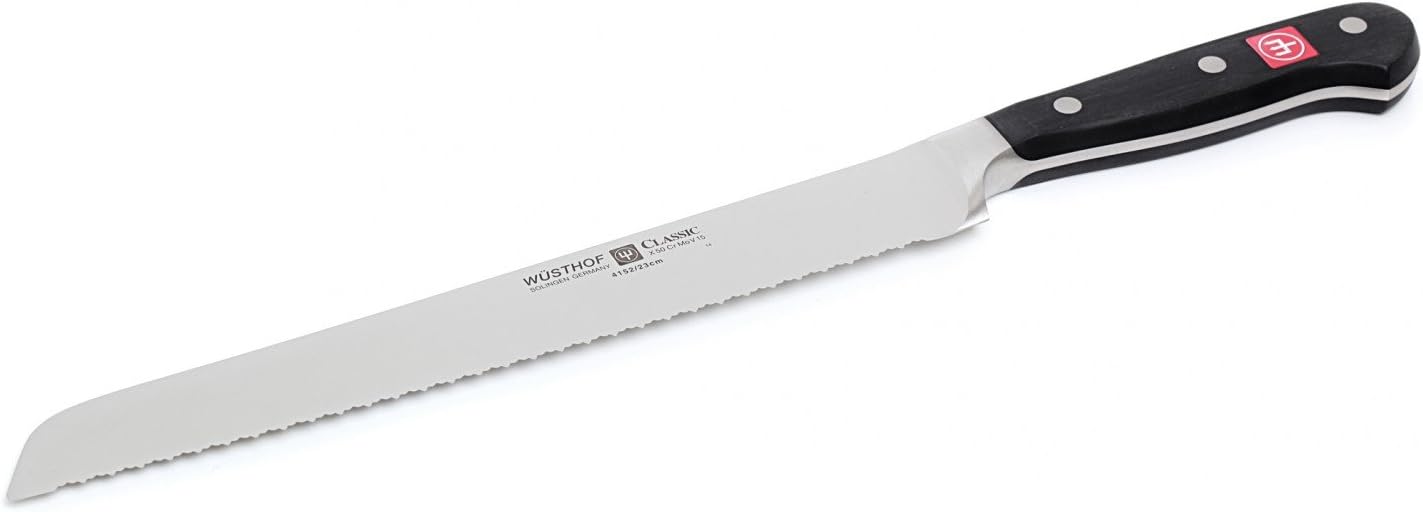
The Wusthof Classic 9-Inch Double Serrated Bread Knife is our top pick for Chef's Knives 2026: German & Japanese Steel Picks. Double serration for superior cutting control. For budget shoppers, the Zwilling Pro 8" Chef's Knife offers solid value at a lower price.
See Today’s Price →At a Glance

Showing 4 of 4 products
Wusthof Classic 9-Inch Double Serrated Bread Knife
“The Wusthof Classic is the best premium bread knife — double serrations and German steel for ultimate cutting precision.”
See Today’s Price →What we like
- Double serration for superior cutting control
- High-carbon German steel
- Full tang construction
- Wusthof lifetime warranty
Watch out for
- Premium price
- 9-inch slightly shorter than Victorinox
Read Full Analysis
The Wusthof Classic 4582-7/20 represents 200 years of German cutlery tradition executed at a high level. The X50CrMoV15 chromium-molybdenum-vanadium steel, hardened to 58 HRC, is the industry standard for German kitchen knives—it sharpens easily, resists staining and corrosion, and holds a working edge reliably through daily honing. The full bolster—the thick band of steel between blade and handle—is both a balance point and a safety feature. It prevents the hand from slipping forward onto the blade during heavy chopping, which matters during extended prep sessions. The triple-riveted POM handle is classic and comfortable, fitting naturally in a pinch grip. At 58 HRC, the Wusthof is softer than Japanese alternatives, meaning the edge benefits from honing before each use. Run a honing rod across it 5-10 times before you start cooking and the knife performs at its peak. Skip honing for a few weeks and it'll feel noticeably less sharp. This maintenance rhythm suits cooks who enjoy the ritual; it frustrates cooks who want a knife that just stays sharp. Made in Solingen, Germany—the historic center of German blade manufacturing—with consistent quality control that shows in the 4,200 reviews at 4.8 stars. At $159.95, the Wusthof Classic is a legitimate lifetime purchase for cooks who want the best of German tradition.

MAC Professional 8" Chef's Knife with Dimples MTH-80
“The MAC MTH-80 delivers the sharpest, longest-lasting edge in this comparison for cooks willing to learn proper Japanese knife maintenance.”
See Today’s Price →What we like
- MAC Original steel at 59-61 HRC holds an edge significantly longer than German knives
- Dimples (Granton edge) measurably reduce food sticking when slicing
- Western-style handle bridges comfort between European and Japanese designs
- Made in Japan with consistently tight manufacturing tolerances
Watch out for
- Requires a water whetstone for proper sharpening—honing rods don't work well on harder steel
- More chip-prone than German knives if used on hard foods or bones
Read Full Analysis
The MAC MTH-80 is consistently recommended by knife experts as the best Japanese chef's knife for Western cooks who are used to German-style handles. The MAC Original steel—hardened to 59-61 HRC—produces an edge that's noticeably sharper out of the box and retains that sharpness longer between sharpenings than any German knife in this comparison. The dimples (Granton edge) along the blade face create air pockets during slicing that reduce adhesion with wet, sticky foods. The effect is most noticeable with raw fish, cheese, potatoes, and dense root vegetables. It's a genuine benefit, not merely aesthetic. The Western-style handle is MAC's key differentiator from knives like the Global. It fits naturally in a standard pinch grip without requiring technique adjustment—meaning the transition from a Wusthof to a MAC is seamless from the handle perspective. The harder steel requires proper maintenance. A honing rod keeps softer German steel aligned, but at 59-61 HRC, honing does little for the MAC. Instead, occasional sharpening on a water whetstone (a 1000/3000 grit combination stone works well) restores the edge. This takes 10-15 minutes with practice and produces results superior to any pull-through sharpener. For cooks willing to learn whetstone sharpening, the MAC MTH-80 is the best knife in this comparison for pure edge performance.

Global G-2 8" Chef's Knife
“The Global G-2 is a beautifully balanced, sanitary one-piece knife for cooks who appreciate minimalist Japanese design and have dry hands when they cook.”
See Today’s Price →What we like
- CROMOVA 18 steel is stain-resistant and corrosion-resistant
- Seamless one-piece stainless construction—no crevices for bacteria
- Sand-filled hollow handle provides excellent weight balance
- Distinctive design that's held up over decades of production
Watch out for
- Stainless handle becomes slippery when wet—requires adjustment for wet-hand cooks
- Polarizing handle feel: loved by some, uncomfortable for others
Read Full Analysis
The Global G-2 occupies a unique position in the chef's knife market: it's been made in essentially the same form since 1985, with the same CROMOVA 18 chromium-molybdenum-vanadium steel and the same distinctive hollow handle design. Its longevity isn't nostalgia—it's evidence that the design genuinely works. CROMOVA 18 steel is notably corrosion-resistant—more so than most Japanese steels—while still achieving the hardness (around 58 HRC) needed for a sharp, long-lasting edge. The seamless one-piece construction (blade and handle are one continuous piece of stainless) eliminates the handle seams, rivets, and recesses where bacteria accumulate in traditional knives. For cooks who care about hygiene, this is a meaningful advantage. The hollow handle is filled with sand calibrated to balance the knife at the bolster point. In a dry hand, the balance is excellent and the dimpled texture provides grip. In a wet hand, that texture is insufficient—the polished stainless gets slippery. This is the Global's primary practical limitation and the reason it splits opinion: some cooks never notice the issue; others find it a deal-breaker. The 8,900 reviews at 4.7 stars confirm broad satisfaction with a small but vocal contingent of slippery-handle complaints. If you tend to dry your hands while cooking or prefer a minimalist aesthetic and single-material construction, the Global G-2 is an excellent choice.

Zwilling Pro 8" Chef's Knife
“The Zwilling Pro is an excellent German knife whose Friodur treatment and curved profile suit beginners developing their technique.”
See Today’s Price →What we like
- Friodur ice-hardening process improves corrosion resistance and durability
- Curved blade profile handles rocking cuts and pull-through motions equally well
- 57 HRC is forgiving of imperfect sharpening technique
- Zwilling's reputation for consistent German quality
Watch out for
- $149.95 is a premium price for a knife that competes closely with the cheaper Victorinox
- Fewer distinctive features than Wusthof Classic at a similar price
Read Full Analysis
The Zwilling Pro 31021-203 is Zwilling J.A. Henckels' flagship chef's knife, built around the brand's proprietary Friodur ice-hardening process. After standard heat treatment, the steel is quenched at sub-zero temperatures, which improves molecular structure to produce a blade that's simultaneously harder and more flexible than conventional heat-treated steel. In practice, this means slightly better chip resistance at the 57 HRC hardness level. At 57 HRC, the Zwilling Pro sits slightly softer than the Wusthof Classic at 58 HRC. The difference is measurable but minimal in practice—both benefit from regular honing and respond similarly to whetstone sharpening. The Zwilling's blade profile is more curved than the Wusthof's, which encourages a rocking motion when chopping. Beginners who default to rocking will find the Zwilling profile more natural. The handle—Zwilling's twin bolster design—is ergonomic and balanced, fitting a pinch grip well. Build quality from the Solingen factory matches Wusthof's high standards. At $149.95, the Zwilling Pro is in direct competition with the Wusthof Classic. Both are excellent; the Wusthof's slightly harder steel and longer market track record give it the edge among confident buyers. The Zwilling's more forgiving steel and curved profile make it the slightly better pick for cooks early in their cooking journey.
Chef's Knives Buying Guide
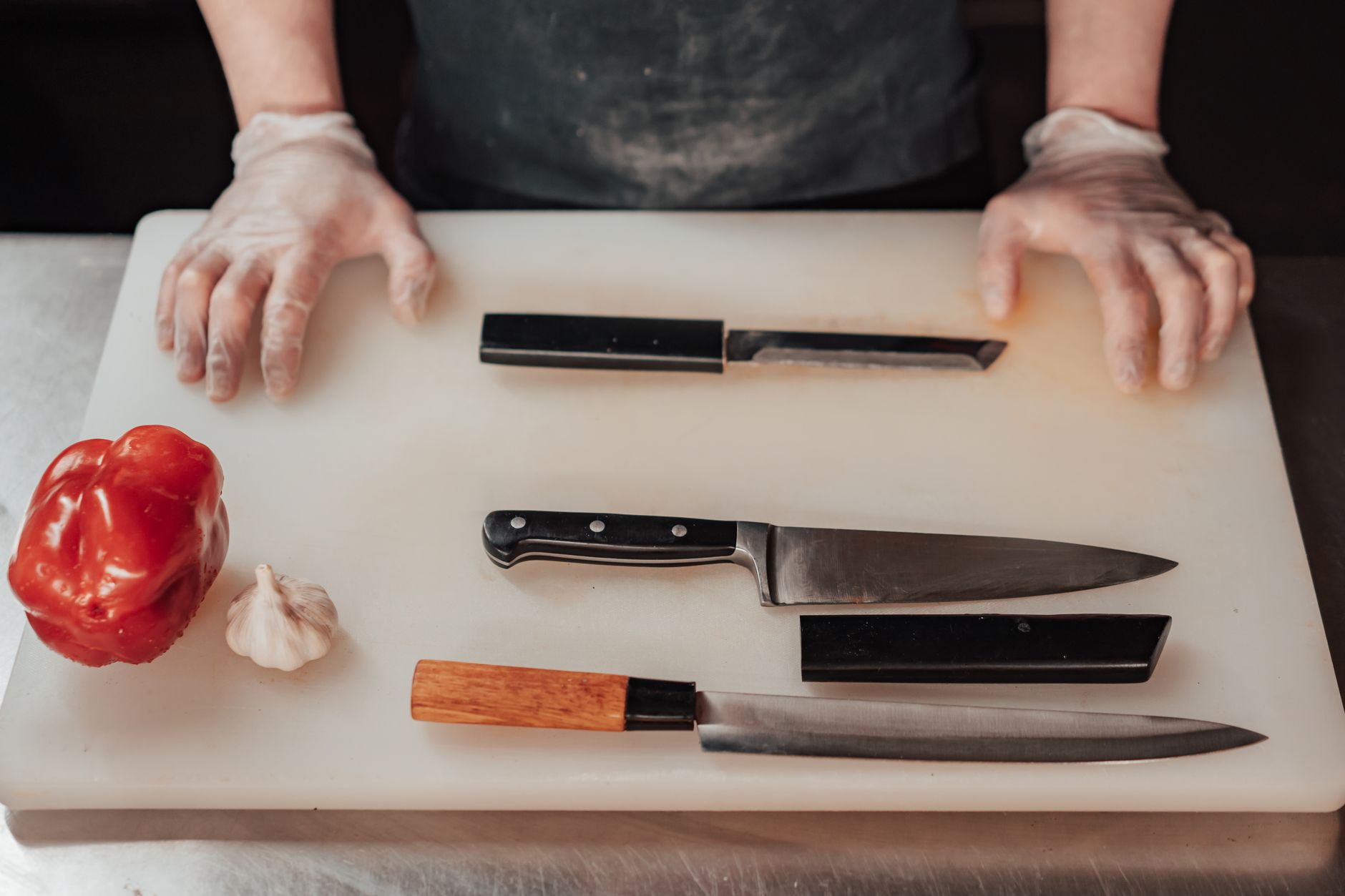 Photo by Mikhail Nilov / Pexels
Choosing a chef's knife means choosing a philosophy—and understanding the tradeoffs between German and Japanese steel is the most important thing you can learn before spending money.
German vs. Japanese Knives: What Actually Differs
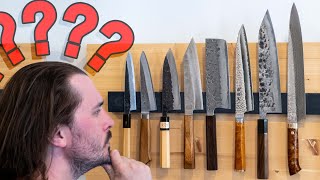
German knives (Wusthof, Zwilling) use softer steel, typically around 56-58 HRC on the Rockwell hardness scale. They're sharpened to a wider 15-20 degree angle per side, making the edge more robust—it resists chipping when you hit a seed, nick a bone, or use the blade to scoop chopped vegetables. The tradeoff is that softer steel dulls faster and requires regular honing to maintain performance. Japanese knives (MAC, Global) use harder steel at 59-62 HRC. They're sharpened to a narrower 10-15 degree angle, producing a more acute, razor-sharp edge that lasts longer between sharpenings. The tradeoff: harder steel is more brittle and will chip or crack if used on very hard foods or if dropped on a hard surface. Japanese knives reward careful technique; German knives tolerate rough handling better.
The most overlooked factor in knife selection is handle fit. Wusthof's classic bolster-and-POM-handle design fits a pinch grip well for most Western hands. Global's hollow stainless handle filled with sand for balance is polarizing—some cooks love it, others find it slippery when wet. MAC's Western-style wooden handle bridges the two traditions. Victorinox's Fibrox handle is deliberately non-slip and textured for both dry and wet hands, which is why professional kitchens rely on it. If you can't try a knife before buying, read reviews from people who describe their hand size—most reviewers mention if they have small or large hands.
Higher HRC (harder steel) means: sharper out of the box, better edge retention, longer time between sharpenings, but more fragile edge and harder to sharpen at home. The Wusthof Classic at 58 HRC can be touched up on a standard honing rod before each use and sharpened at home with a whetstone every few months. The MAC at 59-61 HRC holds its edge longer but requires a water whetstone (not a honing rod) for proper sharpening, which takes more time and skill. If you won't sharpen your own knives and prefer to send them out once a year, a harder Japanese knife makes sense. If you like maintaining your knives regularly, a German knife rewards that habit.
Buying a knife block set instead of one great knife is the most common mistake—sets compromise on quality to hit a price point, and most knives in a set go unused. Prioritize buying one excellent 8-inch chef's knife over a mediocre 15-piece set. Using a cutting board that's too hard (glass, ceramic, bamboo) will dull any knife rapidly—use wood or plastic. Storing knives in a drawer where the blades contact each other destroys edges quickly; use a magnetic strip or knife block. Finally, don't skip honing. Even the best knife goes from sharp to mediocre without regular honing, and most people mistake a knife that needs honing for a knife that needs sharpening.
Frequently Asked Questions
What's the real difference between a Japanese and a German chef's knife?
Why do professional chefs use Victorinox when there are much more expensive options?
Do the dimples on the MAC MTH-80 actually reduce food sticking?
How often should I sharpen my chef's knife?
Is a knife block or magnetic strip better for storing chef's knives?
How We Analyze Products
We analyze Amazon review data — often thousands of reviews per product — to surface patterns that individual buyers miss. Our process aggregates star ratings, review counts, and buyer sentiment at scale, identifying which strengths and weaknesses appear consistently across the largest review samples available. The 8,333+ reviews analyzed on this page represent real verified-purchase feedback from Amazon buyers.
Each product earned its placement through data: total review volume, average rating, and the specific praise and complaints that repeat most often across buyers. No manufacturer paid for placement on this page. Products appear here because buyers endorsed them at scale, not because a company asked us to feature them.
We use AI to summarize review sentiment — not to fabricate opinions, but to condense what thousands of buyers actually wrote into a readable format. The pros and cons you see reflect the most common themes found in verified purchaser reviews, paraphrased for clarity. We do not claim to have accessed Reddit, YouTube, or specific publications in generating these summaries.
Prices shown reflect Amazon pricing at the time this page was last generated. Click “See Today’s Price” to get the current live price on Amazon. Read our full methodology →