Best Coffee Makers Under $30 2026: Drip & Pod Picks

The OXO Brew Pour-Over Coffee Maker is the best coffee maker under $30 — produces cafe-quality pour-over coffee with any ground beans and zero electricity. The Primula Stovetop Espresso Maker is the top pick if you prefer strong espresso-style coffee at the same price.
See Today’s Price →At a Glance
| # | Product | Award | Price |
|---|---|---|---|
| 1 | Best Design | $15.99 as of Nov 21, 8:34 AM CT details Buy → |
|
| 2 | Best Espresso Alternative | $19.99 as of Nov 21, 8:26 AM CT details Buy → |
|
| 3 | Best for Multiple Cups | $24.95 as of Nov 21, 8:25 AM CT details Buy → |
|
| 4 |  Melitta Filter Coffee Maker Melitta |
$7.89 as of Nov 21, 8:26 AM CT details Buy → |
Coffee Makers Under $30 Buying Guide
 Photo by Chevanon Photography / Pexels
Choosing the best coffee maker under $30 requires being honest about what a sub-$30 coffee maker can realistically deliver. The options at this price are: a basic 4-12 cup drip coffee maker with minimal features, a pour-over dripper, a French press, or a Moka pot. Automatic drip coffee makers under $30 (Hamilton Beach, BLACK+DECKER) produce functional hot coffee but lack precision brewing temperature control (ideal is 195-205 degrees F), showerhead coverage for even saturation, and good carafe design. For coffee quality, the manual options under $30 actually outperform automatic drip at this price: a quality pour-over dripper like the Hario V60 ($15-$20) produces excellent coffee when paired with a gooseneck kettle; a French press ($15-$25) produces rich, full-bodied coffee. Key specs for automatic drip makers: heating element quality (faster heating equals better temperature; cheap elements under-heat water to 185 degrees which under-extracts and produces flat coffee), carafe type (insulated thermal carafes keep coffee hot without a heating plate that burns coffee over time; glass carafes with a heating plate overheat coffee after 20-30 minutes), and brew time (5-8 minutes for 8-12 cups is the target range). Common mistakes: buying the cheapest available automatic drip maker expecting specialty-level coffee (the quality ceiling is real), using pre-ground coffee older than 2 weeks (stale coffee tastes flat regardless of machine quality), and not cleaning the coffee maker monthly (mineral scale from hard water reduces brewing temperature and extraction quality). Budget: for under $30, a Hario V60 or Bodum French press produces better coffee than most automatic drip makers at the same price.
Watch Before You Buy

Showing 4 of 4 products
“OXO's pour-over stands on its own water tank — just fill the reservoir and the flow rate automatically optimizes extraction; cleaner countertop workflow than other pourers.”
See Today’s Price →What we like
- Water tank meters consistent pour rate
- Rainmaker head saturates grounds evenly
- Works over most carafes
- Less technique required
Watch out for
- More parts to clean
- Less control for experienced brewers
Read Full Analysis
OXO Brew Pour-Over and 4.7 stars automates the water flow rate — a built-in water tank with a perforated base distributes water evenly over the grounds without manual pouring technique. This makes it more forgiving than a bare filter cone for beginners who struggle with consistent pouring. The counterop footprint is self-contained and cleaner than balancing a cone on a mug. The main limitation: the water tank adds volume to store and wash. Best for users who want pour-over results without the manual pouring skill.

“Primula's stovetop moka pot produces espresso-strength coffee on any burner; genuine Italian-style brewing for the cost of a single Starbucks drink.”
See Today’s Price →What we like
- Under $20
- 6 cup capacity
- Simple classic design
- Good starter moka pot
Watch out for
- Not induction compatible
- Build quality below Bialetti
Read Full Analysis
Primula's Stovetop Espresso Maker is the only non-drip, non-pour-over brewing method on this under-$30 coffee maker page. A Moka pot forces pressurized steam through packed coffee grounds — the result is espresso-strength concentrated coffee, far stronger than drip or pour-over, and a completely different brewing style at the same $20 price point as the OXO pour-over ($19.97, rank 1). For buyers who prefer strong concentrated coffee or use it as a base for lattes and Americanos, Primula opens a different flavor profile than any other option here. The 6-cup capacity (measured in espresso-sized 1 oz servings) yields one to two concentrated servings per batch. One important limitation: Primula is not induction-compatible — it requires a gas or electric coil burner. Induction stove owners should look at the OXO or Melitta pour-over options on this page instead. Build quality is below Bialetti's original Italian standard — the seal and gasket will wear faster under daily use. For beginners exploring Moka pot brewing at minimum cost, Primula is the right starting point. The upgrade path is a Bialetti Moka Express when daily brewing makes the quality difference noticeable.
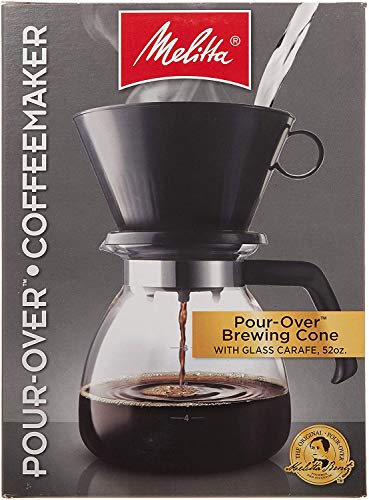
“The 52oz carafe size makes Melitta's larger pour-over practical for two people; brew directly into the carafe and keep it on a warming pad.”
See Today’s Price →What we like
- Includes glass carafe and single-cup dripper in one package — complete pour-over setup under $25
- Uses standard Melitta cone filters (widely available at grocery stores)
- Straightforward design with no learning curve — pour and it works
- Keeps coffee warm in the insulated carafe for 30–45 minutes
- Lowest price entry into pour-over coffee of any option in this guide
Watch out for
- Plastic dripper is not neutral — can impart slight plastic taste before fully broken in
- Glass carafe does not have a tight seal — coffee cools faster than a proper thermal carafe
- Single drip hole design extracts less evenly than the Hario V60 spiral rib design
Read Full Analysis
The Melitta 52oz Pour-Over Coffee Brewer with Glass Carafe is the only multi-cup option on this under-$30 page — the OXO Brew pour-over ($19.97, rank 1) and Primula Moka pot ($19.99, rank 2) both produce one to two servings per batch. Melitta's complete setup includes a cone dripper and a 52 oz glass carafe together, making it practical for two people or anyone who wants to brew a batch and keep it accessible. Standard Melitta cone filters are available at grocery stores nationwide, which removes the specialty filter sourcing that some pour-over systems require. The pour-over process needs no technique — water goes in the top, coffee drips into the carafe below. No spiral-pour required as with the Hario V60. Standard Melitta single-hole cone design extracts reliably if less precisely than spiral-rib alternatives. The trade-offs: the plastic dripper can impart a slight taste before breaking in after several brews, and the glass carafe is not insulated — coffee cools within 30-45 minutes without a warming pad underneath. For two-person households who want a complete pour-over setup at the lowest possible price with no separate carafe purchase, Melitta 52oz is the right choice on this page.
“The Melitta Single Cup sits over any mug and brews pour-over coffee in 3 minutes with zero electricity; clean up takes 10 seconds.”
See Today’s Price →What we like
- Under $6
- Works with #2 cone filters (widely available)
- Simple plastic design
- Single serving
Watch out for
- Plastic — no heat retention
- No design refinement vs. ceramic options
Read Full Analysis
Melitta Single Cup and 4.7 stars is the simplest coffee brewer available — a plastic filter cone that sits over any standard mug, brews a pour-over in 3 minutes with zero electricity, and cleans in 10 seconds. At under $9, it's the lowest-cost path to better coffee than a drip machine produces. The limitation is ritual: you must boil water separately and pour manually, which adds steps versus a push-button machine. For anyone willing to invest 5 minutes of attention, the resulting cup quality far exceeds the price.
Frequently Asked Questions
What's the best coffee maker under $30?
Can a $20 coffee maker make good coffee?
Drip coffee maker vs French press — which makes better coffee?
Is a single-serve pod machine (Keurig) better than a drip maker under $30?
How do I clean a coffee maker without cleaning tablets?
How We Chose These Products
We compare each product’s Amazon listing, the manufacturer’s published specifications and Amazon customer ratings, shown with their review counts as Amazon’s data, and rank the products on how well they answer this page’s question. We do not test products in hand and we do not run our own analysis of review text. A publication or expert is named only where we cite its published findings about that product. No manufacturer paid for placement on this page.
A price appears only when Amazon’s API supplied it at a recent daily refresh, with the date and time beside it, and is withdrawn at 4 AM Central on the day after it turns 24 hours old; otherwise use “Check price on Amazon” for the live price. Read our full methodology →