Best Espresso Grinder (2026)
The Baratza Encore ESP is the best espresso grinder for most home users — consistent flat burrs, 40 grind steps, and a proven track record. Serious enthusiasts should consider the Fellow Ode Gen 2 or Niche Zero for single-dose precision.
See Today’s Price →At a Glance
Showing 5 of 5 products

Encore ESP
“The best entry point for espresso grinding. Baratza's support network and parts availability mean this grinder will outlast cheaper competitors.”
See Today’s Price →What we like
Watch out for
Read Full Analysis
The Encore ESP is the right entry point for home espresso for a reason that has nothing to do with burrs: Baratza's service network. When the grinder needs adjustment or a burr replacement, Baratza sells parts directly and maintains an active repair program — the Encore ESP is a grinder you can own for a decade. The 40 grind steps in the ESP's espresso-specific range provide enough adjustment resolution for dialing in most home espresso machines. Compared to the Breville Smart Grinder Pro at $200, the Encore ESP costs $50 more but is more purpose-built for espresso — the SGP covers a wider range with less granularity in the espresso zone. The ESP's limitation is that it's a single-use tool: not well-suited for filter coffee or French press. The Niche Zero and Specialita at two to four times the price offer better precision, but that gap only matters after you've already learned to dial in grind correctly.
Niche Zero
“The cult favorite for a reason. Zero retention means every dose is fresh, making it ideal for specialty coffee exploration.”
See Today’s Price →What we like
Watch out for
Read Full Analysis
The Niche Zero commands a cult following for one reason: near-zero retention. Every dose is fresh because almost no coffee stays in the grinding path between sessions. This matters for single-dose grinding — weighing each dose before grinding rather than using a hopper. The stepless adjustment gives granular control without discrete steps. Compared to the Encore ESP at $249, you're paying $450 more for lower retention and stepless adjustment. That tradeoff is worth it for serious enthusiasts who switch beans frequently and can perceive the freshness difference in the cup. Grinding speed is slower than competitors, and availability outside the UK can be inconsistent with lead times. The Specialita at $445 is an alternative for noise-sensitive environments, but the Niche edges ahead for espresso precision and retention. At this price, you should already be sourcing quality beans and using a scale for dosing.
Ode Brew Grinder Gen 2
“If you brew both filter coffee and espresso and want one premium grinder, the Ode Gen 2 handles both creditably.”
See Today’s Price →What we like
Watch out for
Read Full Analysis
The Ode Gen 2 is an honest dual-purpose grinder with a caveat: it was designed for filter coffee first and espresso second. The 64mm flat burrs produce excellent grind consistency for pour-over, French press, and batch brew. Espresso range was added in Gen 2 via a different burr configuration — it works, but the usable settings window is narrower than dedicated espresso grinders like the Encore ESP or Specialita. The low-static design is a genuine daily-use advantage: less grind scatter on your counter and portafilter. The industrial-modern design is beautiful, which matters for a countertop appliance you see every day. Compared to the Encore ESP, the Ode costs $95 more and performs better on filter but is less precise for espresso. The right choice for a household that brews both filter and espresso and accepts slight espresso compromise in exchange for one grinder instead of two.
Smart Grinder Pro
“Excellent all-rounder if you own a Breville espresso machine. Covers espresso through French press and integrates well with the Breville ecosystem.”
See Today’s Price →What we like
Watch out for
Read Full Analysis
The Smart Grinder Pro is the most practical choice on this page for one specific situation: you already own a Breville espresso machine. The digital dose timer interface integrates naturally with Breville's machine logic, and the wide grind range from espresso through French press handles the full spectrum. At $200, it's the most affordable pick on this page and undercuts the Encore ESP by $50. The tradeoffs are real: conical burrs at this tier retain more grounds than flat burrs, and the espresso range has less granularity than the Encore ESP's 40 dedicated steps. For casual espresso drinkers using a Breville machine who don't want to enter the deep hobbyist end of grinder selection, this is a genuinely good, practical choice. For anyone planning to upgrade beyond the Breville ecosystem, the Encore ESP is the better long-term investment.
Mignon Specialita
“The quietest home espresso grinder at this tier. If you grind early in the morning or have noise-sensitive housemates, the Specialita is worth the premium.”
See Today’s Price →What we like
Watch out for
Read Full Analysis
The Specialita earns its price premium through a feature that's difficult to quantify until you've experienced its absence: it's nearly silent. Home grinding at 6am or in an apartment with thin walls is a different experience when your grinder runs at whisper volume. Beyond noise, the stepless micrometric adjustment and 55mm flat burrs represent a genuine step up in grind consistency over the Encore ESP. Compared to the Niche Zero at $699, the Specialita costs $254 less and is more readily available but has slightly more retention between doses. Compared to the Encore ESP at $249, the Specialita costs $195 more for meaningfully better burrs, stepless adjustment, and the noise advantage. The learning curve on stepless adjustment is real — unlike the Encore's discrete steps, you're navigating a continuous range requiring more dialing when switching beans. For serious home baristas in noise-sensitive environments, this is the most compelling choice on the page.
Espresso Grinder (2026) Buying Guide
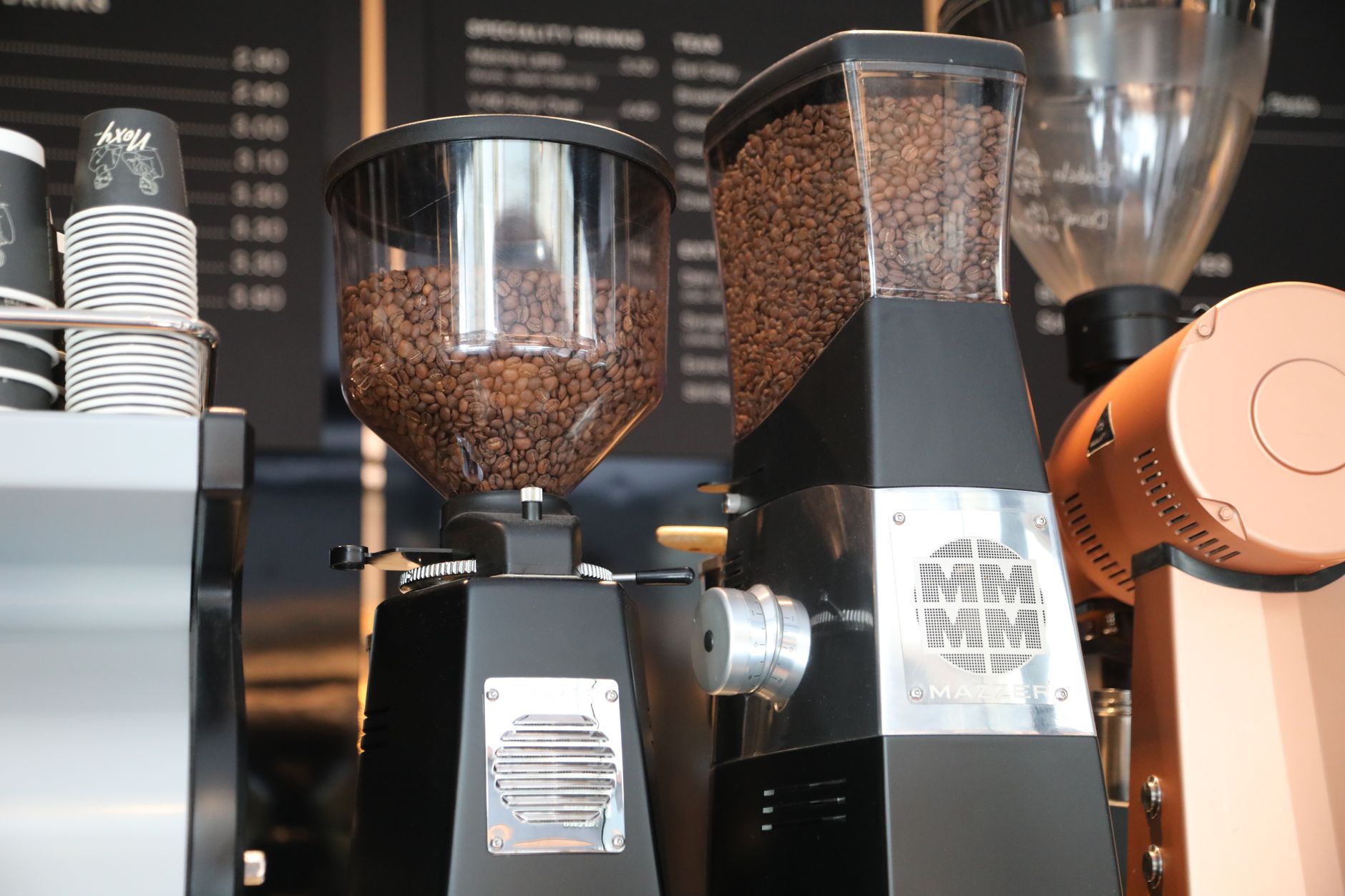 Photo by Jean-Paul Wright / Pexels
Espresso grinding is unforgiving — the difference between a channeling, bitter shot and a perfectly balanced one can be one click on your grinder's adjustment ring. Here's what matters when choosing an espresso grinder.
Burr Type: Flat vs. Conical
Flat burrs produce more consistent grind distribution and are favored by specialty coffee shops. They run hotter (heat can affect flavor during long sessions) and often have more retention (grounds left inside the grinder between doses). Conical burrs run cooler, retain less coffee, and are generally more forgiving — which is why most home-user recommendations use conical. The Niche Zero and Eureka Mignon are conical; Baratza Vario and most prosumer grinders use flat burrs.
Grind Adjustment: Steps vs. Stepless
Stepped grinders click between fixed positions — easier to use and repeat settings. Stepless grinders allow infinite micro-adjustment for maximum dialing-in precision. For home espresso, stepped is typically sufficient. If you're chasing competition-level consistency or switching between espresso and filter coffee daily, stepless gives you more control.
Retention and Single-Dosing
Retention is how many grams of old coffee stay in the grinder after each dose. High retention (2–5g) means stale grounds mixing with fresh ones and waste when switching between coffees. Single-dose grinders are designed to grind exactly the amount you put in. If you like trying different beans frequently, low-retention single-dosing grinders (Niche Zero, DF64) are worth the premium.
RPM and Heat
Lower RPM grinders preserve aromatic compounds that heat destroys. Most premium grinders run at 400–1,200 RPM — fast enough to grind efficiently, slow enough to minimize heat buildup. Cheap blade grinders and high-speed burr grinders (some at 1,600+ RPM) introduce heat that degrades flavor, especially noticeable with light roasts.
The Bottom Line
Don't match an expensive grinder to a cheap espresso machine or vice versa. The Baratza Encore ESP pairs well with machines up to $1,000. Above that, consider the Niche Zero or Eureka Mignon Specialita. And regardless of budget, buy from brands with good repair support — Baratza is the gold standard for parts and service.
Related Guides
Frequently Asked Questions
What grinder should I buy for home espresso?
Why does grind consistency matter for espresso?
What is grind retention and why does it matter?
Can I use the same grinder for espresso and pour-over?
How long do espresso grinder burrs last before needing replacement?
How We Analyze Products
We analyze Amazon review data — often thousands of reviews per product — to surface patterns that individual buyers miss. Our process aggregates star ratings, review counts, and buyer sentiment at scale, identifying which strengths and weaknesses appear consistently across the largest review samples available.
Each product earned its placement through data: total review volume, average rating, and the specific praise and complaints that repeat most often across buyers. No manufacturer paid for placement on this page. Products appear here because buyers endorsed them at scale, not because a company asked us to feature them.
We use AI to summarize review sentiment — not to fabricate opinions, but to condense what thousands of buyers actually wrote into a readable format. The pros and cons you see reflect the most common themes found in verified purchaser reviews, paraphrased for clarity. We do not claim to have accessed Reddit, YouTube, or specific publications in generating these summaries.
Prices shown reflect Amazon pricing at the time this page was last generated. Click “See Today’s Price” to get the current live price on Amazon. Read our full methodology →