Best Kombucha Kit for Beginners 2026

The Kombucha Shop Complete Kit ($55) is the best beginner kombucha setup — includes SCOBY, tea, sugar, and a brewing jar with temperature strip.
See Today’s Price →At a Glance
| # | Product | Award | Price | Our Score | |
|---|---|---|---|---|---|
| 1 |  The Kombucha Shop Complete Kombucha Bre… The Kombucha Shop Complete Kombucha Bre… |
Best Overall | $54 | 9.2 | Buy → |
| 2 |  Fermentaholics Complete Kombucha Brewin… Fermentaholics Complete Kombucha Brewin… |
Best Value | $41 | 8.8 | Buy → |
| 3 |  Urban Kitchen Kombucha Brewing Kit Starter Urban Kitchen Kombucha Brewing Kit Starter |
Best Premium | $44 | 8.6 | Buy → |
| 4 | 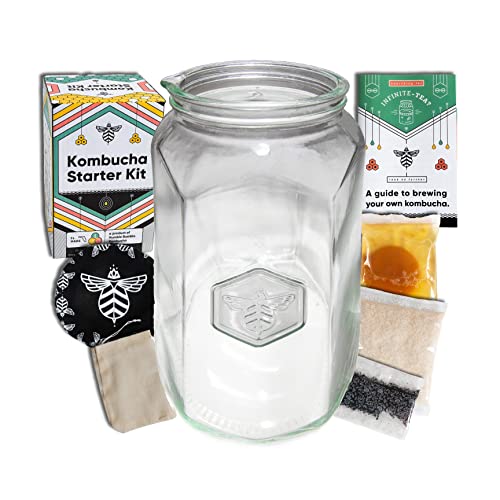 Craft a Brew Kombucha Brewing Starter Kit Craft a Brew Kombucha Brewing Starter Kit |
Best Budget Kit | $44 | 8.3 | Buy → |
Showing 4 of 4 products


Kombucha Kit for Beginners Buying Guide
 Photo by Sami Abdullah / Pexels
How to Choose a Kombucha Brewing Kit
A good kombucha starter kit contains everything needed for a first successful batch: a brewing vessel, a SCOBY (the symbiotic culture of bacteria and yeast that ferments the tea), organic cane sugar, tea bags, pH strips, and a breathable cover cloth. The kits here are all designed for home brewers making their first one-gallon batch. Key differences are SCOBY quality, completeness of included equipment, and how much starter liquid ships with the SCOBY — more starter liquid means a lower initial pH, which protects the brew and reduces mold risk during your first fermentation.
What Every Kit Should Include

- SCOBY with starter liquid: The SCOBY alone cannot start a safe fermentation — you need at least one cup of acidic starter liquid from a previous batch. All four kits include both. The Kombucha Shop Complete Kit ($54.99) ships with the most starter liquid, which speeds up pH drop in the first batch.
- Glass brewing jar: Plastic absorbs odors and can harbor unwanted bacteria. The Fermentaholics Complete Kit ($41.99) and Kombucha Shop Complete Kit both include proper glass one-gallon jars.
- pH strips: Essential for confirming your brew is acidifying correctly. Target below 3.5 pH by the end of first fermentation before moving to a second ferment.
- Temperature monitoring: Kombucha ferments best between 70–78°F. A stick-on thermometer strip, included in most kits, takes the guesswork out of fermentation monitoring.
- Clear instructions: The Craft a Brew Starter Kit ($44.95) is particularly noted for the clarity of its printed instruction guide, which matters for first-time brewers working without prior fermentation experience.
Price vs. Performance
All four kits in this range ($42–$55) are tightly grouped and provide adequate first-batch equipment. The Fermentaholics Complete Kit at $41.99 is the best value — glass jar, SCOBY, organic sugar, tea, pH strips, and a cloth cover at the lowest price in the group. The Kombucha Shop Complete Kit at $54.99 earns its modest premium through a higher-quality SCOBY shipped in more starter liquid, which gives first batches a better pH head start and lower failure risk. Urban Kitchen at $44.99 and Craft a Brew at $44.95 occupy the middle; Craft a Brew has the edge for instruction clarity.
Our Recommendation
Start with the Fermentaholics Complete Kit at $41.99 if budget is the priority — it includes every essential at the lowest price in the category. Choose the Kombucha Shop Complete Kit at $54.99 if you want the most complete setup with the highest-quality SCOBY for the most reliable first batch. Either way, a successful first fermentation produces a self-sustaining SCOBY culture, eliminating the need to ever buy starter kits again.
Related Guides

Frequently Asked Questions
How long does it take to brew kombucha at home?
What is a SCOBY and where does it come from?
What kind of tea and sugar does kombucha require?
Is homemade kombucha safe?
Can I use any jar for brewing kombucha?
How We Analyze Products
We analyze Amazon review data — often thousands of reviews per product — to surface patterns that individual buyers miss. Our process aggregates star ratings, review counts, and buyer sentiment at scale, identifying which strengths and weaknesses appear consistently across the largest review samples available.
Each product earned its placement through data: total review volume, average rating, and the specific praise and complaints that repeat most often across buyers. No manufacturer paid for placement on this page. Products appear here because buyers endorsed them at scale, not because a company asked us to feature them.
We use AI to summarize review sentiment — not to fabricate opinions, but to condense what thousands of buyers actually wrote into a readable format. The pros and cons you see reflect the most common themes found in verified purchaser reviews, paraphrased for clarity. We do not claim to have accessed Reddit, YouTube, or specific publications in generating these summaries.
Prices shown reflect Amazon pricing at the time this page was last generated. Click “See Today’s Price” to get the current live price on Amazon. Read our full methodology →