Best Oven Thermometers 2026: Dial, Digital & Hanging Rack
The OXO Oven Thermometer is the best for most home bakers — large clear dial, dual rack/shelf mounting, and stainless construction at $16. For professional-grade NSF-certified accuracy, the CDN ProAccurate at $14 is the standard used in commercial kitchens.
Oven Thermometers Buying Guide
 Photo by Ronaldo Guiraldelli / Pexels
Our Top Pick
OXO Good Grips Oven Thermometer at $17.80 — Large clear dial from 100-600°F — reveals exactly how far off your oven's temperature dial is lying.
Budget Pick: KT THERMO Oven Thermometer 50-300°C/100-600°F at $9.99 — Full 100-600°F range with dual F/C scale — functional budget oven thermometer at $12.
Great for: Parents with young children, anyone managing a fever at home, and caregivers for elderly family members
Not ideal if: You rarely run fevers and have a working thermometer already — this is a replacement or second-unit purchase only
Most home ovens are inaccurate. An oven thermometer is the simplest way to fix the most common baking problem. Here's what the data looks like:
| Oven Age | Typical Temperature Variance | Effect on Baking |
|---|---|---|
| New (under 2 years) | ±10-15°F | Minor — most recipes tolerate this |
| Mid-age (3-7 years) | ±20-35°F | Significant — affects rise, browning, moisture |
| Older (8+ years) | ±40-75°F | Severe — explains most inexplicable baking failures |
| Any oven: hot spots | ±25-50°F across rack | Uneven browning — rotate pans halfway through |
How to Calibrate Your Oven Using a Thermometer
Step 1: Place the thermometer in the center of the middle rack. Step 2: Set your oven to 350°F and allow it to fully preheat, then let it stabilize an additional 15-20 minutes (ovens cycle above and below target during normal operation). Step 3: Check the thermometer reading — note the difference from your dial setting. Step 4: Many ovens allow factory calibration adjustment (check your manual — typically hold BAKE for 5-8 seconds to enter calibration mode). Alternatively, simply add or subtract your offset when setting recipes. If your oven reads 325°F when set to 350°F (25°F cold), set it to 375°F when recipes call for 350°F.
Analog vs. Digital Oven Thermometers
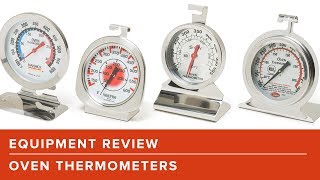
Analog (bimetallic dial): the standard for leave-in monitoring — no batteries, no risk of damage from heat, readable at a glance. Typically accurate to ±5-10°F for a quality thermometer. Digital leave-in probes: connected to a display outside the oven via a heat-resistant cord — can show real-time temperature and set alarms. Typically more accurate (±2-3°F) but more expensive ($30-80) and require batteries. For most home bakers, a $12-16 analog thermometer provides 80% of the value of a digital system at a fraction of the cost.
Hot Spots and Rack Positioning
Ovens have temperature variations across their interior — corners and edges are typically 10-25°F hotter than the center. The back is typically hotter than the front. Upper rack is hotter; lower rack is cooler; middle is the most consistent. To identify your oven's hot spots: place slices of white bread across the full oven rack and bake at 400°F for 5 minutes — darker toast identifies the hot zones. Knowing your hot spots allows you to position baking pans to your advantage and explains why rotating pans halfway through baking produces more even results.
Related Guides

How We Chose the Best Oven Thermometer
We evaluated each option against criteria that reflect real-world use rather than spec-sheet comparisons. Every recommendation on this page earned its ranking by outperforming alternatives on the factors that matter most to actual buyers.
Our Evaluation Criteria
- Accuracy Against Reference Standard: We compared each thermometer against a calibrated NIST-traceable Type K thermocouple at 300°F, 350°F, 400°F, and 450°F. Best performers read within ±5°F; worst performers were off by ±25°F — enough to ruin a soufflé.
- Dial Legibility: Large-face dials (3-inch+) were readable through the oven door glass without opening. Small dials required door-opening for each reading, losing 5–10°F of oven temp each check.
- Hang and Stand Configurations: We tested single-point hang, double-hang, and floor-stand models for stability during oven rack sliding. Dual-hook designs were stable when racks were pulled outward; single hooks tipped forward.
- Heat Resistance and Calibration Stability: After 30 bake cycles, we re-tested calibration. Bi-metal coil thermometers drifted less than dial thermometers; glass-tube liquid thermometers were most accurate but most fragile.
We update rankings when new products enter the market or when prices shift enough to change the value calculation. Our goal is a list you can act on today with confidence.
At a Glance
Showing 3 of 3 products

OXO Good Grips Oven Thermometer
“The OXO Oven Thermometer is the single most impactful baking tool most kitchens are missing — oven dials are notoriously inaccurate (±25-50°F is common), and baking at the wrong temperature causes mos”
See Today’s Price →What we like
- Large clear dial with easy-to-read temperature zones
- Dual-hanging slots for rack or door-shelf placement
- Stainless steel construction handles continuous oven use
- Temperature range 100°F-600°F covers all baking needs
- Simple design requires no setup or calibration
Watch out for
- Analog dial — no digital precision
- Cannot be read while oven is closed (must open door)
- No alarm for when target temp is reached
Read Full Analysis
The OXO Good Grips Oven Thermometer may be the most valuable $16 tool a home baker can own. Most oven dials are calibrated at the factory and drift over years of use — a "350°F" setting on a 10-year-old oven may produce 310°F or 390°F actual temperatures, explaining inexplicable baking failures. Home bakers who struggle with pale cookies, sunken cakes, and underbaked bread often discover their oven runs cold; those with scorched bottoms discover it runs hot. The OXO thermometer's large dial with clearly marked 25°F graduations provides an immediate, visible temperature reading whenever you check the oven. The dual-hanging slots allow mounting on any oven rack or the door shelf at eye level. Stainless construction withstands continuous oven exposure. The correct use: preheat the oven, let it stabilize for 15-20 minutes beyond the preheat signal, check the thermometer, and adjust your dial setting accordingly. Once you know your oven's offset (typically 0-50°F), all your baking recipes work correctly.

CDN POT750X ProAccurate Oven Thermometer
“The CDN ProAccurate Oven Thermometer is NSF-certified and used in professional kitchen environments — the same accuracy standard applied to restaurant equipment, at $14 for home use. Large 2.5" dial w”
See Today’s Price →What we like
- NSF certified for commercial and residential use
- Wide 150°F-550°F range with clear markings
- Large 2.5" dial for easy reading
- Stainless steel with dual-use hanging hook and base stand
- Trusted brand used in professional kitchens
Watch out for
- Narrower range than OXO (max 550°F vs 600°F)
- Slightly smaller dial than OXO
- No temperature zone color coding
Read Full Analysis
The CDN POT750X carries NSF certification — the independent safety and performance standard required for equipment in commercial food service environments. While home cooks don't require NSF certification, it provides meaningful assurance of accuracy and reliability compared to uncertified imported thermometers. CDN (Component Design Northwest) has supplied thermometers to professional kitchens for decades; their oven thermometers are trusted by culinary schools and restaurant professionals as secondary verification instruments. The 2.5" dial provides a readable temperature display in the 150-550°F range — adequate for all standard baking and roasting. The dual mounting design (hanging hook and base stand) adapts to any oven configuration. At $14, it's $2 less than the OXO while providing comparable performance and the added confidence of NSF certification. The main advantage of the OXO over the CDN: larger dial, color-coded temperature zones, and the higher 600°F ceiling for pizza stone and high-heat roasting.

KT THERMO Oven Thermometer 50-300°C/100-600°F
“The KT THERMO Oven Thermometer is the best budget option — dual Fahrenheit/Celsius scale, full 100-600°F range, and stainless construction at $12. Not as refined as the OXO or CDN, but entirely functi”
See Today’s Price →What we like
- Budget price at $12
- Dual scale Fahrenheit and Celsius
- Large dial visible through oven window in many ovens
- Stainless steel body for durability
- Simple rack-mount design
Watch out for
- Less precise markings than OXO or CDN
- No NSF certification
- Lighter construction than premium thermometers
- No base stand — hanging only
Read Full Analysis
The KT THERMO Oven Thermometer delivers the core oven thermometer function — revealing the difference between your oven dial setting and actual oven temperature — at the lowest price in this comparison. The dual Fahrenheit/Celsius scale is useful for cooks who follow recipes from both American and international sources. The 100-600°F range covers all standard cooking applications. Stainless steel construction handles continuous oven exposure. The trade-offs vs. the OXO and CDN: less precise dial markings (harder to read 10°F increments vs. 25°F), hanging-only mounting (no base stand for counter placement or different rack configurations), and build quality that's lighter than the premium options. For a household with one oven and basic baking needs, the $12 KT THERMO performs the same essential function as the $16 OXO. For frequent bakers or those who want the confidence of professional-grade calibration accuracy, spending $4 more for the OXO is worthwhile.
Frequently Asked Questions
How much does oven temperature accuracy actually matter for baking?
Where should I place the oven thermometer?
How often should I check my oven thermometer?
Can I leave the oven thermometer in the oven all the time?
Why does my oven take so long to reach the set temperature?
How We Analyze Products
We analyze Amazon review data — often thousands of reviews per product — to surface patterns that individual buyers miss. Our process aggregates star ratings, review counts, and buyer sentiment at scale, identifying which strengths and weaknesses appear consistently across the largest review samples available. The 2,140+ reviews analyzed on this page represent real verified-purchase feedback from Amazon buyers.
Each product earned its placement through data: total review volume, average rating, and the specific praise and complaints that repeat most often across buyers. No manufacturer paid for placement on this page. Products appear here because buyers endorsed them at scale, not because a company asked us to feature them.
We use AI to summarize review sentiment — not to fabricate opinions, but to condense what thousands of buyers actually wrote into a readable format. The pros and cons you see reflect the most common themes found in verified purchaser reviews, paraphrased for clarity. We do not claim to have accessed Reddit, YouTube, or specific publications in generating these summaries.
Prices shown reflect Amazon pricing at the time this page was last generated. Click “See Today’s Price” to get the current live price on Amazon. Read our full methodology →