Best Pour-Over Coffee Makers (2026)

The Hario V60 is the pour-over standard for coffee enthusiasts — it produces an exceptionally clean, nuanced cup with full control over extraction. Beginners who want more forgiveness should start with the Chemex 6-Cup, which uses a thick filter that buffers over-extraction.
See Today’s Price →At a Glance
| # | Product | Award | Price | Our Score | |
|---|---|---|---|---|---|
| 1 | 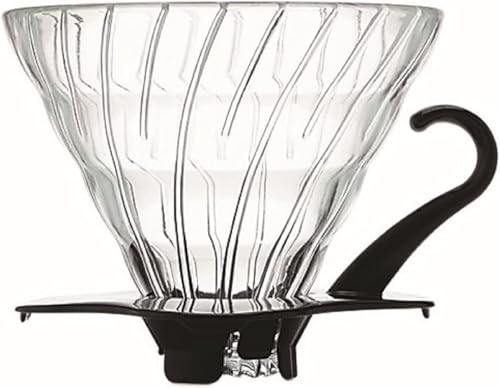 V60 Coffee Dripper (02, Plastic) V60 Coffee Dripper (02, Plastic) |
Best Overall | $26 | 9.4 | Buy → |
| 2 |  Classic Glass Coffee Maker 6-Cup Classic Glass Coffee Maker 6-Cup |
Best for Beginners | $44 | 9.0 | Buy → |
| 3 | Wave Dripper 185 |
Most Consistent | $26 | 8.8 | Buy → |
| 4 | Stagg EKG Electric Pour-Over Kettle |
Essential Pairing | $165 | 9.2 | Buy → |
| 5 | 1.0L Variable Temperature Kettle |
Best Budget Kettle | $49 | 8.5 | Buy → |
Showing 5 of 5 products
V60 Coffee Dripper (02, Plastic)
“The V60 is the gold standard for pour-over for a reason. Once you dial it in, it outperforms drippers 3x its price.”
See Today’s Price →What we like
Watch out for
Read Full Analysis
The V60 is the pour-over gold standard — not because it's forgiving or easy, but because in skilled hands it produces the clearest, most nuanced cup of any dripper at any price on this page. The single-hole conical design requires controlled, even pouring to achieve consistent extraction; pour too fast and you underextract, too slow and you overextract. This technique sensitivity is both the V60's strength and its honest limitation for beginners. At $26.55 for the plastic version, it's the most affordable way into V60 brewing — ceramic and glass versions cost more for aesthetics, not performance. Compared to the Kalita Wave at $26, the V60 produces a brighter, more pronounced cup when used correctly, but the Kalita is more forgiving of imperfect pours. For beginners learning pour-over, the Kalita is the more practical starting point. The V60 rewards practice and pays off with a higher ceiling. Pair with the Bonavita or Fellow EKG kettle — temperature and pour control matter significantly with this dripper.
Classic Glass Coffee Maker 6-Cup
“More forgiving than the V60 and doubles as a gorgeous serving carafe. The go-to for households that want great coffee without a precision technique.”
See Today’s Price →What we like
Watch out for
Read Full Analysis
The Chemex is the most distinctive item on this page: it's both dripper and carafe in a single hourglass-shaped vessel. At $44, it costs $17 more than the V60 or Kalita Wave and requires Chemex's proprietary thicker paper filters, which are effective but require planning to keep stocked. The thick filters produce the cleanest, most sediment-free cup of any dripper on this page — stripping oils and fines more thoroughly than standard paper filters — resulting in a mild, very clean cup. For beginners, the Chemex is more forgiving than the V60 because the wider conical geometry is less sensitive to pour inconsistency. The serving vessel doubles as a presentation piece for guests. The honest limitations: glass breaks (borosilicate, but still), the shape requires a specific bottle brush to clean properly, and the proprietary filters require planning. For households that want beautiful presentation alongside great coffee without mastering precise V60 technique, the Chemex is the right choice.
Wave Dripper 185
“The most consistent pour-over dripper for beginners graduating from drip machines. Less punishing of uneven pours than the V60.”
See Today’s Price →What we like
Watch out for
Read Full Analysis
The Kalita Wave's flat-bed extraction design with three small holes is the most forgiving geometry on this page. Unlike the V60's single-hole conical design where pour angle and speed dramatically affect extraction, the flat bed's three evenly spaced holes produce consistent extraction even with slightly uneven pours. This makes it the correct recommendation for beginners transitioning from drip coffee makers who want manual pour-over without learning precise technique first. At $26, it matches the V60 Plastic in price while being meaningfully more beginner-friendly. The honest tradeoff: the Kalita Wave won't achieve the V60's peak clarity in expert hands — the flat-bed design produces a rounder, more balanced cup with less brightness and complexity than the V60 at its best. Proprietary wave-shaped filters are required and available on Amazon. For new pour-over brewers who want consistency over maximum potential, the Kalita Wave is the most sensible starting dripper on this page. The Bonavita kettle at $49 is the natural pairing.
Stagg EKG Electric Pour-Over Kettle
“A great pour-over kettle does more to improve your cup than upgrading drippers. The Stagg EKG's precision hold mode is transformative for dialing in recipes.”
See Today’s Price →What we like
Watch out for
Read Full Analysis
The Stagg EKG is the most expensive single item on a page that includes drippers under $30, which requires honest justification. That justification: a precision gooseneck kettle with temperature hold does more to improve pour-over quality than upgrading drippers. The features that matter are the LCD temperature display (you see exactly what temperature you're pouring at, not guessing), the hold mode (maintains target temperature for 60 minutes, preventing cooling between pours in multi-cup sessions), and the precision gooseneck (enables controlled, narrow pour for even bloom saturation). Brewing at 200°F versus 185°F produces noticeably different extraction. Without temperature control, you're guessing. Compared to the Bonavita at $49, the Stagg EKG costs $116 more for better aesthetics, a more precise digital hold mode, and a slightly smaller 0.9L capacity. For serious pour-over practitioners, the Stagg EKG is the premium choice. For budget-conscious buyers who want temperature control, the Bonavita delivers the core functionality at a third of the price.
1.0L Variable Temperature Kettle
“The Bonavita proves you don't need to spend $165 to get temperature control and gooseneck precision. A great starting kettle.”
See Today’s Price →What we like
Watch out for
Read Full Analysis
The Bonavita is the practical recommendation for buyers who want temperature-controlled gooseneck pour-over without paying $165 for the Fellow Stagg EKG. At $49, it delivers the two core requirements: a gooseneck spout for precise pour control and variable temperature selection so you're not guessing water temperature at the moment of brewing. The 1.0L capacity is slightly larger than the Stagg EKG's 0.9L, which matters when making multiple cups or a full Chemex batch. The honest tradeoffs versus the Stagg EKG are real: dial-based temperature control is less precise than the EKG's LCD display, heat-up time is slower, and the aesthetics are utilitarian. The temperature hold mode is present but less refined. For someone brewing one V60 cup each morning who wants temperature accuracy without the premium investment, the Bonavita is the right choice. The $116 price gap buys meaningful precision and design from the EKG, but doesn't transform coffee quality in the cup for most users.
Pour-Over Coffee Makers (2026) Buying Guide
 Photo by Bruno Cervera / Pexels
Pour-over coffee is manual brewing done right — you control the water temperature, pour rate, and bloom time, which together determine how much of the coffee's flavor compounds end up in your cup. Here's what separates the best pour-over setups from mediocre ones.
Dripper Shape: V60 vs. Flat-Bottom vs. Chemex
Cone-shaped drippers (Hario V60, Kalita Wave) concentrate the water flow through a single hole at the bottom, increasing contact time with grounds and producing a bolder, more nuanced extraction. Flat-bottom drippers spread the bed of coffee evenly — more forgiving and more consistent in inexperienced hands. The Chemex combines dripper and carafe in one glass vessel with a proprietary thick filter that removes oils and fines for a particularly clean, bright cup favored by light-roast enthusiasts.
Filters: Paper vs. Metal

Paper filters (especially the thicker Chemex and Cafec filters) remove coffee oils (diterpenes) for a cleaner cup with better clarity. Metal filters allow oils through, producing a body similar to French press. Pour-over is fundamentally a paper-filter brewing method — if you want metal filter body, you'd be better served by an AeroPress or French press. Bleached white filters are neutral in taste; unbleached brown filters can impart a faint papery flavor unless pre-rinsed with hot water (always pre-rinse regardless).
Gooseneck Kettle: Non-Negotiable for Pour-Over
A gooseneck kettle is essentially required for pour-over — a standard kettle spout pours too fast and unevenly to control extraction. Electric gooseneck kettles with temperature control (Fellow Stagg EKG, Bonavita) let you hit the ideal 195–205°F for coffee without a thermometer. Budget option: a stovetop gooseneck kettle and a $5 thermometer works fine.
Grind Consistency

Grind quality matters more for pour-over than almost any other brewing method. Medium-coarse grind (sea salt texture) works for most drippers. The V60 is particularly sensitive to grind size — too coarse and you get watery, under-extracted coffee; too fine and it chokes and over-extracts bitter compounds. A quality burr grinder (Baratza Encore, Timemore C2) paired with any good dripper beats an inconsistent grinder with an expensive dripper every time.
The Bottom Line
Start with the Hario V60 or Chemex if you want the best cup quality. Both cost under $50 and will last decades. The biggest upgrade you can make is a gooseneck kettle and better grinder — the dripper itself is almost secondary once you have those two variables controlled.
Related Guides

Frequently Asked Questions
Which pour-over dripper makes the best tasting coffee?
What is the ideal water temperature for pour-over coffee?
How fine should I grind coffee for pour-over?
What is the bloom stage in pour-over coffee?
What coffee-to-water ratio should I use for pour-over?
How We Analyze Products
We analyze Amazon review data — often thousands of reviews per product — to surface patterns that individual buyers miss. Our process aggregates star ratings, review counts, and buyer sentiment at scale, identifying which strengths and weaknesses appear consistently across the largest review samples available.
Each product earned its placement through data: total review volume, average rating, and the specific praise and complaints that repeat most often across buyers. No manufacturer paid for placement on this page. Products appear here because buyers endorsed them at scale, not because a company asked us to feature them.
We use AI to summarize review sentiment — not to fabricate opinions, but to condense what thousands of buyers actually wrote into a readable format. The pros and cons you see reflect the most common themes found in verified purchaser reviews, paraphrased for clarity. We do not claim to have accessed Reddit, YouTube, or specific publications in generating these summaries.
Prices shown reflect Amazon pricing at the time this page was last generated. Click “See Today’s Price” to get the current live price on Amazon. Read our full methodology →