Best Whetstone Knife Sharpeners (2026)

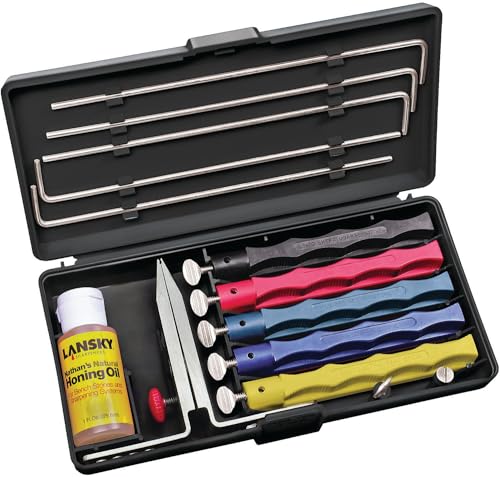
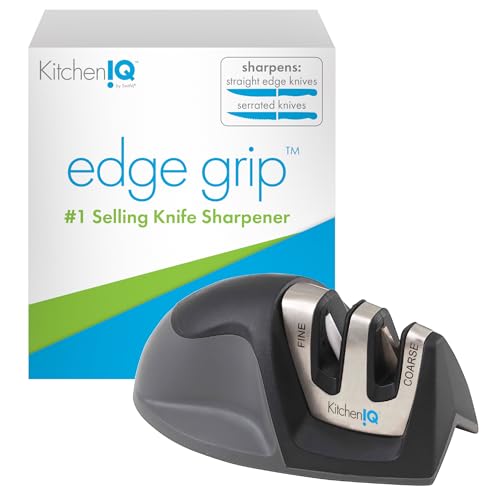
The Lansky Deluxe 5-Stone Sharpening System is our top pick for Whetstone Knife Sharpeners. It offers excellent performance for Whetstone Knife Sharpeners. For budget shoppers, the KitchenIQ 50009 Edge Grip 2-Stage Knife Sharpener offers solid value at a lower price.
See Today’s Price →At a Glance
Showing 2 of 2 products
Lansky Deluxe 5-Stone Sharpening System
“Best guided system for pocket knives — Lansky guided angle eliminates the freehand angle problem entirely. Wrong tool for kitchen knives; perfect for outdoor and folding knives.”
See Today’s Price →
KitchenIQ 50009 Edge Grip 2-Stage Knife Sharpener
“The KitchenIQ Edge Grip is the best-reviewed budget knife sharpener available. At under $9, it delivers functional sharpening results for the majority of home kitchen knives. The two-stage system cove”
See Today’s Price →What we like
- Exceptional value — the most affordable effective knife sharpener available
- Non-slip base with edge grip prevents movement during use
- Stage 1 carbide quickly restores very dull edges
- Stage 2 ceramic fine-tunes and maintains the edge
Watch out for
- Carbide stage removes more metal than necessary — not ideal for high-end knives
- Produces a functional but less refined edge than electric sharpeners
- Not suitable for serrated knives or Japanese single-bevel knives
Whetstone Knife Sharpeners (2026) Buying Guide
 Photo by HONG SON / Pexels
Whetstone vs Pull-Through Sharpener vs Electric Sharpener
Pull-through sharpeners (V-notch style) are fast but remove too much metal and create a weak edge — fine for cheap knives, damaging to good ones. Electric sharpeners are fast and consistent but use fixed angles that don't suit all knives. Whetstones take 10-20 minutes per knife but give you control over angle, grit progression, and bevel shape. For knives worth $50+, use a whetstone. For cheap stainless sets: pull-through is fine.
Grit Selection — What Grits Do You Need

120-240 grit: for severely damaged edges and chips. 400-600 grit: for dull knives that need a new edge set. 1000 grit: the workhorse — maintains a working edge, repairs moderately dull knives. 3000-6000 grit: polishing and refining after the 1000. 8000+ grit: mirror polish for Japanese knives and straight razors. Most home cooks need only 1000 and 3000-6000. A combo 1000/6000 or 1000/3000 stone covers all normal maintenance needs.
Soaking vs Splash-and-Go Stones
Traditional whetstones require 5-10 minutes soaking before use — the water prevents the stone from clogging and acts as lubricant. Splash-and-go stones only need a splash of water on the surface immediately before use — more convenient. Most beginner-friendly whetstones are splash-and-go. Japanese natural stones typically require soaking. Either works; splash-and-go is easier for occasional home use.
Sharpening Angle — The Critical Variable
Western kitchen knives (Wusthof, Henckels): 15-20 degrees per side. Japanese knives (Shun, Global, MAC): 10-15 degrees per side. Pocket knives: 15-25 degrees per side. The flatter the angle, the sharper but more fragile the edge. The steeper the angle, the more durable but less sharp. An angle guide (included with many beginner whetstones) holds your angle consistently while you develop muscle memory. After 20-30 sharpening sessions, most people sharpen freehand.
Flattening Your Stone
Whetstones dish over time — the center wears faster than the edges, creating a concave surface that creates a convex (rounded) edge on your knife. A lapping plate or flattening stone corrects this. For casual home use (sharpening once a month), flattening every 6-12 months is adequate. For frequent use, check flatness monthly. A dished stone cannot produce a flat bevel — this is the most common cause of whetstone frustration for beginners.
Related Guides

Frequently Asked Questions
What grit whetstone do I need to start sharpening knives?
How do I know the correct sharpening angle?
How often should I sharpen my kitchen knives on a whetstone?
What's the difference between a whetstone and a honing rod?
Do I need to soak a whetstone before use?
How We Analyze Products
We analyze Amazon review data — often thousands of reviews per product — to surface patterns that individual buyers miss. Our process aggregates star ratings, review counts, and buyer sentiment at scale, identifying which strengths and weaknesses appear consistently across the largest review samples available. The 97,864+ reviews analyzed on this page represent real verified-purchase feedback from Amazon buyers.
Each product earned its placement through data: total review volume, average rating, and the specific praise and complaints that repeat most often across buyers. No manufacturer paid for placement on this page. Products appear here because buyers endorsed them at scale, not because a company asked us to feature them.
We use AI to summarize review sentiment — not to fabricate opinions, but to condense what thousands of buyers actually wrote into a readable format. The pros and cons you see reflect the most common themes found in verified purchaser reviews, paraphrased for clarity. We do not claim to have accessed Reddit, YouTube, or specific publications in generating these summaries.
Prices shown reflect Amazon pricing at the time this page was last generated. Click “See Today’s Price” to get the current live price on Amazon. Read our full methodology →