Cold Brew vs French Press: Which Coffee Method Is Right for You? (2026)
French press (4-minute brew) produces bold, full-body coffee with visible oils — best for daily drinkers who want immediate results. Cold brew (12-24 hour steep) produces smooth, low-acid concentrate that lasts 2 weeks — best for sensitive stomachs and iced coffee. The Frieling USA Stainless Steel French Press ($139.95) is the benchmark for serious French press users.
At a Glance
| # | Product | Award | Price |
|---|---|---|---|
| 1 | Our Top Pick | $139.95 Buy → |
|
| 2 | Best Insulated | $144.99 Buy → |
|
| 3 | Best Modern | $135 Buy → |
|
| 4 | Best Classic | Check current price on Amazon Buy → |
|
| 5 |  Le Creuset Stoneware French Press… Le Creuset Stoneware French Press…Le Creuset |
Best Ceramic | Check current price on Amazon Buy → |
Cold Brew vs French Press Buying Guide

Cold brew and French press are both immersion brewing methods — grounds steep directly in water rather than being filtered through. That's where the similarity ends. The resulting drinks are different in flavor profile, acidity, caffeine content, and use case. Choosing between them isn't about quality; it's about matching your coffee habit.
French Press: What It Actually Does
A French press steeps ground coffee in hot water (195–205°F) for 4 minutes, then a metal mesh plunger is pressed down to separate grounds from liquid. The metal filter leaves coffee oils in the cup — unlike paper filters that absorb them. This creates a textured, full-body cup with a slight sediment at the bottom.
Flavor profile: Rich, robust, slightly bitter, with noticeable body and mouthfeel. Significantly more complex than drip coffee. Coffee geeks consider French press the best way to taste the true character of a single-origin bean — nothing is filtered out.
Caffeine: Higher than drip, similar to Aeropress. A standard 8-oz cup brewed at 1:15 ratio (1g coffee per 15ml water) contains approximately 80–100mg caffeine.
Acidity: Moderate — hot water extraction pulls acidic compounds quickly. People with acid reflux sometimes find French press harsh.
Time and cleanup: 4-minute brew, 2-minute cleanup. Grounds go in compost; rinse the plunger. No paper filters to buy.
Best grind: Coarse (like sea salt). Fine grinds pass through the metal filter and create sludge. A burr grinder set to coarse is ideal — a blade grinder produces inconsistent sizes that muddy the cup.
Equipment cost: $15–$45 for a reliable French press. Bodum Chambord ($30) and ESPRO Travel Press ($144.99) are the standards. The $144.99 Amazon basics versions work but have flimsier plunger seals. A coffee scale ($15–$25) and burr grinder ($40–$80) make the biggest quality difference — not the press itself.
Cold Brew: What It Actually Does
Cold brew steeps coarsely ground coffee in room-temperature or cold water for 12–24 hours, then filters it through a fine mesh or paper filter. The result is a highly concentrated liquid (typically 2–4x strength of regular coffee) that gets diluted before drinking. Cold brew is NOT iced coffee — iced coffee is hot-brewed coffee poured over ice, which tastes bitter and watery as it dilutes. Cold brew has its own distinct flavor.
Flavor profile: Smooth, chocolatey, low-acid, slightly sweet. The cold water extraction process pulls different compounds than hot water — less of the acidic and bitter chlorogenic acids, more of the sweeter melanoidins. Many people who "don't like coffee" enjoy cold brew.
Caffeine: Higher than French press when served as concentrate. As a standard diluted drink (1:1 or 1:2 with water or milk), similar to or slightly higher than French press. 8 oz of properly diluted cold brew: 100–150mg caffeine.
Acidity: 60–70% less acidic than hot coffee. Consistently rated better by people with acid reflux, sensitive stomachs, or GERD. This is cold brew's single biggest advantage for a meaningful segment of coffee drinkers.
Time and prep: 12–24 hours steep (mostly passive time), 5–10 minutes active setup, 2–3 minutes filtering. Once made, lasts 1–2 weeks refrigerated as concentrate. Batch brewing 1–2 times per week vs. daily brewing is the real time comparison — cold brew wins on weekly time invested for regular drinkers.
Equipment cost: $20–$60. Toddy Cold Brew System ($40) is the industry standard. OXO Good Grips Cold Brew Maker ($50) is easier to use. Mason jar + Chemex paper filter works for $5 total — not as convenient but identical result.
![French Press Vs Cold Brew Coffee Maker [2025] | What's The D](https://img.youtube.com/vi/1sdrsKsMDlQ/mqdefault.jpg)
Head-to-Head: Six Decision Criteria
1. You want coffee immediately: French press wins. 4 minutes vs. 12–24 hours for cold brew.
2. You drink multiple cups per day: Cold brew wins. Batch once, have coffee for a week. French press requires a new brew every session.
3. Acid sensitivity or GERD: Cold brew wins clearly. 60–70% less acidic is a meaningful difference — many acid-sensitive people can drink cold brew but not hot coffee.
4. You want hot coffee: French press wins for hot. Cold brew concentrate can be heated (add hot water instead of cold water when diluting) but loses some of its smoothness advantage.
5. Budget and simplicity: Tie. Both require just one piece of equipment ($20–$50). French press needs a kettle (you may already have one). Cold brew needs no heat source but requires planning ahead.
6. Best coffee flavor: Subjective. Specialty coffee enthusiasts often prefer French press for single-origin beans — the oils and full extraction reveal the bean's character. Cold brew's smoothness masks some of that complexity. For everyday drinking, cold brew's consistency is hard to beat.
Grind and Bean Selection
Both methods demand coarse grind — this is non-negotiable. Fine grounds make French press muddy and over-extract cold brew into bitterness. A burr grinder set to "coarse" (like sea salt or kosher salt texture) is the single biggest upgrade for either method.
For French press: Medium-dark and dark roasts work best — the full-body extraction amplifies roast character. Light roasts can taste underwhelming without the higher extraction temperature of pour-over.
For cold brew: Medium and dark roasts are standard — the chocolate and caramel notes translate well to cold extraction. Light roasts lose their fruity brightness in cold water and produce a thin, flat result. Ethiopian and Colombian medium-roasts are popular cold brew choices.
Ratio: French press uses 1:15 (1g coffee per 15ml water) for a standard cup. Cold brew concentrate uses 1:4 or 1:5 (1g coffee per 4–5ml water) — then dilute 1:1 or 1:2 when drinking.
What We Recommend
Buy a French press if: you want immediate hot coffee, enjoy tasting different beans, drink 1–2 cups per day, and don't have acid issues. Bodum Chambord 8-cup ($30) is the benchmark. Pair it with a burr grinder — see our best burr coffee grinders for options under $80.
Buy a cold brew maker if: you drink multiple cups daily, have acid sensitivity, prefer iced coffee in summer, or want to batch-brew and forget it. Toddy Cold Brew System ($40) or OXO Good Grips ($50) are the two top picks. See our manual coffee brewers under $50 for the full comparison. For kettle pairing with French press, see best electric kettles under $100.
Our Picks and Why
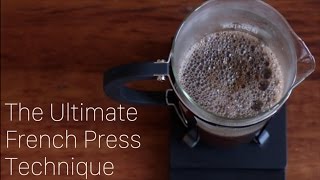
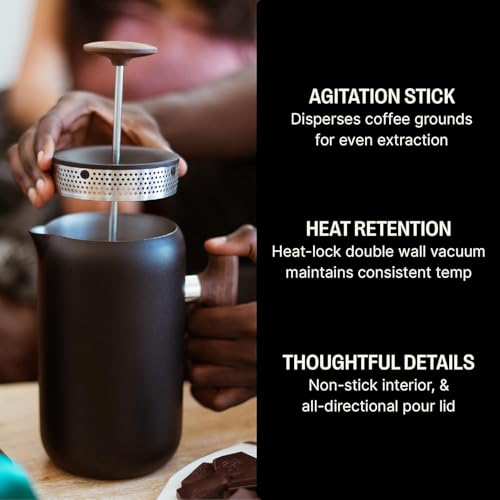
The Frieling USA Double-Walled Stainless Steel French Press ($139.95) earns the top spot for daily use — the double-wall stainless body keeps the brew hot for a second cup and survives the drops that crack a glass carafe, which is the failure point of most presses. For the cleanest cup, the Espro P7 ($144.99) is the better choice — its double micro-filter catches the fine sediment a standard mesh screen lets through, so the coffee tastes closer to filter-brewed. The Fellow Clara ($135.00) rounds out the top three as the design-forward pick: a vacuum-insulated body, a thoughtfully weighted plunger, and a brew-range marking that takes the guesswork out of your ratio.
“The Frieling USA Double-Walled Stainless Steel French Press features double-wall vacuum insulation. 4.6 stars from 1,045 Amazon reviews signal consistent reliability.”
See Today’s Price →What we like
- Double-wall vacuum insulation
- Unbreakable stainless construction
- Keeps coffee hot 60+ minutes
- Fine mesh filter
Watch out for
- Higher price
- Cannot see coffee level inside
Read Full Analysis
The Frieling USA French Press resolves the single most common failure mode of glass-bodied presses: breakage. The double-wall vacuum stainless construction handles drops and thermal shock that shatter Bodum Chambord carafes, and the same insulation that protects the carafe keeps coffee above 150°F for 60 minutes or more — eliminating the rapid cooling that makes a plunged French press undrinkable within 10-15 minutes. At $139.95, this is a press built to last decades rather than until the next kitchen shelf collision. The fine mesh filter system manages sediment as well as or better than glass alternatives. The trade-off is opacity: you cannot see the brew level or color, which removes the visual cue that many French press users rely on to judge extraction. The price sits between the Fellow Clara ($135) and Espro P7 ($144.99), both of which offer their own insulation and filtration approaches. The Frieling's case is straightforward — stainless vacuum construction at a price that undercuts glass replacements over time, with no ritual compromises in the brew process itself.

“Double-wall stainless keeps coffee hot for 2+ hours while the patented micro-filter double-filters grounds for a cleaner cup than standard French presses — the Espro P7 at $150 for coffee drinkers…”
See Today’s Price →Watch out for
- Hand-wash recommended for some parts to extend coating or surface lifespan
- Counter space commitment may be challenging in very small kitchens
“”
See Today’s Price →Watch out for
- Carafe-style machines keep coffee warm for a limited time before taste degrades
- Regular descaling maintenance is required to prevent mineral buildup

“”
See Today’s Price →Watch out for
- Carafe-style machines keep coffee warm for a limited time before taste degrades
- Regular descaling maintenance is required to prevent mineral buildup
“Enameled stoneware retains heat longer than glass and doesn't transfer metallic taste like stainless — the Le Creuset French press for coffee drinkers who prioritize flavor purity. Heavier than…”
See Today’s Price →Watch out for
- Hand-wash recommended for some parts to extend coating or surface lifespan
- Counter space commitment may be challenging in very small kitchens
Frequently Asked Questions
Is cold brew stronger than French press?
Why does cold brew taste less bitter than hot coffee?
Can I heat up cold brew?
What grind size for French press?
How long does cold brew last in the fridge?
What equipment do I need to start cold brewing?
How We Analyze Products
We analyze Amazon review data — often thousands of reviews per product — to surface patterns that individual buyers miss. Our process aggregates star ratings, review counts, and buyer sentiment at scale, identifying which strengths and weaknesses appear consistently across the largest review samples available. The 2,270+ reviews analyzed on this page represent real verified-purchase feedback from Amazon buyers.
Each product earned its placement through data: total review volume, average rating, and the specific praise and complaints that repeat most often across buyers. No manufacturer paid for placement on this page. Products appear here because buyers endorsed them at scale, not because a company asked us to feature them.
We use AI to summarize review sentiment — not to fabricate opinions, but to condense what thousands of buyers actually wrote into a readable format. The pros and cons you see reflect the most common themes found in verified purchaser reviews, paraphrased for clarity. We do not claim to have accessed Reddit, YouTube, or specific publications in generating these summaries.
Prices shown reflect Amazon pricing at the time this page was last generated. Click “See Today’s Price” to get the current live price on Amazon. Read our full methodology →