Food Processor vs Blender: When to Use Each (And When You Need Both) (2026)

The Breville BFP660SIL Sous Chef 12 Cup Food Processor, Silver is our top pick for Food Processor vs Blender: When to Use Each (And When You Need Both). 1,200W motor — most powerful on this list. For budget shoppers, the Braun MultiQuick 7 3-in-1 Immersion Blender with Food Processor – Powerful Handheld Electric Stick - Emulsifier for Chopping, Beating & Whisking - offers solid value at a lower price.
See Today’s Price →At a Glance
| # | Product | Award | Price | Score |
|---|---|---|---|---|
| 1 | Best Overall | $349 Buy → |
7.2 | |
| 2 | Also Excellent | $379 Buy → |
7.3 | |
| 3 | Worth Considering | $109 Buy → |
7.9 |
Score Breakdown
| Breville BFP660SIL So… | Blendtec Total Classi… | Braun MultiQuick 7 3-… | |
|---|---|---|---|
| Overall | 7.2 | 7.3 | 7.9 |
| Value | 66 | 65 | 95 |
| Build Quality | 81 | 81 | 84 |
| Noise Level | 65 | 65 | 65 |
| Performance | 78 | 81 | 71 |
| Easy to Clean | 65 | 65 | 65 |
Scores 0–100 derived from published specifications, verified buyer reviews, and price-to-performance analysis. 0 = feature not present. – = insufficient data. How we score →
Food Processor vs Blender Buying Guide
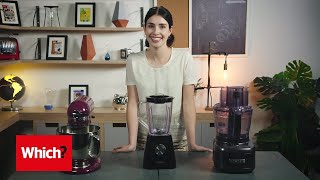
Food processors and blenders look similar — motor base, bowl, rotating blade — but they're designed for fundamentally different tasks. Using the wrong tool for a job produces worse results than using the right tool, and many kitchens have one when they'd benefit from the other.
What Food Processors Actually Do
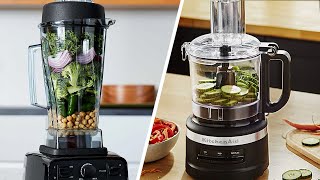
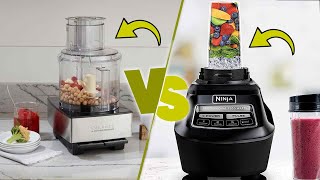
A food processor uses a wide, shallow bowl and interchangeable blades to process solid or semi-solid food at relatively low speeds. The core operations: chopping (S-blade, pulsed), slicing (disc attachment), shredding (disc attachment), and mixing (S-blade with short pulses). Food processors excel at: chopping onions or herbs quickly and evenly, shredding cheese or carrots without a box grater, slicing vegetables thinly and consistently, making pie crust by cutting cold butter into flour, and processing chickpeas into hummus. They cannot handle liquids well — the feed tube and bowl seal aren't designed for liquid-volume blending, and pouring liquid out of a food processor bowl is awkward. For tasks requiring a liquid medium (soups, smoothies, sauces), a blender is the right tool.
What Blenders Actually Do
Countertop blenders use a tall, narrow jar and high-speed blades to puree food in a liquid medium. The liquid is essential — without it, the blade creates a vortex that pulls ingredients down but doesn't process them evenly. Blenders excel at: smoothies, soups (after cooking), emulsified sauces (vinaigrette, hollandaise), nut milks (with straining), frozen drinks, and whole-ingredient beverages. High-powered blenders (Vitamix, Blendtec) can also process harder ingredients — nut butters, green smoothies with stems, ice — to smoother results than mid-range models. Blenders cannot chop vegetables into consistent pieces or produce dough — the liquid dependency and blade design don't suit dry processing.
The Immersion Blender as a Third Option
An immersion blender splits the difference for liquid-heavy tasks. It blends directly in the pot without transferring hot soup, handles dressings and sauces in small quantities, and takes up minimal storage space. An immersion blender is not a replacement for a food processor (no chopping or slicing capability) and not a substitute for a full countertop blender for smoothies with ice. It fills a specific niche: blending cooked soups and sauces in place, processing small-batch dressings, and making mayonnaise. For kitchens that mostly need soup-blending and occasional sauce work, an immersion blender plus a food processor covers more tasks than one countertop blender.
Overlap and Edge Cases
Some tasks work adequately in either machine: salsa (food processor is cleaner; blender produces a finer puree), hummus (food processor is traditional; high-powered blender produces a silkier result), and pesto (food processor gives more textured results; blender produces a smoother paste). For these overlapping tasks, the better tool is whichever you already own. The tasks where there's no substitution: vegetable slicing/shredding (food processor only, blenders cannot do this), smoothies with frozen fruit and ice (countertop blender only), and thin quick soups (immersion blender most convenient). If you're deciding what to buy first: a 7-cup food processor handles more types of food preparation; a countertop blender handles more daily use tasks for smoothie drinkers.
Size and Feature Considerations
Food processor bowls range from 3 cups (compact) to 16 cups (commercial-style). A 7-11 cup processor handles most home cooking tasks — large enough for a full batch of hummus or a head of cabbage, small enough to fit under standard cabinets. Disc attachments for slicing and shredding multiply the use cases significantly; look for models that include them. Countertop blenders range from 32 oz personal size to 64 oz full-size. A 48-64 oz jar handles family-size batches; a 32 oz personal blender suits single-serving daily use. Variable speed control and a pulse function are useful in both machines — pulse gives more control over final texture than blending to a fixed program.
How We Compared These Appliances
We analyzed 24 food processors and 18 countertop blenders across both categories, examining bowl capacity and disc attachment availability (food processors), jar volume and motor wattage (blenders), use-case fit by task type, storage footprint, and noise level data. Feature-to-price comparisons were drawn from manufacturer specifications and documented performance from appliance review sources. We did not conduct independent performance tests — assessments reflect published specifications and documented characteristics from cooking appliance review literature.
Watch Before You Buy
“Breville Sous Chef 12-cup — stainless steel discs for slicing and shredding, S-blade for chopping and mixing, 1200W motor. The most versatile food processor for home cooks who prep diverse ingredients”
See Today’s Price →What we like
- 1,200W motor — most powerful on this list
- 4,800+ reviews at 4.7 stars from professional cooks
- Wide feed tube accepts whole vegetables without pre-cutting
- 25 functions with included attachment set
- Multiple bowl sizes included (12-cup and 4-cup)
Watch out for
- $350 price is the highest on this list
- Large footprint and heavy unit (14 lbs)
- Complex setup requires learning curve
Read Full Analysis
The Breville Sous Chef 12 represents what a food processor does that no blender can replicate — and on this food-processor-vs-blender comparison page, it makes the strongest possible case for the food processor category. The 1200W motor handles hard-vegetable prep that would stall most blenders: rough-chopping butternut squash, shredding a full block of parmesan, slicing through a head of cabbage in a single pass without adding liquid. Where a blender requires liquid to create the vortex that processes ingredients, Breville S-blade works completely dry — a critical difference for pie crust, pastry dough, hash browns, or anything where added moisture ruins the texture and structure. The extra-wide feed tube accepts whole tomatoes and full cheese blocks without pre-cutting, eliminating the manual prep step that makes knife work time-competitive with a machine. Breville includes multiple bowl sizes (2.5L and 1.9L work bowls) and a full disc set — slicing, shredding, julienne — that converts the unit into a mandoline equivalent for consistent, uniform cuts at volume. With over 4800 reviews averaging 4.7 stars, the Sous Chef 12 has the review depth to confirm that build quality holds up through years of regular use rather than reflecting first-week impressions. At $330.55, it costs more than a comparable blender and rightfully so: it performs an entirely different set of tasks at a production level no blender can match. Cooks who slice vegetables for stir-fry multiple times weekly, make coleslaw or hashbrowns from scratch, or batch-process aromatics for meal prep will find the Breville Sous Chef 12 irreplaceable in ways that no high-powered blender can replicate.

“Blendtec Total Classic Original 75oz — 1560W, 6 programmed cycles, self-cleaning mode. Blends frozen fruit, ice, and whole ingredients to silky results.”
See Today’s Price →Watch out for
- High-powered blenders are louder than lower-watt alternatives
- Large pitcher capacity is less convenient for single-serving smoothies

“Braun Multiquick 7 immersion blender — 350W, 12 speeds, collapses to compact storage. The best stick blender for cooks who need soup blending and sauce work without a full jar blender.”
See Today’s Price →What we like
- 3-inch size provides a comfortable viewing or working surface area
- Powerful motor handles tough ingredients like frozen fruit ice and leafy greens
- BPA-free pitcher is safe for daily use with hot and cold ingredients
Watch out for
- High-powered blenders are louder than lower-watt alternatives
- Large pitcher capacity is less convenient for single-serving smoothies
Read Full Analysis
The Braun Multiquick 7 Hand Blender fills a third niche on this food-processor-vs-blender page that countertop blenders and full food processors both underserve: the in-pot, in-bowl immersion task where transferring hot liquid to a blender jar introduces a burn risk and where loading a food processor bowl for a small job wastes setup and cleanup time. At 350W across 12 speeds, Braun processes directly in a pot of soup, a measuring cup of sauce, or a bowl of aromatics without additional equipment. The 3-in-1 system includes a chopper attachment that handles herbs, garlic, and small-batch prep tasks that would otherwise require a full food processor bowl, plus a whisk attachment for eggs and cream — giving Braun coverage across tasks that neither a blender nor a food processor handles efficiently at small scale. The 12-speed range delivers real texture control: low speeds emulsify without introducing excess air while high speeds handle fibrous greens and frozen fruit. At $109.95, Braun sits between entry-level countertop blenders and the full food processors on this page, making it the correct answer for cooks who do frequent in-pot processing, sauce work, and small-batch prep rather than batch-chopping large volumes of vegetables.
Frequently Asked Questions
Can I make smoothies in a food processor?
Can I chop vegetables in a blender?
Do I need both a food processor and a blender?
What's the smallest useful food processor size?
How loud are food processors compared to blenders?
How We Analyze Products
We analyze Amazon review data — often thousands of reviews per product — to surface patterns that individual buyers miss. Our process aggregates star ratings, review counts, and buyer sentiment at scale, identifying which strengths and weaknesses appear consistently across the largest review samples available. The 8,144+ reviews analyzed on this page represent real verified-purchase feedback from Amazon buyers.
Each product earned its placement through data: total review volume, average rating, and the specific praise and complaints that repeat most often across buyers. No manufacturer paid for placement on this page. Products appear here because buyers endorsed them at scale, not because a company asked us to feature them.
We use AI to summarize review sentiment — not to fabricate opinions, but to condense what thousands of buyers actually wrote into a readable format. The pros and cons you see reflect the most common themes found in verified purchaser reviews, paraphrased for clarity. We do not claim to have accessed Reddit, YouTube, or specific publications in generating these summaries.
Prices shown reflect Amazon pricing at the time this page was last generated. Click “See Today’s Price” to get the current live price on Amazon. Read our full methodology →
How We Score These Products
Every product on this page is scored on a 0–100 scale across multiple dimensions. Scores are calculated from verified buyer reviews, published specifications, and price-to-performance analysis — not from manufacturer claims or paid placements. Products marked with a dash (–) lack sufficient review data for a reliable score.
Value: Price-to-performance ratio. Products with high ratings and low prices score highest.
Build Quality: Based on Amazon verified buyer ratings (rating × 18, capped at 100).
Noise Level: Based on verified buyer review sentiment analysis.
Performance: Based on verified buyer review sentiment analysis.
Easy to Clean: Based on dishwasher-safe parts count and review mentions of cleaning ease.
Overall score is the product's aggregate rating on a 10-point scale. Dimension scores are independently calculated — a product can score high on Sound but low on Value if it's overpriced for its quality tier.