How to Choose a Cutting Board: 2026 Complete Guide
Wood for knife edges, plastic for raw meat and the dishwasher — most kitchens want one of each. For the wooden board the Sonder Los Angeles Alfred Cutting Board ($169.95) is the premium pick here, made in the USA and thick enough to last.
At a Glance
| # | Product | Award | Price |
|---|---|---|---|
| 1 |  Sonder Los Angeles Alfred Cutting… Sonder Los Angeles Alfred Cutting…Sonder Los Angeles |
Best Design | $179.99 Buy → |
| 2 |  Farberware Build-A-Board Bamboo C… Farberware Build-A-Board Bamboo C…Farberware |
Also Excellent | $19.99 Buy → |
| 3 |  GORILLA GRIP BPA-Free Reversible … GORILLA GRIP BPA-Free Reversible …Gorilla Grip |
Best Plastic | Check current price on Amazon Buy → |
How to Choose a Cutting Board: Buying Guide
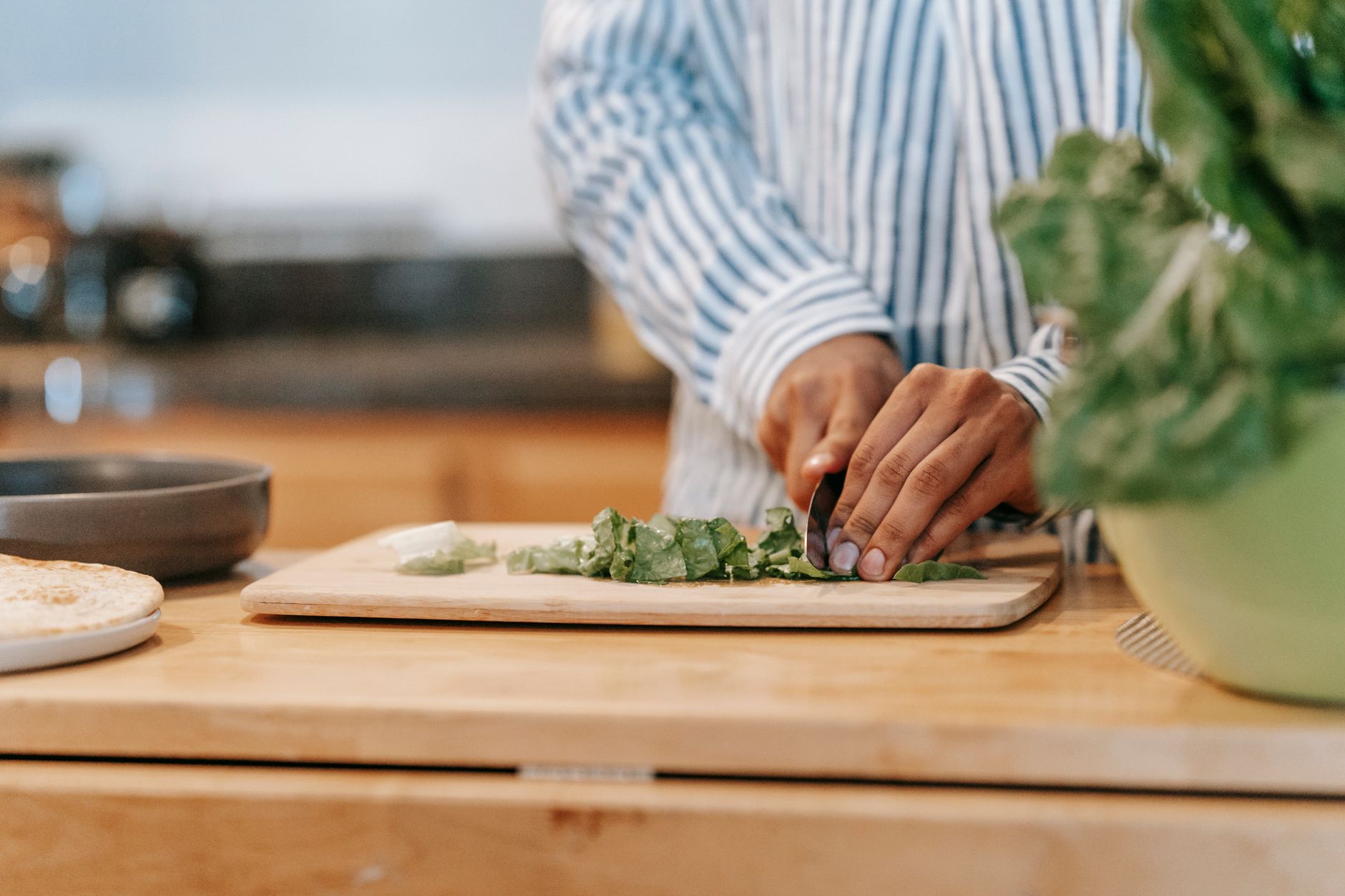 Photo by Michael Burrows / Pexels
The cutting board is the most knife-contact surface in your kitchen, which makes material selection a knife-health decision as much as a cutting board decision. The wrong material doesn't just wear faster — it actively dulls your knives with every stroke, compounding into wasted sharpening sessions and shorter knife lifespans.
Material Comparison: What Actually Happens at the Blade Level
Hard maple (the benchmark): The standard against which other materials are measured. Janka hardness rating of 1,450 lbf — firm enough to resist deep grooves that harbor bacteria, soft enough to not deflect knife edges on contact. The wood grain closes slightly after each cut, partially self-sealing the surface. FDA-approved food contact surface. Requires monthly mineral oil maintenance. Price: $25-80 for quality boards (Boos, OXO, Teakhaus).
Walnut: Janka hardness 1,010 lbf — softer than maple, gentler on knife edges. Beautiful darker color. Slightly more expensive than maple for comparable quality. The softer surface means knife marks appear more quickly, but the lower hardness is easier on fine Japanese knives with thinner, harder blades.
Bamboo: Not wood — it's a grass pressed into boards. Janka equivalent around 1,380-3,000 lbf depending on processing. Significantly harder than maple in most commercial bamboo boards, which makes it harder on knife edges. A $20 bamboo board will dull a quality knife 30-40% faster than a maple board of the same price. Bamboo is sustainable and affordable, but "harder = more durable" doesn't mean "better for knives."
HDPE plastic (high-density polyethylene): The professional food service standard. NSF/FDA certified, dishwasher-safe at 140°F which sanitizes effectively. Knife-friendly surface similar to wood at equivalent hardness. Does develop knife grooves over time — replace when grooves become visibly deep (bacteria harbor in grooves). Price: $15-40. Color-coding systems (red = raw meat, yellow = poultry, green = produce) are a food safety best practice used in commercial kitchens.
Glass/marble/ceramic: The kitchen counter displayed surface that should never be cut on. Hardness of 6-7 on Mohs scale vs steel knives at 5.5-6.5. A glass board literally chips microscopic ceramic particles off the knife edge with every stroke — dulling in one session what would take months on wood. Glass boards also slip dangerously. They exist for display and bread serving, not cutting. Never cut on these.
Edge Grain vs End Grain vs Face Grain
Edge grain (the side/long grain — wood fibers run horizontally along the board length): Most common, most affordable. The knife cuts across the grain fibers. Durable surface, resistant to warping. A well-oiled 1-1.5 inch thick edge grain maple board is appropriate for 90% of home cooking tasks. $30-80 for quality boards.
End grain (the top of the wood — grain fibers run vertically, visible as rings): The premium cutting board design. When you cut into end grain, the knife slips between the wood fibers rather than cutting across them. The fibers spring back after each cut — genuinely self-healing at the surface level. This means end grain boards maintain a smoother surface longer, are gentler on knife edges, and have a distinctive checkerboard appearance. Significantly more expensive to manufacture ($80-300+ for quality end grain). End grain boards also need more oil maintenance and are heavier. For serious home cooks who use knives extensively: end grain is worth the investment.
Face grain (the widest flat face of the wood): The least expensive but most prone to warping and splitting. Face grain boards are cut from a single wide plank — moisture affects the wide grain unevenly. Not recommended for kitchen use; used in charcuterie boards where they look beautiful but won't be heavily cut on.
Size and Thickness
The most common mistake: boards too small for the task. Chopping large vegetables, breaking down a whole chicken, or slicing a baguette requires room for the food plus the knife motion. Minimum sizes by use:
Everyday chopping: 10x14 inches minimum (most people use 12x18)
Meat carving/breaking down poultry: 16x20 inches minimum
Baking (rolling dough): 18x24 inches
Multiple ingredients at once: 18x24+ inches
Thickness: 1 inch is standard. 1.5 inches is better — heavier (stays in place during cutting), more material to resurface over time. 2 inches or more for carving boards — the added depth catches juices and provides stability for larger cuts. Never buy a board under 3/4 inch thick — they warp easily and flex during cutting.
Food Safety: Wood vs Plastic Debate Resolved
Decades of food safety concern suggested plastic was safer than wood because it can be sanitized in a dishwasher. Research from UC Davis (Dean Cliver, 1990s, confirmed by subsequent studies) found that new plastic boards harbor bacteria in knife grooves and are extremely difficult to sanitize after grooves appear. Wood's natural antimicrobial properties (phenolic compounds in hardwoods, especially maple) inhibit bacterial survival — bacteria drawn into wood grain die quickly as the wood dries, while they survive in plastic grooves. The practical guidance: both materials are safe when properly maintained. Replace plastic boards when grooves appear. Oil wood boards monthly. Both surfaces should be sanitized with 1 tablespoon bleach per gallon of water after raw meat contact (don't soak wood — wipe, then dry immediately).
Care: The Maintenance That Extends Board Life
Wood boards: Never dishwasher — the high-heat water cycle causes splitting and warping within 1-2 washes. Hand wash with hot soapy water, dry immediately (standing upright, never flat on a wet surface). Monthly oil with food-grade mineral oil or a beeswax/mineral oil board cream. Signs the board needs oil: white, dry-looking surface; water doesn't bead. An oiled board surface makes water bead and roll off. Boos Board Cream ($10-15) is the industry standard conditioner.
Plastic boards: Dishwasher-safe (140°F cycle sanitizes effectively). When knife grooves become deep (can trap fingernails), replace the board — deep grooves harbor bacteria that dishwashers can't reliably reach.
What We Recommend
For most home cooks: a 12x18-inch John Boos maple edge-grain board ($50-70, 1.5-inch thick) — the industry standard home board for 50+ years. For knife enthusiasts with Japanese knives: walnut edge grain or end grain ($80-150) for maximum knife-friendliness. Budget option: OXO Good Grips polypropylene board ($20-30) — dishwasher-safe, NSF certified, rubber feet, and adequate surface for daily use. See our best cutting boards and best chef knives for specific recommendations.
Common Mistakes to Avoid
Using a glass or marble board — ruins knife edges in one session. Buying a board too small — the most common purchase regret; buy 2 sizes larger than you think you need. Machine-washing wood boards — causes irreversible warping within 1-2 cycles. Not oiling regularly — dry wood cracks and harbors bacteria in the cracks. Not using a damp cloth or grip mat under the board — a sliding cutting board during knife use is a safety hazard.
Watch Before You Buy
“Teak or acacia wood board designed to double as a serving board for charcuterie and cheese — the Sonder Los Angeles Alfred for kitchens where the cutting board stays on the counter as part of the…”
See Today’s Price →What we like
- Integrated colander slides out from the board end to collect vegetable trimmings directly during prep without a separate bowl
- Non-slip rubber feet keep the board stationary on wet countertops without a damp cloth underneath
- Food-safe acacia wood surface has a warmer visual tone than maple or plastic for open-kitchen settings
Watch out for
- No current price listed — verify before purchasing
- Acacia requires careful hand-washing and regular oiling — not dishwasher safe despite its hardwood surface
Read Full Analysis
The Sonder Los Angeles Alfred earns its "Best Design" placement through a genuinely useful feature that separates it from standard wood boards: an integrated colander that slides out from one end of the board. During vegetable prep, trimmings collect directly in the colander as you chop — no reaching for a separate bowl or sweeping scraps across the counter. It's a workflow improvement that becomes second nature quickly once you've used it. The acacia wood surface doubles as a serving board in a way that maple or plastic boards cannot. The wood grain pattern and warm tones make it a presentable charcuterie and cheese platform that goes from prep surface to table without looking utilitarian. The non-slip rubber feet are a meaningful detail: acacia boards tend to slide on wet countertops, and having feet integrated rather than requiring a damp cloth underneath simplifies setup. The practical limitations match what you'd expect from an acacia board. It requires hand washing and regular oiling — dishwasher exposure warps wood boards quickly regardless of species. The acacia is slightly softer than maple, so it will show knife marks more visibly over time. Compared to the John Boos at rank 1, the Alfred trades long-term cutting durability for design versatility and the colander feature. For kitchens where the cutting board stays on the counter as part of the visual space and does double duty for entertaining, the Alfred's design justification holds. For high-volume cutting in a working kitchen, the John Boos is the more durable call.
“The Farberware "Build a Board" is an all-in-one solution for food prep and presentation. 4.6 stars from 1,697 Amazon reviews signal consistent reliability.”
See Today’s Price →What we like
- The Farberware "Build a Board" is an all-in-one solution for food prep and presentation
- Arrange cheeses, fruits, nuts, and meats in the compartments to create personalized, eye-catching displays
- More than just a cutting board, this product adds elegance to any event
- The clear locking lid offers an extra layer of protection, ensuring your food stays fresh and secure during
Watch out for
- Budget pricing may reflect simpler construction or fewer premium features
- Hand-wash recommended for some parts to extend coating or surface lifespan
Read Full Analysis
At $19.99, the Farberware Build-a-Board is the accessible entry point on this page, and its 4.6-star rating from nearly 1,700 Amazon reviews confirms it consistently delivers on what it promises. The "Build a Board" concept is essentially a sectioned presentation and prep system: compartments organize cheeses, fruits, and charcuterie, and the clear locking lid lets you prep a board ahead of time, seal it, and refrigerate until guests arrive — a genuinely practical feature for entertaining. As a daily cutting board, it functions but competes against the wood options with a different value proposition. The plastic or composite construction is dishwasher-safe and lower maintenance than the John Boos or Sonder Alfred — no oiling required, and no concern about warping from moisture. The tradeoff is tactile feedback: knife edges hit harder surfaces differently than wood, and heavy daily chopping will show marks more visibly over time. The realistic use case is a second board or a dedicated entertaining platform rather than the primary cutting surface in an active kitchen. For buyers who want something functional at a price that doesn't require a commitment — or who want the presentation compartments for hosting — the Farberware earns its Best Value designation. For a primary cutting board with long-term durability as the priority, the John Boos at rank 1 is worth the price difference.
“Non-slip rubberized edges keep the board stationary during active chopping — the Gorilla Grip for raw meat prep where dishwasher sanitizing between uses is necessary. White surface shows…”
See Today’s Price →What we like
- High-density polyethylene surface is dishwasher safe for full sanitization after raw meat prep
- Non-porous plastic does not absorb bacteria, odors, or stains the way wood surfaces accumulate over time
- White color makes staining and discoloration immediately visible so contamination is not hidden below the surface
Watch out for
- No current price listed — verify before purchasing
- Plastic boards dull knife edges faster than wood over extended use — blades require more frequent sharpening
Read Full Analysis
The Gorilla Grip earns the "Best Plastic" designation by addressing the primary argument for plastic over wood: sanitization certainty. High-density polyethylene is non-porous, meaning bacteria from raw chicken or ground beef cannot embed below the surface the way they can in wood grain that develops micro-cuts over time. Dishwasher-safe construction takes this further — the high-heat wash cycle fully sanitizes the board between uses in a way that hand-washing wood boards cannot reliably replicate. The white color is a deliberate food safety choice rather than aesthetics. White surfaces make staining, discoloration, and contamination immediately visible — a board that has absorbed residue from raw proteins shows it clearly, signaling when replacement is warranted. Dedicated raw meat prep boards should be visually distinct from produce boards, and white HDPE achieves this without requiring a labeling system. The rubberized grip edges keep the board stationary on wet countertops during active chopping. The honest limitation is knife care. Plastic boards are harder on blade edges than end-grain wood — knives require more frequent honing and sharpening in kitchens where the primary cutting surface is plastic. For raw protein prep specifically, where the board goes straight into the dishwasher after use, this tradeoff makes practical sense. For daily vegetable prep and bread slicing where knife care is the priority, the John Boos at rank 1 or the Kooq bamboo at rank 4 are better choices. The Gorilla Grip works best as the dedicated raw-protein board in a two-board kitchen setup.
Frequently Asked Questions
Is wood or plastic better for a cutting board?
What is the difference between edge grain and end grain cutting boards?
Can I put a wooden cutting board in the dishwasher?
Why does bamboo cutting board dull knives?
How do I sanitize a wooden cutting board after cutting raw meat?
What size cutting board do I need?
How We Analyze Products
We analyze Amazon review data — often thousands of reviews per product — to surface patterns that individual buyers miss. Our process aggregates star ratings, review counts, and buyer sentiment at scale, identifying which strengths and weaknesses appear consistently across the largest review samples available. The 3,225+ reviews analyzed on this page represent real verified-purchase feedback from Amazon buyers.
Each product earned its placement through data: total review volume, average rating, and the specific praise and complaints that repeat most often across buyers. No manufacturer paid for placement on this page. Products appear here because buyers endorsed them at scale, not because a company asked us to feature them.
We use AI to summarize review sentiment — not to fabricate opinions, but to condense what thousands of buyers actually wrote into a readable format. The pros and cons you see reflect the most common themes found in verified purchaser reviews, paraphrased for clarity. We do not claim to have accessed Reddit, YouTube, or specific publications in generating these summaries.
Prices shown reflect Amazon pricing at the time this page was last generated. Click “See Today’s Price” to get the current live price on Amazon. Read our full methodology →