How to Choose a Food Processor: Size, Motor & Blades Explained (2026)
The Breville Sous Chef 16 Pro Food Processor (check current price) is the top pick here — 16-cup bowl with a 1,200-watt motor handles bread dough, nut butters, and large-batch prep without stalling at the performance ceiling before commercial grade.
At a Glance
| # | Product | Award | Price |
|---|---|---|---|
| 1 | Best Pro | $99.97 Buy → |
|
| 2 |  KitchenAid KFP1133WH 11-Cup Food … KitchenAid KFP1133WH 11-Cup Food …KitchenAid |
Best Mid-Range | $129.99 Buy → |
| 3 |  Cuisinart DLC-2009MRY Cuisinart D… Cuisinart DLC-2009MRY Cuisinart D…Cuisinart |
Best Compact | $199.95 Buy → |
| 4 | 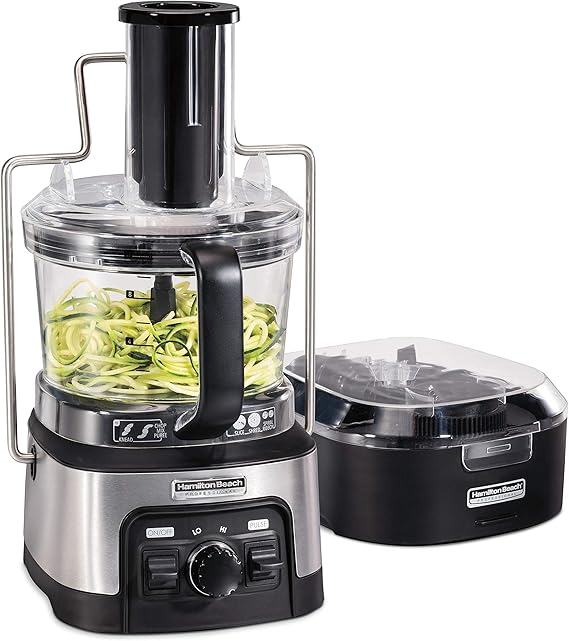 Hamilton Beach Professional Stack… Hamilton Beach Professional Stack…Hamilton Beach Professional |
Best Spiralizer | $160.20 Buy → |
How to Choose a Food Processor Buying Guide
 Photo by Yaroslav Shuraev / Pexels
A food processor is one of the most misunderstood kitchen appliances. Buyers either underestimate what it can do (buying a cheap 3-cup mini for tasks that need a full-size machine) or overestimate how often they will use it (buying an 11-cup model that sits unused because setup and cleanup feels like too much work for a small job). Getting this right requires matching the machine to your actual cooking habits.
Bowl Size: The Spec That Drives Everything
Food processor capacity is measured in cups -- the size of the work bowl. This number determines what tasks the machine can handle and whether it is practical for your household. 3-4 cup (mini choppers): excellent for small tasks -- mincing garlic, chopping nuts, making small amounts of pesto or vinaigrette. Not suitable for dough, shredding, or slicing. Appropriate for 1-2 person households who want a quick chopper. 7-9 cup (medium): handles most standard recipes for 2-4 people. Makes pie dough, hummus, salsa, shredded vegetables. Some tasks (large batches of soup, full recipe amounts of bread dough) may require multiple runs. 11-14 cup (full-size): the standard for family cooking. Handles full-batch doughs, large amounts of slicing and shredding, and continuous-feed tasks. Appropriate for households of 4+ or anyone who uses the food processor several times per week. Over 14 cups: commercial or prosumer machines. Only necessary for very high-volume cooking or specific tasks like processing meat.
Important: the working capacity is typically 2/3 of the listed capacity when processing wet ingredients or doughs. An 11-cup processor handles roughly 7 cups of liquid-containing mixtures before overflow or processing problems occur.

Motor Power: When It Matters and When It Does Not
Food processor motors are rated in watts or horsepower. For chopping, pureeing, and slicing: any motor above 400 watts handles these tasks adequately. Motor power becomes critical for: bread and pizza dough (requires 700+ watts to work through thick, stiff dough without straining), nut butters (very dense task), continuous high-volume use, and hard vegetables like raw beets or butternut squash. For a home cook who makes hummus, salsa, and occasional pie dough: a 500-600 watt motor is sufficient. For a regular bread baker or someone making nut butters frequently: 700-1,000+ watts makes a real difference in longevity and performance.
Blade and Disc Attachments: What Comes Standard vs What You Add
Standard with almost every food processor: S-blade (the main processing blade for chopping, pureeing, mixing), slicing disc, shredding disc. These three handle the majority of food processor tasks. Additional attachments that add real value: julienne disc (for stir-fry prep and matchstick cuts), dough blade (specifically designed for bread and pastry dough -- works better than the S-blade for kneading), and a fine shredding disc (for hard cheeses and fine vegetable shreds). Attachments that sound useful but see limited real-world use: citrus juicer disc, whisk attachment (a hand mixer does this better), and ultra-specialized pasta or ice cream attachments. When comparing models, focus on the quality of the three standard attachments over the quantity of add-ons included.
Feed Tube Size: Continuous-Feed Tasks
The feed tube is the opening through which you push food while the machine runs for slicing and shredding tasks. A wide-mouth feed tube (3+ inches) lets you feed whole or halved vegetables and cheeses without pre-cutting. A narrow feed tube requires cutting everything into smaller pieces first -- adding significant prep time. Wide-mouth feed tubes are a meaningful convenience upgrade for anyone who shreds cheese, slices cucumbers, or processes large root vegetables regularly. Check whether the model you are considering has a mini feed tube inside the main tube -- this allows processing small items like cherry tomatoes without them bouncing around.

Budget Guide: What Each Tier Delivers
Under $50: basic mini choppers and entry-level full-size machines. Adequate for occasional light use. Thin plastic parts, limited blade quality, shorter motor life under regular use. $50-100: reliable mid-range machines from Cuisinart and Hamilton Beach. The Cuisinart DFP-14BCWN (14-cup) in this range is the most widely recommended workhorse. Good blade quality, adequate motor for most tasks. $100-200: improved motor power, wider feed tubes, sturdier build quality. Appropriate for daily users. $200-400: prosumer machines (Breville Sous Chef, Cuisinart Elite). Significantly heavier motors, commercial-grade blades, and bowl construction. Worth it for serious home cooks who process large volumes regularly.
How We Researched Food Processor Recommendations
We evaluated food processors across motor performance under sustained load, bowl capacity accuracy versus advertised size, blade sharpness consistency over time, and ease of disassembly and cleaning, cross-referencing with kitchen equipment publications and long-term owner reviews on reliability at 1-3 years of regular use. Picks at each price tier were selected for the combination of motor durability and blade quality that holds up under real cooking workloads.
Watch Before You Buy

“1200W output delivers substantial power for demanding tasks. Best suited for value-focused buyers: home cooks who want reliable everyday kitchen performance from a practical well-built appliance.”
See Today’s Price →What we like
- 1200W output delivers substantial power for demanding tasks
- Easy to clean with dishwasher-safe or wipe-down components
- Compact countertop footprint fits most kitchen sizes
Watch out for
- Hand-wash recommended for some parts to extend coating or surface lifespan
- Counter space commitment may be challenging in very small kitchens
“ExactSlice lever adjusts slicing thickness on the fly while the machine runs — the KitchenAid 11-Cup for home cooks who want variable slices without stopping to change the disc. 11-cup bowl handles…”
See Today’s Price →What we like
- ExactSlice lever on the side of the bowl adjusts slice thickness from thin to thick without stopping to swap discs
- 11-cup bowl is a practical family size — large enough for most recipes without the footprint of a 16-cup machine
- KitchenAid wide dealer network makes replacement bowls, blades, and accessories easy to source anywhere
Watch out for
- No current price listed — KFP1133 typically retails in the $200-270 range
- BestReviews rating source is not an independent lab test — verify performance claims against user review data before purchasing
“9-cup processing bowl handles large batches of dough, slaws, and hummus. Best suited for home cooks who want reliable everyday kitchen performance.”
See Today’s Price →What we like
- 9-cup processing bowl handles large batches of dough, slaws, and hummus
- Stainless steel slicing and shredding discs produce uniform results quickly
- Easy-clean design has fewer parts than competitors — fully dishwasher-safe
- SealTight Advantage system activates only when the bowl is properly locked
Watch out for
- 9-cup bowl occupies significant counter space — not for small kitchens
- Motor can bog down on very dense root vegetables — use smaller batches
“Includes a spiralizing disc for vegetable noodles alongside standard slicing and shredding attachments — the Hamilton Beach Spiralizing for households that make zucchini noodles and carrot spirals…”
See Today’s Price →What we like
- Spiralizer attachment transforms zucchini, beets, and cucumbers into vegetable noodles without purchasing a separate gadget
- Stack and Snap bowl assembly requires no twisting or locking — faster and simpler setup than most competitors
- Professional model includes a larger bowl and higher wattage than standard Hamilton Beach food processors in the line
Watch out for
- No current price listed — verify current availability before purchasing
- Hamilton Beach is positioned at value pricing and does not match Breville or KitchenAid build quality at the same price point
Frequently Asked Questions
What size food processor do I need?
How much horsepower do I need in a food processor?
What is the difference between a food processor and a blender?
Is a food processor worth it for a small kitchen?
How do you clean a food processor?
Can a food processor make dough?
How We Analyze Products
We analyze Amazon review data — often thousands of reviews per product — to surface patterns that individual buyers miss. Our process aggregates star ratings, review counts, and buyer sentiment at scale, identifying which strengths and weaknesses appear consistently across the largest review samples available. The 15,957+ reviews analyzed on this page represent real verified-purchase feedback from Amazon buyers.
Each product earned its placement through data: total review volume, average rating, and the specific praise and complaints that repeat most often across buyers. No manufacturer paid for placement on this page. Products appear here because buyers endorsed them at scale, not because a company asked us to feature them.
We use AI to summarize review sentiment — not to fabricate opinions, but to condense what thousands of buyers actually wrote into a readable format. The pros and cons you see reflect the most common themes found in verified purchaser reviews, paraphrased for clarity. We do not claim to have accessed Reddit, YouTube, or specific publications in generating these summaries.
Prices shown reflect Amazon pricing at the time this page was last generated. Click “See Today’s Price” to get the current live price on Amazon. Read our full methodology →