How to Choose a Juicer: 2026 Buying Guide
For fruit-heavy juicing (apple, orange, carrot): a centrifugal juicer at $30-100 works fine. For leafy greens or juice that lasts 48-72 hours refrigerated, you need a masticating cold-press juicer at $100-400. The Breville 800JEXL Juice Fountain Elite (check current price) is the benchmark centrifugal model — 1000W motor handles hard produce without clogging.
At a Glance
| # | Product | Award | Price |
|---|---|---|---|
| 1 | Best Compact | $196.91 Buy → |
|
| 2 | Best Citrus | $49.95 Buy → |
|
| 3 |  Hamilton Beach Cold Press Mastica… Hamilton Beach Cold Press Mastica…Hamilton Beach |
Best Masticating | $113.94 Buy → |
| 4 |  Cuisinart Citrus Juicer with Cara… Cuisinart Citrus Juicer with Cara…Cuisinart |
Best Manual | $39.95 Buy → |
How to Choose a Juicer: Buying Guide
 Photo by Mateusz Feliksik / Pexels
The decision between juicer types is not about price — it's about what you plan to juice and how you'll use the juice. Both centrifugal and masticating juicers make juice, but they produce meaningfully different products from the same produce. Understanding the difference prevents a $200 purchase regret.
Centrifugal Juicers: Fast, Affordable, Best for Fruit
Centrifugal juicers work by spinning a mesh basket at 6,000-14,000 RPM to shred produce and fling juice outward through centrifugal force. They're fast (30-60 seconds for a glass of juice), loud (70-80 dB — similar to a blender), and affordable ($30-150).
What they do well: Hard fruits and vegetables with high water content — apple, carrot, beet, cucumber, celery, pineapple, citrus (with rind removed). These produce large volumes of juice quickly. The high water content and firm texture work with the spinning mechanism effectively.

What they do poorly: Leafy greens. The centrifugal mechanism struggles to extract juice from soft, fibrous leaves — it mostly shreds them and flings the fiber into the pulp container without extracting much juice. Spinach, kale, and wheatgrass extract 20-30% of their potential juice volume in a centrifugal juicer vs 80-90% in a masticating juicer. Herbs (parsley, mint) similarly extract poorly.
Oxidation and shelf life: The high-speed spinning introduces significant oxygen into the juice, accelerating oxidation. Centrifugal juice separates and degrades noticeably within 15-30 minutes. Drink immediately for best nutrition and flavor. Storing centrifugal juice overnight produces noticeable color change and nutrient loss. This isn't a health scare — the juice is still nutritious — but the difference is measurable.
Top centrifugal models: Breville Juice Fountain Plus ($150, 850W, dual-speed for soft/hard produce — the best mid-range centrifugal), Hamilton Beach Big Mouth Pro ($30-50, basic but functional for beginners), Breville Juice Fountain Cold ($113.94, cold-spin technology claims reduced oxidation with mixed evidence).

Masticating Juicers (Cold Press / Slow Juicers): Better Yield, Longer Shelf Life
Masticating juicers use a slow-turning auger (40-80 RPM) to crush and press produce against a screen, extracting juice with minimal heat or oxidation. The process takes 1-3 minutes per serving (vs 30-60 seconds centrifugal) but produces superior results on most produce types.
What they do well: Leafy greens (kale, spinach, wheatgrass, parsley, mint), soft fruits (berries, grapes — which centrifugal struggles with), citrus with pith (more bitter compounds extracted). These extractors are 20-30% more efficient on most produce — you get more juice per pound, which partially offsets the higher purchase price over time.
Juice shelf life: Masticating juice oxidizes much more slowly due to minimal air incorporation. Properly stored in an airtight container (fill to the brim, minimizing air contact), masticating juice stays fresh 48-72 hours. This enables batch juicing — juice 3-4 days of servings in one session.
Noise: 40-65 dB — quiet enough to use while others sleep nearby.
Cleanup: More parts (typically 8-15 components vs 5-8 for centrifugal) and more time-consuming cleaning (10-15 min vs 5-8 min). The screen/filter traps fine pulp and requires careful cleaning with the included brush.
Top masticating models: Omega J8006HDS ($250-280, horizontal, 30-year warranty, handles all produce types), Hurom H-AA ($350-400, vertical design, elegant, compact), Tribest Slowstar ($280-320), Aicok Slow Masticating ($100-150, budget entry point with acceptable performance).
Citrus Presses: The Third Type (Overlooked)
If you primarily juice oranges, lemons, limes, and grapefruit: a dedicated citrus press does this better than either centrifugal or masticating juicers and costs $20-80. Manual reamers work fine for 1-2 fruits. Electric citrus presses (Cuisinart CCJ-500, $30-40) handle a full bag of oranges in minutes. A masticating juicer can juice citrus with the peel removed, but a citrus press is faster and easier for this specific task.
Produce Type Decision Matrix
Choose centrifugal if you primarily juice: apples, carrots, beets, celery, cucumber, pineapple, watermelon, ginger root, citrus fruit (peeled).
Choose masticating if you primarily juice: kale, spinach, wheatgrass, parsley, mint, berries, pomegranate seeds, leafy herbs, mixed green juices, or any juice you want to batch-prepare for 2-3 days.
Choose either type if you juice: mixed fruit and veggie juices with some leafy greens — masticating gives better yield on the greens portion.

What We Recommend
Beginners juicing primarily fruit: Breville Juice Fountain Plus ($150) is the best centrifugal — dual-speed, large feed chute (accepts whole apples), easy cleanup. For green juicers and anyone who wants batch-prep capability: Omega J8006HDS ($250-280) has the best reputation for durability (30-year warranty) and handles all produce types effectively. Budget masticating entry: any Aicok or Jocuu model ($80-120) gives a taste of masticating performance before committing more. See our best citrus juicers and best blenders for adjacent buying decisions.
Common Mistakes to Avoid
Buying centrifugal for green juice — you'll get meager results and likely abandon juicing. Test your produce mix before buying: if more than 30% of your juice ingredients are leafy, buy masticating. Not accounting for cleanup time in your routine — if you skip washing the juicer after every use (allowing pulp to dry and stick), any juicer becomes a chore that gets abandoned. Pre-filling a bowl of water to soak parts immediately after juicing dramatically reduces cleaning time. Using soft produce in a centrifugal juicer — ripe bananas and avocados don't juice at all (too little water content); use a blender instead. Not alternating produce types when masticating — alternate soft (leafy) and hard (carrot, beet) produce pieces for most efficient extraction.
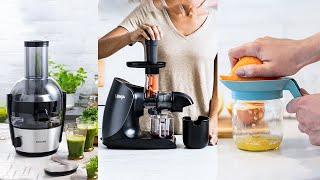
Watch Before You Buy

“”
See Today’s Price →What we like
- Omega CNC80S's compact form delivers full masticating-juicer performance in a smaller footprint
- Slow 80 RPM masticating process minimizes heat and oxidation for higher nutrient preservation
- Quieter operation than centrifugal alternatives — won't wake the household during morning juicing
- Works on leafy greens, wheatgrass, and soft fruits that centrifugal juicers struggle with
Watch out for
- Masticating process is slower — takes longer to produce the same juice volume as centrifugal
- Narrow feed chute requires more pre-cutting of produce before juicing
Read Full Analysis
The Omega CNC80S is the masticating specialist in this comparison at $196.91, and the 80 RPM slow extraction speed is the core technical differentiator from the Breville Fountain Elite centrifugal. Masticating juicers crush and press produce rather than spinning at high speed — the low RPM generates minimal heat and friction, reducing oxidation of the extracted juice and preserving more heat-sensitive enzymes and nutrients than centrifugal extraction. For users who prioritize the nutritional profile of their juice, or who regularly juice leafy greens, wheatgrass, and soft fruits that centrifugal juicers shred rather than extract cleanly, masticating is the right technology. The compact footprint is the CNC80S's design distinction within the masticating category: full-size masticating juicers are typically large countertop appliances; the CNC80S delivers comparable performance in a smaller body that does not require dedicated counter space. Quieter operation compared to centrifugal makes it practical in shared spaces and during morning routines where appliance noise matters. The trade-offs are inherent to masticating technology: the slower process produces less juice volume per unit time than a 1000W centrifugal, and the narrow feed chute requires more produce pre-cutting than the Breville's 3-inch opening. For daily juicers who prioritize nutrient preservation, cold-pressed quality, or regularly include leafy greens and wheatgrass in their routine, the $199.87 Omega is the right investment over a centrifugal option.
“Electric citrus reamer that handles oranges, grapefruits, lemons, and limes with a press-and-turn motion — the Tribest CitriStar for households that juice citrus daily and want faster results than…”
See Today’s Price →What we like
- Tribest CitriStar is purpose-built for citrus — extracts more juice from oranges than multi-purpose juicers
- Centrifugal spinning reamer handles large grapefruits and small limes equally well
- Easy-pour spout minimizes drips during serving
- Compact footprint stores in a cabinet without consuming valuable counter space
Watch out for
- Citrus-only functionality — cannot juice apples, carrots, beets, or leafy greens
- Not a substitute for a full-size juicer if you want to juice a variety of produce
Read Full Analysis
The Tribest CitriStar is the purpose-specific option in this juicer comparison — a dedicated electric citrus reamer rather than a multi-purpose juice extractor, and the right tool for households that juice citrus specifically rather than a mixed produce routine. The centrifugal spinning reamer handles the full citrus size range from small key limes to large grapefruits in the same session without swapping cones or adjusting settings. The auto-reversing cone direction extracts more juice than single-direction manual reamers by covering the full interior surface of the citrus half rather than leaving residual juice along the cone path. The easy-pour spout minimizes dripping during serving — a practical detail for a daily-use citrus juicer where drips around the machine become a cleaning maintenance issue over time. The compact footprint stores in a kitchen cabinet without consuming permanent counter space, which matters for a single-function appliance that competes with countertop real estate from coffee makers and toasters. The critical distinction from the Breville and Omega on this page: the CitriStar is citrus-only and cannot process apples, carrots, beets, ginger, or leafy greens. For households that juice a variety of produce, either multi-purpose juicer covers citrus alongside everything else, making the CitriStar redundant. For households whose entire juicing need is orange juice, fresh lemonade, grapefruit juice, or lime for cocktails — and who want faster and higher-yield results than manual squeezing — the CitriStar is the appropriate purpose-built tool at a lower price than the full extractors.
“Slow masticating auger presses juice at low RPM to preserve more vitamins and enzymes than high-speed centrifugal juicers — the Hamilton Beach masticating for health-focused juicers who prioritize…”
See Today’s Price →What we like
- Hamilton Beach 67951's masticating mechanism extracts more juice from produce than centrifugal at this price
- Slow-squeeze process preserves more vitamins and enzymes for nutritionally dense juice
- Horizontal masticating design handles a wider variety of produce including leafy greens
- Quieter than centrifugal juicers — suitable for early morning use in shared spaces
Watch out for
- Horizontal auger requires disassembly for cleaning — more parts than vertical centrifugal juicers
- Slower juice output speed means juicing larger quantities takes more time
Read Full Analysis
The Hamilton Beach 67951 brings masticating juice extraction to the most accessible price point in this comparison — below the Omega CNC80S at $196.91 while using the same slow-squeeze auger technology. The masticating mechanism crushes and presses produce at low RPM rather than spinning at high speed, generating less heat and oxidation than centrifugal juicers. For health-focused juicers motivated primarily by nutrient retention rather than extraction speed, the masticating process preserves more vitamins and enzymes per serving than centrifugal alternatives at similar or lower prices. The horizontal auger design handles produce that centrifugal juicers cannot process effectively: leafy greens, wheatgrass, kale, and spinach feed through the horizontal auger mechanism cleanly where a centrifugal spinning disc would throw them without extracting useful juice. This makes the Hamilton Beach a practical choice for vegetable-heavy juice recipes rather than purely fruit-based extraction. The trade-offs compared to the Omega CNC80S on this page are primarily build quality grade and brand specialization: Omega focuses specifically on masticating juicing equipment, while Hamilton Beach brings broad appliance brand recognition across a wide product line. Disassembly for cleaning involves more parts than a centrifugal design — inherent to the auger mechanism. For health-conscious buyers who want masticating quality at a lower price than the Omega, the Hamilton Beach 67951 is the budget entry into slow-press juicing on this page.
“Electric cone reamer for oranges, lemons, and grapefruit with flow-control spout to prevent dripping — the Cuisinart for households that make fresh citrus juice regularly and want consistent yield…”
See Today’s Price →What we like
- Cuisinart's compact citrus juicer is perfectly sized for 1-2 person households
- Auto-reversing reamer maximizes juice extraction by spinning in both directions
- Small footprint stores flat in a drawer between uses
- Affordable entry point for fresh-squeezed OJ without a full countertop appliance investment
Watch out for
- Citrus-only design cannot handle apples, vegetables, or other produce
- Small reamer size is not ideal for grapefruit — best suited for oranges, limes, and lemons
Read Full Analysis
The Cuisinart Citrus Juicer occupies a specific niche on this page: it does one thing — squeeze citrus — and does it efficiently. The auto-reversing reamer is the standout feature, spinning in alternating directions to extract every drop from oranges, lemons, and limes rather than missing the pockets between segments. That single engineering decision meaningfully increases yield compared to fixed-direction reamers, and it's the reason frequent fresh-squeezed OJ households find this earns its drawer space. Where it earns its "Best Manual" badge is simplicity and footprint. Compared to the Omega CNC80S ($196.91) or the Breville Juice Fountain, setup is zero — press fruit to reamer, juice flows through the filter cone, done. No blade assemblies, no cleaning a pulp bin, no 10-minute teardown. For households making a glass or two of OJ before work, this wins on convenience alone. The limitations are real but clearly scoped. This cannot handle apples, carrots, or leafy greens — anything requiring a masticating or centrifugal mechanism is out. The reamer diameter is sized for oranges and lemons, so grapefruit yields inconsistently depending on fruit size. If the household's juicing needs extend beyond citrus even occasionally, the Omega or Hamilton Beach masticating options on this page are the better investments. The Cuisinart makes sense for the buyer who knows exactly what they want: fast, clean, citrus-only extraction at an accessible price point.
Frequently Asked Questions
What is the difference between a centrifugal and masticating juicer?
Can I juice leafy greens in a centrifugal juicer?
How long does fresh juice last in the refrigerator?
Is a juicer or blender better for making healthy drinks?
What is the easiest juicer to clean?
How much produce does a juicer require per glass?
How We Analyze Products
We analyze Amazon review data — often thousands of reviews per product — to surface patterns that individual buyers miss. Our process aggregates star ratings, review counts, and buyer sentiment at scale, identifying which strengths and weaknesses appear consistently across the largest review samples available. The 4,720+ reviews analyzed on this page represent real verified-purchase feedback from Amazon buyers.
Each product earned its placement through data: total review volume, average rating, and the specific praise and complaints that repeat most often across buyers. No manufacturer paid for placement on this page. Products appear here because buyers endorsed them at scale, not because a company asked us to feature them.
We use AI to summarize review sentiment — not to fabricate opinions, but to condense what thousands of buyers actually wrote into a readable format. The pros and cons you see reflect the most common themes found in verified purchaser reviews, paraphrased for clarity. We do not claim to have accessed Reddit, YouTube, or specific publications in generating these summaries.
Prices shown reflect Amazon pricing at the time this page was last generated. Click “See Today’s Price” to get the current live price on Amazon. Read our full methodology →