How to Choose a Microwave: 2026 Buying Guide
For most households, a 1000-1200W microwave with inverter technology delivers true continuous power at reduced settings. The Toshiba ML4-EM09PA Countertop Microwave (check current price) is a compact 900W pick. Non-inverter models pulse full power on/off, leaving hot and cold spots.
At a Glance
| # | Product | Award | Price |
|---|---|---|---|
| 1 | Our Top Pick | $116.99 Buy → |
|
| 2 | Best Over-Range | $469.99 Buy → |
|
| 3 |  BLACK+DECKER Digital Microwave Ov… BLACK+DECKER Digital Microwave Ov…BLACK+DECKER |
Worth Considering | $106.99 Buy → |
| 4 | Best Compact | $189 Buy → |
How to Choose a Microwave: Buying Guide
 Photo by Max Vakhtbovych / Pexels
Most microwave purchases focus on size and price when wattage and inverter technology are the specs that actually determine daily performance. A 700W microwave that takes twice as long and produces unevenly heated food is a worse value than a 1100W inverter model even at double the price. Here's what the specs actually mean.
Wattage: The Most Impactful Spec
Microwave wattage directly determines cooking speed and, critically, the evenness of heating. The relationship is not linear — a 700W microwave takes 43% longer than 1000W to deliver the same microwave energy, not 30% longer. The practical impact: food that should cook in 2 minutes at 1000W takes 2:52 at 700W — nearly a minute more during which edges continue cooking after they've reached temperature while the center is still catching up.
Under 700W: Budget models from dorm/compact categories. Acceptable for reheating beverages, popcorn, simple foods. Struggle with frozen items and anything requiring precise cooking. Not recommended for a primary kitchen microwave.
700-900W: Basic countertop range. Adequate for most reheating tasks but noticeably slower. Common in budget models under $60.
900-1100W: Standard household range. Good performance for all common tasks — defrosting, reheating, cooking from frozen, making popcorn. Most models in the $80-150 range.
1100-1200W: The sweet spot for performance. Cooks faster and more evenly. Most 1.1-1.6 cu ft models in this range cost $100-200.
1200W+: High-performance models. Diminishing returns above 1200W for home use — restaurant-grade appliances reach 1800-2200W, but residential wiring rarely accommodates these.

Inverter Technology: The Spec That Changes Everything About "Power Levels"
This is the most underexplained spec in microwave marketing. Non-inverter microwaves have only one power output setting — full power (e.g., 1200W). When you select "50% power" on a non-inverter model, the microwave achieves this by pulsing at full power (1200W) for half the time and off for the other half, in roughly 2-second cycles. The food receives 1200W blasts separated by no-heat periods — creating hot spots at the outside while the center waits for the next pulse.
Inverter technology (Panasonic patent, licensed to some other brands) allows the magnetron to run continuously at any power level. At 50% power: 600W constant, no pulsing. The food heats evenly throughout because the energy is delivered at the same rate as the heat conducts through the food. Real-world impact: inverter microwaves defrost food without cooking the outside, reheat leftovers without dry edges or cold centers, and simmer delicate foods (cream sauces, chocolate) without scorching.
Brands with inverter technology: Panasonic (pioneered and best-implemented), LG, some Sharp models. Toshiba and Hamilton Beach use conventional magnetron only. Breville uses Smart Inverter in their higher-end models.

Countertop vs Over-the-Range (OTR) vs Built-In
Countertop ($60-350): Easiest to install (plug in, use immediately), easiest to replace, portable. Sits on counter — occupies 2-3 sq ft of counter space. Best for renters, small kitchens, and any situation where flexibility matters. 90% of residential microwaves sold.
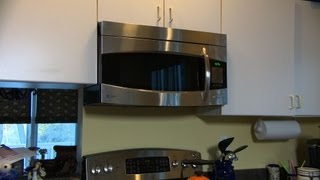
Over-the-range (OTR) ($250-600): Mounts above the range/stove, integrating a ventilation fan and light. Saves counter space, looks built-in. Requires dedicated installation (must be at correct height above range, typically 66-18 inches from cooktop). OTR fans are generally weaker than dedicated range hoods — adequate for light cooking, insufficient for heavy stovetop cooking. Complicated to replace (must match mounting bracket dimensions).
Built-in/drawer microwave ($400-1500): Integrated into cabinet design, often installed at counter height or below. Premium appearance, most expensive, requires custom cabinetry modification.
Size Selection by Household
0.7-0.9 cu ft: Compact, fits standard dinner plate, not much larger. Suitable for 1-person apartments, offices, dorm rooms.
1.0-1.2 cu ft: Standard countertop size. Fits most dishes, including a 2-qt casserole dish. Suitable for 1-3 people.
1.3-1.6 cu ft: Standard-to-large. Fits 9x13 baking dish. Suitable for families of 4.
1.7-2.2 cu ft: Large-capacity family size. Fits large casseroles. Suitable for 4-6 people or frequent use for batch cooking.
Turntable diameter is more practically important than interior volume — a 10.5-inch turntable fits most standard dishes. A 12-inch turntable accommodates larger plates and casseroles.

What We Recommend
For most households: Panasonic Compact 1.2 cu ft 1200W Inverter ($120-150) — inverter technology, adequate size, reliable heating, 10-year Panasonic track record. For smaller spaces: Toshiba EM925A5A ($90-120, 0.9 cu ft, 900W) — best value non-inverter for straightforward tasks. For large families wanting maximum performance: Panasonic 2.2 cu ft 1250W Inverter ($150-200). For over-the-range: LG 1.7 cu ft 300 CFM OTR ($300-400, inverter + adequate ventilation). See our countertop microwave reviews and air fryer toaster oven comparison for alternatives to microwave-only cooking.
Common Mistakes to Avoid
Buying for wattage without considering inverter — 1200W non-inverter produces worse results than 1000W inverter on most delicate heating tasks. Ignoring interior capacity vs exterior dimensions — a 1.6 cu ft microwave may have a much larger exterior than you expect for your counter space. Measure both the available counter space and the interior turntable diameter before buying. Choosing OTR primarily for the ventilation — OTR ventilation (150-300 CFM typical) is weaker than even a basic dedicated range hood (200-400 CFM); don't buy OTR expecting meaningful ventilation. Using plastic containers not rated for microwave use — some plastics release chemicals at microwave temperatures. Use glass, ceramic, or explicitly microwave-safe labeled plastics only.
What the page recommends, and what it costs
- TOSHIBA ML4-EM09PA — $116.99. 900-watt power handles reheating, defrosting, and basic cooking without a learning curve. Against it: Small interior capacity limits plate and bowl sizes that fit inside.
- COSMO COS-3016ORM1SS 30 in. Stellar Collection 1.6 cu. ft. — $469.99. Over-the-range installation frees up counter space entirely while adding ventilation functionality. Against it: Professional installation strongly recommended — improper venting creates fire risk.
- BLACK+DECKER Digital Microwave Oven with Turntable — $106.99. Lowest price point makes it an accessible replacement for a dead microwave without budget strain. Against it: Budget construction — internal components not engineered for decade-plus longevity.
- Danby 1.4 cu.ft. Countertop Microwave — $189. 1.4 cu ft capacity is larger than most "compact" microwaves — holds family-size dishes. Against it: White exterior shows stains and discoloration more visibly than stainless alternatives.
Watch Before You Buy

“Compact 0.9 cu ft countertop microwave with 900W power for apartments and dorm rooms where counter space is limited — the Toshiba for standard reheating and defrosting where a full-size 1.1+ cu ft…”
See Today’s Price →What we like
- 900-watt power handles reheating, defrosting, and basic cooking without a learning curve
- Compact countertop size fits on tight kitchen shelves and small apartment counters
- Toshiba's digital display and one-touch settings simplify everyday microwave tasks
- Multiple power levels provide flexibility for more delicate cooking like melting butter or softening ice cream
Watch out for
- Small interior capacity limits plate and bowl sizes that fit inside
- 900W is modest for cooking raw proteins or large frozen entrees quickly
Read Full Analysis
The Toshiba ML4-EM09PA at $116.99 earns its top-pick position through a combination of compact size, reliable 900-watt output, and an interface that requires no learning curve for standard tasks. The 0.9 cubic foot interior is specifically sized for apartment and small-kitchen use — it fits on a standard shelf or tight counter without requiring the footprint clearance that 1.1 and 1.4 cubic foot models demand. The 900-watt output handles everyday reheating, defrosting, and soft cooking (melting butter, warming beverages, softening ice cream) without the under-heating that budget 700-watt models produce on dense foods. Multiple power levels are the feature that separates the Toshiba from sub-$116.99 alternatives: being able to run at 30-50% power allows genuinely delicate tasks like softening cream cheese or warming chocolate without hot-spot burning. The digital display with one-touch presets covers the most common tasks without requiring the user to calculate time-and-power combinations. Toshiba's reputation in appliances has been consistent through the mid-range tier, and the ML4 series reflects the brand's focus on reliability over feature density. The limitations are proportional to the size: a standard dinner plate may not fit, a 9x13 baking dish definitely will not, and the 900W ceiling means raw protein cooking takes longer than a full-size machine. For an apartment where the microwave is used for reheating rather than cooking, the Toshiba at $116.99 is more than sufficient. Households who regularly microwave large portions or frozen family-size meals should step up to the Hamilton Beach 1.1 cu ft at rank 4.
“”
See Today’s Price →What we like
- Over-the-range installation frees up counter space entirely while adding ventilation functionality
- 30-inch standard width fits the most common range hood rough-in without custom modifications
- Built-in exhaust fan replaces a separate range hood — one purchase solves two problems
- Cosmo's stainless steel finish integrates cleanly with modern kitchen appliance suites
Watch out for
- Professional installation strongly recommended — improper venting creates fire risk
- Over-the-range position makes the interior harder to reach for shorter users
Read Full Analysis
The Cosmo 30-inch Over-the-Range microwave solves two problems simultaneously at a single purchase price: it replaces a countertop microwave while adding ventilation capability for the cooktop below — eliminating the separate range hood purchase that most kitchen renovations require. The 30-inch width fits the standard range hood rough-in found in most North American kitchen layouts without custom cabinetry modification. Price is currently unavailable — verify before purchasing. The ventilation function is the differentiated value: over-the-range models typically include a multi-speed exhaust fan with charcoal or direct-vent capability that removes cooking odors, grease particulate, and steam from the cooktop area. This is categorically different from every countertop model on this page. The trade-off is installation complexity — over-the-range microwaves require cabinet mounting hardware, electrical connection at the correct height, and venting configuration (recirculating or external duct). Professional installation is strongly recommended because incorrect mounting creates both drop risk and fire risk at improper vent gaps. The interior position above the range also makes the cavity harder to reach for shorter users. For a kitchen remodel or new installation where a range hood is budgeted anyway, the Cosmo OTR eliminates that cost while adding microwave functionality in a ventilation-compliant installation.
“Digital control panel with 6 one-touch cooking settings for popcorn, pizza, and frozen vegetables — the Black + Decker for households that want basic microwave functionality at a budget price…”
See Today’s Price →What we like
- Lowest price point makes it an accessible replacement for a dead microwave without budget strain
- Digital controls with preset buttons cover the most common daily tasks
- Standard 700-900W output handles reheating and defrosting effectively
- Black + Decker's widespread parts availability makes repairs and replacements straightforward
Watch out for
- Budget construction — internal components not engineered for decade-plus longevity
- Fewer power levels and features than mid-range models from Toshiba or Panasonic
Read Full Analysis
The Black + Decker Digital Microwave is the lowest-cost accessible replacement option on this page — the pick when the existing microwave has died and a functional replacement is needed without budget strain. Digital controls with preset one-touch buttons for popcorn, pizza, potato, and frozen vegetables handle the most common tasks without requiring manual time-and-power input. The 700-900W output covers reheating and defrosting adequately for single-person and small-household use. Price is currently unavailable — verify before purchasing. Black + Decker's parts availability through hardware and appliance retailers is a practical long-term benefit: if the turntable ring or glass plate breaks, replacement parts are more readily available than for boutique brands. The honest limitation is longevity — budget-tier microwave construction is not engineered for decade-plus daily use at the same rate as mid-range models. For households that use a microwave lightly (reheating once or twice daily, occasional defrost), the lifespan difference versus a Toshiba or Hamilton Beach is less relevant. For a household that microwaves multiple times per day, investing in the Toshiba at $116.99 or Hamilton Beach at rank 4 is the longer-term cost-effective choice.

“1.4 cu ft white microwave with 1000W power in a finish that matches white kitchen appliances — the Danby for kitchens where color coordination matters and most microwaves only come in black or…”
See Today’s Price →What we like
- 1.4 cu ft capacity is larger than most "compact" microwaves — holds family-size dishes
- Danby's white finish suits traditional kitchens avoiding the all-stainless aesthetic
- Multiple power settings accommodate both reheating and cooking from raw ingredients
- Suits both small households and frequent family use without sacrificing interior space
Watch out for
- White exterior shows stains and discoloration more visibly than stainless alternatives
- Basic feature set — no convection, no sensor cooking, no steam functions
Read Full Analysis
The Danby 1.4 cubic foot white microwave addresses a specific kitchen aesthetic gap: most microwaves in this size class come in black or stainless steel, and the white finish integrates with white-appliance kitchens without the color contrast that stainless creates against white refrigerators and dishwashers. The 1.4 cu ft interior is the largest cavity on this page, accommodating family-size plates and larger serving dishes that the Toshiba 0.9 and Hamilton Beach 1.1 models cannot fit. The 12-inch turntable handles standard dinner plates with clearance. Price is currently unavailable — verify before purchasing. At 1,000W output, the Danby has the highest power rating on this page — more power means faster heating on dense foods and more even results on large frozen items where lower-wattage models leave cold centers. The trade-off is that white finishes show food splatters and general soiling more visibly than stainless or dark interiors — a more frequent cleaning commitment is implied. The feature set is basic: no convection, no steam, no sensor cooking that premium models offer. For households with a white appliance suite that need a large-cavity microwave, the Danby solves the aesthetic and size problem simultaneously. For households without a color preference, the Hamilton Beach 1.1 cu ft at rank 4 is the better-balanced choice across size, wattage, and feature combination.
Frequently Asked Questions
What wattage is best for a microwave?
What is inverter technology in a microwave and is it worth it?
What size microwave do I need?
Is a countertop or over-the-range microwave better?
How long does a microwave last?
What should I never microwave?
How We Analyze Products
We analyze Amazon review data — often thousands of reviews per product — to surface patterns that individual buyers miss. Our process aggregates star ratings, review counts, and buyer sentiment at scale, identifying which strengths and weaknesses appear consistently across the largest review samples available. The 13,141+ reviews analyzed on this page represent real verified-purchase feedback from Amazon buyers.
Each product earned its placement through data: total review volume, average rating, and the specific praise and complaints that repeat most often across buyers. No manufacturer paid for placement on this page. Products appear here because buyers endorsed them at scale, not because a company asked us to feature them.
We use AI to summarize review sentiment — not to fabricate opinions, but to condense what thousands of buyers actually wrote into a readable format. The pros and cons you see reflect the most common themes found in verified purchaser reviews, paraphrased for clarity. We do not claim to have accessed Reddit, YouTube, or specific publications in generating these summaries.
Prices shown reflect Amazon pricing at the time this page was last generated. Click “See Today’s Price” to get the current live price on Amazon. Read our full methodology →