How to Choose a Pizza Stone: Material, Size, and Thickness Guide (2026)
The Unicook Heavy Duty Cordierite Pizza Stone ($29.97) is the top pick — 15x12-inch cordierite handles thermal shock without cracking, and 5/8-inch thickness retains even heat for consistent crust browning. Always preheat 45–60 minutes at max oven temp (500–550°F) before launching the pizza.
At a Glance
| # | Product | Award | Price |
|---|---|---|---|
| 1 | Our Top Pick | $33.99 Buy → |
|
| 2 | 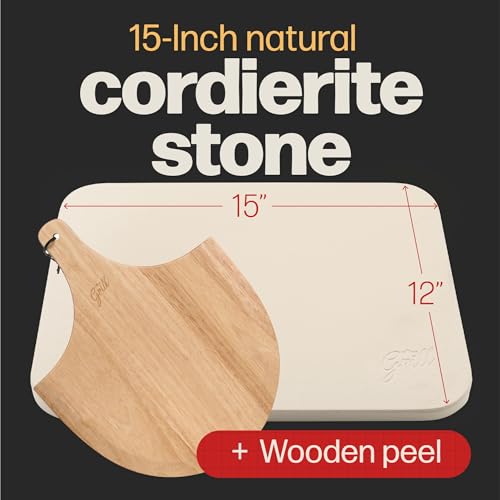 HANS GRILL PIZZA STONE | Rectangu… HANS GRILL PIZZA STONE | Rectangu…Hans Grill |
Best Versatile | $49.99 Buy → |
| 3 |  KitchenStar 16-inch Pizza Stone f… KitchenStar 16-inch Pizza Stone f…KitchenStar |
Best Large | $49.97 Buy → |
| 4 | 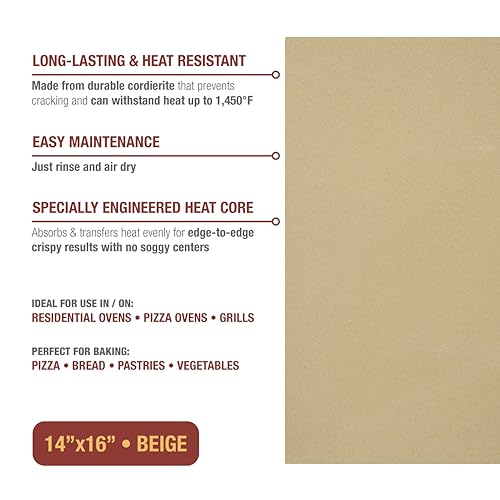 Old Stone Pizza Kitchen Rectangul… Old Stone Pizza Kitchen Rectangul…Old Stone |
Best Classic | $37.21 Buy → |
How to Choose a Pizza Stone Buying Guide
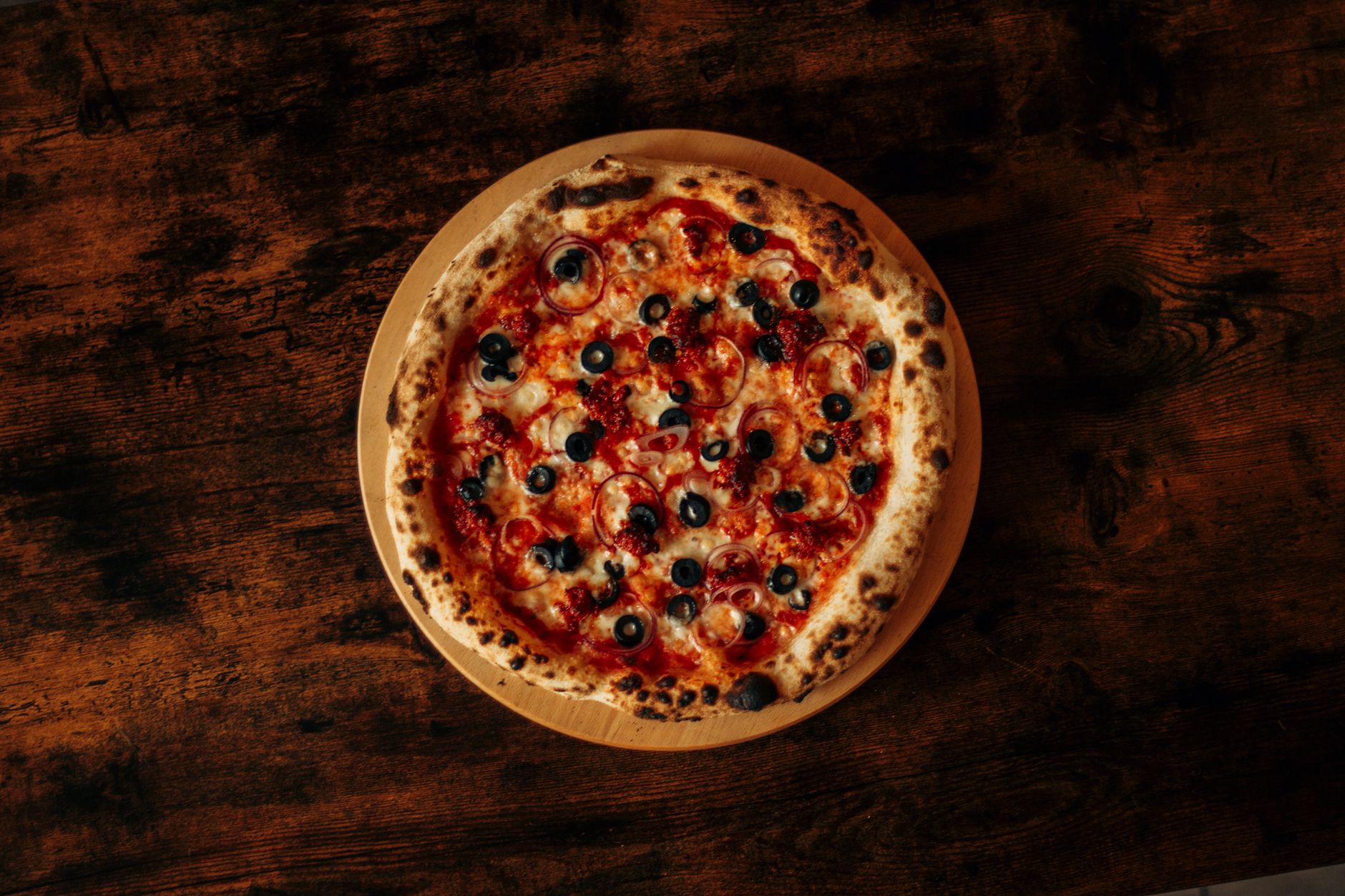 Photo by Anhelina Vasylyk / Pexels
A pizza stone works because it stores heat during preheating and releases it rapidly into the pizza crust during cooking — replicating the intense floor heat of a wood-fired oven. The quality difference between a $37.21 ceramic stone and a $37.21 baking steel is substantial and directly affects crust quality. Here's what the specs actually mean.
Materials: Cordierite vs Ceramic vs Steel
Cordierite (the right stone material): A mineral originally developed for kiln furniture. Handles thermal shock (cold dough hitting 500°F surface, or cold water hitting hot surface) far better than ceramic — it expands and contracts without cracking. Most quality pizza stones use cordierite. Price: $25–$60. Recognizable by its rough, gray or tan surface. The FibraMent-D, Old Stone Oven, and Unicook brands all use cordierite. Key spec: look for cordierite specifically or "kiln-fired" in the description.
Ceramic stones: The most common cheap pizza stone material — smooth, usually white or beige. Looks nicer but cracks easily from thermal shock (leaving cold dough on a hot surface, or any temperature change faster than 15 min). Many $15–$25 pizza stones are ceramic. If you've had a pizza stone crack before, it was likely ceramic. Avoid unless the product explicitly states thermal shock resistance.
Baking steel (the upgrade): A 1/4-inch or 3/8-inch steel plate. Steel conducts heat 18x faster than stone — the crust hits a higher temperature immediately, creating better browning and "spring" (the rapid oven rise in the first minutes of baking). Professional pizza makers prefer steel for thin-crust Neapolitan and New York-style pies. Downside: 10–22 lbs (heavy), expensive ($80–$120), and can rust if not properly dried and oiled after washing. The Baking Steel Original ($80) and NerdChef Steel Stone ($37.21) are the standards. Worth it if you make pizza weekly; overkill for occasional use.
Cast iron pizza pan: A Lodge cast iron pan (round, 12–14 inches) produces similar results to baking steel for pan-style and deep-dish pizza. Not ideal for thin-crust since cast iron doesn't have the flat surface area of a full rectangular baking steel. Price: $30–$50.
Thickness: The Key Spec for Heat Retention
Thicker stones store more heat and transfer it more consistently to the crust. Thin stones work initially but lose temperature quickly as the cold dough absorbs heat, resulting in an inconsistent cook between the first and second pizza.
Under 1/2 inch: Adequate for soft-crust pizza but not for crispy thin-crust. Loses heat quickly. Common in discount kitchen stores.
5/8 inch (the minimum for quality results): The standard thickness for quality cordierite stones. Holds heat for 2–3 consecutive pizzas before needing extended reheat time.
3/4 inch to 1 inch: The premium thickness. Heavier (8–12 lbs), requires longer initial preheat (60 min), but holds heat through 4–5 consecutive pizzas. FibraMent-D 3/4-inch ($55–$75) is the gold standard for serious home pizza makers.
Baking steel 1/4–3/8 inch: The density of steel stores more heat per inch than stone — a 1/4-inch steel holds more energy than a 3/4-inch stone by weight. This is why steel often outperforms thicker stones despite being thinner.
Size and Shape
Round vs rectangular: Round fits most home oven racks and matches a pizza's shape. Rectangular gives more versatility (can cook multiple smaller pizzas, bread, calzones) and better coverage of the oven floor. Rectangular is more practical; round is more common.
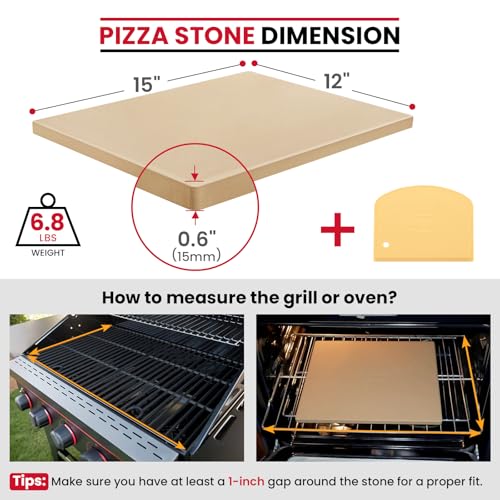
Size recommendations: Measure your oven rack before buying. Most home ovens have a 22"×16" rack. Leave at least 1 inch of clearance on all sides for airflow — a 14"×16" or 15" round stone fits most ovens. Sizing up is better than down: a 14-inch stone for a 12-inch pizza is the minimum; a 16-inch gives working room.
Check oven clearance: Stones need to preheat on the rack — measure the height from rack to oven wall above. Thick stones (3/4"+) plus a pizza may exceed clearance in convection ovens with heating elements in the ceiling.
Using and Caring for a Pizza Stone
Preheat time: 45–60 minutes at maximum oven temperature (500–550°F). This is non-negotiable — putting pizza on a cold or warm stone produces a soggy crust. Set the timer when you turn on the oven, not when it reaches temperature (ovens report air temperature, not stone surface temperature).
Never wash with soap: Soap penetrates the porous surface and is nearly impossible to fully remove. Scrape debris, let cool completely, wipe with a damp cloth. Discoloration (dark spots) is normal and doesn't affect performance.
Never quench with water: Cold water on a hot stone causes thermal shock and cracks it — even quality cordierite has limits. Let it cool in the oven with the door open.
Flour vs cornmeal on the peel: Cornmeal ($1–$2) acts as ball bearings for launching pizza off the peel. Too much flour can burn. Some bakers use semolina flour for a middle ground.
Broken stone: A cracked stone can still be used if the pieces are held together on the rack — cracks don't affect performance, just appearance.

What We Recommend
Budget / occasional use: Old Stone Oven 14-inch round cordierite ($25–$35) — the most widely recommended entry-level stone. Don't buy ceramic at this price point.
Regular home pizza maker: FibraMent-D 14×16 inch rectangular, 3/4-inch ($55–$75) — the enthusiast standard, holds heat for 4–5 pizzas consecutively.
Serious home pizza / investment piece: The Baking Steel Original 14×16, 1/4-inch ($80–$100) — the crispiest crust achievable in a home oven. For bread baking specifically, see our Dutch ovens for bread baking and countertop bread makers. For cookie sheets that use similar principles, see best cookie sheets.
Watch Before You Buy

“The Unicook Heavy Duty Cordierite Pizza Stone 15 x 12 Inch Rectangular features cordierite material. 4.5 stars from 9,297 Amazon reviews signal consistent reliability.”
See Today’s Price →What we like
- Cordierite material
- 15x12-inch
- Works in oven and grill
- Handles thermal shock
Watch out for
- Can crack if exposed to sudden temperature changes
- Requires full preheat for best results
- Absorbs oils over time and cannot be washed with soap
Read Full Analysis
The Unicook at $33.99 earns its top ranking through material and size: cordierite construction handles thermal shock substantially better than natural stone alternatives, and the 15x12-inch rectangular surface accommodates most home pizza sizes while fitting a standard oven rack. Cordierite is the professional pizza stone material of choice — kiln manufacturers use it specifically because it absorbs and releases heat evenly without cracking under the rapid temperature changes that pizza baking requires. With 4.5 stars from 9,297 Amazon reviews, real-world reliability is confirmed at scale. Preheat is non-negotiable: a cold stone placed in a hot oven or a stone loaded before reaching temperature produces uneven results. A 45-60 minute preheat at maximum oven temperature (500-550°F) is the correct setup. The oil absorption over time is normal for cordierite and part of how the stone seasons — soap washing removes these oils and can weaken the material. Wipe clean with a dry brush or damp cloth only. At $37.21, replacement cost is low enough that the soap-avoidance maintenance requirement is low-stakes compared to premium stones three times the price.
“Cordierite pizza stone at $49.99 absorbs oven moisture for a crispy bottom crust — the Hans Grill for home pizza bakers who want stone-oven results from a standard oven or grill. Rectangular shape…”
See Today’s Price →Watch out for
- Hand-wash recommended for some parts to extend coating or surface lifespan
- Counter space commitment may be challenging in very small kitchens
“”
See Today’s Price →What we like
- 16-inch size provides a comfortable viewing or working surface area
- Easy to clean with dishwasher-safe or wipe-down components
- Compact countertop footprint fits most kitchen sizes
Watch out for
- Hand-wash recommended for some parts to extend coating or surface lifespan
- Counter space commitment may be challenging in very small kitchens
Read Full Analysis
The KitchenStar 16-inch stone provides the largest surface area on this page, which matters specifically when baking larger pies — a 16-inch stone comfortably handles 14-inch pizzas with room for crust expansion, while smaller stones require precision placement and can crowd the edges. For households that regularly bake full-size restaurant-style pizzas or large flatbreads, the extra surface area translates directly to less trimming and more crust clearance. At $37.21, it matches the Unicook on price despite the larger footprint. The material and maintenance rules for the KitchenStar follow standard pizza stone protocol: preheat fully before loading (45-60 minutes at maximum oven temperature), no soap, wipe clean dry or with a damp cloth. Avoid sudden cold-water contact on a hot stone. For users primarily baking personal-size or medium pizzas in the 10-12 inch range, the Unicook's 15x12 rectangle or the Hans Grill option may be more proportionate choices. The KitchenStar's size advantage only matters when you consistently fill it — an oversized stone for a small household just takes longer to preheat without delivering additional benefit.
“”
See Today’s Price →What we like
- 16-inch size provides a comfortable viewing or working surface area
- Easy to clean with dishwasher-safe or wipe-down components
- Compact countertop footprint fits most kitchen sizes
Watch out for
- Hand-wash recommended for some parts to extend coating or surface lifespan
- Counter space commitment may be challenging in very small kitchens
Read Full Analysis
Old Stone Oven is the heritage brand on this list — the name has been associated with pizza stones since the early days of home pizza baking, and the 14x16-inch rectangular form factor reflects decades of refinement for oven use. The 14x16 size covers full-size pizza comfortably while staying within the dimensions most standard ovens can accommodate without removal of oven racks. At $29.97, it matches the Unicook and KitchenStar on price while offering a slightly different aspect ratio that some bakers prefer for rectangular flatbreads and focaccia alongside pizza. Cordierite or similar refractory ceramic construction handles high oven temperatures and the thermal cycling of repeated pizza baking. Standard care applies: full preheat before loading, no soap, dry or damp-cloth cleaning only. For buyers choosing between this and the Unicook at the same price, the primary difference is shape preference — the Old Stone Oven's 14x16 rectangle gives a slightly larger total surface area than the Unicook's 15x12, which can matter for elongated flatbreads. For strictly circular pizza use, the wider Unicook may be marginally better proportioned. Either choice at $33.99 delivers equivalent functional performance for home pizza baking.
Frequently Asked Questions
Does a pizza stone make a difference?
How long do you preheat a pizza stone?
Why did my pizza stone crack?
Can I use a pizza stone for bread?
Is a baking steel better than a pizza stone?
What size pizza stone fits in a standard oven?
How We Analyze Products
We analyze Amazon review data — often thousands of reviews per product — to surface patterns that individual buyers miss. Our process aggregates star ratings, review counts, and buyer sentiment at scale, identifying which strengths and weaknesses appear consistently across the largest review samples available. The 9,294+ reviews analyzed on this page represent real verified-purchase feedback from Amazon buyers.
Each product earned its placement through data: total review volume, average rating, and the specific praise and complaints that repeat most often across buyers. No manufacturer paid for placement on this page. Products appear here because buyers endorsed them at scale, not because a company asked us to feature them.
We use AI to summarize review sentiment — not to fabricate opinions, but to condense what thousands of buyers actually wrote into a readable format. The pros and cons you see reflect the most common themes found in verified purchaser reviews, paraphrased for clarity. We do not claim to have accessed Reddit, YouTube, or specific publications in generating these summaries.
Prices shown reflect Amazon pricing at the time this page was last generated. Click “See Today’s Price” to get the current live price on Amazon. Read our full methodology →