How to Choose an Air Fryer in 2026: Buyer's Guide
For 1–3 people: a 4–5 qt basket model like the Ninja AF101 or Cosori Pro II. For families of 4+: a 6 qt or dual-basket model. For cooking complete meals: the Ninja Foodi DualZone handles two dishes simultaneously.
How to Choose an Air Fryer Buying Guide
Air fryers are now one of the fastest-selling kitchen appliances on the market — and also one of the most misunderstood. They don't actually fry food; they circulate superheated air to create Maillard browning on the surface of food. Understanding what air fryers actually do well (and what they don't) is the key to deciding which model is right for your kitchen and your cooking habits.
How Air Fryers Actually Work
An air fryer is a compact countertop convection oven with a powerful fan positioned directly above the heating element. The high-speed circulation creates rapid even heat distribution and a drying effect on food surfaces — producing the crispiness associated with frying without submerging food in oil. Results are genuinely crispy for breaded foods, french fries, wings, and vegetables. Results are less impressive for foods that require oil submersion for the specific texture — true deep-fried donuts and funnel cakes don't replicate well. The main advantages are speed (air fryers preheat in 2–3 minutes vs. 10–15 for a conventional oven) and energy efficiency for small batches.
Basket vs. Oven-Style: Which Type Is Right for You?
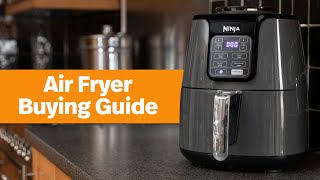
Basket air fryers have a pull-out drawer with a perforated basket. They heat faster, produce crispier results on many foods (because food sits on the basket with airflow from below), and are easier to shake or toss mid-cook. They come in 2–6 qt sizes and are better for single servings and families up to 4. See our best air fryers and best compact air fryers for top basket models.
Oven-style air fryers (toaster oven air fryers) have a door like a small oven, with wire racks and multiple tray positions. They can handle more food volume, can toast bread and bake, and are better for larger families and multi-dish cooking. They take up more counter space and generally produce slightly less crispy results on smaller items than basket models. For the best air fryer toaster ovens and best options under $100, see those dedicated guides.
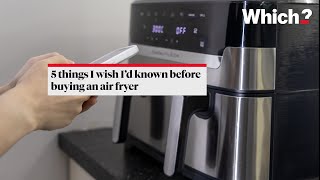
Dual-basket models (Ninja DualZone, Cosori TurboBlaze) have two independent cooking zones. They allow cooking two foods at different temperatures simultaneously — e.g., fries at 400°F while cooking salmon at 325°F, finishing at the same time. For families with different dietary preferences or anyone who regularly cooks complete meals in one appliance, dual-basket is a significant quality-of-life upgrade.
Capacity: Choosing the Right Size
2–3 qt: Single servings and appetizers. The smallest models heat fastest but struggle to cook enough food for two people without multiple batches. Best for dorm rooms, apartments, or supplemental use only.
4–5 qt: The sweet spot for 2–3 people. Most popular-selling size (Ninja AF101, Cosori Pro II). Handles 2–3 chicken thighs, a pound of fries, or a full bag of frozen appetizers in one batch.
5.8–6 qt: Family-sized. Fits a whole chicken (3–4 lbs), larger cuts, and serves 4 reliably. Takes up more counter space; models in this category include the Cosori Pro Gen 2 and COSORI Max XL.
7+ qt or dual basket: For households of 4–6 who want to replace the oven for most cooking or cook complete meals. Models like the Ninja Foodi and PowerXL are designed for this use case. Compare the Ninja vs Cosori head-to-head for capacity and feature comparisons.
Key Features Worth Paying For
Preheat time and power: Higher wattage (1700–1800W) preheat faster than lower-wattage models (1200–1400W). The difference in preheat time is 1–3 minutes — meaningful for daily use. Speed is the primary air fryer advantage over a conventional oven, so preserving that advantage requires adequate power.
Temperature range and precision: Most models cover 200–400°F. A wide range (170–450°F) allows dehydrating at low temperatures and searing at high heat. Digital controls are more precise than analog dials — important if you follow air fryer recipes with specific temperatures.
Ease of cleaning: Look for dishwasher-safe baskets and non-stick coatings that don't scratch. Some baskets have PFOA-free non-stick (acceptable); PTFE/Teflon coatings are standard and safe at air fryer temperatures. Avoid baskets where the coating chips early — check reviews for reports of flaking after 6 months of use.
Noise: Air fryers are louder than conventional ovens due to the high-speed fan. Budget models run around 65dB; premium models are quieter (55–60dB). If noise in a small kitchen or apartment is a concern, check user review mentions of noise levels. See the best beginner air fryers for quiet, easy-to-use options.
Watch Before You Buy

At a Glance
| # | Product | Award | Price |
|---|
Frequently Asked Questions
Is air-fried food actually healthier than deep-fried?
Can you cook raw meat in an air fryer?
What can't you cook in an air fryer?
How do I prevent smoke when air frying?
Do I need to preheat an air fryer?
Is a more expensive air fryer worth it?
How do I clean an air fryer basket?
How We Analyze Products
We analyze Amazon review data — often thousands of reviews per product — to surface patterns that individual buyers miss. Our process aggregates star ratings, review counts, and buyer sentiment at scale, identifying which strengths and weaknesses appear consistently across the largest review samples available.
Each product earned its placement through data: total review volume, average rating, and the specific praise and complaints that repeat most often across buyers. No manufacturer paid for placement on this page. Products appear here because buyers endorsed them at scale, not because a company asked us to feature them.
We use AI to summarize review sentiment — not to fabricate opinions, but to condense what thousands of buyers actually wrote into a readable format. The pros and cons you see reflect the most common themes found in verified purchaser reviews, paraphrased for clarity. We do not claim to have accessed Reddit, YouTube, or specific publications in generating these summaries.
Prices shown reflect Amazon pricing at the time this page was last generated. Click “See Today’s Price” to get the current live price on Amazon. Read our full methodology →