How to Choose Kitchen Knives: Complete Guide (2026)
Three knives is enough: chef's, paring, bread. Victorinox Fibrox ($40) is the best bang-for-buck chef's knife on Earth. German steel for low-maintenance, Japanese for sharpness retention. Skip glass cutting boards — they dull edges in days.
At a Glance
| # | Product | Award | Price | |
|---|---|---|---|---|
| 1 | Our Top Pick | Check Price | Buy → | |
| 2 | Also Excellent | $124 | Buy → | |
| 3 | Worth Considering | Check Price | Buy → |


How to Choose Kitchen Knives Buying Guide
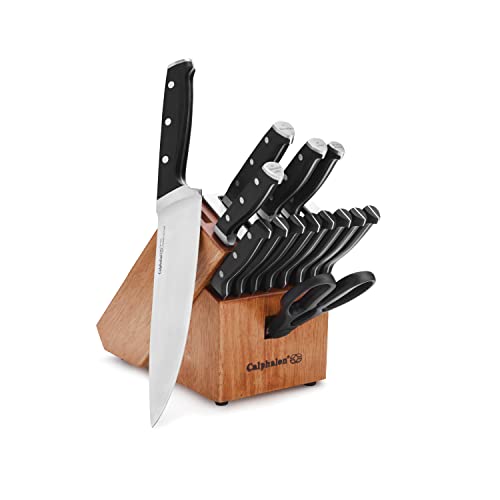
The 15-piece knife block at Bed Bath and Beyond is the worst possible way to spend $200 on kitchen knives. The truth is most home cooks need only three knives — a chef's knife, a paring knife, and a bread knife — and a $40 chef's knife from Victorinox outperforms $300 sets from gift-store brands. Here is the steel-and-geometry framework that explains why some $40 knives outlast $400 knives, plus the maintenance routine that keeps any quality knife sharp for decades.
The three-knife rule (everything else is optional)
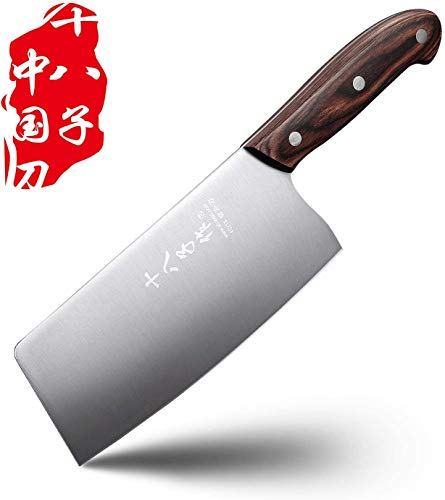
A chef's knife (8 or 10 inch) handles 80% of all kitchen cutting: vegetables, meats, herbs, garlic. A paring knife (3-4 inch) handles small precision work: trimming strawberries, peeling apples, deveining shrimp. A bread knife (8-10 inch serrated) handles anything you can't cut with the chef's knife: bread, tomatoes when chef's knife dulls, melons. That's it. You do not need: utility knives, steak knives (use the bread knife or a paring knife), boning knives (unless you break down whole birds), cleavers, or 12 specialized blades for vegetables.
If you've already bought a knife block, the unused knives are not making the set worth more than the chef's knife you actually use. Buy one excellent chef's knife instead of three mediocre ones. See Best Chef Knives of 2026 for picks at every budget and Best Chef Knife for Beginners for first-time buyers.
Steel types — the spec that actually matters
Knife steel determines edge retention (how long it stays sharp), ease of sharpening, and corrosion resistance. The two main families:
German stainless (X50CrMoV15, X55CrMo14, 1.4116): softer (56-58 HRC), tougher, easier to sharpen, more forgiving of bone or hard cutting board contact. Holds an edge moderately well. Examples: Wusthof Classic, Henckels Pro S, Mercer Renaissance. Best for cooks who want low-maintenance daily knives.
Japanese steels (VG-10, VG-MAX, AUS-10, SG2/R2): harder (60-63 HRC), holds an edge much longer, but more brittle and harder to sharpen at home. Examples: Shun Classic, Tojiro DP, Misono UX10, Miyabi 5000MCD. Best for cooks who maintain their tools and value sharpness.
The hardness spectrum: German softer steel takes 5 minutes to sharpen but dulls in 6-8 weeks of daily use. Japanese harder steel takes 30 minutes to sharpen but holds an edge 6+ months. Pick based on whether you'd rather sharpen often quickly or rarely with effort.
Knife geometry — the underrated factor
Blade thickness behind the edge: the most important spec almost nobody talks about. A thin grind (under 0.4mm at 1mm above the edge) cuts through onions and tomatoes with minimal force. A thick grind (over 0.6mm) feels like splitting wood. Most German chef's knives are thicker; most Japanese are thinner. Victorinox Fibrox at $40 has surprisingly thin geometry — that's why it punches above its price.
Edge angle: German knives sharpen to 20° per side (40° total). Japanese knives sharpen to 15° per side (30° total) — sharper but more fragile. The sharper Japanese angle is more aggressive but chips easier on bone or accidental hard contact.
Profile: Western chef's knives have a rocker profile (curved belly for rocking cuts). Japanese gyutos are flatter (better for push and slice cuts). Santoku knives split the difference. Pick based on your cutting style — if you don't know, get a Western chef's knife (most American cooking content uses rocking cuts).
Price tiers and what they actually buy
$30-50: Victorinox Fibrox, Mercer Renaissance, Wusthof Pro. These are restaurant kitchen workhorses — German X50CrMoV15 steel, NSF-certified handles, dishwasher-survivable. The Victorinox at $40 is the single best knife-bang-for-buck on Earth. See Best Chef Knife Under $50.
$60-120: Wusthof Classic, Henckels Pro S, Tojiro DP, Mac MTH-80. The "premium German" or entry-Japanese tier. Real upgrades over $40 knives in fit-and-finish, handle quality, and sometimes geometry. Best Chef Knife Under $100.
$120-250: Shun Classic, Misono UX10, Global G-2, Miyabi Birchwood. Japanese mid-tier. Genuinely sharper out of the box, often more elegant in hand, but the performance jump from the $80 tier is smaller than the price jump suggests.
$250-500: Miyabi Mizu SG2, Takamura Pro, Suisin Inox Honyaki. Premium Japanese. For experienced cooks who appreciate edge work. Diminishing returns territory for most home cooks. Best Chef's Knives 2026 covers this tier.
Other knives to consider (in order of usefulness)
Bread knife: serrated, 8-10 inches. Cuts crusty bread, tomatoes, soft fruits without crushing. The Tojiro Bread Slicer ($35) and Mercer Millennia ($25) outperform $100 versions. Best Bread Knife 2026.
Boning knife: only if you regularly break down whole chickens, fillet fish, or trim meat from bone. Best Boning Knife 2026. Santoku: a 6-7 inch all-purpose Japanese knife. Smaller and sometimes preferred by cooks with smaller hands — see Best Chef Knife for Small Hands.
The cutting board matters too
Glass cutting boards are knife killers — they dull edges in days. Wood (especially end-grain) and quality plastic boards preserve edges. Bamboo is harder and tougher on edges than wood; only use it if you've accepted faster sharpening. See Best Cutting Boards 2026 and Best Cutting Boards for Meat.
Common mistakes
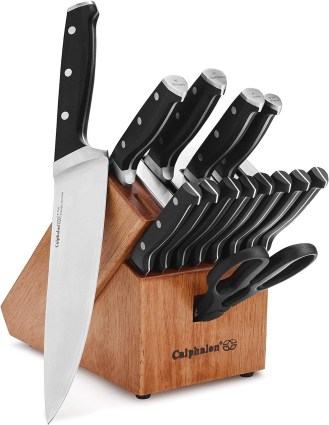
Buying a knife block. You pay for 12 knives to get 3 you'll use. The other 9 take counter space and dull from collisions in the block.
Putting knives in the dishwasher. Even "dishwasher-safe" knives degrade — heat damages handles, detergent corrodes steel, and knives bang against other dishes. Hand-wash, hand-dry immediately.
Cutting on glass or stone. Glass cutting boards or stone countertops dull edges within days. Wood or plastic only.
Using a knife as a screwdriver, can opener, or scraper. Each of these damages the edge. Use the right tool.
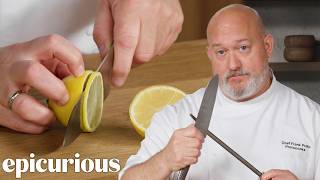
Skipping the honing rod. A honing rod (used 1-2 minutes weekly) realigns the edge and triples the time between actual sharpenings. Almost every quality knife set should include one.
Watch Before You Buy
How We Analyze Products
We analyze Amazon review data — often thousands of reviews per product — to surface patterns that individual buyers miss. Our process aggregates star ratings, review counts, and buyer sentiment at scale, identifying which strengths and weaknesses appear consistently across the largest review samples available.
Each product earned its placement through data: total review volume, average rating, and the specific praise and complaints that repeat most often across buyers. No manufacturer paid for placement on this page. Products appear here because buyers endorsed them at scale, not because a company asked us to feature them.
We use AI to summarize review sentiment — not to fabricate opinions, but to condense what thousands of buyers actually wrote into a readable format. The pros and cons you see reflect the most common themes found in verified purchaser reviews, paraphrased for clarity. We do not claim to have accessed Reddit, YouTube, or specific publications in generating these summaries.
Prices shown reflect Amazon pricing at the time this page was last generated. Click “See Today’s Price” to get the current live price on Amazon. Read our full methodology →