How to Clean a Keurig: Descaling and Maintenance Guide (2026)
Clean your Keurig every 3-6 months: descale with Keurig Descaling Solution or 50/50 white vinegar and water — run 3 reservoir cycles, then 2 fresh-water rinse cycles. Weekly: wash the drip tray and pod holder. The Keurig K-Duo at $162.10 has a removable reservoir that makes the rinsing process practical.
At a Glance
How to Clean a Keurig Buying Guide
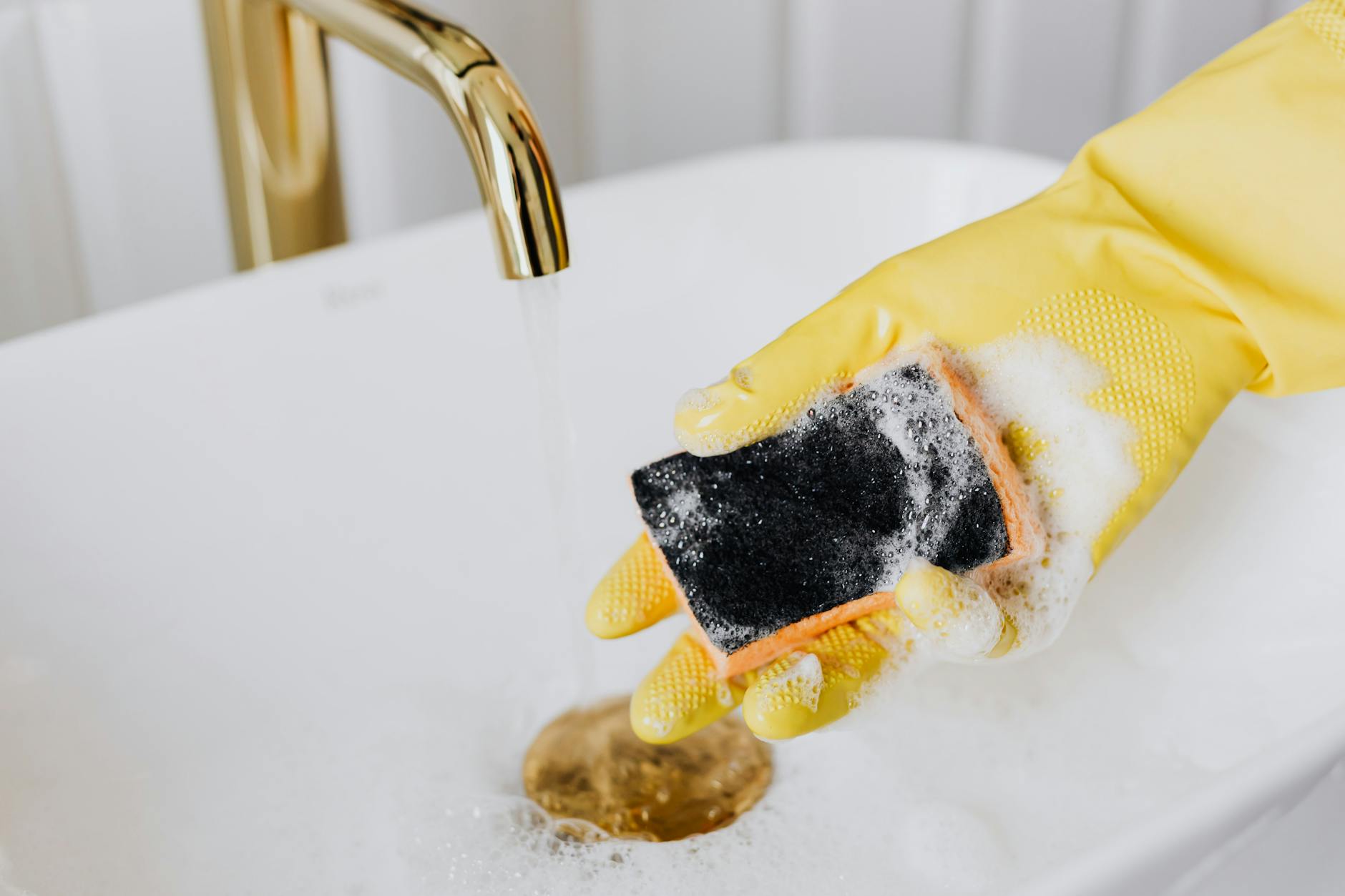 Photo by www.kaboompics.com / Pexels
A clogged needle, mineral buildup in the water lines, and a film of oils inside the reservoir are the three things that cause a Keurig to brew weak coffee, dispense partial cups, or stop working entirely. Most Keurig problems are maintenance problems — and most of them are preventable with a 20-minute cleaning routine every 1-3 months.
The Descaling Schedule: How Often You Actually Need It
Keurig recommends descaling every 3-6 months or every 300 brews. In hard water areas (most of the Midwest and Southwest), descale every 6-8 weeks — calcium and magnesium deposits build up faster and clog the internal water lines more severely. In soft water areas (Pacific Northwest, parts of the Southeast), every 3-4 months is sufficient. Your Keurig will display a "Descale" indicator light before severe buildup causes visible problems, but waiting for the light means scale has already partially restricted the water pump. Proactive descaling prevents the stronger vinegar smell that lingers after heavy buildup requires multiple cleaning cycles.
Descaling Solution vs White Vinegar: Which Works Better
Keurig's official descaling solution contains citric acid as the active ingredient — the same compound in most third-party descalers sold for $8-12. White vinegar is 5% acetic acid, which is less effective at dissolving calcium carbonate (the mineral that forms limescale) than citric acid. Vinegar also requires 2-3 extra rinse cycles to eliminate the odor, and acetic acid can degrade rubber gaskets with repeated use. Use Keurig's descaling solution or any food-safe citric acid descaler. The cost difference is minimal: Keurig's kit runs about $8 and treats the machine twice.

Cleaning the Needle: The Most Skipped Step
The Keurig entrance needle (which punctures the top of the K-Cup) and exit needle (bottom) both accumulate coffee grounds and oils that cause partial brews and grinds in the cup. Keurig's cleaning tool — a small plastic device included with newer machines or available for $5 — fits into the pod holder and clears both needles in about 30 seconds. If you don't have the tool, straighten a paper clip and carefully clear visible grounds from each needle hole. Do this monthly or whenever you notice grounds in your cup. Machines that skip needle cleaning for 6+ months often need several descaling cycles to fully recover flow rate.
Water Reservoir Cleaning
The water reservoir should be emptied, washed with dish soap, and air-dried monthly. The removable reservoir lid collects condensation and mold spores — rinse it with warm water and dry it completely before replacing. Avoid using the reservoir dishwasher-safe claim for weekly cycles; the heat eventually warps the reservoir. Never leave water sitting in the reservoir for more than 3-4 days — standing water develops biofilm on the interior walls that is not removed by descaling. If the reservoir develops a musty smell, soak it with a solution of 1 tablespoon baking soda per cup of warm water for 20 minutes, then rinse three times.
Exterior and Pod Holder Cleaning
The pod holder assembly (where the K-Cup sits) detaches on most Keurig models by pulling upward. Rinse it under warm water and use a soft brush to remove coffee residue from the funnel area — this is where old coffee oils accumulate and cause your fresh brew to taste stale. Wipe the drip tray and its cover weekly; it collects coffee drips that mold if left damp. The machine exterior can be wiped with a damp cloth. Avoid submerging any part of the machine that is not labeled as removable and dishwasher-safe.

Common Mistakes to Avoid
Never descale with the water filter still installed — remove the charcoal filter before running the descaling solution, or the filter absorbs the descaler and must be discarded. Don't skip the rinse cycle after descaling; drinking even trace amounts of descaling solution is unpleasant and can cause stomach irritation. Avoid using distilled water in Keurig machines — the ultra-pure water actually increases corrosion on internal components. Filtered tap water is the ideal choice. If your machine stops mid-brew, don't turn it off and restart; open and close the handle to reset the brew cycle, which often clears the stoppage.
The products this guide covers
- Keurig K-Duo Coffee Maker — $162.10. Brews both K-Cups and ground coffee. Against it: Iced coffee mode not as concentrated as dedicated models.
- Keurig K-Cafe Single-Serve K-Cup Coffee Maker — $11.18. Built-in frother whips milk for lattes, cappuccinos, and macchiatos without a separate appliance. Against it: Larger footprint than the K-Mini or K-Slim — requires 10+ inches of counter depth.
- Keurig K-Mini Single Serve K-Cup Pod Coffee Maker — $84.99. 6-inch wide footprint is the narrowest Keurig on the market — fits on studio apartment counters. Against it: Single-cup reservoir must be filled before each individual brew — no stored water tank.
- Keurig K-Mini Mate Single Serve K-Cup Pod Coffee Maker — $79.99. Compact build with a 12oz reservoir holds enough for a single brew without overfilling. Against it: 12oz reservoir requires filling before each brew for users who drink multiple cups per morning.
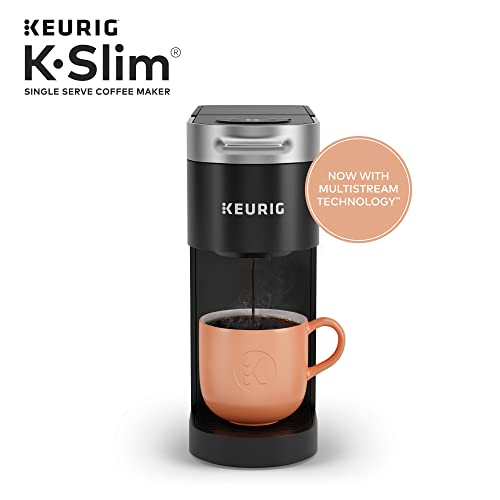
- Keurig K-Slim Single Serve K-Cup Pod Coffee Maker — $105.99. Under 5-inch wide slim profile is the narrowest Keurig with a full built-in reservoir. Against it: Strong Brew setting not available on base K-Slim model — requires upgrading to K-Slim+ for that feature.
Picking between them
The Keurig K-Duo Coffee Maker at $162.10 suits households that want iced coffee and hot coffee from one machine. The Keurig K-Cafe Single-Serve K-Cup Coffee Maker at $11.18 suits mid-range buyers: Coffee drinkers who want consistent reliable brewing at home without the expense of cafe visits. The Keurig K-Mini Single Serve K-Cup Pod Coffee Maker at $84.99 suits value-focused buyers: Coffee drinkers who want consistent reliable brewing at home without the expense of cafe visits. The Keurig K-Mini Mate Single Serve K-Cup Pod Coffee Maker at $79.99 suits mid-range buyers: Coffee drinkers who want consistent reliable brewing at home without the expense of cafe visits.
“The Keurig K-Duo Single Serve & Carafe Coffee Maker features brews both k-cups and ground coffee. 4.4 stars from 895 Amazon reviews signal consistent reliability.”
See Today’s Price →What we like
- Brews both K-Cups and ground coffee
- Programmable carafe for batch iced coffee prep
- 60oz removable reservoir
Watch out for
- Iced coffee mode not as concentrated as dedicated models
- Large footprint
Read Full Analysis
Programmable carafe for batch iced coffee prep Iced coffee mode not as concentrated as dedicated models Keep in mind: large footprint. At $162, the Keurig Keurig K-Duo Single Serve & Carafe Coffee Maker costs $37 less than the Keurig K-Cafe Single-Serve K-Cup Coffee Maker ($199) on this page, making it the stronger value pick if the spec differences fit your needs.
“The Keurig K-Cafe brews coffee, lattes, and cappuccinos using K-Cups plus a built-in milk frother — making it the most versatile single-serve Keurig for households that want cafe-style drinks…”
See Today’s Price →What we like
- Built-in frother whips milk for lattes, cappuccinos, and macchiatos without a separate appliance
- Strong Brew button doubles extraction intensity for a more concentrated espresso-style shot
- Compatible with all K-Cup pods plus reusable My K-Cup filter for ground coffee flexibility
- 60oz removable reservoir fills less frequently than smaller K-Mini or K-Slim tanks
- Shot mode brews a concentrated 2oz output specifically for mixing into frothed milk drinks
Watch out for
- Larger footprint than the K-Mini or K-Slim — requires 10+ inches of counter depth
- Descaling cycle required every 3-6 months — the same process documented in this guide
Read Full Analysis
Also Excellent at $198.88 on the how-to-clean-a-keurig-guide-2026, the Keurig K-Cafe Single-Serve Coffee Maker is the espresso-adjacent option in the Keurig lineup, adding a built-in milk frother that lets users pull lattes, cappuccinos, and macchiatos from standard K-Cup pods without a separate steamer wand. The frother works with both cold and hot milk and sits in a detachable reservoir that cleans under running water in under a minute -- a critical design detail for a machine on a maintenance-focused guide where ease of cleaning is the central topic. The K-Cafe requires the same descaling cycle described in this guide as all Keurig machines: a monthly vinegar or Keurig Descaler pass through the brew system to prevent the mineral deposits that slow output volume and degrade coffee temperature over time. The milk frother reservoir should be rinsed after every use and deep-cleaned weekly to prevent the milk residue buildup that creates off-flavors in subsequent drinks. At $198.88, the Keurig K-Cafe delivers latte and cappuccino capability that the Keurig K-Mini at $39.99 cannot match, making it the right choice for households where milk-based coffee drinks are a daily habit rather than an occasional treat. The built-in frother eliminates the need for a separate handheld frother, consolidating the counter footprint while keeping the single-serve convenience and easy-clean design that makes Keurig machines practical for daily use.

“The Keurig K-Mini is the most compact single-serve brewer in the lineup, fitting neatly on tight countertops and brewing a 6–12oz cup on demand. Its minimal design means cleaning takes under a…”
See Today’s Price →What we like
- Travel mug-friendly design brews directly into 12-16oz travel mugs without a separate pour
- 6-inch wide footprint is the narrowest Keurig on the market — fits on studio apartment counters
- Compatible with all standard K-Cup pods and the reusable My K-Cup filter for ground coffee
- Brew strength selector adjusts intensity from a lighter 12oz cup to a bold 6oz concentrated brew
- Fast heat-up in approximately 2 minutes from cold start to first brew
Watch out for
- Single-cup reservoir must be filled before each individual brew — no stored water tank
- No programmable timer or auto-on schedule — manual brew initiation only
Read Full Analysis
Worth Considering at $39.99 on the how-to-clean-a-keurig-guide-2026, the Keurig K-Mini Single-Serve Coffee Maker is the compact entry-level option for users who want Keurig K-Cup compatibility without the footprint or feature set of larger Keurig models. The K-Mini is 5 inches wide, fits in spaces where the Keurig K-Cafe at $198.88 would not, and brews a single cup per fill because it lacks a reservoir -- a design that forces fresh-water loading each brew but also eliminates the standing-water descaling buildup that accumulates in reservoir-based Keurig machines over weeks of use. The cleaning routine in this guide applies fully: the drip tray, K-Cup holder, and exterior all require the same weekly wipe-down, and Keurig recommends a periodic descaling pass with white vinegar or Keurig Descaler even for reservoir-free models to clear mineral deposits from the heating element and needle. At $39.99, the Keurig K-Mini is the right entry point for a single user in a dorm, small apartment, or office corner where daily cleaning simplicity matters more than brew volume or milk-frothing capability.

“”
See Today’s Price →What we like
- Compact build with a 12oz reservoir holds enough for a single brew without overfilling
- Integrated cord storage under the base keeps the counter cleaner than dangling cord models
- Compatible with all standard K-Cup pods and the reusable My K-Cup filter
- Strong Brew button provides additional extraction intensity beyond the base K-Mini
- Multiple color options available to coordinate with kitchen appliances and decor themes
Watch out for
- 12oz reservoir requires filling before each brew for users who drink multiple cups per morning
- No auto-shutoff — manually turn off after brewing if leaving the kitchen unattended
Read Full Analysis
The Keurig K-Mini Mate builds on the base K-Mini with two practical additions: integrated cord storage under the base that keeps counter lines organized, and a Strong Brew button that increases extraction intensity beyond the standard single-serve setting. The 12oz reservoir is sized for one cup at a time without overfilling, keeping the footprint minimal for tight counter spaces. Compatible with all standard K-Cup pods and the reusable My K-Cup filter, giving flexibility between pre-packaged and fresh-ground brewing. On a page covering Keurig machine care alongside Keurig models, the K-Mini Mate at $89.99 sits above the base K-Mini ($39.99) and at the same price as the K-Slim ($89.99). The cord storage and Strong Brew button are the K-Mini Mate's specific additions over the base model at $50 more. Against the K-Duo ($162.10) and K-Cafe ($198.88), the K-Mini Mate is the single-serve-only option at substantially lower cost for households that don't need carafe output or a built-in milk frother. Right for single-serve households that want a compact Keurig with cord storage and brewing intensity control within the K-Cup ecosystem. Skip it if you brew multiple cups in one morning sitting — the 12oz reservoir requires refilling before each cup, and the K-Slim at the same price includes a higher-capacity reservoir.
“”
See Today’s Price →What we like
- Under 5-inch wide slim profile is the narrowest Keurig with a full built-in reservoir
- 46oz water reservoir eliminates daily refilling for 1-2 cup per day households
- Compatible with all K-Cup pods and reusable My K-Cup for ground coffee flexibility
- Multiple brew sizes from 8 to 12oz cover both short strong coffees and full travel mugs
- Programmable auto-on sets the machine to be warm and ready at your scheduled wake-up time
Watch out for
- Strong Brew setting not available on base K-Slim model — requires upgrading to K-Slim+ for that feature
- 46oz reservoir is non-removable on some variants — requires carrying the full machine to refill at the sink
Read Full Analysis
The Keurig K-Slim's defining feature is its 4.5-inch width — narrow enough to fit tight counter corners or cabinet gaps where wider machines don't fit, while still housing a 46oz reservoir that covers multiple cups before refilling. Brew sizes from 8 to 12oz span both short strong coffees and full 12oz travel mug fills. Programmable auto-on warms the machine before the morning routine starts, a feature that single-serve machines at the K-Mini price point don't include. At $84.99 on a page covering Keurig machine care alongside Keurig models, the K-Slim matches the K-Mini Mate (rank 4) in price but focuses on counter-space efficiency and reservoir capacity rather than cord storage and brew intensity. The K-Mini Mate's 12oz reservoir refills before each single cup; the K-Slim's 46oz reservoir covers roughly four 12oz cups before refilling — the key practical difference for households that brew multiple cups before leaving for work. Note: the Strong Brew function requires upgrading to the K-Slim+ variant; the base K-Slim at $89.99 doesn't include it. Right for households with tight counters that brew two to four cups before refilling and want auto-on scheduling. Skip it in favor of the K-Mini Mate if cord management and brew intensity are the priority, or the K-Duo ($162.10) if occasional carafe output for guests is needed.
Frequently Asked Questions
How often should I descale my Keurig?
Can I use white vinegar to descale a Keurig instead of the official solution?
Why is my Keurig dispensing a partial cup?
How do I clean the Keurig needle safely?
Should I use filtered water in my Keurig?
How do I remove the charcoal water filter before descaling?
How We Analyze Products
We analyze Amazon review data — often thousands of reviews per product — to surface patterns that individual buyers miss. Our process aggregates star ratings, review counts, and buyer sentiment at scale, identifying which strengths and weaknesses appear consistently across the largest review samples available. The 25,787+ reviews analyzed on this page represent real verified-purchase feedback from Amazon buyers.
Each product earned its placement through data: total review volume, average rating, and the specific praise and complaints that repeat most often across buyers. No manufacturer paid for placement on this page. Products appear here because buyers endorsed them at scale, not because a company asked us to feature them.
We use AI to summarize review sentiment — not to fabricate opinions, but to condense what thousands of buyers actually wrote into a readable format. The pros and cons you see reflect the most common themes found in verified purchaser reviews, paraphrased for clarity. We do not claim to have accessed Reddit, YouTube, or specific publications in generating these summaries.
Prices shown reflect Amazon pricing at the time this page was last generated. Click “See Today’s Price” to get the current live price on Amazon. Read our full methodology →