How to Meal Prep Efficiently: A Practical Kitchen Guide (2026)
Prep components rather than finished plates and you can recombine them all week. The WHYSKO Meal Prep Stainless Steel Mixing Bowl 5-Piece Set ($27.99) is the pick here — nested steel bowls take the batch stage that containers cannot.
At a Glance
How to Meal Prep Efficiently Buying Guide
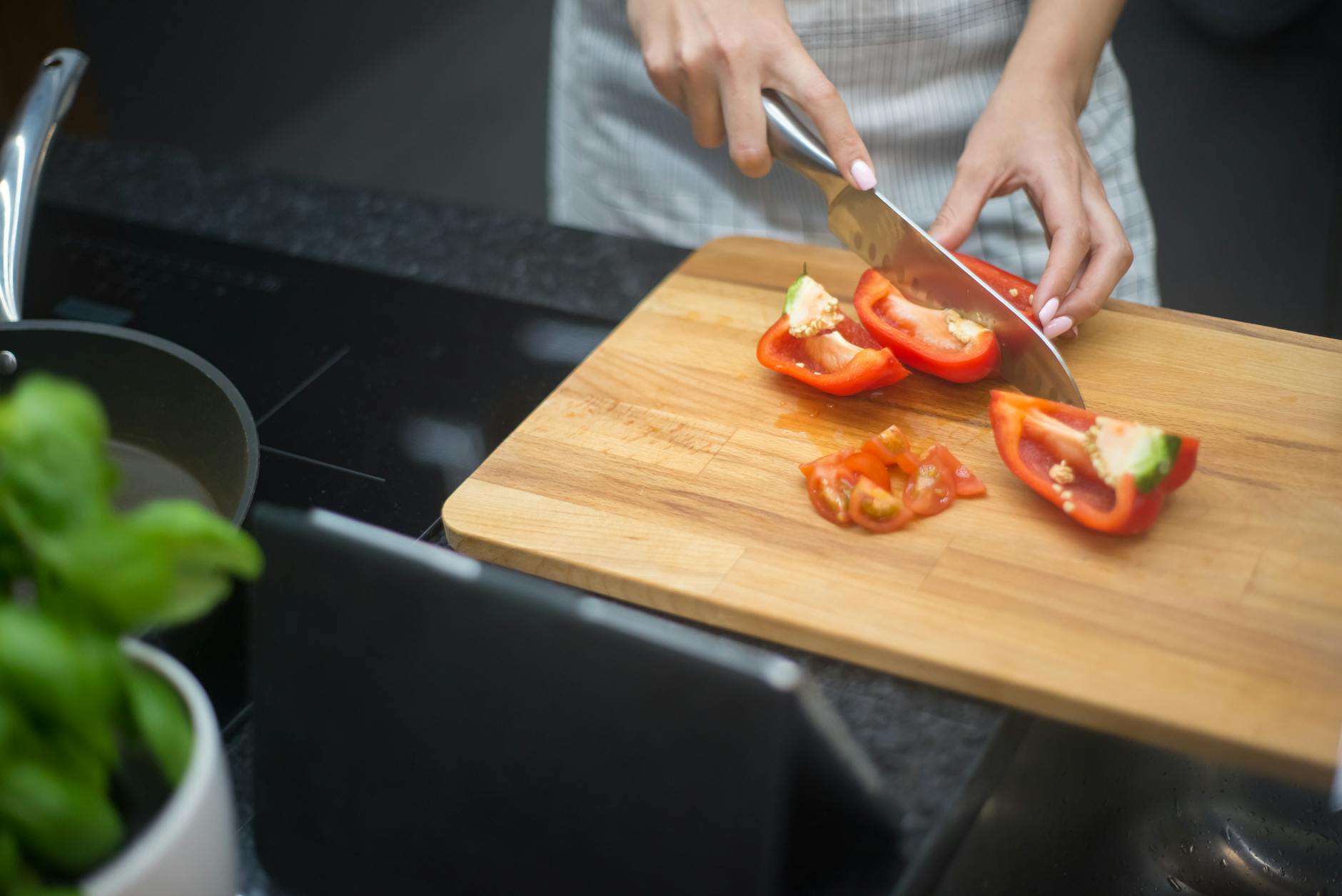 Photo by Kampus Production / Pexels
Meal prep fails for most people not because of discipline but because of poor systems — wrong containers, inefficient cooking order, or no clear plan before shopping. Fix the system and consistency follows automatically.
How We Evaluate Meal Prep Methods
We analyzed food safety guidelines from the USDA and FDA, reviewed storage science research, and cross-referenced techniques from professional meal prep services and registered dietitians. The focus is on methods that maximize food quality and safety over 4–5 day refrigeration windows.
The 2-Hour Sunday System
Structure determines whether meal prep happens consistently. A workable two-hour block covers most households:

- Minutes 0–15: Prep all vegetables (wash, chop, portion). Use one large cutting board; group by cooking method.
- Minutes 15–30: Start grains (rice, quinoa, farro take 15–25 min unattended). Start protein marinades.
- Minutes 30–60: Sheet pan roasting (400–425°F). One pan proteins, one pan vegetables — both fit in a standard oven simultaneously.
- Minutes 60–90: Stovetop proteins (chicken thighs, ground meat, hard-boiled eggs). Pack containers while oven items finish.
- Minutes 90–120: Assembly, labeling, refrigeration. Cool food to below 70°F before refrigerating — warm food raises fridge temperature and promotes bacterial growth.
Cooking Order: Parallel Paths Win
The biggest efficiency gain is running the oven and stovetop simultaneously, not sequentially. A common mistake is waiting for roasted vegetables to finish before starting stovetop proteins — this doubles total time. Instead, start the longest item first (grains, 20–25 min), then roast proteins + vegetables in parallel (25–30 min), then do stovetop items while the oven items rest.
Container Strategy: What Actually Keeps Food Fresh
Container choice has a measurable impact on food quality over 4–5 days:
- Glass containers (Pyrex, OXO): Best for cooked proteins and grains — don't absorb odors, microwave-safe without lid, last indefinitely. $4–8 per container.
- BPA-free plastic (Rubbermaid Brilliance): Best for portability — lighter than glass, leak-proof lids. Not for high-acid foods (tomato sauce stains and absorbs into plastic). $2–4 per container.
- Mason jars: Best for salads, smoothies, and overnight oats — the vertical layering keeps dressing separate from greens until eating. Extends salad life from 2 to 5 days. $1–2 per jar.
- Vacuum-seal containers: Extend delicate foods (cut fruit, avocado) from 2 to 4 days by removing oxygen that causes oxidation.
Food Safety: Refrigeration and Freezing Windows
USDA guidelines for refrigerated cooked food: cooked chicken and beef 3–4 days, cooked fish 3 days, cooked grains 4–5 days, cooked vegetables 3–5 days, hard-boiled eggs 1 week. For meal prep covering more than 5 days: freeze portions beyond day 4 immediately after cooking. Use freezer bags with air pressed out — flat-frozen bags stack more efficiently and thaw faster than containers. Label with date and contents.
Equipment That Makes the Biggest Difference
- Sheet pans (18×13" half sheet): Roast 4–6 servings of protein or vegetables in one batch. Non-stick or aluminum with parchment paper — cleanup takes 30 seconds. $15–25 each; buy two.
- Instant Pot or pressure cooker: Cooks dried beans from scratch in 25–35 minutes (vs 90 min stovetop), chicken in 10 minutes. Weekly bean batch saves $15–20 vs canned beans.
- Rice cooker: Set-and-forget grains while doing other prep. A 6-cup rice cooker handles 3–4 days of grain portions unattended.
- Kitchen scale: Portion control by weight (not volume) is 30% more accurate. A $15–25 digital scale pays for itself in one month by reducing over-portioning.
- Chef's knife (8-inch): A sharp knife cuts vegetable prep time by 30–40%. Hone weekly; sharpen every 2–3 months.
What to Prep vs. What to Leave Fresh
Not everything benefits from advance prep. Prep these in advance: grains, legumes, roasted vegetables, marinated proteins, hard-boiled eggs, washed and chopped raw vegetables, sauces and dressings. Leave these until day-of: avocado (browns in 24 hours even with acid), delicate fish (best cooked fresh), leafy green salads (without mason jar layering), pasta (absorbs sauce and becomes starchy after 2 days).
Sample Weekly Prep Menu ($40–50 for 5 days, 2 people)
Grains: 3 cups rice ($1.50), 2 cups quinoa ($2). Proteins: 2.5 lbs chicken thighs ($6–8), 1.5 lbs ground beef ($7–9), 1 dozen eggs ($3–4). Vegetables: 2 large sweet potatoes ($2), 2 bell peppers ($2), 1 lb broccoli ($2), 1 bag mixed greens ($3). Total: $28–31. With sauces and pantry items: approximately $40–50 total, or $4–5 per meal vs. $12–18 takeout.
Watch Before You Buy


“Stainless steel mixing bowl set with lids for marinating, tossing, and storing prepped ingredients — the Whysko for cooks who prep large volumes where plastic bowls flex and tip. Nesting design…”
See Today’s Price →What we like
- Stainless steel bowls nest compactly — multiple bowls store in less space than flat-bottom containers
- Non-reactive surface is safe for marinating proteins in acidic ingredients without metallic flavor transfer
- Measurement markings inside each bowl reduce the need for separate measuring cups during prep sessions
Watch out for
- Mixing bowls are preparation tools, not storage containers — cannot replace lidded meal prep boxes for portioning
- No lids included — prepped ingredients cannot be stored in the refrigerator without adding plastic wrap
Read Full Analysis
The Whysko Stainless Steel Mixing Bowls serve a distinct purpose in the meal prep workflow from the container-focused products on this page: they're preparation tools rather than storage solutions. The distinction matters for meal preppers who handle large batch volumes — marinating 4 pounds of chicken, tossing a double batch of grain salad, mixing 8 servings of overnight oats — where the prep vessel needs to be sized for the full batch rather than individual portions. Stainless steel's key advantage for meal prep specifically is its non-reactive surface. Acidic marinades (citrus, vinegar, tomato) interact with aluminum and some plastics over extended contact times, producing off-flavors and potential chemical transfer. Stainless holds marinating proteins for several hours without the bowl becoming part of the flavor profile — relevant for cooks who marinate overnight in the refrigerator before Sunday cooking sessions. The measurement markings inside each bowl allow direct portioning during mixing without requiring separate measuring cups, which reduces cleanup and simplifies scaling recipes up or down. At $27.99, the Whysko is the most affordable stainless mixing bowl set relative to comparable options. The nesting design stores all bowls in the cabinet footprint of the largest bowl, making them practical for kitchens without extensive storage space. The honest limitation is the storage use case: without lids, prepped ingredients sitting in these bowls need plastic wrap coverage for refrigerator storage, which adds a step compared to lidded containers. For buyers who need a prep vessel for mixing and marinating and use lidded containers separately for portioned storage, the Whysko filling the prep side of that workflow makes practical sense.
“By choosing ThinkFit, you’re supporting a US-based, family-owned small business backed by the SBA. 4.7 stars from 4,653 Amazon reviews signal consistent reliability.”
See Today’s Price →What we like
- Insulated carry bag keeps cold meals at safe temperature for 6+ hours between morning prep and lunchtime
- Multiple interior compartments separate snacks, dressings, and mains without separate bags
- Shoulder strap and handle offer two carry options for commuters and gym-goers
Watch out for
- Carry bag requires separate containers inside — not a standalone food storage solution
- Insulation performance depends on pre-chilling with an ice pack — no ice pack included in the kit
Read Full Analysis
The ThinkFit earns its "Best Lunch Box" position by solving the meal prep transport problem that the other products on this page don't address: getting portioned meals from the refrigerator to the office or gym at a safe temperature without needing a separate bag. The insulated carry bag maintains cold meal temperatures for 6+ hours, which covers the window from morning departure to a noon lunch without requiring a separate ice pack — though pre-chilling the bag does improve performance for longer carry times. The multi-compartment interior is the practical differentiator from a generic insulated bag. Separate sections for mains, snacks, dressings, and utensils mean the meal arrives organized rather than jumbled from transit movement. The dual carry options — shoulder strap and handle — reflect genuine ergonomic consideration for commuters who may have one hand occupied with a bag or coffee during transit. Compared to the Stack Man containers at rank 1 (which are storage-optimized for the refrigerator), the ThinkFit is transport-optimized — it's the product that makes the Stack Man containers useful outside the kitchen. Compared to the Fitpacker portion control containers at rank 4, the ThinkFit is format-agnostic: it carries whatever containers you already own without requiring a specific size. The honest limitation is that it requires containers inside it to function — it's a carry system, not a standalone food storage solution.

“Cooks up to 12 eggs in multiple styles — hard, soft, medium boiled, poached, or scrambled — using steam without boiling water or timing — the Dash Deluxe at $29.99 for meal preppers who batch eggs…”
See Today’s Price →What we like
- Produces 12 hard, soft, or medium boiled eggs simultaneously — one of the highest batch outputs of any countertop egg cooker
- Auto-shutoff alarm sounds when eggs finish — no timer-watching or risk of overcooking during a busy meal prep session
- Detachable tray and rack are dishwasher-safe for quick cleanup after batch egg prep
Watch out for
- Dedicated function only — does not poach, scramble, or fry, so it adds an appliance if you don't already own one
- At $49.95 it costs more than stovetop batch cooking — value increases proportionally with prep frequency
Read Full Analysis
The Dash Deluxe Rapid Egg Cooker at $29.99 addresses one of the most consistent meal prep pain points: batch boiling eggs without monitoring a pot. Stovetop egg boiling requires timing from the moment water hits boiling, accounts for elevation adjustments, and produces inconsistent results because home burner heat varies. The Dash uses measured steam rather than submersion boiling — add water to the measuring cup marked for the desired doneness, pour into the tray, and the unit produces consistent hard, soft, or medium-boiled eggs without supervision. The auto-shutoff alarm signals completion. The 12-egg capacity is the meaningful specification for weekly prep. A batch of 12 hard-boiled eggs covers a full week's protein for most meal prep schedules — sliced into salads, eaten as standalone snacks, or incorporated into egg salads and grain bowls. Processing 12 in one cycle at the start of a prep session takes roughly 15 minutes of unattended time while other prep tasks happen simultaneously. The steam method also produces eggs that peel significantly more easily than pot-boiled eggs, which is a practical time saver when processing a full dozen. At $49.95 it's the highest-priced product on this meal prep page, and the value case depends on frequency. Weekly meal preppers who cook 12 eggs every Sunday will recoup the cost quickly in time saved and consistent results. Occasional cooks who boil eggs once a month will find the stovetop method adequate. The detachable tray and rack are dishwasher-safe — cleanup after a full batch takes less than two minutes. For dedicated weekly preppers, this is a purpose-built tool that removes one consistent friction point from the Sunday routine.
Frequently Asked Questions
How long does meal-prepped food last in the fridge?
What containers are best for meal prep?
Should I cook everything before storing or prep ingredients raw?
Is it safe to reheat meal-prepped food multiple times?
What's the most efficient order to batch cook?
How We Analyze Products
We analyze Amazon review data — often thousands of reviews per product — to surface patterns that individual buyers miss. Our process aggregates star ratings, review counts, and buyer sentiment at scale, identifying which strengths and weaknesses appear consistently across the largest review samples available. The 12,762+ reviews analyzed on this page represent real verified-purchase feedback from Amazon buyers.
Each product earned its placement through data: total review volume, average rating, and the specific praise and complaints that repeat most often across buyers. No manufacturer paid for placement on this page. Products appear here because buyers endorsed them at scale, not because a company asked us to feature them.
We use AI to summarize review sentiment — not to fabricate opinions, but to condense what thousands of buyers actually wrote into a readable format. The pros and cons you see reflect the most common themes found in verified purchaser reviews, paraphrased for clarity. We do not claim to have accessed Reddit, YouTube, or specific publications in generating these summaries.
Prices shown reflect Amazon pricing at the time this page was last generated. Click “See Today’s Price” to get the current live price on Amazon. Read our full methodology →