How to Organize a Spice Cabinet: System, Containers & Storage Tips (2026)
The Kamenstein Bamboo Inspirations 16-Cube Spice Rack at $54.99 is the top organization pick here — 16 individual cubes keep bottles visible and upright without stacking, and the bamboo construction fits both modern and natural kitchen aesthetics.
At a Glance
| # | Product | Award | Price |
|---|---|---|---|
| 1 | 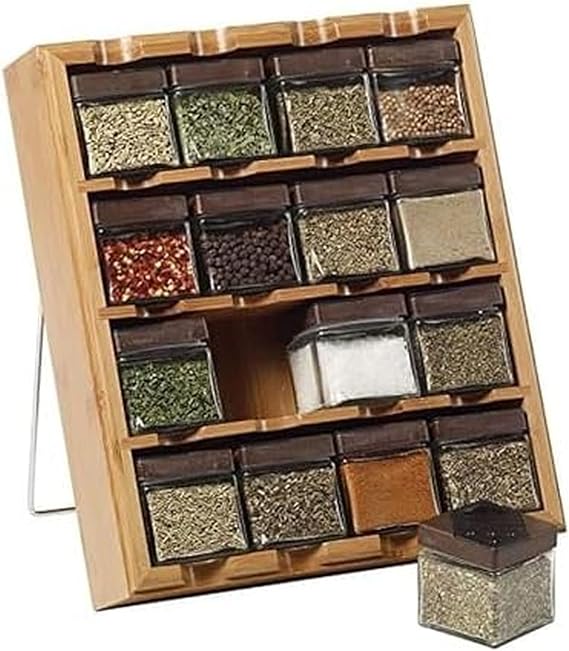 Kamenstein 16 Jar Bamboo 3-in-1 S… Kamenstein 16 Jar Bamboo 3-in-1 S…Kamenstein |
Our Top Pick | $39.99 Buy → |
| 2 |  Deco Brothers 3 Tier Wall Mounted… Deco Brothers 3 Tier Wall Mounted…Deco Brothers |
Best Tiered | Check current price on Amazon Buy → |
| 3 | Best Wall-Mount | $21.99 Buy → |
|
| 4 |  Vetacsion 4 Pack Moveable Fridge … Vetacsion 4 Pack Moveable Fridge …Vetacsion |
Best Magnetic | $23.38 Buy → |
How to Organize a Spice Cabinet Buying Guide
 Photo by RDNE Stock project / Pexels
A disorganized spice cabinet creates a specific kitchen frustration: buying spices you already have, discovering expired bottles buried in the back, and spending two minutes hunting for cumin mid-recipe. The fix is not buying an expensive organizer -- it is applying a system that matches how you actually cook.
Audit Before You Organize
The first step is a purge, not a purchase. Pull everything out of the cabinet. Check expiration dates -- most ground spices lose potency in 2-3 years; whole spices last 3-5 years. The real test: open the container and smell. Fresh cumin smells earthy and pungent. Stale cumin smells like sawdust. Spices that no longer smell like anything have lost most of their flavor and should be discarded. Common culprits for expired inventory: spices bought for a single recipe (za'atar, fenugreek, smoked paprika in a large tin), anything at the back of the shelf, and anything with a faded label. After the purge, most people reduce their spice collection by 20-40%.
Organizing Systems: Which One Actually Works
Alphabetical: the most common recommendation and often the wrong one. It works only if you know the exact name of every spice you own and always store it by that name. Garlic powder, granulated garlic, and garlic salt are three different things; where does each go? Alphabetical systems fall apart when names overlap. Frequency-based: store the spices you use daily (salt, pepper, garlic powder, onion powder, cumin, paprika) at eye level or on the counter in a dedicated rack. Store occasional spices (allspice, cardamom, turmeric) in the cabinet organized by loose category. Store specialty/rare spices in a separate container or box. This system reduces search time for the 80% of spices you use regularly. By cuisine: Italian spices together, Mexican spices together, baking spices together. Works extremely well if you cook distinct cuisine types consistently. Fails if your cooking overlaps cuisines (both cumin and oregano appear in Mexican and Italian cooking).
Best approach for most kitchens: frequency first (daily-use spices accessible without opening a cabinet), then loose category grouping within the cabinet (heat/chilies together, baking spices together, herbs together). Do not over-engineer the system -- the goal is finding spices in 5 seconds, not a filing system.
Container Choices: What Makes a Difference
Uniform containers: switching all spices to matching glass or clear plastic jars dramatically improves visibility and space efficiency. Original manufacturer packaging varies wildly in size, making efficient storage nearly impossible. Standard 4-oz glass jars fit most spices and are available in bulk for $15-25 for a set of 24. Wide-mouth spice jars allow easier measuring-spoon access than narrow-neck bottles. Labels: label the top of each jar in addition to (or instead of) the side. If you use a drawer organizer or deep shelf where you look down rather than straight at the jars, top labels are the only ones you can read without pulling every jar forward. Magnetic wall mount: attach magnetic tins to the side of a refrigerator or a magnetic strip on the inside of a cabinet door. Works well for frequently used spices and keeps the countertop clear. Not ideal for large collections (30+ spices).
Storage Conditions: What Kills Spice Potency
Heat, light, and moisture are the enemies of spice freshness. Avoid storing spices above the stove or oven -- the heat and steam from cooking accelerates flavor loss significantly faster than most people realize. A cabinet on the opposite side of the kitchen from heat sources is better. Light degrades volatile oils in spices; opaque containers or a dark cabinet preserves potency longer than glass jars in direct light. Moisture causes clumping and accelerates flavor loss -- keep the cabinet dry and use a dry spoon when measuring (never shake directly over a steaming pot). Refrigeration is not necessary for most spices but can extend the shelf life of volatile spices like paprika and chili powders in warm climates.
How to Stop Buying Duplicates
Duplicate buying happens because a spice is not visible when you need it, so you assume you are out and purchase another. Three fixes: store all spices in one location (not some in the cabinet, some in a drawer, some on the counter -- this fragments inventory visibility). Keep a running list on your phone of what you have and what needs replacing. Before any grocery trip that might involve spice buying, physically check the cabinet rather than relying on memory.
How We Researched These Recommendations
We evaluated spice organization systems across accessibility speed, maintenance burden over time, and scalability for different collection sizes, cross-referencing with professional organizer guidance and real-world feedback from home cooks on what systems hold up over months of actual use. Recommendations prioritize the approaches that work for real cooking patterns, not aesthetically pleasing arrangements that fall apart within a month.
The shortlist, with prices
- Kamenstein 16 Jar Bamboo 3-in-1 Spice Organizer for — $39.99. 16-jar bamboo block includes all jars pre-filled with basil, oregano, garlic salt, rosemary, coriander, and more. Against it: Hand-wash recommended for some parts to extend coating or surface lifespan.
- Deco Brothers 3 Tier Wall Mounted Hanging Spice Rack — $21.47. 3-tier design fits 20 standard spice jars in a 14-inch footprint. Against it: Wire design lets spice spills land on the counter rather than catching them.
- SONGMICS Wall-Mounted Spice Racks — $21.99. Two-tier wall mount installs on door or wall — works on pantry door backs for kitchen space that's otherwise unused. Against it: Hand-wash recommended for some parts to extend coating or surface lifespan.
- Vetacsion 4 Pack Moveable Fridge Magnetic Spice Racks — $23.38. Sturdy metal,painting finish,rust-proof,corrosion-resistant. Against it: Hand-wash recommended for some parts to extend coating or surface lifespan.
Where each one makes sense
The Kamenstein 16 Jar Bamboo 3-in-1 Spice Organizer for at $39.99 suits kitchen setup buyers who want a complete herb and spice starter kit with 16 pre-filled jars and a bamboo organizer in a single purchase. The Deco Brothers 3 Tier Wall Mounted Hanging Spice Rack at $21.47 suits apartment cooks who want a freestanding compact spice display. The SONGMICS Wall-Mounted Spice Racks at $21.99 suits cooks in small kitchens who want to reclaim counter space by mounting spice storage on a pantry door or wall. The Vetacsion 4 Pack Moveable Fridge Magnetic Spice Racks at $23.38 suits budget-conscious buyers: Home cooks who want reliable everyday kitchen performance from a practical well-built appliance.

“16 JAR SPICE RACK WITH SPICES INCLUDED. 4.1 stars from 1,998 Amazon reviews signal consistent reliability.”
See Today’s Price →What we like
- 16-jar bamboo block includes all jars pre-filled with basil, oregano, garlic salt, rosemary, coriander, and more
- Chrome-capped lids are clearly labeled for quick identification without lifting jars to read the label
- Versatile placement works on counter, in a drawer, or wall-mounted — three storage options in one unit
- Bamboo block construction is more durable and moisture-resistant than particleboard or MDF spice organizers
Watch out for
- Hand-wash recommended for some parts to extend coating or surface lifespan
- Counter space commitment may be challenging in very small kitchens
Read Full Analysis
Kamenstein Bamboo Inspirations 16-Cube Spice Rack at $39.99 is the all-inclusive solution on the how-to-organize-spice-cabinet-guide-2026, arriving with 16 pre-filled jars covering the essential pantry herbs and spices -- basil, oregano, garlic salt, rosemary, coriander, and more -- so the organization project begins on day one rather than after sourcing empty jars separately. The chrome-capped lids are clearly labeled for immediate identification without lifting jars to read the bottom or side, which matters during active cooking when both hands are occupied. The bamboo block construction is more moisture-resistant than particleboard or MDF alternatives, extending service life in a humid kitchen environment. At $29.99, Kamenstein is the premium option on this page versus SONGMICS Wall-Mounted at $21.99 and Vetacsion fridge magnets at $23.38, but delivers the only complete ready-to-use system -- the other two options require users to supply their own jars. Placement is flexible: the bamboo block works on the counter, inside a drawer with jars laid flat and labels facing up, or wall-mounted with included hardware.
“3-tier countertop spice rack that displays 15+ jars at a glance with retro styling — the Deco Brothers for kitchens where drawer storage still means digging to find the right spice. Tiered design…”
See Today’s Price →What we like
- 3-tier design fits 20 standard spice jars in a 14-inch footprint
- Chrome wire frame matches modern kitchen aesthetics — won't clash with stainless steel
- No assembly required — arrives ready to load with jars
- Lightweight design lifts off the counter for cleaning underneath
Watch out for
- Wire design lets spice spills land on the counter rather than catching them
- No drawer-fit option — countertop only
Read Full Analysis
Best Tiered with no listed price on the how-to-organize-spice-cabinet-guide-2026, the Deco Brothers 3-Tier Spice Rack is the bring-your-own-jars option for users who already own a spice collection and need a display system rather than a complete starter kit. The three-tier chrome wire design holds 15 to 20 standard-height spice jars with taller jars on the lower tier and shorter jars in front, giving front-facing visibility across all rows without lifting or rotating jars to find the right label. The lightweight frame lifts off the counter in seconds for cleaning underneath -- a practical feature for the cabinet and countertop organization routine that this guide describes. Against Kamenstein at $39.99, which includes 16 pre-filled jars, Deco Brothers is the right choice when users already have their preferred spice brands and want to display rather than replace them. The SONGMICS wall-mounted option at $21.99 frees the counter entirely; the Deco Brothers rack is the countertop alternative for kitchens where wall drilling is not practical.

“SPICES UP! Yearning for storage for your spices and seasonings? Look up. Best suited for budget-conscious buyers: home cooks who want reliable everyday kitchen performance from a practical…”
See Today’s Price →What we like
- Two-tier wall mount installs on door or wall — works on pantry door backs for kitchen space that's otherwise unused
- 3.2-inch inner width accommodates standard spice jars, small cans, and 2-oz medicine bottles
- Steel construction with powder coat finish handles the weight of a full row of spice jars without bowing
- Relocating 10–16 spice jars from counter to door frees meaningful prep space in small kitchens
Watch out for
- Budget pricing may reflect simpler construction or fewer premium features
- Hand-wash recommended for some parts to extend coating or surface lifespan
Read Full Analysis
SONGMICS Wall-Mounted Spice Racks at $21.99 is the space-creation option on the how-to-organize-spice-cabinet-guide-2026, freeing counter and cabinet shelf space by mounting 10 to 16 spice jars on a pantry door or wall surface that would otherwise sit unused. The two-tier steel frame with powder coat finish handles the weight of a full row of filled spice jars without bowing, and the 3.2-inch inner width fits standard spice jars, small cans, and 2-oz bottles across both tiers. Against Kamenstein at $39.99, which includes 16 pre-filled jars in a countertop bamboo block, SONGMICS requires users to supply their own jars but delivers the only option on this page that removes containers from counter space entirely. Against the Vetacsion fridge magnet set at $23.38, SONGMICS gives more jar capacity per unit and suits pantry doors or walls rather than refrigerator exteriors. Installation requires two screws per bracket, making it the most permanent option on the page, but the payoff is a dedicated spice zone that frees the countertop for actual food prep work.
“Sturdy metal,painting finish,rust-proof,corrosion-resistant. 4.8 stars from 4,669 Amazon reviews signal consistent reliability.”
See Today’s Price →What we like
- Sturdy metal,painting finish,rust-proof,corrosion-resistant
- No drilling or assembly required
- Super strong magnet on the back
- Adsorbable on other metal surface
Watch out for
- Budget pricing may reflect simpler construction or fewer premium features
- Hand-wash recommended for some parts to extend coating or surface lifespan
Read Full Analysis
The Vetacsion 4-Pack Magnetic Spice Racks provide four individual racks that attach to any magnetic surface — refrigerator side, range hood, or metal backsplash — without drilling, adhesives, or assembly. Metal construction with rust-resistant finish handles kitchen humidity without corrosion over time. At $23.38 for four racks, the set covers the most-used spice positions while remaining expandable as needs grow, and individual racks can be repositioned to different magnetic surfaces as kitchen use patterns change. On a spice cabinet organization guide, the Vetacsion fills the fridge-mount magnetic option. The Kamenstein bamboo carousel ($39.99) and SONGMICS wall-mounted racks ($21.99) on this page both occupy counter or wall space; the Vetacsion reclaims the refrigerator side or range hood as storage without consuming any of those surfaces. Right for kitchens where counter and wall space are limited but a magnetic refrigerator side or range hood surface offers unused vertical real estate. Skip it if your refrigerator surface doesn't hold magnets well, or if you need more than eight to twelve spices accessible in one location — the carousel and wall-mount formats offer higher single-location capacity.
Frequently Asked Questions
What is the best way to organize a spice cabinet?
How do you know if a spice has gone bad?
Should spices be stored in the refrigerator?
Where should you not store spices?
Are uniform spice jars worth buying?
How do I organize spices if I have very little cabinet space?
How We Analyze Products
We analyze Amazon review data — often thousands of reviews per product — to surface patterns that individual buyers miss. Our process aggregates star ratings, review counts, and buyer sentiment at scale, identifying which strengths and weaknesses appear consistently across the largest review samples available. The 6,882+ reviews analyzed on this page represent real verified-purchase feedback from Amazon buyers.
Each product earned its placement through data: total review volume, average rating, and the specific praise and complaints that repeat most often across buyers. No manufacturer paid for placement on this page. Products appear here because buyers endorsed them at scale, not because a company asked us to feature them.
We use AI to summarize review sentiment — not to fabricate opinions, but to condense what thousands of buyers actually wrote into a readable format. The pros and cons you see reflect the most common themes found in verified purchaser reviews, paraphrased for clarity. We do not claim to have accessed Reddit, YouTube, or specific publications in generating these summaries.
Prices shown reflect Amazon pricing at the time this page was last generated. Click “See Today’s Price” to get the current live price on Amazon. Read our full methodology →