How to Season Cast Iron: Initial, Maintenance & Restoration Guide (2026)
Season cast iron by applying a very thin layer of high-smoke-point oil (flaxseed, Crisco, or lard work well — avoid olive oil for initial seasoning), wiping off almost all of it so the surface looks nearly dry, then baking upside down at 450-500°F for 1 hour. Repeat 3-6 times for a new pan. For maintenance: cook fatty foods, avoid prolonged acidic cooking, and apply a thin oil layer after each wash.
How to Season Cast Iron Buying Guide
 Photo by Abdullah Oguk / Pexels
| Best For | ||||
| Time Required | ||||
| Oil Temp Needed | ||||
| Coverage Quality | ||||
| Smoke Level | ||||
| Our Pick For |
Our Top Pick
Lodge 10.25 Inch Cast Iron Skillet at $24.90 — Season cast iron by applying a very thin layer of high-smoke-point oil (flaxseed, Crisco, or lard work well — avoid o....
Budget Pick: Lodge 12-inch Cast Iron Skillet at $29.49 — a solid choice if you're watching your budget.
This guide is for you if:
-
You're equipping a kitchen and don't know which cookware material to buy
-
You want to understand real-world differences between cast iron, stainless, and nonstick
-
You've gotten conflicting advice about pans and want a clear, honest answer
Skip this guide if:
-
You've decided on a material and just need the best brand — see our cookware comparison pages
-
You're a professional chef — home cooking has different durability and cleaning trade-offs
Quick verdict: Season cast iron by applying a very thin layer of high-smoke-point oil (flaxseed, Crisco, or lard work well — avoid olive oil for initial seasoning), wiping off almost all of it so the surface looks nearly dry, then baking upside down at 450-500°F for 1 hour. Repeat 3-6 times for a new pan.
## What Is Seasoning, Really?
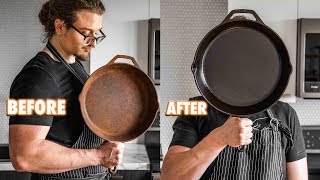
"Seasoning" sounds like flavoring, but it has nothing to do with salt and pepper. Cast iron seasoning is a polymerized layer of oil baked onto the surface of the metal. Understanding this changes everything about how you season.
When oil is heated to high temperatures, its fatty acid chains cross-link and bond together in a process called polymerization. Instead of remaining a liquid oil, the heated oil converts into a hard, plastic-like polymer that bonds to the iron surface. This polymer layer is:
-
Durable (sticks to the iron rather than rubbing off)
Every time you cook with cast iron — especially with oil or fat — you add infinitesimally thin new polymer layers. Every time you cook acidic foods or scrub too aggressively, you remove some. Seasoning is not a one-time event; it's a continuous process.
---## The Science of Oil Selection
The single biggest controversy in the cast iron world is oil selection. There are strong opinions on flaxseed oil, Crisco, lard, grapeseed, and every other option. Here's what the science actually says.
The quality of a seasoning layer depends on how completely the oil polymerizes. Oils with a high proportion of polyunsaturated fatty acids (PUFAs) polymerize more completely and form harder, more durable seasoning layers. Oils with a high proportion of saturated fats polymerize less completely but form more flexible, resilient layers.
Flaxseed oil: Extremely high in PUFAs (particularly linolenic acid). Popularized by food science blogger Sheryl Canter as the best seasoning oil. Creates very hard layers. However, practical experience and follow-up testing have found flaxseed seasoning can be brittle and flake off with thermal stress. Not universally recommended anymore despite the theory.
Crisco (vegetable shortening): The Lodge factory standard. Balanced fatty acid profile creates flexible, durable polymer layers. Easy to apply in the correct thin amount. Works well for initial and maintenance seasoning.
Lard and tallow: Traditional choices before vegetable oils were widely available. High saturated fat content creates a more flexible (less hard) polymer layer. Very durable. Lard is what your grandmother's cast iron was seasoned with. Still excellent.
Grapeseed oil: High in PUFAs, high smoke point (420°F), relatively neutral flavor. A popular modern choice, performs similarly to flaxseed without the brittleness concerns.
Avocado oil: Very high smoke point (520°F), high PUFA content. Works well, particularly for high-heat seasoning bakes. More expensive than other options.
Canola oil: Widely available, decent PUFA content, 400°F smoke point. Fine for maintenance seasoning; works for initial seasoning but not the top pick.
Olive oil: Low smoke point (~375°F), mixed fatty acid profile. Fine for cooking, not ideal for dedicated seasoning bakes (can become sticky). Not recommended for initial seasoning.
Coconut oil: Very high saturated fat content, forms soft polymer layers that don't last as long. Use for cooking, not dedicated seasoning.
Crisbee Puck: A commercial seasoning conditioner made from beeswax, soybean oil, and palm oil. Pre-formulated for optimal fatty acid balance and application consistency. Convenient and effective, especially for maintenance.

For initial seasoning: flaxseed, grapeseed, Crisco, or lard. All work. The difference between them matters far less than application technique (thin layers) and baking temperature and time.
For maintenance: whatever you cook with. The fat that renders from a bacon strip is seasoning. The butter you use for eggs adds seasoning. Regular cooking is the best maintenance.
---## Initial Seasoning: Step-by-Step
This is for a brand new pan or one you've fully stripped down to bare metal.
-
The cast iron pan
-
High-smoke-point oil (grapeseed, flaxseed, Crisco, or lard)
-
Aluminum foil or a baking sheet (to catch drips)
New Lodge pans come pre-seasoned from the factory, but the seasoning is thin and benefit from building up. If it's a new pan, wash with hot soapy water to remove any factory residue or shipping oil, then rinse thoroughly.
If this is a stripped/restored pan: wash, rinse, then dry completely on the stovetop over medium heat for 3-5 minutes until all visible moisture evaporates. Surface should look completely matte gray.
Critical: Cast iron must be completely dry before oiling. Water under the oil layer prevents proper polymerization.
At a Glance

Showing 3 of 3 products

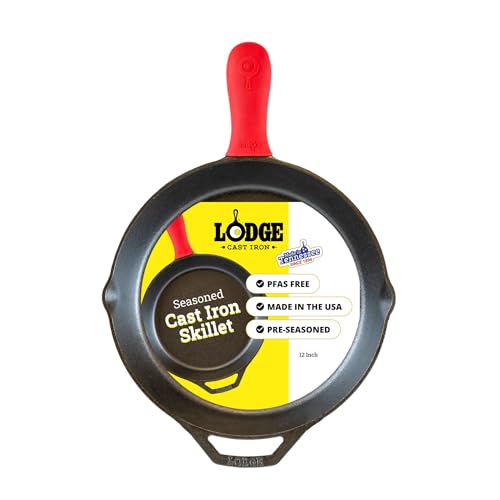
Lodge 10.25 Inch Cast Iron Skillet
“Lodge 10.25-inch is the cast iron benchmark — preseasoned in the USA, virtually indestructible, and one of the best kitchen investments available at $34. Tens of millions sold for a reason.”
See Today’s Price →What we like
- Pre-seasoned and ready to use
- Made in USA (South Pittsburg, Tennessee)
- Virtually indestructible
- Improves with every use
- Oven-safe at any temperature
Watch out for
- Heavy (5.35 lbs)
- Textured surface — not as smooth as machined brands
- Requires maintenance (drying, oiling)

Lodge 12-inch Cast Iron Skillet
“The Lodge 12-inch is the definitive cast iron skillet for home cooks who want the best combination of cooking surface area, proven reliability, and unbeatable price-to-performance ratio.”
See Today’s Price →What we like
- Pre-seasoned with vegetable oil and ready to cook day one
- 12-inch surface handles large cuts, family meals, and batch cooking
- Induction-compatible and oven-safe to any temperature
- 40,000+ verified Amazon reviews confirm long-term reliability
Watch out for
- At ~7 lbs, heavier than smaller cast iron options
- Rough factory surface smooths with use but takes several cooking sessions

Frequently Asked Questions
Can I use soap on cast iron?
What oil is best for seasoning cast iron?
How many seasoning layers do I need?
My cast iron is sticky after seasoning — what happened?
Can I use cast iron in the oven?
How do I restore rusty cast iron?
Can I cook eggs on cast iron?
What's the difference between Lodge and vintage cast iron?
How We Analyze Products
We analyze Amazon review data — often thousands of reviews per product — to surface patterns that individual buyers miss. Our process aggregates star ratings, review counts, and buyer sentiment at scale, identifying which strengths and weaknesses appear consistently across the largest review samples available. The 326,839+ reviews analyzed on this page represent real verified-purchase feedback from Amazon buyers.
Each product earned its placement through data: total review volume, average rating, and the specific praise and complaints that repeat most often across buyers. No manufacturer paid for placement on this page. Products appear here because buyers endorsed them at scale, not because a company asked us to feature them.
We use AI to summarize review sentiment — not to fabricate opinions, but to condense what thousands of buyers actually wrote into a readable format. The pros and cons you see reflect the most common themes found in verified purchaser reviews, paraphrased for clarity. We do not claim to have accessed Reddit, YouTube, or specific publications in generating these summaries.
Prices shown reflect Amazon pricing at the time this page was last generated. Click “See Today’s Price” to get the current live price on Amazon. Read our full methodology →