How to Store Kitchen Knives Properly: 2026 Guide
A magnetic knife strip protects blade edges better than any block — no contact wear between uses. If you prefer a block, the Victorinox Swiss Classic 6-Piece Knife Block Set at $78.90 uses horizontal slots that keep blades away from wooden walls. Avoid traditional vertical-slot blocks that dull edges daily.
At a Glance
| # | Product | Award | Price |
|---|---|---|---|
| 1 |  Victorinox Swiss Classic Kitchen … Victorinox Swiss Classic Kitchen …Victorinox |
Our Top Pick | $92.95 Buy → |
| 2 |  CUISINART Block Knife Set, 15pc C… CUISINART Block Knife Set, 15pc C…Cuisinart |
Most Comprehensive | Check current price on Amazon Buy → |
| 3 | Best Steak | $215 Buy → |
|
| 4 |  Farberware Self-Sharpening 13-Pie… Farberware Self-Sharpening 13-Pie…Farberware |
Best Self-Sharpening | $56.14 Buy → |
| 5 | 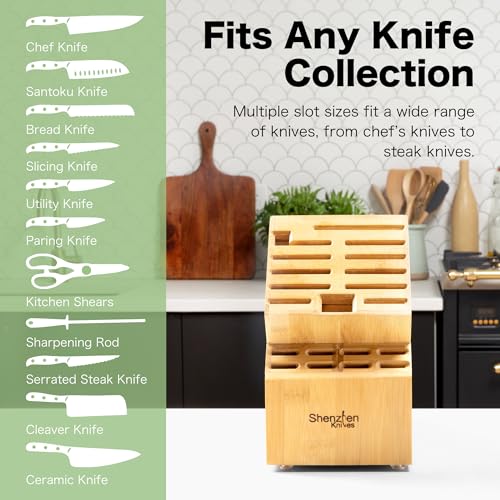 Shenzhen Knives 20 Slot Universal… Shenzhen Knives 20 Slot Universal…Shenzhen Knives |
Best Bamboo | Check current price on Amazon Buy → |
How to Store Kitchen Knives Properly: Buying Guide
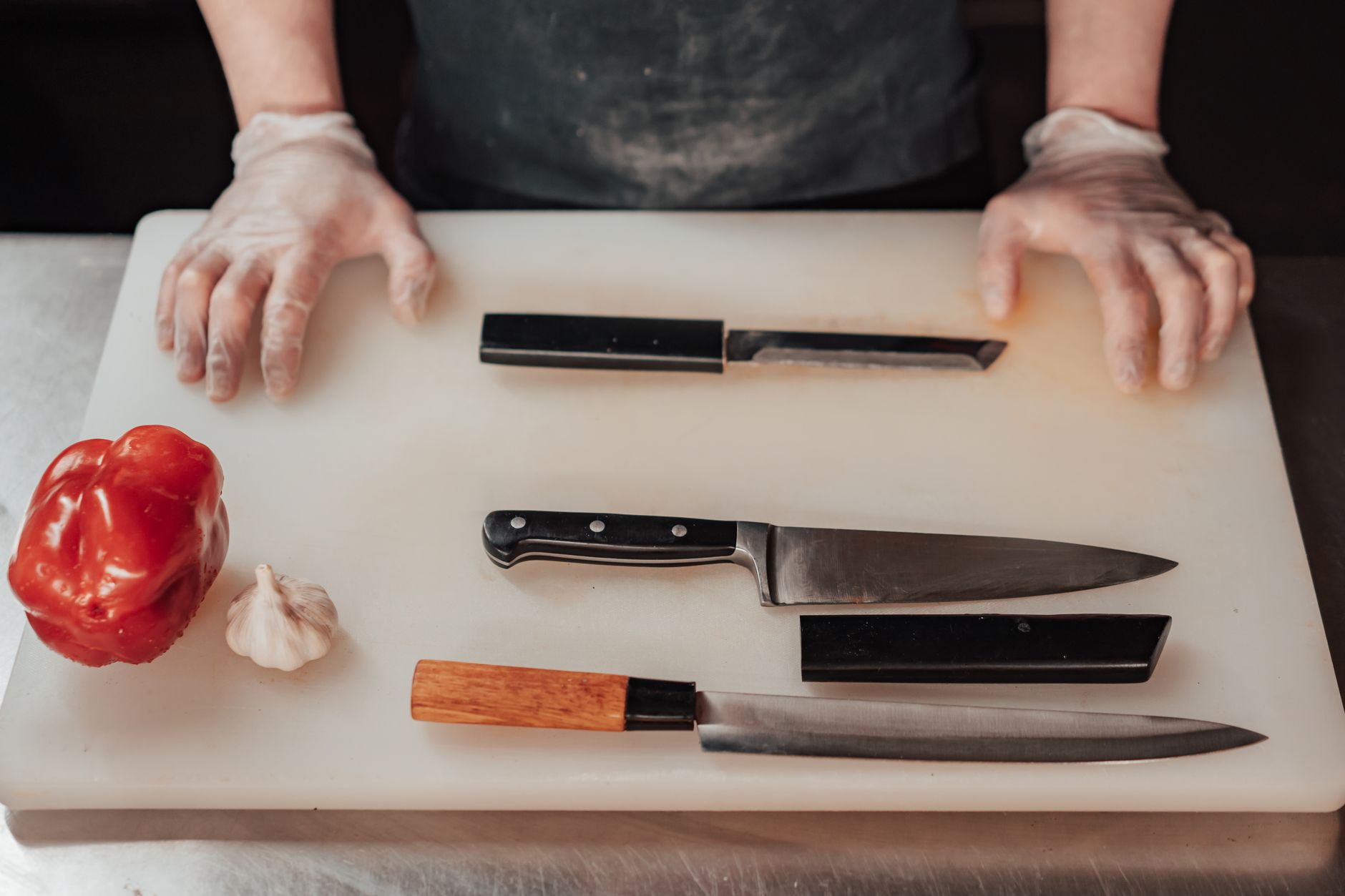 Photo by Mikhail Nilov / Pexels
Your knife storage method is silently dulling your knives or preserving them. Most people think dullness comes from cutting on hard surfaces or improper technique — those matter, but the daily insertion and removal from a traditional knife block removes more edge than most cutting sessions. Understanding why transforms a $15 storage decision into a knife longevity strategy.
Why Traditional Knife Blocks Dull Blades
Traditional knife block slots are oriented at a slight angle — the knife slides in and makes contact with the wooden walls of the slot on both sides. The blade edge contacts and rubs along the wood as it travels in and out. Over thousands of insertions, this microscopic abrasion is equivalent to dragging your blade along a surface repeatedly. The effect is measurable: a knife stored in a traditional block for one year requires more frequent sharpening than the same knife stored on a magnetic strip.
The problem is specifically the angled wooden walls. Two designs solve this:
Universal bristle blocks (Kapoosh-style): Instead of wooden slot walls, these blocks are filled with flexible nylon rods/bristles. Knives slide between the bristles, which conform to the blade without applying lateral pressure. The edge makes no contact with hard surfaces. Any slot can hold any knife size or shape (hence "universal"). Price: $20-40 for quality models.
Horizontal-slot blocks: Some blocks orient knives horizontally with the edge facing down (not up). When blade-down, only the spine contacts the block wall. The edge hangs freely without contact. John Boos, Wusthof, and some Shun blocks use this design. More expensive ($80-200) but genuinely knife-preserving.
Magnetic Knife Strips: The Best Storage for Blade Longevity
A magnetic knife strip mounts to a wall or cabinet interior and holds knives by magnetic attraction through the spine. The blade never contacts any hard surface — it's suspended in space. Benefits: no edge contact during storage, visual inventory of all knives at a glance, easy access, and ventilation (blades air-dry completely, preventing moisture and rust on carbon steel knives).
Installation: Mount at eye level (68-72 inches from floor for most adults) in a location where knives can be safely grabbed without reaching. Mount on studs or use appropriate wall anchors (a full rack of knives can weigh 5-15 lbs). Keep 6+ inches of clearance on each side so knives can be lifted off without catching on adjacent knives or walls.
Magnetic strip materials: Stainless steel backing ($20-40) — durable, easy to clean, most common. Wooden backing ($30-60) — aesthetically warmer, slightly more fragile. Acacia wood strips from Wüsthof or Victorinox are popular premium options. Magnetic strength matters: test by pressing your heaviest knife to the strip and nudging gently — it should stay firmly held without sliding. Under-powered strips let heavy chef's knives slide or fall.
Size: A 12-inch strip fits 4-5 standard knives. An 18-inch strip fits 6-8 knives. For a full chef's kit (8 knives), a 24-inch strip is needed.

Knife Drawer Organizers and Blade Guards
For kitchens without wall space or those who prefer knives out of sight: in-drawer storage requires either an in-drawer knife block (a plastic or bamboo tray with designated slots) or individual blade guards.
In-drawer knife blocks: Bamboo or plastic trays with knife-specific slots. The blades rest in slots designed for specific knife types (chef's, paring, bread). Best option: the knife rests in the slot on the spine, not the edge. Fits standard 18-inch wide kitchen drawers. Brands: KA-BAR, Bambüsi, Ginsu. Cost: $15-40.
Blade guards (knife sheaths): Food-safe plastic covers that slip over individual blades. Essential for any drawer where knives aren't in a dedicated organizer — loose knives in a junk drawer means damaged edges from contact with other utensils and dangerous cutting hazards when reaching in the drawer. Sets of 4-6 blade guards cost $8-15. Use one for every knife stored in a drawer without an organizer.
The Forgotten Step: Honing Before Storing
The most efficient time to hone a knife is immediately before storing — not before using. Reasoning: right after washing and before putting the knife away, the edge is at its most exposed and you're already handling the knife. A 5-second honing pass (3-4 strokes per side on a honing rod) realigns the edge that was displaced during cooking. Cumulative daily honing maintains a sharp edge significantly longer between sharpening sessions.
Honing vs sharpening: honing (honing steel/rod) realigns the metal edge without removing material — the edge folds during cutting and honing straightens it back. Sharpening (whetstone, pull-through sharpener, professional service) removes metal to create a new edge. Hone weekly or after each intensive use. Sharpen when honing no longer improves cutting performance (typically every 2-6 months for home cooks).
What We Recommend
For most kitchens: an 18-inch magnetic strip ($25-40) mounted on the backsplash or inside a cabinet door. Brands: Wüsthof, Victorinox, Ouddy. For block preference: a Kapoosh-style universal bristle block ($20-30) that protects edges while fitting any knife size. For drawers: a bamboo in-drawer organizer ($20-30) with individual blade guards for any knives that don't fit. For travel or camping: a knife roll (canvas or leather, $30-70) keeps a chef's kit protected and organized. See our best chef knives, best boning knives, and best bread knives for the knives worth protecting with proper storage.
Common Mistakes to Avoid
Storing knives loose in a drawer — edge contact with other utensils and the risk of cuts when reaching in. Using a traditional angled-slot knife block — daily edge contact accelerates dulling. Putting knives in the dishwasher — high-temperature water and harsh detergents dull blades and crack handles (wood handles especially). Knives are hand-wash only. Storing knives wet — moisture causes rust on high-carbon steel knives and staining on stainless. Dry thoroughly before storing. Magnetic-stripping a knife by slapping it blade-first onto the magnet — always apply the spine first, then rotate the blade onto the magnet to avoid dragging the edge across the surface.

Watch Before You Buy

“Includes chef knife, bread, carving, and utility knives. 4.6 stars from 958 Amazon reviews signal consistent reliability.”
See Today’s Price →What we like
- Includes chef knife, bread, carving, and utility knives
- Fibrox handles on all knives
- Excellent value for a starter knife block set
- All knives are NSF certified
- Very sharp from the box
Watch out for
- Block quality is basic
- Knives are stamped not forged
- Limited steak knives
Read Full Analysis
Victorinox is the Swiss Army Knife company, and the same engineering philosophy — functional precision at accessible price points — carries into their kitchen knives. The Swiss Classic 6-Piece Set at $86.88 is the knife recommendation that cooking schools and culinary instructors consistently return to for one reason: Victorinox's stamped steel holds a workable edge across years of regular home use and sharpens back easily on a whetstone or honing rod without requiring professional technique. The Fibrox handle is the tactile differentiator from competitors at similar prices. Textured thermoplastic rubber gives a secure grip even on wet hands, which matters practically more than aesthetics during active prep. Professional kitchen knife handles are predominantly Fibrox or equivalent for this reason — slip-resistant handles reduce fatigue and accident risk during continuous work. NSF certification confirms the handle material and construction meet commercial food safety standards. At $86.88 versus the Farberware 13-piece self-sharpening set at $56.14, the Victorinox buys significantly better blade steel — the trade is fewer pieces for higher per-knife quality. The 6 pieces cover the essential kitchen tasks: chef's knife for general prep, bread knife for loaves and tomatoes, carving knife for roasts, utility knife for mid-size tasks, and paring knife for detail work. Compared to the Wüsthof 7-Piece at $215, the Victorinox knives are stamped rather than forged — lighter and thinner, which suits most home cooks, but without the full bolster and balance of a forged blade. For buyers who want professional kitchen quality without the Wüsthof price commitment, the Swiss Classic 6-piece has been the default recommendation for decades.
“15-piece knife block set with high-carbon stainless steel blades and Graphix handle design — the Cuisinart for kitchens where matching block and knife aesthetics matter alongside performance. Full…”
See Today’s Price →Watch out for
- Hand-wash recommended for some parts to extend coating or surface lifespan
- Counter space commitment may be challenging in very small kitchens
“Full-tang forged German high-carbon steel holds an edge through years of use. Best suited for home cooks who want reliable everyday kitchen performance.”
See Today’s Price →What we like
- Full-tang forged German high-carbon steel holds an edge through years of use
- Precision laser-cut edge sharpens to 14-degree angle sharper than most steak knives
- Included block keeps blades protected and safely accessible on the counter
- Wüsthof lifetime warranty covers manufacturing defects with no time limit
Watch out for
- Premium price is 4-6x entry-level stainless sets — significant investment for steak knives
- Hand-wash only to preserve the blade edge and handle finish
- Block takes counter space — not ideal for small kitchens with limited workspace
Read Full Analysis
Wüsthof's position in the knife market is clear and consistent: German high-carbon steel forged to professional standards, backed by a lifetime warranty that covers manufacturing defects permanently. The 7-Piece Steak Knife Set at $215 sits at the premium end of this knife block page precisely because forged steak knives at this grade aren't a purchase most households make twice. The full-tang construction — where the steel runs continuously from blade tip through the length of the handle — provides balance and durability that stamped alternatives cannot replicate. Tang distribution means the blade and handle behave as one piece under pressure rather than transmitting force to a connection point. The 14-degree precision laser-cut edge is more acute than standard steak knives (typically 20-25 degrees), which translates to cleaner slicing through cooked proteins without tearing the fibers. The practical result is that a medium-rare steak holds its juice better when cut cleanly versus sawed. For households where steak dinners are a regular occurrence and where the knife quality directly affects the eating experience, the edge geometry difference is noticeable. At $215 versus the Victorinox Swiss Classic at rank 1 ($92.95), the Wüsthof costs roughly 2.5x more and delivers forged construction versus stamped, a more acute edge angle, and the brand's lifetime warranty infrastructure. The Farberware self-sharpening 13-piece at $56.14 handles the budget tier with a built-in sharpening system in the block. The Wüsthof is the investment purchase for buyers who cook frequently, prioritize edge longevity, and want knives that perform better five years in than the day they arrived. Hand-wash care is non-negotiable — the dishwasher degrades both the high-carbon steel and the handle finish over time.
“Built-in ceramic sharpeners in each block slot automatically hone the blade every time you insert or remove a knife — the Farberware self-sharpening set for households that never sharpen…”
See Today’s Price →Watch out for
- Hand-wash recommended for some parts to extend coating or surface lifespan
- Counter space commitment may be challenging in very small kitchens
Read Full Analysis
Farberware Self-Sharpening 13-Piece Knife Block Set at $56.14 solves the most common knife maintenance failure: blades that never get sharpened. Built-in ceramic sharpeners in each block slot hone the edge on every insertion and removal — no whetstones, pull-through sharpeners, or intentional sharpening routine required. The 13-piece set covers everyday kitchen tasks including chef's, bread, santoku, utility, and paring knives alongside steak knives, making this a complete entry-level cutlery solution for households that want consistently sharp knives without building a maintenance habit. At $56.14, the Farberware costs $30.74 less than the Victorinox Swiss Classic 6-Piece at $92.95 and $158.86 less than the Wüsthof 7-Piece Steak Knife Block at $92.95. The trade-off is steel quality and longevity: Victorinox and Wüsthof use higher-grade stainless steel that holds an edge longer and responds well to intentional sharpening over years. The Farberware's ceramic hones a softer blade automatically. On piece count alone, 13 pieces at $56.14 versus 6 pieces at $56.14 favors the Farberware for volume coverage at lower cost. Buy the Farberware Self-Sharpening set if you consistently end up with dull knives and want a 13-piece set that maintains itself automatically with no extra steps. The built-in sharpeners remove the friction of intentional maintenance, making it the practical choice for busy kitchens that don't prioritize knife care. Skip it in favor of the Victorinox Swiss Classic if you're willing to sharpen periodically and want better steel that improves with proper care — Victorinox blades will outperform and outlast the Farberware over time with minimal attention. Hand washing is recommended to extend blade and block life.
“Twenty universal slots accommodate any knife shape — no more leaving the bread knife on the counter because the block only fits European-profile blades. Bamboo construction is naturally…”
See Today’s Price →Watch out for
- Hand-wash recommended for some parts to extend coating or surface lifespan
- Counter space commitment may be challenging in very small kitchens
Frequently Asked Questions
Why does a knife block dull knives?
What is the best way to store kitchen knives?
Is it safe to put knives in a drawer?
Should I wash knives in the dishwasher?
What is the difference between honing and sharpening a knife?
How do I mount a magnetic knife strip on a wall?
How We Analyze Products
We analyze Amazon review data — often thousands of reviews per product — to surface patterns that individual buyers miss. Our process aggregates star ratings, review counts, and buyer sentiment at scale, identifying which strengths and weaknesses appear consistently across the largest review samples available. The 2,831+ reviews analyzed on this page represent real verified-purchase feedback from Amazon buyers.
Each product earned its placement through data: total review volume, average rating, and the specific praise and complaints that repeat most often across buyers. No manufacturer paid for placement on this page. Products appear here because buyers endorsed them at scale, not because a company asked us to feature them.
We use AI to summarize review sentiment — not to fabricate opinions, but to condense what thousands of buyers actually wrote into a readable format. The pros and cons you see reflect the most common themes found in verified purchaser reviews, paraphrased for clarity. We do not claim to have accessed Reddit, YouTube, or specific publications in generating these summaries.
Prices shown reflect Amazon pricing at the time this page was last generated. Click “See Today’s Price” to get the current live price on Amazon. Read our full methodology →