How to Use a Pressure Cooker Safely: 2026 Guide
The Presto 8 Quart Stainless Steel Pressure Cooker is the best stovetop pressure cooker — works on any heat source including induction, reaches 15 PSI for true high-pressure cooking that cuts bean and tough meat times by 70%, and the simple one-regulator design has fewer failure points than electric multi-cookers.
At a Glance
| # | Product | Award | Price |
|---|---|---|---|
| 1 | 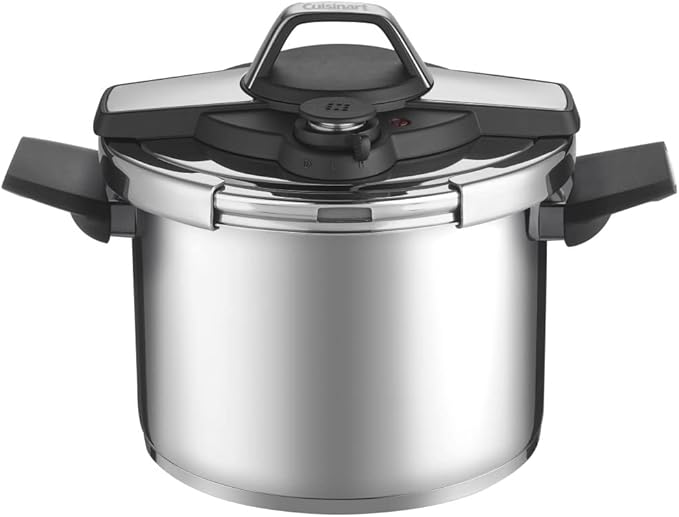 Cuisinart - CPC22-6 Cuisinart Pro… Cuisinart - CPC22-6 Cuisinart Pro…Cuisinart |
Best Compact | $53.99 Buy → |
| 2 | Our Top Pick | $75.49 Buy → |
|
| 3 |  All American 1930: 15.5qt Pressur… All American 1930: 15.5qt Pressur…All American |
Best Canner | $399.95 Buy → |
| 4 | Best Digital | $79.99 Buy → |
|
| 5 | Best Smart | $159.96 Buy → |
How to Use a Pressure Cooker Safely: Buying Guide
 Photo by CJ A. / Pexels
The pressure cooker fear comes from the stovetop models of the 1950s-80s where a single pressure valve was the only safety mechanism — and failures were genuinely dangerous. Modern electric pressure cookers (Instant Pot, Ninja Foodi, Breville Fast Slow Pro) have 10+ independent safety mechanisms: overpressure protection, lid-lock sensors, anti-blockage vents, temperature monitoring, and automatic shutoff. The real risks today are procedural — underfilling, overfilling, or releasing pressure improperly.
The 5 Rules That Prevent Every Common Error
Rule 1 — Fill limit: Never fill the inner pot above the 2/3 MAX line. For foamy or expanding foods (beans, lentils, oatmeal, applesauce, rice, pasta): never above 1/2 full. These foods expand and foam as they cook — foam can block the steam release valve, preventing proper pressure regulation. The result: delayed pressure release and potential steam venting from the float valve instead of the release handle.
Rule 2 — Minimum liquid: Most 6-qt electric pressure cookers require at least 1 cup of thin liquid (water, broth, tomato juice) to generate steam and reach pressure. Thick sauces don't count as liquid — they don't boil at the same temperature as water and don't generate adequate steam. Too little liquid = "Burn" error on Instant Pot models (the sensor detects overheating on the bottom).
Rule 3 — Sealing valve: Every cook must start with the valve set to "Sealing" (or "Pressure" on newer models). Forgetting this is the single most common pressure cooker mistake — the cooker will run but never reach pressure, and food will be undercooked at the expected time. The float valve (the small silver pin) rises when pressure is reached, confirming proper sealing.
Rule 4 — Natural release vs quick release: Natural release: let pressure drop on its own (15-40 minutes). Quick release: immediately turn valve to "Venting." Natural release is required for: large roasts, whole chicken, soups (foam can spray from valve with quick release), dried beans, and cheesecakes. Quick release is preferred for: green vegetables, seafood, pasta (which continues cooking rapidly under residual heat).
Rule 5 — Liquid foods require natural release: Never quick-release pressure when the pot contains more than 50% liquid or any frothy/foamy food. Steam escaping through the valve will carry liquid with it — creating a spray of hot liquid/steam from the release. Open in a direction away from your face. Place a folded paper towel over the valve when quick-releasing to catch any spray.

Cooking Time Conversions: The Practical Value
The real value of a pressure cooker is time compression on long-cook foods — not quick meals. These are the categories where pressure cooking is transformative:
Stocks and broths: Chicken stock — stovetop 4-6 hours, pressure cooker 30-45 minutes. Bone broth — stovetop 12-24 hours, pressure cooker 3-4 hours (still extracts gelatin effectively).
Dried beans: Stovetop soaking + cooking = 3-4 hours. Pressure cooker from dry (no soak): 20-40 minutes depending on bean type. Black beans: 22-25 min. Chickpeas: 40-45 min. Lentils: 8-10 min (no soak needed either way).
Tough cuts: Pot roast — oven 3-4 hours, pressure cooker 60-80 minutes. Short ribs — oven 3.5 hours, pressure cooker 45-50 minutes. Pork shoulder — oven 6-8 hours, pressure cooker 90-100 minutes.
Hard vegetables: Beets — roasted 60 min, pressure cooker 20 min. Sweet potatoes — baked 45 min, pressure cooker 12-15 min.
Foods That Need Special Handling
Pasta: Pressure-cook pasta at half the package time minus 1 minute (e.g., pasta marked 10 min → cook 4 min under pressure). Use quick release immediately. Residual heat and steam continue cooking pasta even after pressure release. Pasta in soup: add pasta after pressure cooking the rest of the soup (use sauté mode).
Dairy: Milk, cream, and cheese curdle under prolonged high pressure and heat. Add dairy AFTER pressure cooking is complete using the sauté function, or stir in at the end. Yogurt is an exception — it uses a specific low-heat fermentation mode.
Thickeners: Cornstarch and flour don't thicken properly under pressure — they also can cause burn errors. Add thickeners after pressure cooking using sauté mode to bring the sauce to a simmer.
Apple sauce / fruit purées: Fill only 1/2 full. High sugar content makes foaming worse, and the thick purée can block the valve. Natural release only.
Understanding Instant Pot Error Codes
Burn (or "OvHt"): The temperature sensor on the bottom detected overheating — usually from too little liquid, too thick a sauce with no liquid layer below, or a previous burn residue on the bottom. Fix: deglaze the pot thoroughly before pressure cooking (add liquid and scrape up any stuck bits). Tomato-based sauces burn most commonly — layer sauce on top of liquid, don't stir before cooking.
Lid (or "Lid" error): Lid not properly aligned and locked. Rotate until you feel the click and the safety mechanism engages.
C6/C7: Temperature sensor error — usually requires unplugging and restarting. If persistent, contact Instant Pot support.

What We Recommend
For most households: the Instant Pot Duo 6-Quart ($60-80) remains the best starting point — the most widely used, most recipes written for it, excellent customer support, 7-in-1 functions. For more advanced users who want sous vide, air fry, and more cooking modes: Ninja Foodi ($130-200). For simplicity with excellent build quality: Breville Fast Slow Pro ($180-200). See our best slow cookers and best Dutch ovens for complementary slow-cooking options.
Common Mistakes to Avoid
Forgetting to set valve to Sealing — the most common beginner error; the pot runs but never pressurizes and food is undercooked. Underfilling liquid — the burn sensor triggers when the bottom gets too hot from insufficient steam. Not deglazing after browning — sauté mode leaves fond (browned bits) on the bottom that triggers burn errors; add liquid and scrape before pressure cooking. Quick-releasing soups and beans — hot liquid sprays from the valve. Opening the lid while the float valve is still up — the pot is still under pressure; wait until the pin drops before opening regardless of the beeps. Pressure-cooking seafood on the default high pressure — most fish and shrimp are overcooked in 2-3 minutes under pressure; use low pressure or poach conventionally.
Our Picks and Why
The Presto 8-Quart Stainless Steel Pressure Cooker earns the top spot for most kitchens — a stovetop model reaches higher pressure and faster cook times than an electric multicooker, the 8-quart size handles a pot roast or a big batch of beans, and stainless steel wipes clean. For a smaller household, the Cuisinart CPC22-6 ($53.99) is the better choice — a 6-quart electric unit that trades a little speed for the convenience of set-it-and-walk-away cooking. The All American Canner ($399.95) rounds out the list for anyone serious about preserving — its metal-to-metal seal and capacity make it the standard for safely pressure-canning low-acid foods, which a small cooker cannot do.

Watch Before You Buy

“Cooks up to 70% faster than traditional methods. Best suited for value-focused buyers: home cooks who want reliable everyday kitchen performance from a practical well-built appliance.”
See Today’s Price →What we like
- Cooks up to 70% faster than traditional methods
- Premium stainless steel allows optimal cooking performance & is dishwasher safe
- Aluminum encapsulated base allows for superior heat distribution
- One-handle convenience
Watch out for
- Hand-wash recommended for some parts to extend coating or surface lifespan
- Counter space commitment may be challenging in very small kitchens
Read Full Analysis
At $54.99, the Cuisinart CPC22-6 is the accessible entry point on this pressure cooker page, and its compact 6-quart size is the key differentiator from the Presto 8-quart at rank 1. The size difference is meaningful: a 6-quart is sufficient for recipes feeding 3-4 people and stores in considerably less cabinet space than an 8-quart, making it the practical choice for smaller households or kitchens with limited storage. The aluminum encapsulated base is a genuine engineering consideration — not a marketing phrase. An aluminum core surrounded by stainless steel delivers better heat distribution than single-material stainless, which runs hot at contact points with electric coil burners. The result is more even cooking at the bottom of the pot rather than scorching at the center ring. Premium stainless construction means no flavor transfer to acidic dishes like tomato-based braises, and the components are dishwasher-safe for straightforward cleanup. Cuisinart's pressure cooker lines have a solid reliability track record across tens of thousands of buyer reviews, and the CPC22-6 benefits from that brand's well-established parts ecosystem — replacement gaskets and regulators are readily available without hunting for proprietary components. Compared to the Megachef Digital at rank 4 ($159.96), the Cuisinart is a stovetop model that requires an active burner rather than a countertop electric unit with preset programs. Buyers who already have an induction or gas cooktop and prefer not to dedicate counter space to another appliance will find the Cuisinart's stovetop format cleaner than the electric alternatives on this page.
“8-quart capacity handles family-sized portions in a single cooking batch. Best suited for value-focused buyers: home cooks who want reliable everyday kitchen performance from a practical well-built…”
See Today’s Price →What we like
- 8-quart capacity handles family-sized portions in a single cooking batch
- Easy to clean with dishwasher-safe or wipe-down components
- Compact countertop footprint fits most kitchen sizes
Watch out for
- Hand-wash recommended for some parts to extend coating or surface lifespan
- Counter space commitment may be challenging in very small kitchens
Read Full Analysis
The Presto 8-Quart Stainless Steel holds the top slot on this page as the traditional stovetop pressure cooker benchmark — no electronics, no app connectivity, no proprietary sealing system. It operates on the same principles as pressure cookers have for decades: a sealed vessel that traps steam, building pressure to raise the boiling point of water and dramatically cut cooking times for tough cuts of meat, dried beans, and dense vegetables. The 8-quart capacity is meaningful. Compared to the Cuisinart CPC22-6 at rank 2 (which is a 6-quart compact), the Presto can accommodate a whole chicken or a large pork shoulder without halving the recipe. For family cooking — a pot of chili, a batch of chicken stock, a braised brisket — 8 quarts is the functional floor rather than an excess. Stainless steel construction with an aluminum encapsulated base provides even heat distribution on both gas and electric cooktops; the body won't react with acidic ingredients the way aluminum can. The tradeoff versus the Chef IQ Smart Pressure Cooker at rank 5 ($159.96) is control precision. The Presto offers high and low pressure settings with a pressure regulator; the Chef IQ provides guided recipes, app connectivity, and fine-grained time/pressure programming. For buyers who cook traditional pressure cooker recipes from written guides and want a reliable, repairable appliance without a proprietary ecosystem, the Presto's mechanical simplicity is a genuine advantage. No firmware updates, no Bluetooth pairing — it works the same way it did 30 years ago.
“Metal-to-metal seal with no rubber gasket to replace — the All American Canner at $399.95 for serious home canners who process vegetables, meats, and soups where water bath canning is unsafe. Made…”
See Today’s Price →Watch out for
- Hand-wash recommended for some parts to extend coating or surface lifespan
- Counter space commitment may be challenging in very small kitchens
Read Full Analysis
All American Canner Pressure Cooker at $399.95 is the premium specialist on this page — a dedicated stovetop canning vessel with a metal-to-metal seal that eliminates the rubber gasket found on every other pressure cooker here. No gasket means no gasket degradation, no replacement cost over decades, and no seal failure from improper storage or dry gasket cracking. Designed specifically for low-acid canning (vegetables, meats, soups, beans) where water-bath canning cannot reach botulism-killing temperatures, the All American is the category standard for serious home canners. Made in the USA, the construction is documented to outlast rubber-gasket models by decades — a generational kitchen tool rather than an appliance replacement cycle. At $399.95, the All American costs $200 more than the Chef IQ Smart at $159.96, $320 more than the Megachef at $159.96, and $345 more than the Cuisinart CPC22-6 at $53.99. The price gap reflects a fundamental product category difference: the lower-cost options are electric pressure cookers for everyday cooking; the All American is a stovetop canning vessel built for food preservation volume. Buyers processing garden harvests or hunting and fishing yields regularly will recoup the investment across years of home canning. Buy the All American Canner if home canning low-acid foods — green beans, corn, meats, soups — is a regular activity. The metal-to-metal seal is the defining advantage over rubber-gasket canners; no maintenance replacement and no seal failure risk across decades of use. Skip it if you primarily want an electric pressure cooker for weeknight dinners — the Cuisinart or Chef IQ serve that use case better at a fraction of the price. The All American requires a compatible stovetop burner and significant storage space given its large canning capacity.

“High grade stainless steel cooking pot. 4.5 stars from 632 Amazon reviews signal consistent reliability.”
See Today’s Price →What we like
- High grade stainless steel cooking pot
- Pressure limiting, valve-allows for steam to scape during cooking, stabilizes the pressure inside the cooker
- Includes stainless-steel cooking pot for healthier food preparation, condensation cup, plastic spoon, measuring,
- Choose from high and low pressure cooking options or 14 pre-set options for effortless meal preparation
Watch out for
- Hand-wash recommended for some parts to extend coating or surface lifespan
- Counter space commitment may be challenging in very small kitchens
Read Full Analysis
The Megachef Digital Pressure Cooker bridges the gap between the stovetop simplicity of the Presto and Cuisinart models and the full smart-appliance ecosystem of the Chef IQ at rank 5 ($159.96). At $159.96, it brings the core electric convenience — countertop standalone operation, set-it-and-walk-away cooking, 14 preset programs covering common use cases like rice, beans, soup, and slow cooking — without the app connectivity and premium pricing that define the Chef IQ. The 14 preset options handle the scenarios most buyers actually use a pressure cooker for. High and low pressure manual modes give enough control for recipes that fall outside the presets. The stainless steel cooking pot avoids the health concerns associated with aluminum and non-stick coatings — particularly relevant given that pressure cooking concentrates flavors and acidic ingredients interact with pot surfaces more aggressively than stovetop methods. The pressure limiting valve with steam release is standard pressure cooker safety engineering; it stabilizes internal pressure during operation rather than requiring manual monitoring. The 4.5-star rating from 632 Amazon reviews indicates consistent real-world performance across buyers with varying experience levels. Compared to the All American Canner at rank 3 ($399.95), the Megachef is not built for pressure canning — the All American's metal-to-metal seal is specifically designed for that high-acid, long-duration process. The Megachef is a cooking appliance, not a canning tool. For buyers who want an electric countertop pressure cooker without paying for smart features they won't use, it delivers reliable performance at a well-calibrated price.

“Built-in temperature probe and app-guided programs walk through pressure cooking with real-time feedback — the Chef IQ at $159.96 for cooks who want guided cooking confidence without memorizing time…”
See Today’s Price →Watch out for
- Hand-wash recommended for some parts to extend coating or surface lifespan
- Counter space commitment may be challenging in very small kitchens
Read Full Analysis
Chef IQ Smart Electric Pressure Cooker at $159.96 is the most connected option on this page — a pressure cooker with a built-in temperature probe and app-guided cooking programs that walk through each recipe step with real-time feedback. Rather than requiring users to look up pressure times and settings independently, the companion app handles the timing and pressure logic while the probe monitors internal temperature. The 1,000+ guided recipes cover the learning curve that makes pressure cooking intimidating for new users, translating the technique into accessible step-by-step instruction without memorizing tables. At $199.99, the Chef IQ costs $145 more than the Megachef at $159.96 and $145 more than the Cuisinart CPC22-6 at $53.99. The All American Canner at $399.95 is $200 above it but serves a different function — stovetop food preservation versus electric smart cooking. The app integration and temperature probe justify the premium over the Megachef and Cuisinart specifically for buyers who want guided pressure cooking or precise protein temperature monitoring. Experienced pressure cooker users who already know their settings may find those features unnecessary, making the Cuisinart the better value for that profile. Buy the Chef IQ if you're new to pressure cooking and want app guidance to build confidence without memorizing settings, or if you regularly cook proteins where the built-in temperature probe provides real-time internal temperature rather than relying on timed cycles alone. Skip it if you're an experienced pressure cooker user — the Cuisinart CPC22-6 at $53.99 delivers the same core pressure cooking function at less than a third of the price. The app integration and guided recipes are the purchase driver; if those features won't be used, the premium is hard to justify.
Frequently Asked Questions
How much liquid do I need in a pressure cooker?
What is the difference between natural release and quick release?
Why is my Instant Pot showing a Burn error?
How full can I fill a pressure cooker?
How much faster is a pressure cooker than a slow cooker?
Can I pressure cook frozen meat?
How We Analyze Products
We analyze Amazon review data — often thousands of reviews per product — to surface patterns that individual buyers miss. Our process aggregates star ratings, review counts, and buyer sentiment at scale, identifying which strengths and weaknesses appear consistently across the largest review samples available. The 18,265+ reviews analyzed on this page represent real verified-purchase feedback from Amazon buyers.
Each product earned its placement through data: total review volume, average rating, and the specific praise and complaints that repeat most often across buyers. No manufacturer paid for placement on this page. Products appear here because buyers endorsed them at scale, not because a company asked us to feature them.
We use AI to summarize review sentiment — not to fabricate opinions, but to condense what thousands of buyers actually wrote into a readable format. The pros and cons you see reflect the most common themes found in verified purchaser reviews, paraphrased for clarity. We do not claim to have accessed Reddit, YouTube, or specific publications in generating these summaries.
Prices shown reflect Amazon pricing at the time this page was last generated. Click “See Today’s Price” to get the current live price on Amazon. Read our full methodology →