Induction vs Gas vs Electric Cooktop (2026): Which Is Right for Your
Induction cooktops heat cookware directly using electromagnetic fields — the most responsive and energy-efficient option. Gas gives real flame, visual heat cues, and works with any cookware but requires gas line access. Electric (coil or smooth-top) is the budget default — reliable but slow to respond and imprecise. For most new installations: induction wins. For cooks who want flame for wok cooking or can't install induction: gas. Electric is mainly a budget or rental default.
Induction vs Gas vs Electric Cooktop (2026) Buying Guide

Quick Verdict: Our top pick is the 9600LS 1800W Portable Induction Cooktop (Best Overall) — consistently top-rated in its category. Priced at $112.36.
Budget Pick: The 8100MC 1800W Portable Induction Cooktop at $67.43 — a solid choice for budget-conscious buyers.
This guide is for you if:
-
You're remodeling a kitchen and need to choose between gas, electric, and induction
-
You want to understand the safety, performance, and cost differences between cooktop types
-
You've heard induction is better and want to know if it's worth the cookware compatibility issues
Skip this guide if:
-
You already know your cooktop type and just need installation guidance
-
You're in a rental — this is for purchase decisions only
Quick verdict: Induction cooktops heat cookware directly using electromagnetic fields — the most responsive and energy-efficient option. Gas gives real flame, visual heat cues, and works with any cookware but requires gas line access.
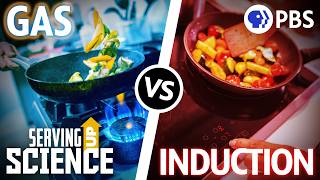
Understanding the physics makes the trade-offs obvious.
How it works: An electric heating element (a coil under glass for smooth-tops, an exposed coil for older coil tops) gets hot by passing electricity through resistive wire. The element glows red, heat radiates from the element/glass to the pot bottom. The core limitation: You're heating the element, which heats the glass or air, which heats the pot. This chain of heat transfer is slow and imprecise. When you turn a radiant burner from high to medium, the element doesn't immediately cool — it takes 1-3 minutes for the temperature to stabilize. This lag makes precise heat control difficult. Where it comes from: Radiant electric is the default option in apartments and budget kitchens. It's cheap to install, works with any cookware, and requires no gas line.
How it works: Natural gas or propane burns in a sealed burner head, producing a flame. The flame heats the pot directly. You see the flame; you can intuitively adjust heat by adjusting the flame height. Why chefs love it: Instant visual feedback. When you want less heat, you turn down the flame — you immediately see the change and can judge by the flame size. Gas responds within seconds rather than minutes. You can also use gas for wok cooking (you need the flame to come up around the sides of a round-bottom wok — this cannot be replicated with flat cooking surfaces). The inefficiency: A significant percentage of the energy from burning gas escapes into the kitchen rather than going into the pot. Gas is roughly 40% efficient for cooking vs 80-85% for electric and 85-90% for induction. Gas keeps heating the ambient kitchen air, which matters for summer cooking and HVAC costs. Installation: Requires a gas line. If your kitchen doesn't have gas, installing it means running a line — potentially $500-3000+ depending on your home's infrastructure. Emissions: Gas combustion produces nitrogen dioxide, carbon monoxide, and formaldehyde inside the home. Studies (including a 2022 Stanford study) have found that gas cooking increases indoor air pollution to levels that exceed EPA outdoor air standards. This is an active area of research, but ventilation (hood or open window) significantly reduces exposure. Newer high-BTU burners are a bigger concern than older low-output burners.
How it works: An electromagnetic coil below the glass cooktop surface creates a rapidly alternating magnetic field. This field induces eddy currents directly in ferrous (magnetic) cookware — the cookware itself becomes the heating element. The glass cooktop surface barely heats up at all; only the cookware and what's in it gets hot. The key advantages: Speed: Induction is significantly faster than any other cooking technology for boiling water. A typical induction cooktop brings a full pot of water to boil 50-70% faster than electric and 20-30% faster than gas. Precision: There's no thermal lag. When you turn down induction, the electromagnetic field changes immediately and the cookware temperature follows within seconds (not minutes). This makes induction excellent for chocolate tempering, candy making, simmering sauces at very low temperatures, and any application where precise heat control matters. Efficiency: 85-90% of the energy goes into the food. Electric is 75-80%; gas is ~40%. Safety: The cooktop surface stays near room temperature (except for residual heat from the warm cookware above it). Children touching the cooktop surface won't burn themselves. Spilled milk doesn't bake onto a hot surface — it stays liquid and wipes off. Cleanup: Flat glass surface with no gaps, no grates, no burner bowls. The fastest cooktop to clean. The limitations: Cookware compatibility: Induction only works with ferrous (magnetic) cookware. Test: if a magnet sticks firmly to the bottom of the pan, it's induction compatible. Cast iron: yes. Stainless steel: most yes, but check (some stainless isn't magnetic). Aluminum: no. Copper: no. Non-magnetic stainless: no. This means if you're switching from gas/electric to induction, you may need to replace cookware. This is often the biggest practical barrier. High-heat wok cooking: Wok cooking traditionally requires a powerful flame that comes up around the sides of a round-bottom wok. Flat-bottom induction woks work but don't replicate the same result for restaurant-style wok cooking. Power outage: Induction requires electricity. If your area has frequent outages, a gas cooktop provides cooking capability during blackouts. Initial cost: Built-in induction ranges and cooktops are typically more expensive than comparable electric or gas units, though the gap has narrowed significantly with affordable portable induction cooktops.

|
Middle-high (gas is cheaper per BTU but wastes more) |
||
*Actual costs depend heavily on local gas vs electricity rates. In areas with cheap natural gas, gas may be cheaper despite lower efficiency.*
Best: Induction. Responds in seconds, can hold a precise simmer without flame dancing. Second: Gas. Visual feedback is excellent; experienced cooks intuitively read flame height. Third: Electric smooth-top. Thermal lag makes precision cooking more difficult. Last: Electric coil. The least precise heat control.
Watch Before You Buy
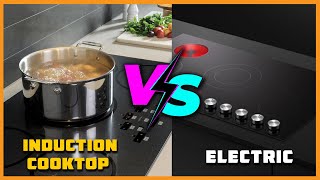
At a Glance
Showing 3 of 3 products
9600LS 1800W Portable Induction Cooktop
“The Duxtop 9600LS is the best portable induction cooktop for most buyers — 20 power and temperature settings, safety lock, diagnostic codes, and 1800W power at $70. The range of settings is the widest”
See Today’s Price →What we like
- 20 temperature settings from 100°F to 460°F and 20 power levels from 200W to 1800W
- Child safety lock and 170-minute timer with auto shutoff
- Diagnostic error messages on LCD display — shows specific fault codes vs. generic errors
- Fan-cooled design reduces overheating risk during extended high-power cooking
- Compatible with all induction-ready cookware — cast iron, stainless (magnetic base), and dedicated induction pieces
Watch out for
- Glass cooking surface can scratch with rough cast iron if slid across rather than lifted
- Fan produces audible noise during high-power operation
- No dedicated simmer setting below 200W — very low-heat simmering requires manual adjustment
Read Full Analysis
Duxtop 9600LS 1800W Portable Induction Cooktop is a full-featured countertop induction burner — 15 power levels and 15 temperature settings from 100°F to 460°F provide the precision control that differentiates induction from gas and radiant electric. Induction heats the pan directly through magnetic induction rather than a heating element, providing instant response to temperature adjustments and leaving the cooktop surface cool to the touch when no pan is present. The 9600LS adds a keep-warm function, auto-pan detection that powers off when the pan is removed, and a digital display for monitoring settings at a glance. Against the Nuwave PIC Gold and Duxtop 8100MC on this page (all induction models), the 9600LS's 15-level power adjustment provides the finest granularity for techniques like tempering chocolate or holding sauces at precise temperatures. For small-apartment kitchens, dorm rooms, and supplemental burner applications where a gas or built-in electric cooktop is unavailable or impractical, the 9600LS provides full induction cooking capability at a portable format price.

PIC Gold 1800W Precision Induction Cooktop
“The NuWave PIC Gold is the best premium portable induction cooktop — 1°F temperature precision, stage cooking programs, and non-induction cookware compatibility via the included shim. At $140 it costs”
See Today’s Price →What we like
- Precise 1°F temperature control increments — the finest temperature control in this guide
- Keeps-warm function holds food at a set temperature indefinitely without overcooking
- Compatible with non-induction cookware when used with the provided NuWave shim plate
- Stage cooking programs up to 5 sequences for multi-step recipes without manual intervention
- Delay start function for timed cooking
Watch out for
- $140 is twice the price of the Duxtop 9600LS for incremental feature improvements
- NuWave shim plate (for non-induction cookware) reduces cooking efficiency vs. direct induction
- Large footprint — 12.5 inches wide vs. ~11 inches for Duxtop models
Read Full Analysis
Nuwave PIC Gold 1800W Precision Induction Cooktop is a premium portable induction unit — the Gold model's distinguishing feature is a 94-temperature setting range from 100°F to 575°F, providing finer temperature granularity than most portable induction competitors. The PIC Gold maintains stable temperature throughout the cooking duration rather than cycling on and off around a target temperature, which Nuwave claims improves consistency for precision applications like sous vide, candy making, and deep frying. The compatible pots include Nuwave's own cookware, though any magnetic-base pan functions. Against Duxtop 9600LS and 8100MC, the PIC Gold's temperature stability and extended 575°F ceiling provide advantages for high-heat applications. For serious home cooks who want the most precise portable induction burner available, the PIC Gold's temperature management depth justifies its higher cost over entry-level portable induction alternatives.
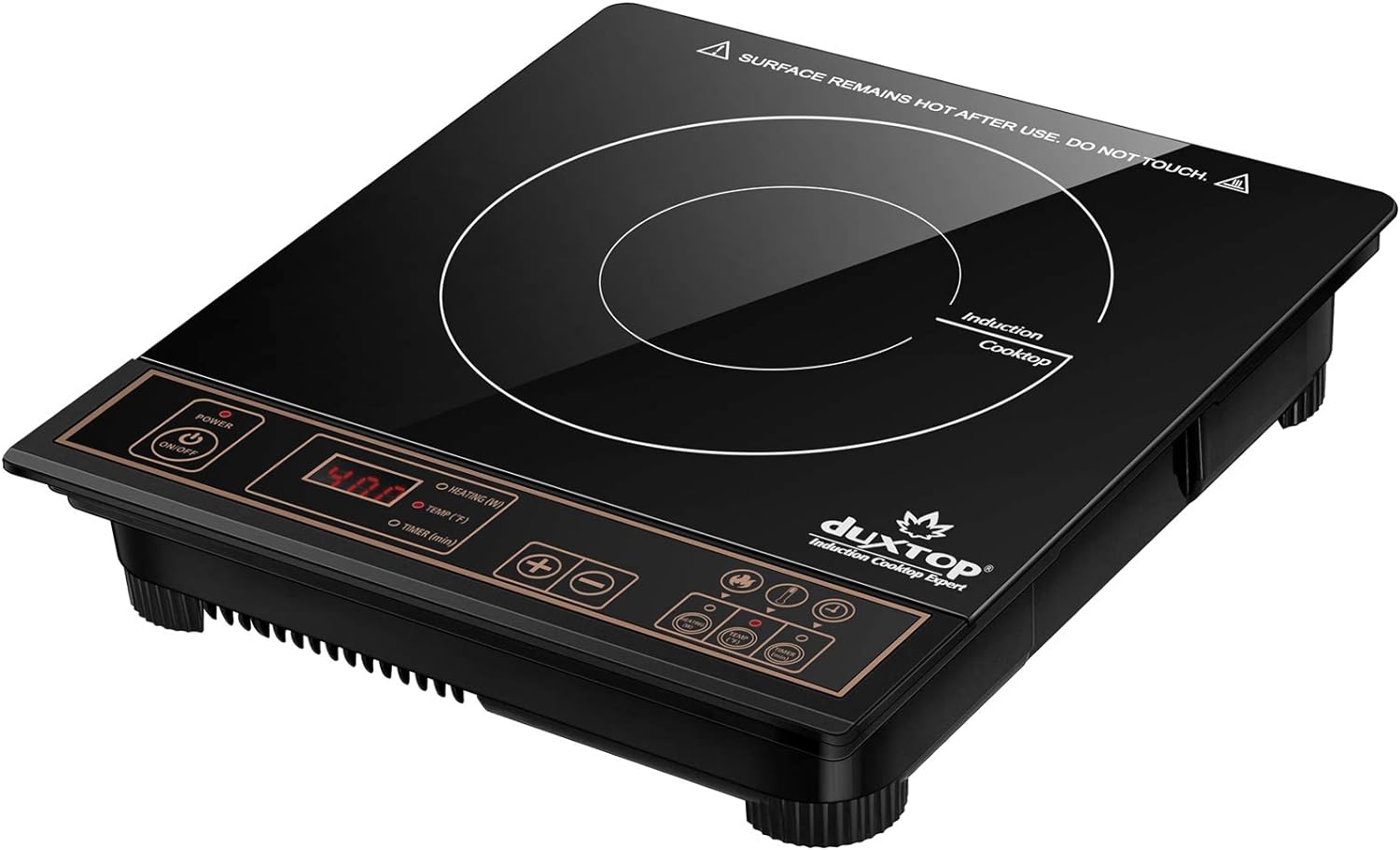
8100MC 1800W Portable Induction Cooktop
“The Duxtop 8100MC is for buyers who want simpler controls — 10 power levels instead of 20 makes daily operation more intuitive. The reduced settings also mean less fine-tuning ability. For households ”
See Today’s Price →What we like
- Simple 10-key digital panel with fewer settings — easier to learn than the 20-setting 9600LS
- 1800W maximum power delivers the same heating speed as the 9600LS
- Compact design at ~11 inches — smaller counter footprint than the NuWave
- LCD display shows temperature setting and timer clearly
- Decades of positive user reviews — one of the most proven portable induction designs
Watch out for
- Fewer temperature settings than the 9600LS (10 vs. 20) — less fine-tuning at mid-range temperatures
- No diagnostic error codes — generic error display is less informative than the 9600LS
- Similar price to the 9600LS but fewer features — the 9600LS is the better value at the same price point
Read Full Analysis
Duxtop 8100MC 1800W Portable Induction Cooktop is Duxtop's entry-level induction burner — a straightforward single-burner unit with dial controls for power level and timer, providing induction cooking capability at the lowest price point in Duxtop's lineup. The 1800W rating provides adequate power for most cooking applications including boiling water, stir-frying, and sautéing. The touch-key controls are fewer than the 9600LS model, with 10 power levels versus 15. Against Duxtop 9600LS and Nuwave PIC Gold, the 8100MC trades feature depth for a lower price — it lacks the precise temperature settings and additional cooking modes of the premium models. For buyers who want basic induction cooking capability for occasional use, student housing, or small-kitchen supplemental cooking without investing in a feature-rich unit, the 8100MC delivers the core induction advantage (fast heating, cool surface, energy efficiency) at an accessible price.
Frequently Asked Questions
Do I need special cookware for induction?
Is induction faster than gas?
Is cooking with gas dangerous for indoor air quality?
Can I use cast iron on an induction cooktop?
What's the difference between induction and electric?
Can I install induction if I currently have gas?
Are portable induction cooktops worth it?
What BTU do I need on a gas cooktop?
How We Analyze Products
We analyze Amazon review data — often thousands of reviews per product — to surface patterns that individual buyers miss. Our process aggregates star ratings, review counts, and buyer sentiment at scale, identifying which strengths and weaknesses appear consistently across the largest review samples available. The 31,351+ reviews analyzed on this page represent real verified-purchase feedback from Amazon buyers.
Each product earned its placement through data: total review volume, average rating, and the specific praise and complaints that repeat most often across buyers. No manufacturer paid for placement on this page. Products appear here because buyers endorsed them at scale, not because a company asked us to feature them.
We use AI to summarize review sentiment — not to fabricate opinions, but to condense what thousands of buyers actually wrote into a readable format. The pros and cons you see reflect the most common themes found in verified purchaser reviews, paraphrased for clarity. We do not claim to have accessed Reddit, YouTube, or specific publications in generating these summaries.
Prices shown reflect Amazon pricing at the time this page was last generated. Click “See Today’s Price” to get the current live price on Amazon. Read our full methodology →