How to Store Spices Properly: Complete Guide to Spice Organization (2026)
The Olde Thompson 16-Jar Orbit Spice Rack at $29.99 is the best countertop organizer for small kitchens — a rotating base provides access to all 16 jars without moving others, labeled jars eliminate guessing in a rush, and the compact footprint fits on a standard kitchen counter.
At a Glance
| # | Product | Award | Price |
|---|---|---|---|
| 1 | 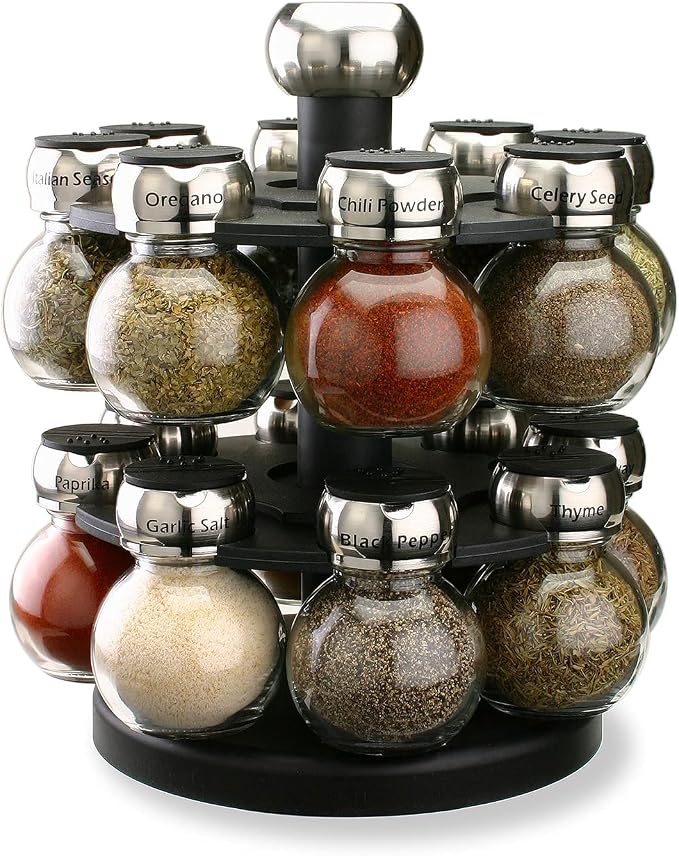 Olde Thompson Since 1944 Orbit Ro… Olde Thompson Since 1944 Orbit Ro…OLDE THOMPSON SINCE 1944 |
Our Top Pick | $45.10 Buy → |
| 2 | Best Pull-Out | Check current price on Amazon Buy → |
|
| 3 | Best Wall Mount | $34.99 Buy → |
|
| 4 | 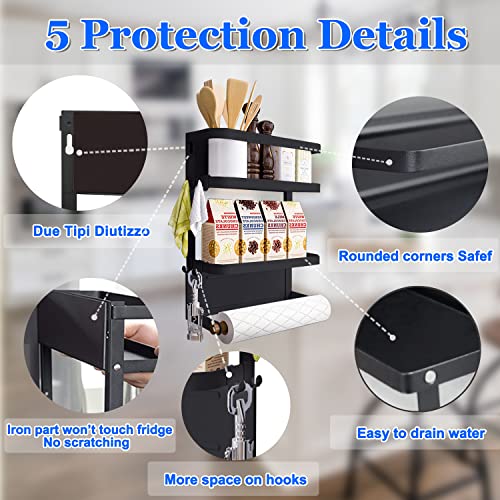 Dr.BeTree Magnetic Spice Rack for… Dr.BeTree Magnetic Spice Rack for…Dr.BeTree |
Best Magnetic | Check current price on Amazon Buy → |
| 5 | Best 6-Pack | Check current price on Amazon Buy → |
How to Store Spices Properly Buying Guide
 Photo by ROMAN ODINTSOV / Pexels
A well-organized spice collection isn't just aesthetically pleasing — it directly affects how your food tastes. Spices stored near heat, in the wrong containers, or past their prime deliver a fraction of their intended flavor. This guide covers every element of smart spice storage, from containers and racks to proper labeling and rotation schedules.
Why Spice Storage Matters More Than You Think
Ground spices lose up to 70% of their volatile flavor compounds within 12–18 months if stored improperly. The three enemies of freshness are heat, light, and moisture. Most kitchen cabinets above the stove reach 90–110°F regularly — accelerating degradation dramatically. A $25 cabinet-door rack on a cool wall outperforms a $150 countertop carousel directly next to the burners.
Buying quality spices and storing them poorly is a common and expensive mistake. A jar of saffron ($10–$20), smoked paprika ($6–$12), or vanilla extract ($15–$30) can lose most of its value in months if exposed to steam from the stove.
Choosing the Right Spice Containers
The container you use determines how long your spices retain potency. Here's what to know:
- Glass jars with metal lids ($1–$3 each): Best choice. Don't absorb odors, block light better than clear plastic, and seal tightly. Ball 4 oz mason jars and OXO Pop containers both work well.
- Magnetic tins ($15–$40 for a set): Convenient for wall mounting but smaller capacity. Check that they seal completely — loose-fitting lids are a dealbreaker.
- Plastic shaker jars (often included with spice sets): Acceptable short-term but degrade over 2–3 years. The plastic can off-gas into strongly aromatic spices.
- Original store packaging: Often adequate if you use the spice within 6 months. Reseal tightly with a rubber band and store in a drawer — fine for casual cooks.
For a full kitchen overhaul, budget $30–$80 for 20–30 uniform jars. Consistency makes labeling and stacking much easier.
Spice Storage Systems: Racks, Drawers, and Walls
Choose a storage format based on your kitchen layout and how often you cook:

- Pull-out drawer inserts ($20–$50): Best for serious cooks. You see every label at once, no searching through rows. Works with any cabinet that has a spare drawer or can be converted.
- Wall-mounted magnetic strips ($25–$60): Saves counter and cabinet space. Great for small kitchens. Requires stud mounting for heavy loads. Magnetic tins sold separately ($10–$25).
- Cabinet-door racks ($15–$35): Adds storage without taking new space. Look for models with lips to prevent jars falling when the door is opened quickly.
- Tiered cabinet shelves ($12–$30): Budget-friendly and easy. Two-tier risers let you see back-row spices without moving the front row.
- Countertop carousels ($25–$80): Convenient but use only in cooler parts of the kitchen, away from heat sources.
For a 20–30 jar collection, a $30–$50 drawer insert or a $45 wall magnetic system are the two best-value investments.
Labeling and Dating Your Spice Collection
Labels seem trivial but save significant time. A chalkboard label ($8–$15 for a pack) with the spice name and purchase date lets you quickly assess freshness. Key labeling rules:
- Write the purchase date not just the spice name — this is the only way to track when to replace them
- Use oil-resistant labels if jars will be handled with cooking-greasy hands (standard paper peels off)
- For uniform jar sets, label both the lid (visible in a drawer) and the side (visible on a shelf)
- Waterproof vinyl labels ($10–$20 for 100) are worth the cost for long-term collections
Shelf Life and Rotation Strategy
Rotation prevents the "dead spice" problem where your cabinet looks full but nothing delivers real flavor:

- Ground spices: 1–2 years at peak potency; still usable to ~3 years
- Whole spices (cinnamon sticks, cumin seeds, cardamom pods): 3–5 years; grind fresh before use
- Dried herbs (thyme, oregano, basil): 1–2 years; test by rubbing between fingers
- Seeds (sesame, poppy, caraway): 1–2 years; prone to going rancid, especially in warm kitchens
- Salt, sugar, vanilla extract: Indefinite — no rotation needed
Do a full spice audit twice a year. Smell each jar — anything without strong aroma gets replaced. Budget $30–$60 per year to refresh your collection. Buying whole spices in small quantities from bulk stores ($2–$8/oz) is cheaper and fresher than packaged brand spices.
Budget Guide: What to Spend
You don't need a $200 system to store spices well. Here's what makes sense at each price point:
- $15–$30: A tiered cabinet shelf riser + paper labels. Gets the job done for casual cooks with 10–15 spices.
- $30–$60: 20–30 uniform glass jars + a pull-out drawer insert or door rack. Best value for most home cooks.
- $60–$120: Full magnetic wall system with custom labels + complete jar set. Great for open-concept kitchens where the display is visible.
- $120+: Custom drawer inserts or built-in spice pull-outs. Worth it in a kitchen renovation, overkill as a standalone purchase.
Common Spice Storage Mistakes
Avoid these mistakes that affect even experienced cooks:
- Storing above the stove: Heat and steam are the fastest way to ruin a spice collection
- Buying in bulk without using quickly: Warehouse club spice containers look like a deal but often expire before you finish them
- Mixing whole and ground in the same container: They expire at different rates and can confuse measurements
- Not smelling before using: A quick sniff saves a ruined dish — if it smells like nothing, it tastes like nothing
- Skipping labels: Unlabeled jars force you to open every jar when cooking — slows you down and exposes spices to air
Watch Before You Buy


“The Olde Thompson 16-Jar Labeled Orbit Spice Rack features made in usa or imported. 4.6 stars from 2,923 Amazon reviews signal consistent reliability.”
See Today’s Price →What we like
- Pre-filled with 16 commonly used spices — no separate purchasing needed
- Orb-shaped glass jars look attractive on countertops and don't tip
- Chrome labels are easy to read at a glance for fast cooking identification
- Olde Thompson's airtight lids keep spices fresher than open-top containers
Watch out for
- Fixed 16-jar set — doesn't grow with your spice collection beyond what's included
- Countertop placement takes up surface real estate in smaller kitchens
Read Full Analysis
Olde Thompson's 16-Jar Orbit Spice Rack ships pre-filled with 16 common spices in orb-shaped glass jars — stable, non-tipping, and attractive on a countertop. Chrome printed labels are readable at a glance during cooking without picking up the jar. Olde Thompson's airtight lids seal each jar individually, which does more to preserve potency than open-top or cork-sealed containers common in cheaper sets. At $45.10, this is the lowest-priced option on this page versus the SWOMMOLY wall mount at $34.99. The included spices make it particularly good value if you're starting a spice collection from scratch — buying 16 individual jars separately would easily cost $40-60. The limitation: once you expand beyond these 16 spices, the set doesn't grow with you, and matching the orb-style jars for additions can be difficult. Best for cooks who are outfitting a new kitchen or replacing a tired, mismatched spice collection and want everything in one purchase. Skip if you already own 20+ spices or prefer a specific storage style like drawer pull-outs (SpaceAid) or wall-mount racks (SWOMMOLY at $34.99).
“Cabinet-mount pull-out rack that slides forward to reveal spices stored in rows at eye level — the SpaceAid for kitchen cabinets where spices are buried in back and require removing everything in…”
See Today’s Price →What we like
- Pull-out drawer design brings every jar into view without digging through the cabinet
- SpaceAid's slide mechanism handles weight of full glass spice jars smoothly
- Maximizes cabinet depth that standard stacked shelves completely waste
- Installs in minutes with no drilling — adhesive or tension mounting options
Watch out for
- Cabinet width must match the pull-out dimensions — measure before ordering
- Won't fit cabinets with fixed center dividers or unusually shallow depth
Read Full Analysis
SpaceAid's pull-out spice rack installs inside an existing cabinet and slides forward on a smooth mechanism, bringing every jar into view at once without pulling things out. Standard cabinet spice storage loses the back third of cabinet depth — spices pushed to the back get forgotten and expire. This solves that by making the full depth usable. The adjustable shelves handle jars from 2 to 4 inches tall, covering standard spice jars as well as taller seasoning bottles. Installation uses either adhesive or tension mounting — no drilling required. This is a meaningful advantage over the SWOMMOLY wall mount ($34.99), which requires drilling and wall anchors for a permanent installation. The trade-off is cabinet-specific sizing: the pull-out dimensions must match your cabinet width, and it won't fit cabinets with a fixed center divider or unusually shallow depth. Measure before ordering. Best for cooks who already have a full spice collection stored in a cabinet but constantly lose track of what's in the back. The Olde Thompson set ($45.10) is better if you're starting fresh and want a countertop display; the SWOMMOLY ($34.99) is better if you want maximum capacity on a wall.
“9-tier wall-mounted spice rack at 47 inches tall holds 50+ jars in a dedicated wall space — the SWOMMOLY for serious cooks who have outgrown cabinet spice storage and want a full display. Adjustable…”
See Today’s Price →What we like
- 9-tier vertical design stores dozens of spice jars without using any counter space
- Wall-mount or over-door installation adapts to kitchens of any size
- Adjustable shelf spacing fits taller bottles alongside standard spice jars
- SWOMMOLY's sturdy frame holds full jars without flexing under loaded weight
Watch out for
- Wall mounting requires drilling and appropriate wall anchors for heavier spice loads
- Door mounting only works on pantry-style inward-opening cabinet doors
Read Full Analysis
SWOMMOLY's 9-tier wall-mount rack runs 47 inches tall and holds 50+ spice jars in a dedicated wall space — the highest capacity option on this page. The frame is adjustable: shelf spacing can be repositioned to fit jars from 2 to 5 inches tall, so taller herb bottles sit alongside standard spice jars without wasted vertical space. It can mount to a wall with included anchors or hang over a pantry door, giving installation flexibility. At $34.99, the SWOMMOLY costs $5 more than the Olde Thompson 16-jar set ($45.10) but offers dramatically more storage capacity and uses zero counter space. The SpaceAid pull-out sits in a cabinet without drilling; SWOMMOLY requires wall anchors for a permanent installation, which means committing to a wall location. Over-door mounting avoids drilling but only works on pantry-style inward-opening doors with sufficient clearance. Best for serious cooks with large spice collections — 30, 40, 50+ jars — who have run out of counter and cabinet space and want a display-style wall installation. Not ideal for renters who can't drill, or for kitchens without a suitable wall; the SpaceAid pull-out is a better no-drill option in that case.
“Magnetic spice jars that mount on the refrigerator side wall plus a paper towel holder arm — the Dr.BeTree for kitchens where counter and cabinet space is maxed and the refrigerator wall goes…”
See Today’s Price →What we like
- Magnetic mount sticks directly to the refrigerator side — zero counter or cabinet space used
- Integrated paper towel holder consolidates two kitchen accessories in one unit
- Dr.BeTree's strong magnets hold firmly even on stainless steel fridge surfaces
- Visible jar placement lets you grab spices without opening any doors
Watch out for
- Only works on magnetic fridge surfaces — won't stick to stainless steel panels with low iron content
- Limited jar count compared to wall-mount or cabinet organizers
Read Full Analysis
The Dr.BeTree Magnetic Spice Rack mounts directly to the refrigerator side wall using strong magnets, occupying zero counter or cabinet space. The integrated paper towel holder consolidates two kitchen accessories into one fridge-mounted unit — spice storage and towel roll in the same footprint. Transparent jars with label windows let you identify spices by sight without removing or opening containers, and Dr.BeTree's magnets hold firmly on standard refrigerator finish surfaces. Against the Olde Thompson 16-jar carousel ($45.10) and the SWOMMOLY wall-mount ($34.99) on this page, the Dr.BeTree fills a different role: zero-footprint fridge-wall storage for kitchens where both counter space and cabinet real estate are already fully occupied. The carousel and wall-mount both offer higher jar capacity, but they require a surface area the Dr.BeTree doesn't consume. The key limitation is surface compatibility — the magnets work on standard refrigerator finishes but may not hold on stainless steel panels with low iron content. Best suited for small kitchens where the refrigerator side is the last available vertical surface. Skip it if your refrigerator surface doesn't hold magnets or if you need to organize more spices than this unit's jar count accommodates.

“6-pack of magnetic spice jars that stick to any refrigerator or metal surface — the DTUQYX for cooks who want the most-used spices near the stove without using counter space. Stronger magnet hold…”
See Today’s Price →What we like
- 6-pack provides enough magnetic containers to cover the most-used spice lineup
- Fridge-side placement keeps frequently used spices within arm's reach of the stove
- DTUQYX's stackable containers can also be grouped on magnetic surfaces beyond the fridge
- Airtight lids maintain spice freshness when sealed properly between uses
Watch out for
- Containers are smaller than standard spice jars — bulk spices require refilling more often
- Labels must be created or printed separately — containers ship without printed labels
Read Full Analysis
The DTUQYX 6-pack provides enough magnetic containers to cover most households' core everyday spice lineup without a secondary storage solution for common seasonings. Each container attaches to any magnetic surface — refrigerator side, range hood, or metal backsplash — keeping frequently used spices within arm's reach of the stove. Airtight lids seal between uses to maintain freshness, and the transparent construction identifies contents by sight without label hunting. Against the Dr.BeTree combo unit (rank 4) on this page, the DTUQYX 6-pack trades the integrated paper towel holder for a multi-container format at better per-unit value. The containers can be distributed across different magnetic surfaces in the kitchen rather than grouped in one location — useful for splitting spices between the fridge side near the stove and a range hood above it. The main operational trade-off: containers run smaller than standard spice jars, so bulk quantities require more frequent refilling, and labels must be created or printed separately since the pack ships without printed identification. Right pick for cooks who want fridge-side or range-hood access for six to eight frequently used spices without committing to a full wall-mounted organizer. Not the right fit if you buy spices in bulk quantities or prefer a pre-labeled system like the Olde Thompson carousel.
Frequently Asked Questions
What is the best container for storing spices?
Should spices be stored in the fridge or freezer?
How do I know when a spice has gone bad?
What's the best placement for a spice rack?
How many spices does the average home cook need?
How We Analyze Products
We analyze Amazon review data — often thousands of reviews per product — to surface patterns that individual buyers miss. Our process aggregates star ratings, review counts, and buyer sentiment at scale, identifying which strengths and weaknesses appear consistently across the largest review samples available. The 6,676+ reviews analyzed on this page represent real verified-purchase feedback from Amazon buyers.
Each product earned its placement through data: total review volume, average rating, and the specific praise and complaints that repeat most often across buyers. No manufacturer paid for placement on this page. Products appear here because buyers endorsed them at scale, not because a company asked us to feature them.
We use AI to summarize review sentiment — not to fabricate opinions, but to condense what thousands of buyers actually wrote into a readable format. The pros and cons you see reflect the most common themes found in verified purchaser reviews, paraphrased for clarity. We do not claim to have accessed Reddit, YouTube, or specific publications in generating these summaries.
Prices shown reflect Amazon pricing at the time this page was last generated. Click “See Today’s Price” to get the current live price on Amazon. Read our full methodology →