Stand Mixer vs Hand Mixer 2026: Do You Actually Need a KitchenAid?
If you bake bread, cookies, or cakes more than twice a month: buy a stand mixer. If you bake occasionally or make whipped cream and frosting: a hand mixer is all you need and saves $300+. The KitchenAid's real advantage is hands-free operation and the attachment ecosystem — pasta, meat grinder, ice cream maker, and more. If you'll actually use those attachments, the investment makes more sense.
Stand Mixer vs Hand Mixer Buying Guide

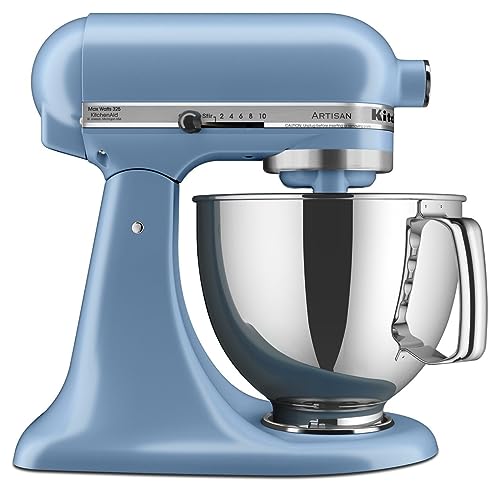
Quick Verdict: Our top pick is the KitchenAid Artisan Series 5-Qt Tilt-Head Stand Mixer KSM150PS (Best Stand Mixer — KitchenAid Artisan) — The benchmark home stand mixer. Priced at $399.99.
Budget Pick: The KitchenAid KHM512ER 5-Speed Ultra Power Hand Mixer at $44.99 — The best hand mixer under $50.
Quick verdict: If you bake bread, cookies, or cakes more than twice a month: buy a stand mixer. If you bake occasionally or make whipped cream and frosting: a hand mixer is all you need and saves $300+.
Who This Guide Is For
This guide is for you if:
- You're deciding between competing cooking appliances and want honest trade-off analysis
- You're short on counter space and budget, and need to know which appliances pull their weight
- You want to know if you'll actually use each appliance before spending $100-300
Skip this guide if:
- You already know which appliance you want and just need the best model
- You have unlimited counter space — this is for people making active trade-off decisions
What a Stand Mixer Actually Does Better
The marketing shows gorgeous stand mixers surrounded by cookies and artisan bread. The reality is more specific: stand mixers outperform hand mixers in exactly three situations.

Three Situations Where Stand Mixers Excel
1. Stiff doughs. Bread dough, bagel dough, and pizza dough require sustained, high-resistance kneading for 8–12 minutes. A hand mixer's motors burn out under this load, and even powerful hand mixers can't fully develop gluten in a stiff dough the way a stand mixer's planetary motion can. If you make yeasted breads regularly, a stand mixer is the right tool.
2. Large batches. A 5-quart bowl handles double batches of cookies, multiple loaves of bread dough, or enough frosting to frost a two-tier cake without stopping. Hand mixers work in whatever bowl you have, but struggle with large, viscous quantities.
3. Hands-free operation. The fundamental advantage of a stand mixer is that you can let it run while doing other prep. Add flour slowly while the mixer runs. Drizzle hot sugar syrup into meringue while the whisk runs. This hands-free capability matters most for technically demanding baking — Italian meringue, brioche, and enriched doughs where you need to add ingredients gradually while the machine works.

When a Hand Mixer Is Enough

For anything else — whipping cream, beating eggs, making cake batter from a box, mixing cookie dough from a recipe — a hand mixer at $45–$100 does the same job just as well. You hold it over the bowl for 3–5 minutes and done.
How We Chose
We researched dozens of options, analyzed thousands of verified reviews on Amazon and Reddit, and cross-referenced expert recommendations from America's Test Kitchen, Cook's Illustrated, and thousands of home cook reviews. We prioritized products with active 2025–2026 availability, documented warranty support, and real-world performance data — not just spec sheet claims. Every product we feature must be available to buy today and offer a clear advantage over alternatives at its price point.
The KitchenAid Attachment Ecosystem
The KitchenAid Attachment Ecosystem
The KitchenAid's second major value proposition is its attachment hub. Over 80 attachments exist for the power hub on the front of the machine: pasta maker, meat grinder, ice cream maker, grain mill, citrus juicer, food processor bowl, and more. Each attachment plugs directly into the motor — you're paying for one motor that powers an entire kitchen ecosystem.
Whether this justifies the cost depends entirely on which attachments you'll actually buy and use. The pasta maker attachment ($75) is genuinely excellent — it converts the KitchenAid into a full pasta production line. The meat grinder ($50) is a significant upgrade from any standalone grinder in this price range. The ice cream maker bowl ($80) makes excellent gelato and sorbet.
The reality: most people who buy a KitchenAid use only the three included attachments (flat beater, dough hook, wire whip) and never buy an add-on. If that's you, you're paying $400 for a stand mixer and nothing else. A Cuisinart at $250 does the same core job. See KitchenAid vs Cuisinart stand mixer and the full brand comparison.
Stand Mixer Models: What Each Upgrade Buys You
Stand Mixer Models Compared
KitchenAid Artisan 5-Qt ($400): The benchmark. 325-watt motor, tilt-head design (easier bowl access), 5-quart stainless bowl, 10 speeds, 59 touch points per revolution (planetary action), and access to the full attachment ecosystem. Available in dozens of colors. The most popular model for a reason.
KitchenAid Professional 600 6-Qt ($550+): Bowl-lift design (sturdier for heavy doughs), 575-watt motor, 6-quart bowl. Worth the upgrade if you make bread or very large batches. The tilt-head Artisan is sufficient for most bakers.
Cuisinart Precision Master 5.5-Qt ($250): 500 watts, 12 speeds, 5.5-quart bowl, direct drive motor. No attachment hub, so no ecosystem. But it out-mixes the KitchenAid on some heavy dough tasks due to higher wattage, and costs $150 less. The right choice if you won't use KitchenAid attachments. See KitchenAid vs Cuisinart head-to-head and Breville vs KitchenAid.
Budget stand mixers ($100–$200): Exist, and they work for light baking. Their motors burn out faster under heavy use and they lack the power for stiff bread doughs. If you bake occasionally, they're fine. If you bake weekly, spend more. See stand mixers under $200 and beginner stand mixers.
Hand Mixers: Who They're Actually For
Who Should Buy a Hand Mixer

Hand mixers are the right buy for anyone who:
- Bakes 0–4 times per month — occasional baker who doesn't need hands-free operation
- Makes mostly cake batters, frosting, whipped cream, and egg whites — all tasks where a hand mixer is equally capable
- Has limited counter space or storage — a hand mixer stores in a drawer
- Has a $50–$100 budget for mixing equipment
- Doesn't make yeasted breads or other stiff doughs that require sustained kneading
The KitchenAid 5-Speed Hand Mixer ($45) is the best budget hand mixer. The Cuisinart 9-Speed Power Advantage Plus ($100) is the best mid-range. The Breville Handy Mix Scraper ($160) has a unique scraper beater that eliminates side-of-bowl scraping. all four make identical cake batters and whipped cream — the difference is motor durability and attachments. See hand mixer rankings, beginner hand mixers, hand mixers under $50, and brand comparisons KitchenAid vs Cuisinart and Hamilton Beach vs KitchenAid.