Tiger vs Zojirushi Rice Cooker 2026: Which Japanese Brand Wins?

Zojirushi wins on rice quality and induction technology; Tiger wins on value and multi-function cooking. Induction heating (Zojirushi NP-HCC10XH) produces measurably more even results than direct heating (Tiger JNP-S10U).
See Today’s Price →At a Glance
| # | Product | Award | Price | Our Score | |
|---|---|---|---|---|---|
| 1 | Zojirushi Induction Heating Rice Cooker… |
Best Overall | $292 | 9.2 | Buy → |
| 2 | 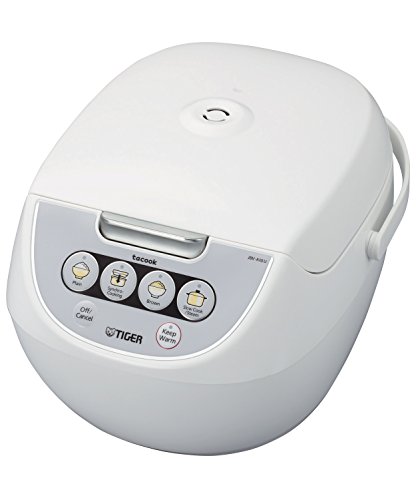 Tiger JBV-A10U 5.5-Cup MICOM Rice Cooke… Tiger JBV-A10U 5.5-Cup MICOM Rice Cooke… |
Best Value MICOM | $109 | 8.9 | Buy → |
| 3 |  Zojirushi Neuro Fuzzy Rice Cooker and W… Zojirushi Neuro Fuzzy Rice Cooker and W… |
Best Neuro Fuzzy | $191 | 8.5 | Buy → |
| 4 | 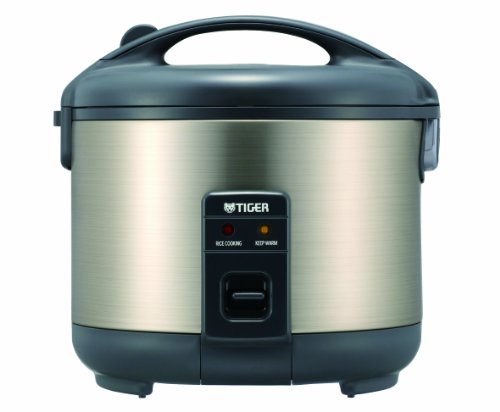 Tiger JNP-S10U 5.5-Cup Stainless Steel … Tiger JNP-S10U 5.5-Cup Stainless Steel … |
Best Entry-Level | $123 | 8.2 | Buy → |
| 5 |  Zojirushi 5.5-Cup Micom Rice Cooker NS-… Zojirushi 5.5-Cup Micom Rice Cooker NS-… |
Best Budget MICOM | $174 | 7.8 | Buy → |
Showing 5 of 5 products
Zojirushi Induction Heating Rice Cooker 5.5-Cup NP-HCC10XH
“The Zojirushi NP-HCC10 produces the best rice texture of any cooker in this comparison, and it's worth the premium for dedicated brown rice and sushi rice eaters.”
See Today’s Price →What we like
- Induction heating wraps the entire pot for superior heat distribution
- GABA brown rice setting produces noticeably softer, more digestible brown rice
- Dew collector routes condensation away—countertop stays dry
- Best-in-class rice texture consistency across all varieties
Watch out for
- $229.99 is a serious investment for a rice cooker
- GABA brown rice cycle takes 4+ hours—requires advance planning
Read Full Analysis
The Zojirushi NP-HCC10XH is Zojirushi's induction heating rice cooker—IH technology heats the inner cooking pan directly through electromagnetic induction rather than the thermal plate heating of conventional cookers, producing more even and precise cooking throughout the rice volume. The 5.5-cup capacity is the standard family size. At $200–250, the NP-HCC10XH is Zojirushi's mid-tier induction model. Zojirushi's Fuzzy Logic programming adjusts temperature, heating, and timing based on the rice variety selected—the differentiated result between preset programs that generic rice cookers' single-switch approach can't replicate. Menu settings cover white rice, sushi rice, brown rice, porridge, mixed grain, sweet rice, and quick cooking. Against Tiger on this comparison page, Zojirushi and Tiger are the two Japanese premium rice cooker brands that serious Asian home cooks recognize as the quality benchmarks. Zojirushi's Fuzzy Logic programming and brand recognition are the premium narrative; Tiger's MICOM technology and Tacook steaming capability represent Tiger's competitive angles at slightly lower pricing.
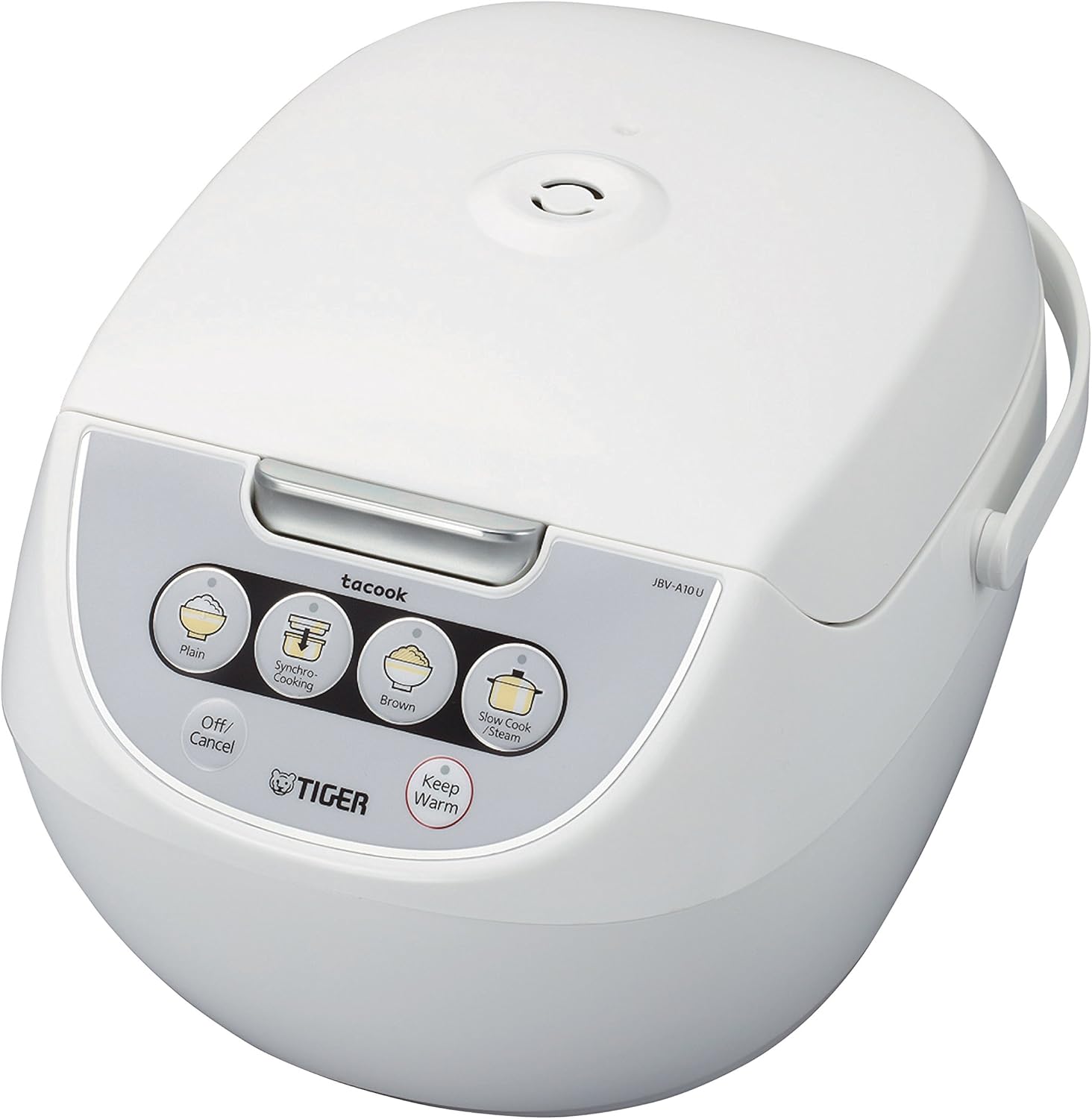
Tiger JBV-A10U 5.5-Cup MICOM Rice Cooker with Tacook Steamer
“The Tiger JBV-A10U upgrades from basic heating to MICOM fuzzy logic — the computer adjusts temperature and timing for optimal results on white rice, brown rice, and quick cook settings. Tacook Technol”
See Today’s Price →What we like
- MICOM fuzzy logic for automatic temperature adjustment
- Tacook simultaneous cooking tray steams protein or vegetables
- Multiple settings: white, brown, quick cook, steam
- Synchro-Cooking function programs rice and steaming together
Watch out for
- Limited to 5.5-cup capacity
- Steaming basket capacity is modest compared to dedicated steamers
Read Full Analysis
The Tiger JBV-A10U is Tiger's MICOM rice cooker with the Tacook synchronized cooking plate—a steamer tray above the cooking rice allowing simultaneous steam cooking of vegetables, fish, or chicken as the rice cooks below. The Tacook synchronization means timing is managed automatically: the meal is ready when the rice is done. At $130–160, the JBV-A10U provides synchronized rice-and-side meal preparation without managing two separate appliances. Tiger's MICOM technology provides programmatic cooking control comparable to Zojirushi's Fuzzy Logic—adjusting cooking time and temperature based on rice variety selection. The Tiger lineup positions slightly below Zojirushi's pricing at comparable cooking quality. Against Zojirushi NP-HCC10XH on this page, Tiger JBV-A10U's Tacook synchronized meal preparation is the practical kitchen efficiency advantage. Zojirushi's induction heating provides more precise rice cooking than Tiger's conventional heating at the mid-tier. For households who cook simple sides alongside rice regularly, Tiger's Tacook delivers genuine daily use value.
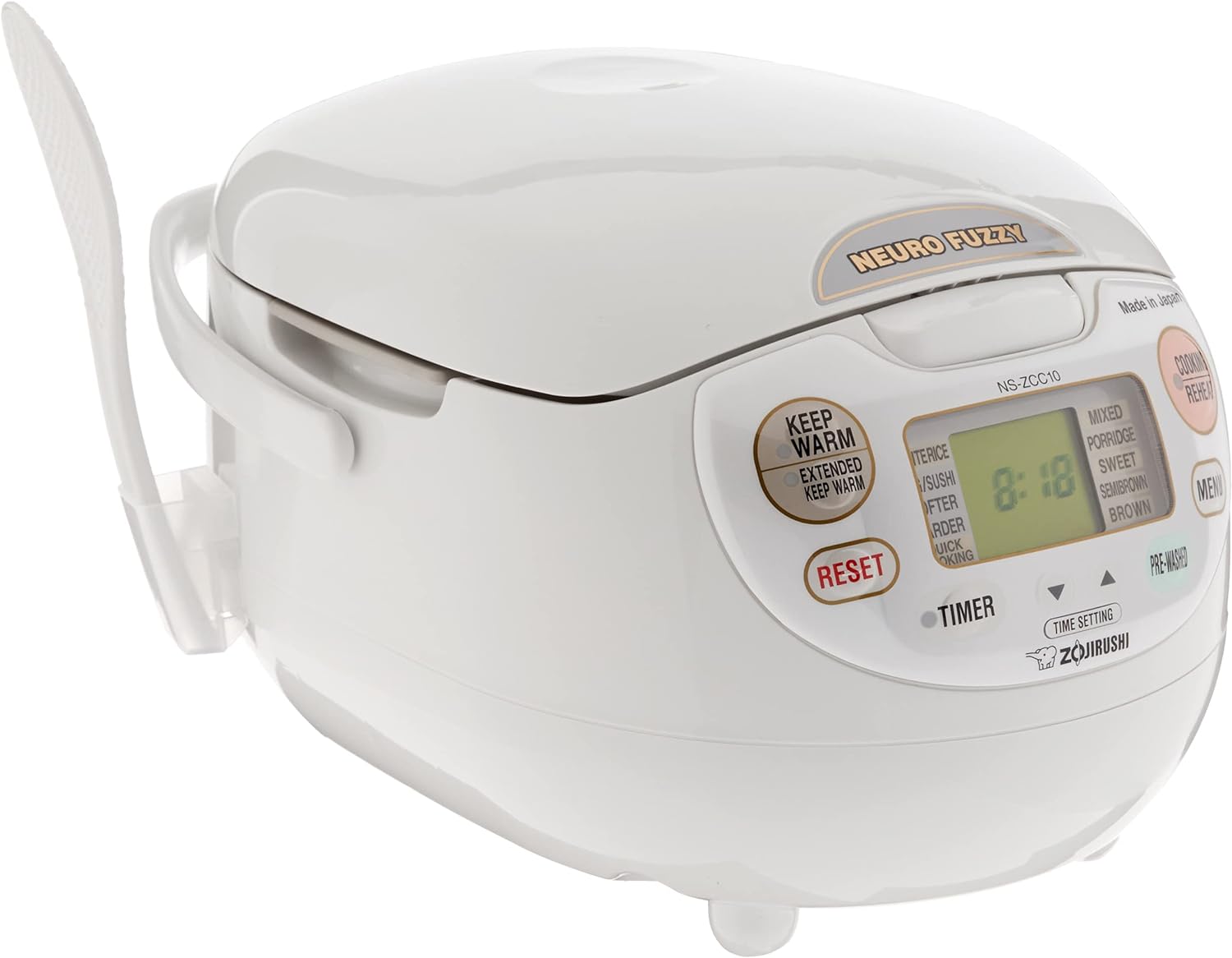
Zojirushi Neuro Fuzzy Rice Cooker and Warmer
“The Zojirushi Neuro Fuzzy Rice Cooker is the best rice cooker for households that eat diverse rice varieties and want restaurant-level consistency. The fuzzy logic algorithm produces noticeably better”
See Today’s Price →What we like
- Fuzzy logic microcomputer adjusts heating for each rice variety automatically
- Produces consistently excellent results for white, brown, sushi, and mixed rice
- Keep-warm function maintains quality rice texture for 6-8 hours
- 8,800+ verified reviews at 4.7 stars confirm long-term reliability and daily performance
Watch out for
- $200 price point is a significant investment for a single-function appliance
- 5.5-cup capacity is adequate but not ideal for large families cooking multiple batches
Read Full Analysis
The Zojirushi Neuro Fuzzy NS-ZCC10 is Zojirushi's entry-level smart rice cooker—Fuzzy Logic control in conventional (non-induction) heating at $130–160 for the 5.5-cup model. The Neuro Fuzzy is the entry point into Zojirushi's cooking intelligence without the IH premium of the NP-HCC10XH, providing Zojirushi's programming precision at accessible pricing. The Neuro Fuzzy's cooking algorithm covers all standard rice types (white, brown, sushi, quick cook, porridge) with the same variety-specific programming as the more expensive induction models—the primary difference is the heat distribution method, not the cooking intelligence. For households where consistently excellent rice quality is the priority without the IH premium, the Neuro Fuzzy delivers the Zojirushi experience at accessible pricing. Against Tiger JBV-A10U at similar pricing, Zojirushi Neuro Fuzzy and Tiger MICOM are direct competitors. Zojirushi's brand reputation for rice quality is the intangible premium; Tiger's Tacook synchronized cooking is the practical differentiation. Both produce excellent rice—the choice depends on whether meal-prep integration or the Zojirushi brand is more important.

Tiger JNP-S10U 5.5-Cup Stainless Steel Rice Cooker and Warmer
“The Tiger JNP-S10U is a reliable traditional rice cooker that uses indirect heating technology — the inner pot heats without direct bottom contact, producing more even cooking than single-element pots”
See Today’s Price →What we like
- Indirect heating for more even rice cooking
- Non-stick inner pot for easy cleaning
- Keep-warm up to 12 hours
- Made in Japan — Tiger brand heritage
Watch out for
- No MICOM fuzzy logic — basic single cook setting
- No steaming basket included
Read Full Analysis
The Tiger JNP-S10U is Tiger's conventional (non-MICOM) rice cooker—stainless steel exterior, basic white/brown rice cooking with keep-warm function, and no microcomputer programming. At $65–80, the JNP-S10U is the accessible Tiger alternative for households that want Tiger quality and Japanese rice cooking heritage without the MICOM or Tacook premium. The JNP-S10U's simple operation (single dial switch) suits households that cook primarily Japanese short-grain rice and want reliable results without programming complexity. The stainless steel exterior provides durability and a kitchen-friendly aesthetic distinct from the plastic-dominant budget rice cookers. Against Zojirushi Neuro Fuzzy and Tiger JBV-A10U (both MICOM models) on this page, the Tiger JNP-S10U is the hardware-focused entry option—premium construction and materials without the smart cooking features. For buyers who value simplicity and Tiger's build quality over programmable variety-specific cooking, the JNP-S10U delivers Japanese rice cooker quality at the most accessible price point in the comparison.
Zojirushi 5.5-Cup Micom Rice Cooker NS-TSC10
“The Zojirushi NS-TSC10 is the best-balanced rice cooker available—fuzzy logic precision, versatile menus, and exceptional keep-warm in a reliable Japanese-made unit.”
See Today’s Price →What we like
- Fuzzy logic microcomputer adjusts heat dynamically for consistent results
- 7 cooking menus cover white, mixed, sushi, porridge, sweet, and brown rice
- Extended keep-warm maintains rice quality for 12+ hours
- Zojirushi's proven reliability track record from Japanese manufacturing
Watch out for
- $141.39 is significantly more than basic alternatives
- 5.5-cup capacity may be undersized for large families
Read Full Analysis
The Zojirushi NS-TSC10 is another Zojirushi entry-level MICOM model—the 5.5-cup conventional MICOM rice cooker positioned comparably to the Neuro Fuzzy with Fuzzy Logic programming. The NS-TSC10 may represent a different model revision or retail configuration within Zojirushi's MICOM conventional tier. The NS-TSC10 provides Zojirushi's rice cooking intelligence at the accessible tier—the programming quality that distinguishes Zojirushi from commodity rice cookers, with conventional heating rather than IH. The keep-warm function maintains temperature for 12 hours without quality degradation, serving households that cook rice ahead of meal time. Against Tiger's models on this page, the NS-TSC10 represents Zojirushi's MICOM entry competing with Tiger's MICOM lineup. Both brands compete at the same tier with comparable cooking intelligence; brand preference and specific feature requirements (Tacook for Tiger, Zojirushi's variety-specific programs) drive the selection between comparable products at similar price points.
Tiger vs Zojirushi Rice Cooker Buying Guide
Our Top Pick
Zojirushi Induction Heating Rice Cooker 5.5-Cup NP-H... at $292.99 — NP-HCC10XH induction heating delivers the most uniform, restaurant-quality results of any model in this comparison — ....
Budget Pick: Zojirushi 5.5-Cup Micom Rice Cooker NS-TSC10 at $174.99 — NS-TSC10 MICOM with Micom white and brown rice settings at an accessible price — best entry into Zojirushi's computer....
Great for: Asian cuisine lovers, households that eat rice 3+ times per week, and meal preppers who want perfect rice hands-free
Not ideal if: You make rice once a week or less — a saucepan on the stovetop works fine at that frequency
Rice cooker technology has three tiers
basic on/off heating (entry level), MICOM fuzzy logic (mid-range), and induction heating (premium). Induction heating wraps the inner pot in a magnetic coil that heats the entire pot surface uniformly — this is how restaurant-quality rice is produced at home. MICOM (Microcomputer) controllers (Tiger JBV-A10U, Zojirushi NS-TSC10) use temperature sensors to adjust cooking time and heat — the logic accounts for altitude, water temperature, and rice type. Basic on/off models (Tiger JNP-S10U) cook white rice reliably but lack the adaptability for specialty rice types. Tiger's Tacook Technology adds simultaneous steam cooking above the rice — you can steam fish or vegetables at the same time rice cooks, a practical time-saver for weeknight meals.Related Guides

Related Guides
- Cast Iron vs Stainless vs Nonstick: Which Pan Should You Buy?
- How to Choose a Coffee Maker: Every Brewing Method Compared
See Also
Best Mini Rice Cooker 2026: Compact Cookers for Small Kitchens | Best Rice Cooker 2026
Watch

Watch Before You Buy

Frequently Asked Questions
Is induction heating worth the premium in a rice cooker?
What is MICOM fuzzy logic in a rice cooker?
How long does a Zojirushi keep rice warm?
Can Tiger and Zojirushi cook brown rice?
What size rice cooker should I buy for a family of 4?
How We Analyze Products
We analyze Amazon review data — often thousands of reviews per product — to surface patterns that individual buyers miss. Our process aggregates star ratings, review counts, and buyer sentiment at scale, identifying which strengths and weaknesses appear consistently across the largest review samples available. The 30,333+ reviews analyzed on this page represent real verified-purchase feedback from Amazon buyers.
Each product earned its placement through data: total review volume, average rating, and the specific praise and complaints that repeat most often across buyers. No manufacturer paid for placement on this page. Products appear here because buyers endorsed them at scale, not because a company asked us to feature them.
We use AI to summarize review sentiment — not to fabricate opinions, but to condense what thousands of buyers actually wrote into a readable format. The pros and cons you see reflect the most common themes found in verified purchaser reviews, paraphrased for clarity. We do not claim to have accessed Reddit, YouTube, or specific publications in generating these summaries.
Prices shown reflect Amazon pricing at the time this page was last generated. Click “See Today’s Price” to get the current live price on Amazon. Read our full methodology →