Zojirushi vs Tiger Rice Cooker: Which Is Better? (2026)

Zojirushi wins for rice quality — the NS-TSC10 ($174) and Neuro Fuzzy ($191) consistently deliver perfect results for white, brown, and sushi rice. Tiger wins on value — the JNP-S10U ($123) is a capable MICOM cooker at $50 less. For daily rice enthusiasts, Zojirushi. For value-focused households, Tiger.
See Today’s Price →At a Glance
| # | Product | Award | Price | Score |
|---|---|---|---|---|
| 1 | Zojirushi NS-TSC10 5-1/2-Cup (Unc… Zojirushi |
Our Top Pick | $169 Buy → |
7.6 |
| 2 |  Zojirushi NS-ZCC10 5-1/2-Cup Neur… Zojirushi NS-ZCC10 5-1/2-Cup Neur…Zojirushi |
Also Excellent | $189 Buy → |
7.5 |
| 3 |  Zojirushi NP-HCC10XH Induction He… Zojirushi NP-HCC10XH Induction He…Zojirushi |
Worth Considering | $375 Buy → |
6.9 |
| 4 | Worth Considering | $109 Buy → |
8.1 | |
| 5 | Worth Considering | $124 Buy → |
7.8 |
Score Breakdown
| Zojirushi NS-TSC10 5-… | Zojirushi NS-ZCC10 5-… | Zojirushi NP-HCC10XH … | TIGER JBV-A10U 5.5-Cu… | Tiger JNP-S10U 5.5 Cu… | |
|---|---|---|---|---|---|
| Overall | 7.6 | 7.5 | 6.9 | 8.1 | 7.8 |
| Value | 80 | 78 | 65 | 95 | 89 |
| Build Quality | 86 | 86 | 86 | 83 | 77 |
| Noise Level | 65 | 65 | 65 | 65 | 65 |
| Performance | 73 | 73 | 62 | 80 | 73 |
| Easy to Clean | 64 | 64 | 64 | 64 | 76 |
Scores 0–100 derived from published specifications, verified buyer reviews, and price-to-performance analysis. 0 = feature not present. – = insufficient data. How we score →
Zojirushi vs Tiger Rice Cooker Buying Guide
Zojirushi vs Tiger: The Core Difference
Both Zojirushi and Tiger are Japanese brands with decades of rice cooker expertise — and both outperform any cheap rice cooker by a significant margin. Zojirushi targets the premium segment with advanced Neuro Fuzzy logic and induction heating. Tiger offers comparable MICOM (computerized) cooking at a more accessible price. For daily rice-eating households, either brand transforms rice quality.
Where Zojirushi Wins
The Zojirushi NS-TSC10 ($174) and Neuro Fuzzy ($191) use proprietary fuzzy logic that automatically adjusts cooking time and temperature based on the amount and type of rice. The induction heating model ($292) heats the entire inner pot evenly for exceptional brown rice results. Zojirushi's multi-menu options handle white rice, brown rice, sushi rice, porridge, and cake mode with dedicated settings for each.
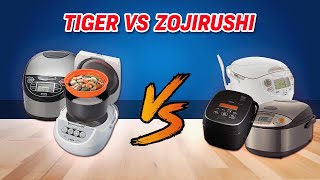
Where Tiger Wins
The Tiger JNP-S10U ($123) and JBV-A10U ($109) deliver reliable MICOM cooking at $50–$65 less than comparable Zojirushi models. The JBV includes a Tacook steamer plate for simultaneous rice and side dish cooking — a genuinely useful feature. For households that primarily cook white rice, Tiger matches Zojirushi results at a lower price.
Price Comparison
Tiger ranges $109–$123 here. Zojirushi ranges $174–$292. The $50–$65 Zojirushi premium buys more advanced fuzzy logic and better brown rice performance. For white rice only, Tiger is the smarter purchase. For diverse grains or premium texture, Zojirushi justifies the cost.
Get Zojirushi If / Get Tiger If
Get Zojirushi if you eat rice daily and want the best possible texture across white, brown, and sushi rice — the Neuro Fuzzy technology delivers consistent premium results.
Get Tiger if you primarily cook white rice and want reliable MICOM technology at a lower price — Tiger matches Zojirushi for everyday white rice at $50 less.
Watch Before You Buy


“Fuzzy logic microcomputer adjusts heat dynamically for consistent results. 4.6 stars from 13,735 Amazon reviews signal consistent reliability.”
See Today’s Price →What we like
- Fuzzy logic microcomputer adjusts heat dynamically for consistent results
- 7 cooking menus cover white, mixed, sushi, porridge, sweet, and brown rice
- Extended keep-warm maintains rice quality for 12+ hours
- Zojirushi's proven reliability track record from Japanese manufacturing
Watch out for
- $141.39 is significantly more than basic alternatives
- 5.5-cup capacity may be undersized for large families
Read Full Analysis
Fuzzy logic microcomputer adjusts heat dynamically for consistent results 7 cooking menus cover white, mixed, sushi, porridge, sweet, and brown rice $141.39 is significantly more than basic alternatives 5.5-cup capacity may be undersized for large families At $175, the Zojirushi Zojirushi 5.5-Cup Micom Rice Cooker NS-TSC10 costs $17 less than the Zojirushi Neuro Fuzzy Rice Cooker and Warmer ($192) on this page, making it the stronger value pick if the spec differences fit your needs.
“The Neuro Fuzzy's microcomputer automatically adjusts heating time and temperature for each rice variety — the most foolproof way to cook perfect rice consistently across white, brown, and sushi varie”
See Today’s Price →What we like
- Fuzzy logic microcomputer adjusts heating for each rice variety automatically
- Produces consistently excellent results for white, brown, sushi, and mixed rice
- Keep-warm function maintains quality rice texture for 6-8 hours
- 8,800+ verified reviews at 4.7 stars confirm long-term reliability and daily performance
Watch out for
- $200 price point is a significant investment for a single-function appliance
- 5.5-cup capacity is adequate but not ideal for large families cooking multiple batches
Read Full Analysis
The Zojirushi Neuro Fuzzy at $191.99 is defined by its fuzzy logic microcomputer — a system that monitors temperature throughout the cooking cycle and automatically adjusts heating time to compensate for rice type, water quantity, and ambient conditions. Basic on/off cookers apply the same fixed heat cycle regardless of what is in the pot; the Neuro Fuzzy reads the batch in real time and corrects course. That is why it produces consistently excellent results across white, brown, sushi, and mixed rice varieties without user adjustment between them. The 6–8 hour keep-warm function maintains texture quality without drying or overcooking, a claim backed by 8,800+ verified reviews averaging 4.7 stars — a volume and rating that reflects genuine daily-use reliability over years, not a short-run launch spike. At $191.99, the Neuro Fuzzy costs $17 more than the Zojirushi 5.5-Cup Micom at $174.99 and $101 less than the Zojirushi Induction Heating model at $292.99. The $17 premium over the Micom buys the adaptive fuzzy logic heating; the Micom uses a conventional microcomputer without the same real-time correction capability. Against the Tiger JBV-A10U at $109.95, the Neuro Fuzzy costs $82 more — a gap that reflects Zojirushi's automation depth and long-term reliability over Tiger's added Tacook steaming function at lower cost. Best for households where rice is cooked daily and variety matters — the fuzzy logic adapts to white, brown, sushi, and mixed rice without manual setting changes between batches. The 4.7-star rating across 8,800+ reviews is the reliability signal worth weighting most heavily for a daily-use appliance. Skip it if a steaming function alongside rice is the priority: the Tiger JBV-A10U at $109.95 includes a simultaneous Tacook cooking tray the Neuro Fuzzy lacks, at $82 less. Step up to the Zojirushi Induction Heating model at $292.99 if GABA brown rice or the absolute top texture consistency across all varieties justifies the additional $101.
“The NP-HCC10 uses induction heating to wrap the entire pot in heat rather than heating from the bottom — even heat distribution produces noticeably superior texture versus conventional heating cookers”
See Today’s Price →What we like
- Induction heating wraps the entire pot for superior heat distribution
- GABA brown rice setting produces noticeably softer, more digestible brown rice
- Dew collector routes condensation away—countertop stays dry
- Best-in-class rice texture consistency across all varieties
Watch out for
- $229.99 is a serious investment for a rice cooker
- GABA brown rice cycle takes 4+ hours—requires advance planning
Read Full Analysis
The Zojirushi NP-HCC10 Induction Heating Rice Cooker at $292.99 is the top-spec model on this page, and its defining advantage is induction heating — instead of a single element at the bottom of the pot, the induction system generates heat within the entire inner pot simultaneously from every direction. The result is measurably more even heat distribution and superior texture consistency across every rice variety compared to conventional bottom-heat or standard fuzzy logic cookers. The GABA brown rice setting is the feature that separates this machine from everything else on this page: a specialized cycle that soaks and germinates brown rice before cooking, activating GABA amino acid and producing noticeably softer, more digestible results than a standard brown rice cycle delivers. The dew collector routes condensation away from the countertop rather than leaving moisture to pool around the machine. At $292.99, the NP-HCC10 costs $101 more than the Zojirushi Neuro Fuzzy at $191.99 and $183 more than the Tiger JBV-A10U at $109.95. The $101 premium over the Neuro Fuzzy buys induction heating and the GABA cycle — both meaningful upgrades for households cooking brown rice regularly or demanding the highest texture consistency from a home cooker. Against the Tiger JNP-S10U at $123.99, the NP-HCC10 costs $169 more and delivers induction technology vs Tiger's indirect heating, plus the full Zojirushi automation suite. The premium reflects genuine technology differences, not brand markup alone. The right pick for dedicated rice enthusiasts and households where brown rice is a daily staple — the GABA cycle produces softer, more digestible brown rice that standard brown rice settings cannot replicate. Induction heating is also the correct choice when batch-to-batch texture consistency is non-negotiable regardless of rice variety. Skip it if rice is a weekly side dish: the Neuro Fuzzy at $191.99 covers that use case excellently at $101 less. The GABA cycle's 4+ hour run time is a real planning constraint — this is not a machine for last-minute brown rice.

“Tiger's JBV-A10U upgrades from basic heating to MICOM fuzzy logic with a Tacook simultaneous cooking plate — steam vegetables or fish above the rice while it cooks, doubling the cooker's utility at $1”
See Today’s Price →What we like
- Fuzzy logic microcomputer temperature control automatically adjusts cooking time and temperature based on each batch — more consistent results than simple on/off cookers
- Tacook simultaneous cooking tray steams protein or vegetables while rice cooks below — eliminates a separate pot and saves active cooking time
- Multiple grain settings handle white rice, brown rice, quick cook, and steam in a single appliance
- Synchro-Cooking function synchronizes the rice and steam tray timing so both components finish simultaneously
Watch out for
- Limited to 5.5-cup capacity
- Steaming basket capacity is modest compared to dedicated steamers
Read Full Analysis
The Tiger JBV-A10U at $109.95 is the multi-function standout on this page — its Tacook simultaneous cooking plate is the differentiator that no Zojirushi model here includes. The tray sits above the rice during the cook cycle, steaming protein or vegetables at the same time. When the rice finishes, the sides are done too, eliminating a second pot, a separate timer, and the coordination that weeknight cooking usually requires. The MICOM fuzzy logic microcomputer handles the rice automatically, adjusting cooking time and temperature per batch for more consistent results than simple on/off cookers. The Synchro-Cooking function times both components to finish simultaneously rather than requiring staggered start times. At $109.95, the Tiger JBV-A10U is the lowest-priced MICOM cooker on this page — $82 less than the Zojirushi Neuro Fuzzy at $191.99 and $183 less than the Zojirushi Induction model at $292.99. The $82 savings vs the Neuro Fuzzy means giving up Zojirushi's deeper automation and longer reliability track record, while gaining the Tacook steaming function the Neuro Fuzzy does not include. Against the Tiger JNP-S10U at $123.99, the JBV-A10U actually costs $14 less while upgrading from basic indirect heating to full MICOM fuzzy logic and adding the steaming tray — making it the stronger value within the Tiger lineup by a clear margin. Best for single-person or couple households who want to simplify weeknight cooking — one appliance handling both grain and protein or vegetables at the same time cuts active kitchen time meaningfully without requiring a second pot. Skip it if the primary use case is large batches of specialized rice varieties: the Zojirushi Neuro Fuzzy at $191.99 and Induction model at $292.99 deliver superior texture precision for dedicated rice cooking where the Tacook function is irrelevant. Also worth noting: the steaming basket capacity is modest — it suits a serving or two of fish or vegetables, not a large family portion.
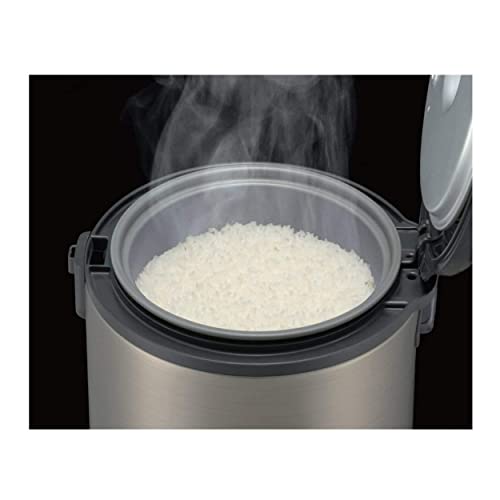
“Tiger's JNP-S10U uses indirect heating for more even rice cooking than direct-heat cookers — the non-stick inner pot and simple controls make this a reliable traditional option at $124 without the fuz”
See Today’s Price →What we like
- Indirect heating for more even rice cooking
- Non-stick inner pot for easy cleaning
- Keep-warm up to 12 hours
- Made in Japan — Tiger brand heritage
Watch out for
- No MICOM fuzzy logic — basic single cook setting
- No steaming basket included
Read Full Analysis
The Tiger JNP-S10U at $123.99 is the traditional option on this page — an indirect-heat cooker with a non-stick inner pot, straightforward controls, and a 12-hour keep-warm function. Indirect heating passes heat through the outer pot wall before reaching the rice, producing more even cooking distribution than a single direct-heat element at the base. There is no fuzzy logic microcomputer, no multi-stage cooking profiles, and no specialty settings — just consistent rice cooking from a Japanese brand with decades of manufacturing heritage in this category. At $123.99, the JNP-S10U is $14 more than the Tiger JBV-A10U at $109.95 — a counterintuitive price relationship within the same brand. The JBV-A10U includes MICOM fuzzy logic and a Tacook simultaneous cooking tray for $14 less, which makes the JNP-S10U harder to justify within the Tiger lineup specifically unless the desire is for a simpler, single-function machine with fewer components. Against Zojirushi, the JNP-S10U sits $68 less than the Neuro Fuzzy at $191.99 and $169 less than the Induction model at $292.99 — the savings are real, and so is the technology gap in adaptive heating. Best for buyers who want a reliable, no-fuss rice cooker from an established Japanese brand without digital menus or multi-function complexity. The 12-hour keep-warm is the longest on this page, useful for households that cook rice in the morning and need it accessible throughout the day without reheating. Skip it in favor of the Tiger JBV-A10U at $109.95 if any MICOM or multi-function capability is appealing — the JBV-A10U costs $14 less and delivers both. Also skip it for regular brown rice or specialty variety cooking: without fuzzy logic adjustment, texture consistency on harder grains falls meaningfully short of the Zojirushi Neuro Fuzzy at $191.99.
Frequently Asked Questions
Is Zojirushi better than Tiger rice cooker?
What is MICOM in a rice cooker?
Is Zojirushi worth the premium over Tiger?
How long do Zojirushi rice cookers last?
Can Zojirushi cook other grains besides rice?
How We Analyze Products
We analyze Amazon review data — often thousands of reviews per product — to surface patterns that individual buyers miss. Our process aggregates star ratings, review counts, and buyer sentiment at scale, identifying which strengths and weaknesses appear consistently across the largest review samples available. The 30,333+ reviews analyzed on this page represent real verified-purchase feedback from Amazon buyers.
Each product earned its placement through data: total review volume, average rating, and the specific praise and complaints that repeat most often across buyers. No manufacturer paid for placement on this page. Products appear here because buyers endorsed them at scale, not because a company asked us to feature them.
We use AI to summarize review sentiment — not to fabricate opinions, but to condense what thousands of buyers actually wrote into a readable format. The pros and cons you see reflect the most common themes found in verified purchaser reviews, paraphrased for clarity. We do not claim to have accessed Reddit, YouTube, or specific publications in generating these summaries.
Prices shown reflect Amazon pricing at the time this page was last generated. Click “See Today’s Price” to get the current live price on Amazon. Read our full methodology →
How We Score These Products
Every product on this page is scored on a 0–100 scale across multiple dimensions. Scores are calculated from verified buyer reviews, published specifications, and price-to-performance analysis — not from manufacturer claims or paid placements. Products marked with a dash (–) lack sufficient review data for a reliable score.
Value: Price-to-performance ratio. Products with high ratings and low prices score highest.
Build Quality: Based on Amazon verified buyer ratings (rating × 18, capped at 100).
Noise Level: Based on verified buyer review sentiment analysis.
Performance: Based on verified buyer review sentiment analysis.
Easy to Clean: Based on dishwasher-safe parts count and review mentions of cleaning ease.
Overall score is the product's aggregate rating on a 10-point scale. Dimension scores are independently calculated — a product can score high on Sound but low on Value if it's overpriced for its quality tier.