Best Digital Pianos 2026: 88-Key, Weighted & Stage Picks

Best Overall: Yamaha P-45B at $449.99. 88 hammer-weighted keys, excellent piano tone, and Yamaha reliability make this the top choice for committed piano students.
See Today’s Price →At a Glance
Digital Pianos Buying Guide
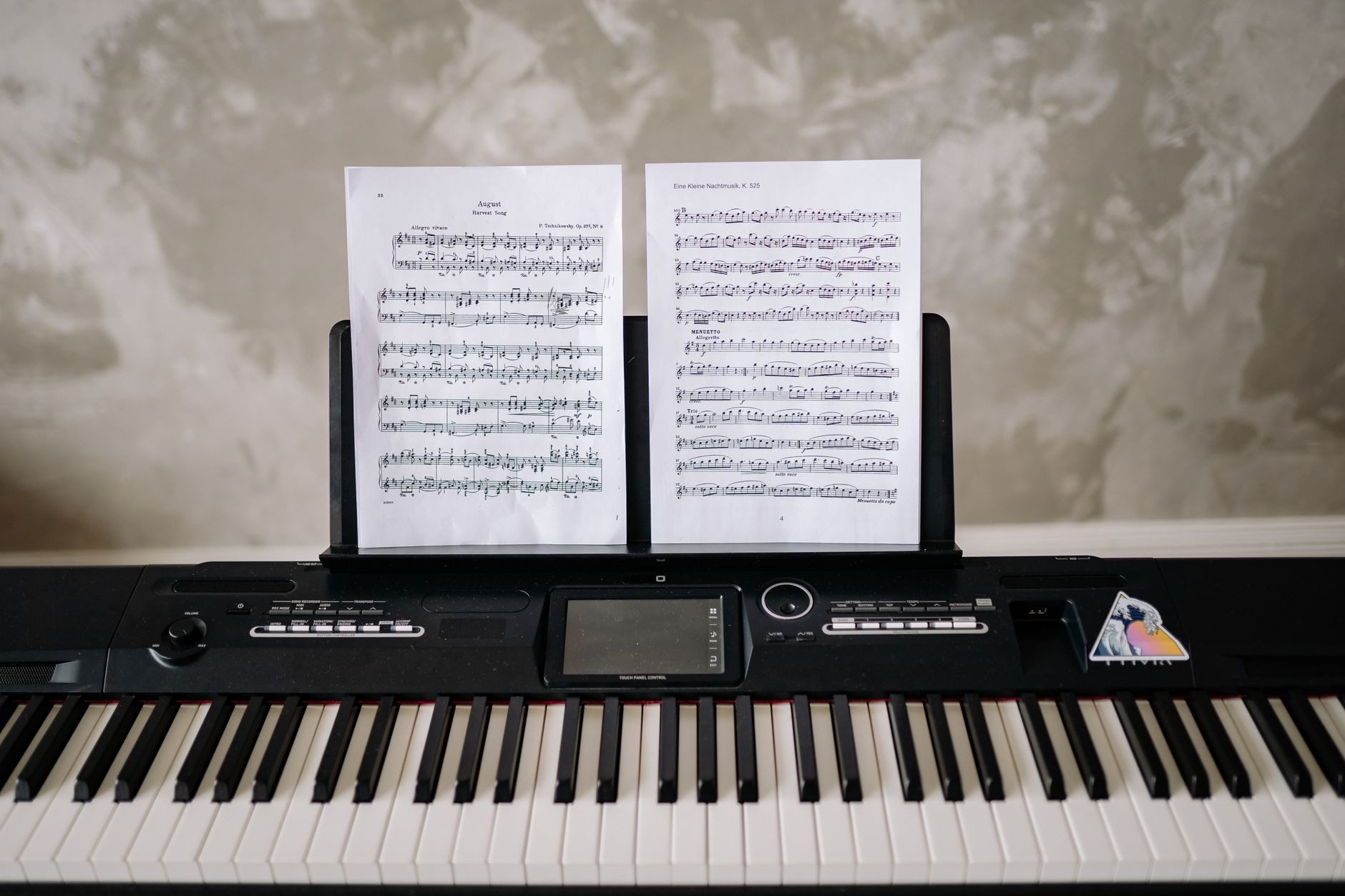 Photo by Yan Krukau / Pexels
How we picked these. We compared digital pianos across weighted key action type (graded hammer preferred), polyphony count, piano sound sample quality and layering, built-in speaker system, connectivity (MIDI, USB-to-host, Bluetooth), and portability, cross-referencing picks from Sweetwater, Piano Buyer magazine, and professional piano instructor reviews. Products were selected for touch response accuracy and acoustic tone realism at each use case.
Why 88 Weighted Keys Matter for Real Piano Development
A digital piano differs from a keyboard in one critical way: weighted keys. The Yamaha P-45B and Roland FP-30X both have 88 fully weighted keys that simulate the hammer action of an acoustic piano. This matters because finger strength and dynamic control — the ability to play softly or loudly based on touch — are fundamental piano skills. Playing on unweighted synth keys teaches you to press buttons; playing on weighted keys teaches you to play piano. Anyone taking lessons with a piano teacher, or planning to ever play an acoustic piano, needs weighted keys. Non-negotiable.
Yamaha P-45B vs. Roland FP-30X: Where the Price Difference Goes
The Yamaha P-45B at $647.12 is the entry point for genuine digital pianos — it has 88 weighted keys, 10 voices, and Yamaha's reliable Graded Hammer Standard action. It sounds good, feels right, and does exactly what a beginner through intermediate player needs. The Roland FP-30X at $647.12 steps up in three meaningful ways: the key action is more refined (Roland's PHA-4 Standard action has escapement simulation that mimics grand piano feel), the sound engine has more voice detail, and it connects via Bluetooth audio. For casual learners, the Yamaha is sufficient. For adults who played piano before and are returning, or students who practice two or more hours daily, the Roland's feel difference is noticeable and worth the premium.
Sound Quality and Voices
Most players use the grand piano voice 95% of the time. Both instruments here have excellent grand piano samples — Yamaha samples their own concert grands; Roland samples from Steinway and their own instruments. The Yamaha P-45B has 10 voices (grand piano, electric piano, organ, strings, vibraphone, and variations). The Roland FP-30X has 56 voices with more nuanced layering. Additional voices matter if you're also a synthesizer or keyboard player who wants digital piano action with more sound variety. If you exclusively want to learn piano, the extra voices in the Roland don't change the practice experience.
Size, Weight, and Setup Considerations
Both pianos are described as "portable" but they're dense instruments at roughly 25–26 lbs. Neither is convenient to move frequently. Both require an optional stand or furniture placement — they won't stand on their own without a dedicated stand, sold separately for $50–$100. A sustain pedal is included or available cheaply; a proper bench matters for posture, especially for younger students. Budget $80–$150 total for stand and bench on top of the piano price when calculating real cost to get started properly.
Buying a Digital Piano: What to Skip
Don't buy a digital piano without checking that it has weighted or at minimum semi-weighted keys — many instruments marketed as "digital pianos" have unweighted synth action. Don't skip the stand: playing on a table at the wrong height creates wrist and shoulder strain that disrupts practice. Avoid buying used without verifying all keys function and the pedal input works — stuck or dead keys are expensive to repair and a deal-breaker for daily use. If budget is a hard constraint, a used Yamaha P-45B in good condition is a better buy than a new unweighted instrument at the same price.
Related Guides
- Best Beginner Keyboards
- Yamaha vs Kawai Digital Piano
- Yamaha vs Roland Digital Piano
Watch Before You Buy
“Yamaha P-45B delivers 88 hammer-weighted keys and excellent piano tone at the most accessible price point for serious students.”
See Today’s Price →What we like
- 88 weighted keys
- Graded hammer action
- Headphone output
- Compact design
Watch out for
- No built-in speakers — requires external amp or headphones
- Basic onboard sounds vs Roland alternatives
- Stand and sustain pedal sold separately
Read Full Analysis
The Yamaha P-45B is the entry point into real digital piano territory. 88 Graded Hammer Standard keys replicate the weight and feel of an acoustic piano — heavier in the bass register, lighter in the treble. This graded weighting is essential for building proper technique. The 10 built-in voices are limited, but the acoustic grand piano sample is exceptional — bright, resonant, and dynamically responsive. 64-note polyphony handles most classical and pop repertoire without note dropouts. At 25 lbs, it's portable enough to move between rooms. The P-45B is the minimum recommended instrument for anyone pursuing serious piano study.

“Roland FP-30X offers superior key action, 256-voice polyphony, and Bluetooth for players ready to invest in quality.”
See Today’s Price →What we like
- 88 weighted keys
- Escapement action
- Bluetooth audio
- Premium feel
Watch out for
- High price
- No built-in speakers
- Stand and pedal sold separately add significant cost
Read Full Analysis
The Roland FP-30X earns its $647.12 price with meaningful upgrades over budget digital pianos. Roland's PHA-4 Standard key action has escapement simulation — a small click mechanism that replicates the physical feel of an acoustic piano's hammer mechanism, something most digital pianos omit. 256-note polyphony (vs 64 on the Yamaha P-45B) eliminates any possibility of note dropout during complex classical passages. Bluetooth MIDI/Audio enables wireless connection to iPads for lesson apps like Simply Piano. The SuperNATURAL piano modeling produces rich, expressive tone that responds to playing nuance. If budget allows, the FP-30X is the better long-term investment.

“The Yamaha P-125A at $499.99 is the best value step up from the entry-level P-45, adding Bluetooth connectivity for piano apps and samples drawn from both the CFX and Bosendorfer Imperial concert…”
See Today’s Price →What we like
- 88 fully weighted GH keys
- CFX and Bösendorfer Imperial sample sources
- Bluetooth for piano apps
- Best value step-up from P-45
Watch out for
- GH action (less advanced than YDP-165)
- No furniture cabinet or stand included
- Requires separate stand
Read Full Analysis
The Yamaha P-125A ($429.99) is the clearest step-up on this page for buyers who want more than the entry-level P-45 without reaching into Roland FP-30X or console piano territory. The defining additions over the P-45 are Bluetooth connectivity for piano apps and a richer sound source — the P-125A samples both the Yamaha CFX and Bosendorfer Imperial concert grands, giving it a more nuanced tonal palette than the P-45. The 88-key Graded Hammer action is fully weighted, replicating acoustic piano key resistance — heavier in the bass register, lighter in the treble. Against the Roland FP-30X ($647.12) on this page, Yamaha gives up the FP-30X superior sound modeling and more advanced action, but saves $265 — a meaningful gap for a student or intermediate player. Against the YDP-145 ($647.12) and YDP-165 ($647.12), the P-125A sacrifices the furniture cabinet and deeper polyphony depth available at those price points. A separate stand is required and should be factored into total cost. For intermediate players who want Yamaha reliability, Bluetooth integration, and multi-source sampling at well under $500, the P-125A holds a well-defined position in this lineup.

“At $1,094 the Yamaha YDP-165 steps up with damper resonance simulation and CFX Grand sampling in a furniture-grade console that includes stand and 3-pedal system. Note it lacks Bluetooth…”
See Today’s Price →What we like
- CFX Grand sample from Yamahas finest concert grand
- GH Graded Hammer action
- Furniture-grade console — no stand needed
- Damper resonance simulation
- 3-pedal system included
Watch out for
- No Bluetooth connectivity
- No escapement simulation
- Large footprint — not portable
Read Full Analysis
The Yamaha YDP-165 at $1,499 sits at rank 4 on this page despite being the highest-priced option — which is the right editorial call for most buyers, because the $300 premium over the YDP-145 is meaningful only for players who will hear the difference. What you gain at $1,499 is Yamaha's CFX Grand sample set — recordings of their 9-foot concert grand used at Carnegie Hall — combined with damper resonance simulation that responds to pedal pressure depth, not just whether the sustain is engaged or released. The GH Graded Hammer action delivers progressively heavier key resistance from treble to bass, matching acoustic piano response in a way that develops proper technique for advancing players. The furniture-grade console format eliminates portability but includes a matching stand and three-pedal system — the complete setup that portable alternatives like the P-125 ($429) and Roland FP-30X ($647.12) on this page require separate purchases to replicate. Buyers who choose the YDP-165 over the YDP-145 ($647.12 on this page) are specifically after CFX Grand sampling and damper resonance — features that matter for classical repertoire where pedaling subtlety and tonal complexity are required. Skip it for casual practice or beginners; choose it when acoustic realism is the primary purchase criterion rather than Bluetooth connectivity or portability.

“The Yamaha YDP-145 at $1,199.99 is the entry point into Yamaha's furniture-grade Arius console line, including a dedicated stand and 3-pedal system so no accessories are needed. GH Graded Hammer…”
See Today’s Price →What we like
- Console design with furniture-grade wood cabinet
- GH Graded Hammer action (upgrade from GHS)
- CFX Sampling from Yamahas finest concert grand
- Dedicated piano stand and 3-pedal system included
Watch out for
- Large footprint — not portable
- Higher price than slab-style options
Read Full Analysis
The Yamaha YDP-145 at $1,199 is the entry point into Yamaha's furniture-grade Arius console line — and the right choice for buyers who want a permanent home instrument rather than a portable slab. The GH Graded Hammer action provides progressively heavier key resistance from treble to bass, building proper technique in ways the GHS action on lower Yamaha portables doesn't replicate. CFX Grand sampling delivers the same source recordings as Yamaha's flagship concert grand, a meaningful tonal upgrade over the samples in portables at half the price. The console format includes the stand and three-pedal system as a complete package. The P-45B and P-125A ($399-429 on this page) require optional stands and dual-pedal accessories that narrow the actual price gap. For a buyer who wants the instrument to look and feel like a proper piano rather than a portable keyboard on a rack, the YDP-145's furniture-grade cabinet delivers that. Against the YDP-165 ($1,499 on this page), the YDP-145 gives up damper resonance simulation — the feature that responds to sustain pedal depth for subtle classical dynamics. For players focused on music learning rather than performance nuance, the $300 savings is entirely sensible. For advancing classical players where pedaling subtlety matters, the YDP-165 is the correct step-up.
Frequently Asked Questions
Yamaha P-45B vs Roland FP-30X — which is better?
Do I need 88 keys for a digital piano?
Can a digital piano replace an acoustic piano?
What stand do I need for the Yamaha P-45B?
How long does it take to learn piano as an adult?
How We Analyze Products
We analyze Amazon review data — often thousands of reviews per product — to surface patterns that individual buyers miss. Our process aggregates star ratings, review counts, and buyer sentiment at scale, identifying which strengths and weaknesses appear consistently across the largest review samples available. The 2,646+ reviews analyzed on this page represent real verified-purchase feedback from Amazon buyers.
Each product earned its placement through data: total review volume, average rating, and the specific praise and complaints that repeat most often across buyers. No manufacturer paid for placement on this page. Products appear here because buyers endorsed them at scale, not because a company asked us to feature them.
We use AI to summarize review sentiment — not to fabricate opinions, but to condense what thousands of buyers actually wrote into a readable format. The pros and cons you see reflect the most common themes found in verified purchaser reviews, paraphrased for clarity. We do not claim to have accessed Reddit, YouTube, or specific publications in generating these summaries.
Prices shown reflect Amazon pricing at the time this page was last generated. Click “See Today’s Price” to get the current live price on Amazon. Read our full methodology →