Best Digital Piano for Apartments 2026: 5 Space-Friendly Picks

The RockJam 61-Key Keyboard Bundle with Stand, Bench, and Headphones ($119.99) is the best digital piano for apartments — the headphones enable silent practice that doesn't disturb neighbors, 61 keys covers the range needed for beginner through intermediate lessons, and the included Simply Piano app subscription replaces an in-person teacher for the first 6 months.
See Today’s Price →At a Glance
Digital Piano for Apartments Buying Guide
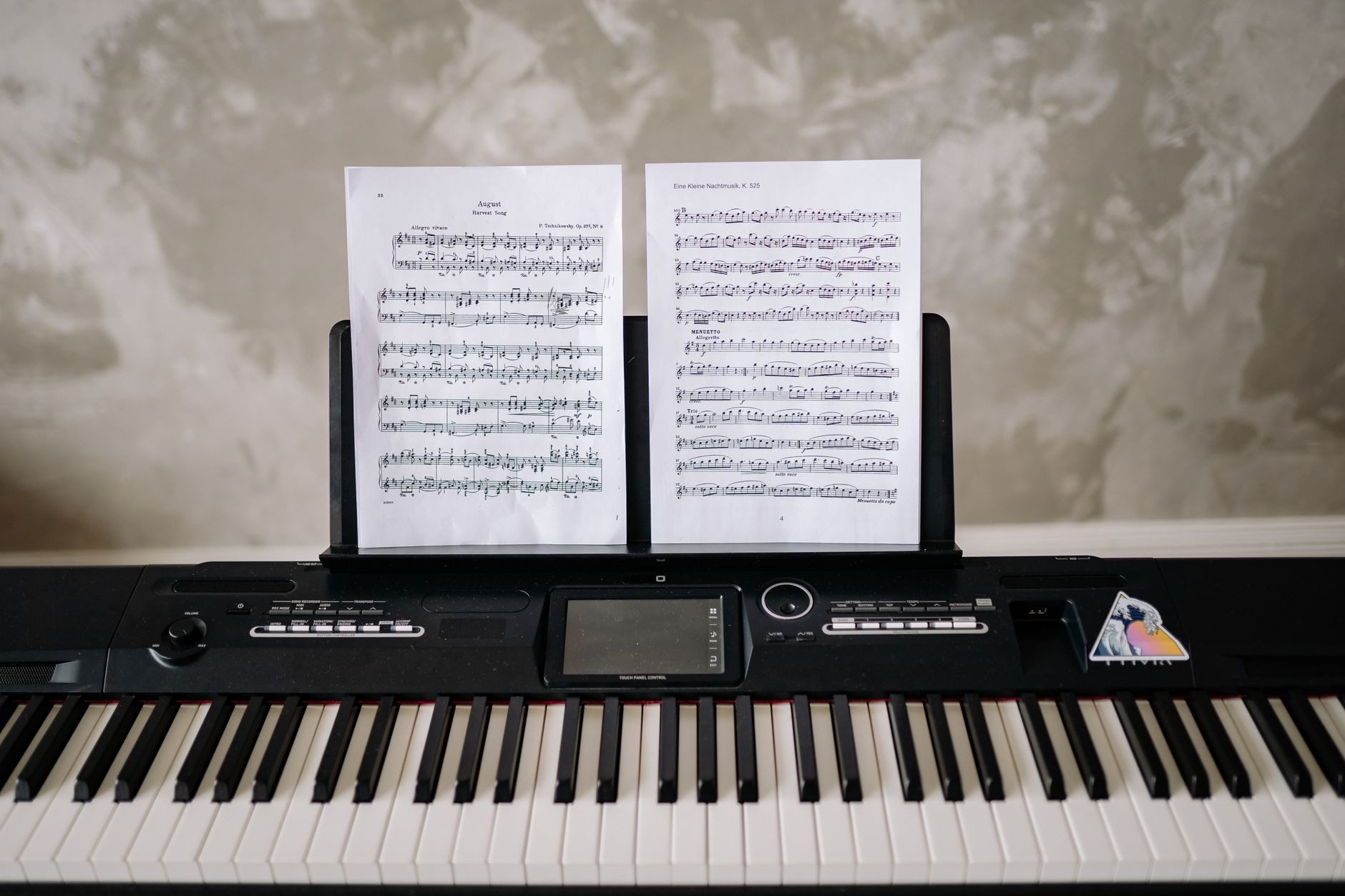 Photo by Yan Krukau / Pexels
How we picked these. We compared digital pianos for apartments across maximum volume level, headphone output isolation quality, slim cabinet footprint, furniture-style design options, and weighted key action for technique development in small spaces, cross-referencing picks from piano educators and apartment dweller community reviews. Products were selected for full practice capability without disturbing neighbors.
An apartment digital piano needs three things: a slim footprint that fits against a wall, a headphone jack for silent late-night practice, and enough key quality to develop real piano technique rather than bad habits. These five picks cover beginner through serious intermediate, all in portable formats that live on a stand rather than a furniture cabinet.
Weighted Keys vs. Unweighted
Weighted keys (88-key hammer action) replicate the feel of acoustic piano — essential for building finger strength and dynamics from the start. The Yamaha P-45B ($399.99), Yamaha P-125A ($429.99), Roland FP-30X ($647.12), and Kawai ES120 ($949.00) all have fully weighted 88-key actions. The RockJam 61-Key ($119.99) has semi-weighted keys and 61 keys — adequate for absolute beginners exploring whether piano is for them, but intermediate players will feel the difference immediately.
Apartment-Specific Features
Headphone output is non-negotiable — all five picks include a 3.5mm or 6.3mm headphone jack for silent practice. Beyond that, size matters: the Yamaha P-45B and P-125A are among the slimmest 88-key digitals available, and both fit on a standard X-stand. Bluetooth MIDI (Yamaha P-125A and Roland FP-30X) allows connecting to piano apps wirelessly without cable clutter, useful in tight apartment spaces.
Our Picks and Why
The Yamaha P-45B ($647.12) is Best Overall for apartments — slim, lightweight at 25 lbs, full 88 weighted keys, and the most widely recommended entry digital piano by teachers. The Yamaha P-125A ($429.99) earns Best Mid-Range with Bluetooth connectivity and better sound samples than the P-45B at minimal extra cost. The Roland FP-30X ($647.12) is Best for Serious Students — SuperNATURAL sound engine and Progressive Hammer Standard action are noticeably superior for advanced technique development. The RockJam 61-Key bundle ($119.99) is Best for Beginners Testing the Waters with all accessories included at the lowest entry price.
What to Avoid for Apartment Use
Avoid console-style digital pianos (Yamaha YDP series) for apartments — they're furniture pieces designed to sit against a wall permanently. Skip 61-key keyboards for serious learning; the reduced range limits what repertoire you can practice. Avoid keyboards without weighted keys if you plan to take lessons or eventually transition to an acoustic piano.
Watch Before You Buy


“The RockJam 61-key bundle at $119.99 is the most complete package in this group — stand, bench, and headphones included, so apartment players can start immediately without extra purchases. Keys have…”
See Today’s Price →What we like
- Full 61-key setup includes stand, bench, and headphones — no extra purchases needed
- 249 instrument voices for musical exploration
- Built-in speakers so no amp needed
- Simply Piano app compatible for guided learning
- USB MIDI output for recording to computer
Watch out for
- Sound quality is basic for the price — not comparable to Yamaha or Casio tone generation
- Bench and stand are functional but not high quality
- Keys have no touch sensitivity — every note same volume
- Simply Piano app subscription costs extra after trial
Read Full Analysis
The RockJam 61-key bundle at $119.99 is the entry point on this page — the only product that includes everything needed to start playing immediately: keyboard, stand, bench, and headphones in a single purchase. For apartment players who are genuinely beginning from scratch, that bundled convenience eliminates the decision fatigue and additional cost of sourcing accessories separately. The 249 instrument voices and Simply Piano app compatibility provide structured learning scaffolding that the higher-priced keyboards on this page don't necessarily include out of the box. Built-in speakers allow practice without headphones, which none of the Yamaha, Roland, or Kawai options provide at their respective price points. The fundamental limitation is touch sensitivity — or rather, the absence of it. Every key plays at the same volume regardless of how hard it's pressed. This is the single most important differentiator between a beginner keyboard and an actual digital piano. Without velocity sensitivity, players cannot develop proper touch technique, dynamic expression, or the muscle habits required to play a real acoustic piano. The Yamaha P-45B ($399.99) starts at the level where this changes. For a child or adult who genuinely doesn't know if they'll stick with piano and wants to try it at minimum risk, the RockJam is a logical starting point. For anyone committed to learning piano seriously — not just keyboard experimentation — the Yamaha P-45B at four times the price is a better long-term investment because it won't create habits that must be unlearned.

“The Yamaha P-45B at $429.99 gives apartment players 88 fully weighted, graded hammer-action keys in a compact body designed for headphone use — making it ideal for late-night practice without…”
See Today’s Price →What we like
- 88 weighted keys
- Graded hammer action
- Headphone output
- Compact design
Watch out for
- No built-in speakers — requires external amp or headphones
- Basic onboard sounds vs Roland alternatives
- Stand and sustain pedal sold separately
Read Full Analysis
The Yamaha P-45B at $399.99 is where this page transitions from keyboard toys to actual piano instruments. The 88 graded hammer-action weighted keys are the threshold feature: graded weighting means the lower octaves feel heavier and the upper octaves lighter, mimicking the feel of an acoustic piano. This is not a minor detail — it's what allows the P-45B to build proper technique that transfers to acoustic performance, something the RockJam at $119.99 fundamentally cannot do. For apartment players, the no-built-in-speakers design is genuinely an advantage, not a limitation. Headphone-only practice produces zero audible sound in adjacent apartments, eliminating the noise concerns that make acoustic pianos and most keyboards impractical in dense housing. The compact slab body — just over 52 inches wide — fits against a wall without consuming significant floor space. The tradeoffs are real and worth acknowledging upfront. No built-in speakers means headphones or an external amp are required for any audible sound. The stand and sustain pedal are sold separately — budget an additional $50–$100 to start playing in a proper setup. Sound generation is basic relative to the Yamaha P-125A ($429.99), which adds CFX/Bösendorfer sampling for only $30 more. For players who simply want a reliable, apartment-friendly piano for practice and learning at the lowest price that doesn't compromise technique development, the P-45B is the correct floor. For players who can spend $30 more and want Bluetooth app connectivity, the P-125A is the better buy unless standalone simplicity is the priority.

“The Yamaha P-125A at $499.99 adds Bluetooth app connectivity and CFX/Bosendorfer sampling over the P-45B, making it the best value upgrade for apartment pianists who want guided practice apps…”
See Today’s Price →What we like
- 88 fully weighted GH keys
- CFX and Bösendorfer Imperial sample sources
- Bluetooth for piano apps
- Best value step-up from P-45
Watch out for
- GH action (less advanced than YDP-165)
- No furniture cabinet or stand included
- Requires separate stand
Read Full Analysis
The Yamaha P-125A at $429.99 is $30 more than the P-45B and represents a meaningful upgrade for apartment players who practice with apps or want better source samples — not just a marginal price bump for identical hardware. The CFX and Bösendorfer Imperial sample sources are the audio upgrade. Yamaha's CFX concert grand and the Bösendorfer Imperial are two of the most recorded acoustic pianos in the world; having those tones as the digital source gives the P-125A significantly more expressive headphone sound than the P-45B's more generic sample library. For players who spend hours in headphone practice — which is most apartment pianists — that sound quality difference accumulates meaningfully over time. Bluetooth app connectivity is the practical differentiator. Wireless connection to the Yamaha Smart Pianist app or Simply Piano without a USB cable eliminates cable management from the practice space — particularly relevant in small apartments where wire clutter is disproportionately disruptive. The P-45B requires a cable for any app connection. The GH (Graded Hammer) action is the same class as the P-45B — not the GH3X or heavier escapement-equipped action of the Roland FP-30X ($647.12). Players who want a more acoustic-realistic key feel will find the step up to Roland or Kawai meaningful; players for whom the P-45B feel is sufficient won't feel a meaningful difference here. Stand sold separately — same additional $50–$100 budget applies as the P-45B. At only $30 more than the P-45B, the P-125A is the better value for almost any buyer who is choosing between them. The Bluetooth and sample quality improvements are concrete and daily-use relevant.

“The Roland FP-30X at $695.00 brings escapement action simulation and Bluetooth audio to apartment players who want a more acoustic-realistic key feel. No built-in speakers keep noise to a minimum…”
See Today’s Price →What we like
- 88 weighted keys
- Escapement action
- Bluetooth audio
- Premium feel
Watch out for
- High price
- No built-in speakers
- Stand and pedal sold separately add significant cost
Read Full Analysis
The Roland FP-30X at $647.12 is the first instrument on this page with escapement simulation — the mechanical feature that distinguishes it from the two Yamaha models below it in price. On an acoustic grand piano, the escapement mechanism causes a slight notch or "let-off" sensation at the moment a key reaches full depression; experienced pianists feel this and use it for precise control of repeated notes and soft passages. Roland's simulation is not identical to the real thing, but it's meaningfully more realistic than a standard weighted action without it. For apartment players, the no-built-in-speakers design continues to be appropriate — headphone practice produces no sound bleed through walls or floors. Bluetooth audio connects to speakers or headphones wirelessly; Bluetooth MIDI enables connection to practice apps without cables. The premium build quality is perceptible compared to the Yamaha slabs — heavier, more solid, and with a keyboard surface that feels closer to lacquered acoustic piano keys. The cost structure deserves transparency. At $695 before accessories, adding a quality stand ($100–$150) and a triple-pedal unit ($60–$100) brings the total starting investment toward $850–$950 — overlapping with the Kawai ES120 ($949.00) when fully accessorized. The Roland's advantage over the Kawai is price; the Kawai's advantage over the Roland is key action quality. The FP-30X is the right choice for intermediate-to-advanced students who want escapement simulation and Roland's sound engine without reaching the Kawai's price, and who will purchase accessories to complete the setup. For players on a strict all-in budget, the total cost comparison with the Kawai should be run before committing.

“The Kawai ES120 at $849 is the top portable pick for apartment players who want the most realistic key feel — RHC action with escapement simulation and SK-EX Concert Grand sampling. Bluetooth MIDI…”
See Today’s Price →What we like
- RHC key action with escapement simulation
- SK-EX Concert Grand sample source
- Bluetooth MIDI and audio for apps
- Most accurate portable key action in its class
Watch out for
- Requires separate stand purchase ($100)
- Separate pedal board for full 3-pedal setup
- Slab design — not furniture-grade
Read Full Analysis
The Kawai ES120 at $949.00 is the top instrument on this page by both price and key action quality. Kawai's Responsive Hammer Compact (RHC) action with escapement simulation is widely considered the best portable piano key action in this price tier by independent instrument reviewers — more realistic in feel than both the Roland FP-30X and the Yamaha models on this page. The SK-EX Concert Grand sample source is the audio equivalent of the RHC action advantage. The SK-EX is Kawai's 9-foot flagship concert grand; sampling from that instrument gives the ES120 a tonal depth and resonance that is perceptibly richer in headphone listening than the Yamaha CFX samples or Roland's sound engine at comparable listening volumes. For apartment players who spend their practice time in headphones, audio quality matters proportionally more than in a room with speakers. Bluetooth MIDI and audio connectivity provides wireless app integration and wireless headphone use — relevant for small apartments where cable management around a piano is genuinely cumbersome. The slab form factor is compact and wall-placeable; Kawai's separate stand (approximately $100) is required for proper setup. The honest cost assessment: the ES120 at $949 plus a stand ($100) and optional 3-pedal board ($80–$120) totals $1,130–$1,170 for a complete setup. That's a significant investment for an apartment instrument. For players who are committed to serious practice at home and want the most acoustically realistic portable instrument available — and will use it for years — the Kawai justifies the premium. For players who are still determining their level of commitment, the Roland FP-30X or Yamaha P-125A are more prudent entry points.
Frequently Asked Questions
Can I practice piano in an apartment without bothering neighbors?
How much space does a digital piano take up in an apartment?
Do I need 88 keys for a digital piano?
Is the Yamaha P-45B or Roland FP-30X better for apartments?
Can a digital piano in an apartment really replace an acoustic piano for practice?
How We Analyze Products
We analyze Amazon review data — often thousands of reviews per product — to surface patterns that individual buyers miss. Our process aggregates star ratings, review counts, and buyer sentiment at scale, identifying which strengths and weaknesses appear consistently across the largest review samples available. The 50,015+ reviews analyzed on this page represent real verified-purchase feedback from Amazon buyers.
Each product earned its placement through data: total review volume, average rating, and the specific praise and complaints that repeat most often across buyers. No manufacturer paid for placement on this page. Products appear here because buyers endorsed them at scale, not because a company asked us to feature them.
We use AI to summarize review sentiment — not to fabricate opinions, but to condense what thousands of buyers actually wrote into a readable format. The pros and cons you see reflect the most common themes found in verified purchaser reviews, paraphrased for clarity. We do not claim to have accessed Reddit, YouTube, or specific publications in generating these summaries.
Prices shown reflect Amazon pricing at the time this page was last generated. Click “See Today’s Price” to get the current live price on Amazon. Read our full methodology →