Best Electric Guitar Strings 2026: 9-42, 10-46 & Coated
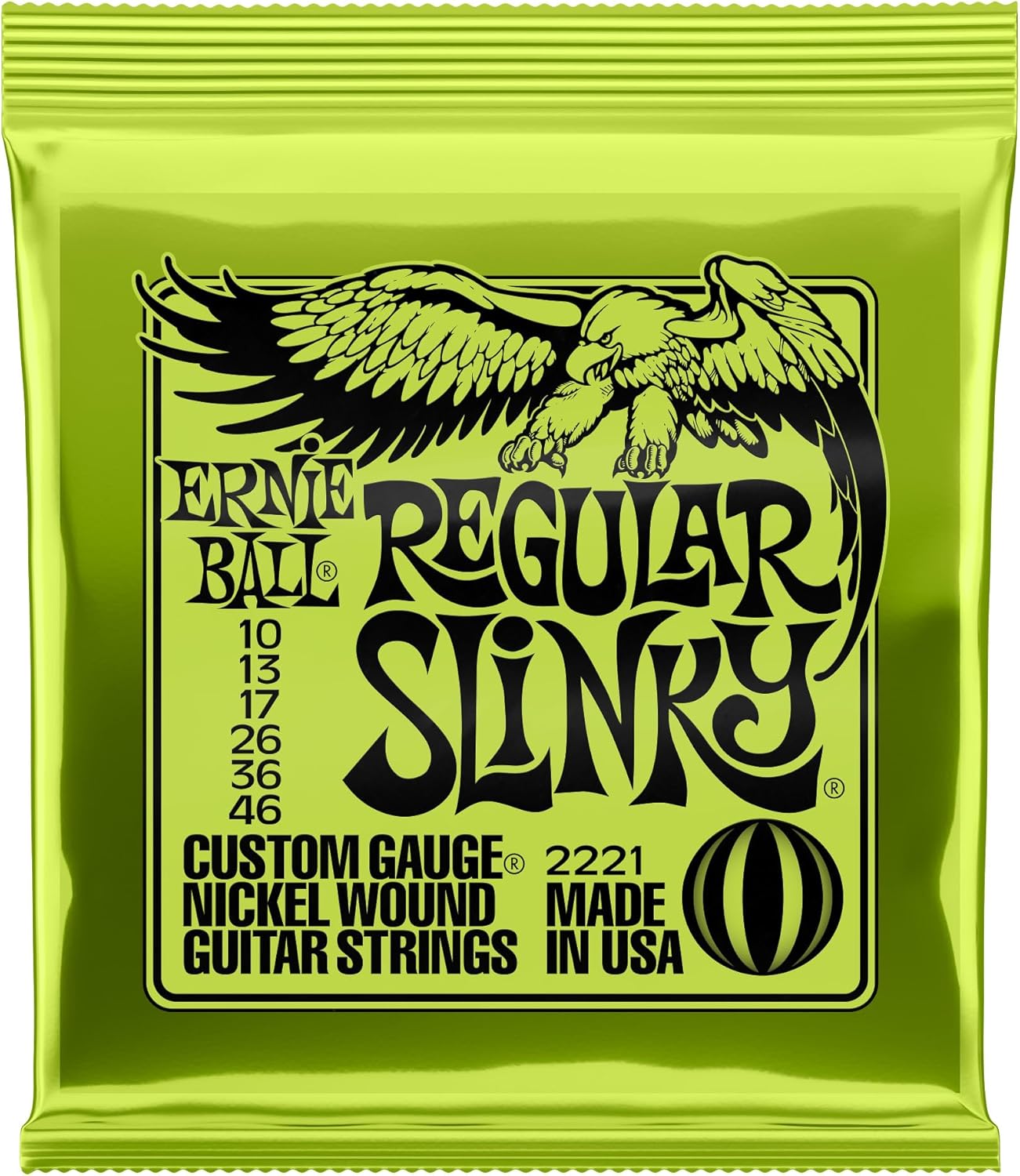
Best Overall: Ernie Ball Regular Slinky 10-46 at $5.49. The industry standard for a reason — bright tone, consistent feel, and widely available.
See Today’s Price →At a Glance
Showing 2 of 2 products
Ernie Ball Regular Slinky Nickel Wound Electric Guitar Strings 10-46
“Ernie Ball Regular Slinky 10-46 electric strings are the most popular electric guitar strings for good reason — balanced tension, bright nickel tone, and consistent quality across every set.”
See Today’s Price →What we like
Watch out for
Read Full Analysis
Ernie Ball Regular Slinky 10-46 strings are arguably the most popular electric guitar strings ever made. The nickel-plated steel construction delivers bright, articulate tone with excellent attack and sustain. 10-46 gauge hits the sweet spot between playability and tone — light enough for comfortable bending but heavy enough for good string tension and output. Every major guitar brand ships their instruments with 10s or 9s. If you don't know what gauge to start with, start here.

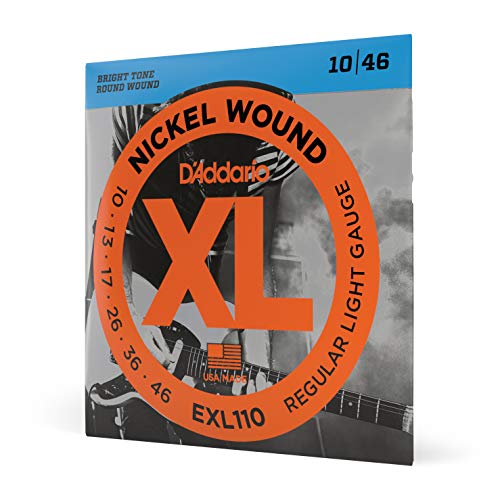
D'Addario EXL110 Nickel Wound Electric Guitar Strings Regular Light 10-46
“D'Addario EXL110 at $6.99 is the best-value electric guitar string — professional quality, consistent tension, and the regular light 10-46 gauge suits virtually every playing style.”
See Today’s Price →What we like
Watch out for
Read Full Analysis
D'Addario EXL110 strings are the serious player's alternative to Ernie Ball. Made with precision in the USA, the nickel-plated steel construction has slightly tighter windings than Ernie Ball, producing a warmer, more even tone across all 6 strings. Intonation accuracy is exceptional — a trademark of D'Addario's manufacturing standards. The tone profile suits rock, blues, and jazz equally well. Many guitarists who have tried both settle on D'Addario for studio recording and Ernie Ball for live playing, where the extra brightness cuts through a mix.
Electric Guitar Strings Buying Guide
 Photo by ANTONI SHKRABA production / Pexels
Gauge and Playability: Start with 10-46
Electric guitar string gauge affects playability, tone, and how the guitar feels under your fingers more than almost any other variable. The 10-46 set — the gauge used by both Ernie Ball Regular Slinky and D'Addario EXL110 — is the most common starting point and the standard gauge most guitars are set up with at the factory. It offers a balance of ease of play (bending is manageable), durability, and full tone. Players who want easier bending move down to 9-42; players who want more output and sustain for heavier styles move up to 11-49. Start at 10-46 unless you already know you need something lighter or heavier.
Nickel Wound vs. Pure Nickel vs. Stainless Steel

Both Ernie Ball Regular Slinky and D'Addario EXL110 are nickel-wound — a steel core wound with nickel-plated steel. This is the standard electric guitar string construction: bright enough for clarity, warm enough for blues and rock, and compatible with all pickup types. Pure nickel strings (unwound variant) have a warmer, vintage tone reminiscent of strings from the 1950s and 60s — preferred for blues and jazz players who want less top-end bite. Stainless steel strings are the brightest and most corrosion-resistant but have a harsher feel on the fingertips. For most players, nickel-wound is the correct default across every genre.
Ernie Ball vs. D'Addario: Real Differences
Ernie Ball Regular Slinky at $8.99 is the string more associated with rock — Jimi Hendrix, Slash, Eric Clapton, and most major rock guitarists have used them as a standard. They have a slightly brighter attack and a feel many rock and blues players prefer for bending. D'Addario EXL110 at $6.99 is slightly warmer and more consistent in manufacturing tolerances due to computer-controlled winding. Neither is objectively better — it comes down to feel preference. The practical difference for a beginner is negligible. Buy a set of each, try them on the same guitar, and you'll know which you prefer within an hour of playing.
How Often to Change Electric Guitar Strings

Electric strings corrode faster than acoustic strings because sweat and oil from your picking hand contact the strings more directly. As a baseline: change strings every 3–4 weeks if you play daily, every 2–3 months if you play a few times per week. The signs that strings need changing: they won't hold tune after bending, they feel sticky or rough, the wound strings look dark or mottled, or the guitar sounds dull and lifeless even with the amp turned up. Many players notice the difference within minutes of putting on fresh strings — the clarity, sustain, and intonation all improve immediately.
Bulk Buying and the Economics of String Changes
Both Ernie Ball and D'Addario sell in 3-packs and 10-packs that reduce the per-set cost significantly. A 10-pack of D'Addario EXL110 works out to considerably less per set than buying singles and removes the "I should probably change these but don't want to run to the store" friction that leads most players to keep dead strings on too long. If you change strings even monthly, bulk buying pays for itself within a few months. Store spare sets in a cool, dry place — sealed packets last years without degrading.
Related Guides

Frequently Asked Questions
What gauge electric strings should beginners use?
How long do electric guitar strings last?
Ernie Ball vs D'Addario — which is better?
Do I need to change all strings at once?
What's the difference between nickel-plated and pure nickel strings?
How We Analyze Products
We analyze Amazon review data — often thousands of reviews per product — to surface patterns that individual buyers miss. Our process aggregates star ratings, review counts, and buyer sentiment at scale, identifying which strengths and weaknesses appear consistently across the largest review samples available.
Each product earned its placement through data: total review volume, average rating, and the specific praise and complaints that repeat most often across buyers. No manufacturer paid for placement on this page. Products appear here because buyers endorsed them at scale, not because a company asked us to feature them.
We use AI to summarize review sentiment — not to fabricate opinions, but to condense what thousands of buyers actually wrote into a readable format. The pros and cons you see reflect the most common themes found in verified purchaser reviews, paraphrased for clarity. We do not claim to have accessed Reddit, YouTube, or specific publications in generating these summaries.
Prices shown reflect Amazon pricing at the time this page was last generated. Click “See Today’s Price” to get the current live price on Amazon. Read our full methodology →