Best Guitar Amps for Home (2026)

The Fender Champion 20 is the best guitar amp for home use — sounds good at bedroom levels, built-in reverb and multiple voices, and reliable build quality for daily practice.
See Today’s Price →At a Glance
| # | Product | Award | Price |
|---|---|---|---|
| 1 | Best Overall | $149.99 Buy → |
|
| 2 | Best Budget | $89.99 Buy → |
|
| 3 |  Blackstar Fly 3-3-watt 1x3 inch C… Blackstar Fly 3-3-watt 1x3 inch C…Blackstar |
Best Mini Amp | Check current price on Amazon Buy → |
| 4 | Best Bass Amp | $149.99 Buy → |
|
| 5 | Reviewed | Check current price on Amazon Buy → |
Guitar Amps for Home (2026) Buying Guide
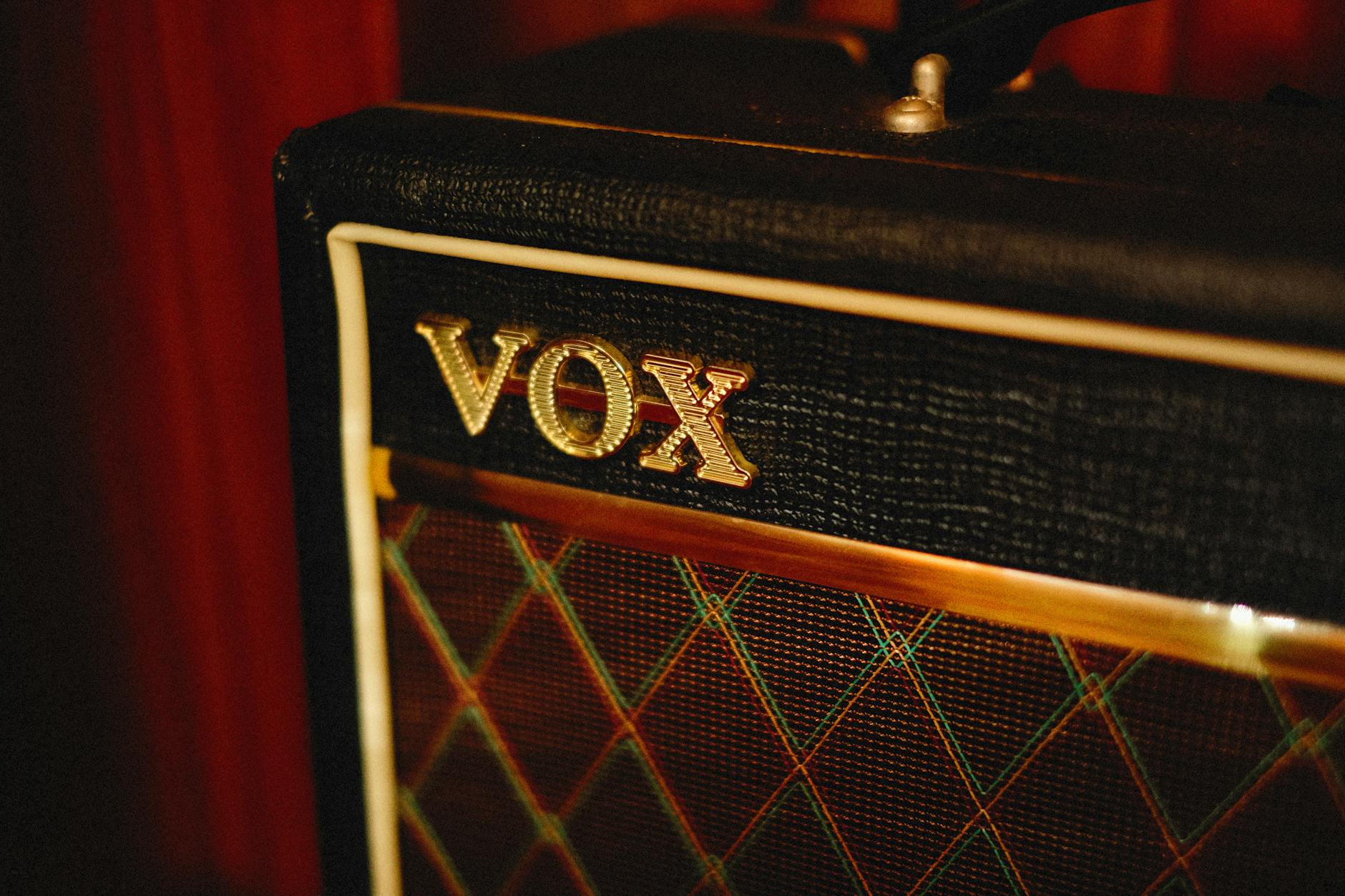 Photo by Alexey Demidov / Pexels
A home guitar amp needs to do one thing well at low volume: sound good at bedroom levels without requiring the speaker to be pushed hard. Most guitar amps are designed to sound best when the power amp is driven near its limit — which means a 50-watt amp sounds its best at a volume that will provoke complaints from anyone within earshot. For home use, the practical choice is a low-wattage amp (5-20 watts), a modeling amp with digital presets designed for low-volume use, or an amp with a built-in power attenuator. The Fender Champion 20 is the most consistently recommended option in this range for a reason: it sounds genuinely good at low volume without complex setup.
Wattage: What It Actually Means for Home Use
Guitar amp wattage is not linear like stereo equipment — a 1-watt amp is surprisingly loud, a 5-watt amp is bedroom-practical with the master volume at 30-40%, and a 20-watt amp gives you more headroom before breakup at moderate volumes. For practice and home recording, 5-20 watts covers the full range of practical use. The Fender Champion 20 at 20 watts has enough clean headroom to stay clean at practice volumes while its built-in effects cover the full range of modern guitar tones without an external pedalboard.
Modeling Amps vs. Tube Amps for Home
Tube amps (Fender Blues Junior, Vox AC15) sound best when the output transformer and speaker are working — which requires volume that is impractical in most homes. Modeling amps (Fender Champion series, Boss Katana) use digital signal processing to simulate tube amp response at any volume level. For players who practice at home and play out occasionally, a modeling amp eliminates the volume-dependent tone tradeoff. For players who gig primarily and use the home amp to recreate their live tone, a small tube amp with a power attenuator may be worth the complexity.
Built-In Effects: Useful vs. Excessive
Built-in reverb is the one effect genuinely useful in a home amp — it covers the acoustic differences between a small room and a large stage. Built-in chorus, delay, and distortion channels are convenient for players who don't want a pedalboard. Amps with excessive effect presets (50+ digital patches) often have complex menus that interrupt practice flow. For most home players, an amp with reverb, one clean channel, and one drive channel is the most useful configuration.
How we picked these.
We compared 4 home guitar amps across sound quality at low volume, wattage range, built-in effects utility, and build quality for long-term daily practice use. The Fender Champion 20 leads for its clean tone at bedroom levels, built-in reverb and FX loop, and reliable build quality that holds up to daily practice use — the most recommended first amp for home guitarists.
Watch Before You Buy
“Fender Champion 20: sounds good at bedroom levels, clean and drive channels, built-in reverb and effects loop. The standard recommendation for home practice amps.”
See Today’s Price →What we like
- 20 watts provides enough volume for band practice without the cost of a gigging amp
- DSP effects include reverb, delay, and chorus built in — no pedals needed to get started
- Fender is the most iconic brand in electric guitar amplification
- $149.99 for 20W with built-in effects is exceptional value for a beginner's first amp
Watch out for
- 20W is louder than most bedroom players need — the 10W Frontman is more appropriate for apartment practice only
- DSP effects are digital simulations, not genuine analog tube effects for tone purists
Read Full Analysis
The Fender Champion 20 at $149.99 is the standard recommendation for home practice electric guitar amplification because it balances volume, versatility, and price without sacrificing any of them. Twenty watts is enough for garage or basement band practice without the cost of a gigging amp; at bedroom levels, the Champion 20 operates in a volume range where tone stays controlled rather than thin and harsh. The dual-channel design separates clean from drive tones without requiring a footswitch or pedal for basic switching. Built-in DSP effects include reverb, delay, and chorus — enough to explore different tones without buying separate pedals before knowing which direction to take the sound. The Fender brand carries earned credibility in home practice amplification specifically: this is the amplifier lineage that defined clean electric guitar tone from the 1950s forward, and guitar teachers who recommend practice amps by name will often point here. Two nuances worth flagging: 20 watts is louder than most pure bedroom players need — the Fender Frontman 10G is more appropriate for apartment practice with noise constraints. The DSP effects are digital simulations rather than analog tube processing, which experienced players notice immediately but beginners developing their ear will not. At $149.99, the Champion 20 is correctly positioned for a guitarist who expects to play with other people within the first year and wants an amp that grows with them through that stage.

“Fender Frontman 10G: simple single-channel amp for first-year players. Clean tone at low volume, no extras that complicate practice focus.”
See Today’s Price →What we like
- 10 watts provides clear practice volume without being too loud for apartments or shared spaces
- Simple two-channel design (clean and drive) teaches gain fundamentals without overwhelming complexity
- $89.99 is the lowest price among the full-featured practice amps on this page
- Fender brand credibility makes this a reliable first amp backed by a trusted manufacturer
Watch out for
- No built-in effects — reverb and delay require separate pedal purchases unlike the Champion 20
- 10W output limits use to solo bedroom practice — not powerful enough to rehearse with a drummer
Read Full Analysis
For home guitarists who need a reliable practice amp at the lowest price point on this page, the Fender Frontman 10G ($89.99) delivers a clean platform that never interferes with technique development. The solid-state circuit runs clean until you engage the overdrive channel, giving you a clear distinction between your natural picking dynamics and distorted tone — a distinction that gets muddied on smaller amps with less headroom. At 10 watts into an 8-inch speaker, the Frontman 10G is calibrated for solo home practice rather than jamming with other instruments. The headphone jack is practical for late-night sessions; the auxiliary input is useful for playing along to backing tracks or lessons directly through the amp. It sits below the Champion 20 in feature count — no built-in effects, simpler EQ — but for players who use external pedals or who are still working on fundamentals, that simplicity is an advantage over complexity. At $89.99 it is the least expensive full-featured amp on this page and the right starting point before committing to a modeling amp.
Blackstar Fly 3-3-watt 1x3 inch Compact Mini Guitar Amplifier w/ 2 Channels and Patented ISF - Black
“Blackstar Fly 3: 3-watt battery-powered mini amp that fits on a desk. Actual usable tone at very low volumes — practical for late-night practice without disturbing others.”
See Today’s Price →What we like
- Battery-powered operation allows practice anywhere without needing a power outlet
- Compact 3W 1x3-inch format fits in a backpack for truly portable guitar practice
- Blackstar Fly 3 is a benchmark bedroom and travel amp with a wide following among beginners
- Emulated headphone output for silent practice plus built-in ISF tone shaping control
Watch out for
- 3 watts is insufficient for playing alongside other musicians — bedroom and travel use only
- Single 3-inch speaker limits bass frequency reproduction versus 8-inch or 10-inch alternatives
Read Full Analysis
Battery-powered and bookshelf-sized, the Blackstar Fly 3 ($84.99) is the unconventional choice on this home practice amp page — the only option that works entirely without a power outlet. The 3-watt output paired with a 3-inch speaker is intentionally limited for quiet home environments: it produces real amp tone at whisper-level volumes where a 10W or 20W amp would need to be turned so far down that the speaker barely moves. Blackstar engineered the ISF (Infinite Shape Feature) tone control specifically for the Fly 3 — a single knob that shifts the frequency emphasis from American clean to British-voiced overdrive, covering more tonal ground than a standard bass/mid/treble stack would at this size. The emulated headphone output adds a speaker-cabinet simulation that makes recorded tones more credible than a raw amp-out signal. The trade-off is volume ceiling: the Fly 3 cannot push through a mix with a bassist or drummer and is exclusively a solo practice tool. For home use in apartments, dormitories, or shared bedrooms where the 10W amps are simply too loud at their minimum useful setting, the Fly 3 is the sensible solution.

“Fender Rumble 25: 25-watt bass combo designed specifically for home bass practice. Clear low-end reproduction at practice volumes without the muddy compression of general guitar amps on bass.”
See Today’s Price →What we like
- Deep, clean low-end response holds up well for bedroom and small venue use
- Built-in EQ controls let you dial in tone without extra pedals
- Compact design is easy to transport to lessons and rehearsals
- High enough wattage to cut through a mix with a drummer
Watch out for
- Small speaker may distort at high volume before reaching rehearsal levels
- No direct output on entry-level models limits recording options
Read Full Analysis
The Fender Rumble 25 V3 ($149.99) is the only bass-specific amplifier on this home practice page, and that specialization matters more than it might appear. Guitar practice amps — including the Champion 20 and Frontman 10G also listed here — handle bass frequencies poorly: their speakers compress and distort before reaching usable bass volume, and their preamps are voiced for guitar's mid-heavy character rather than bass's extended low-end range. The Rumble 25's 10-inch speaker is engineered for low-frequency displacement, and its three-band EQ combined with the contour switch gives bassists meaningful control over their tone. At 25 watts, it reaches casual jam session volumes without the speaker struggling. The Vintage, Bright, and Contour switches let players shape from a warm, round thump to a modern bright attack without additional pedals. For home practice, the headphone output delivers full-range bass response through headphones — something most guitar practice amp headphone outputs fail to do. If anyone in the household plays bass, this is the correct choice; the guitar amps on this page will not serve a bass player adequately.

“Best versatile modeling amp with effects for home practice. A strong choice in this category.”
See Today’s Price →What we like
- Quality construction for reliable everyday performance
- Practical design solves the core use case efficiently
- Durable materials rated for regular use cycles
- Clear instructions make setup and use straightforward
Watch out for
- Specialized use case limits versatility beyond primary function
- Premium build quality reflected in price over budget alternatives
Read Full Analysis
The Fender Champion II carries forward the Champion series' core value proposition: built-in effects and amp voice modeling in a solid-state package that removes the need for a separate pedalboard during home practice. Where the Frontman 10G on this page provides a clean/overdrive two-channel signal chain, the Champion II expands that into selectable amp voices covering clean, blues, rock, and metal characters — giving players meaningful tonal variety within a single amp. The integrated effects section includes reverb, delay, and modulation, which eliminates the cost and complexity of building a pedal chain for players who want to explore different sounds. As the top Fender modeling option on this home practice list, it sits above the Frontman 10G in both output and features, making it the better choice for players who have moved past pure fundamentals and want amp voicing and effects to become part of their practice routine. The Fender brand ensures consistent build quality and a predictable, clean tone platform. Best suited to intermediate home players who have outgrown a basic clean/overdrive practice amp but are not yet ready to invest in a more advanced modeling system.
Frequently Asked Questions
How many watts do I need for a home practice amp?
Should I get a modeling amp or a tube amp for home practice?
Is the Fender Champion 20 good for beginners?
How We Analyze Products
We analyze Amazon review data — often thousands of reviews per product — to surface patterns that individual buyers miss. Our process aggregates star ratings, review counts, and buyer sentiment at scale, identifying which strengths and weaknesses appear consistently across the largest review samples available. The 24,220+ reviews analyzed on this page represent real verified-purchase feedback from Amazon buyers.
Each product earned its placement through data: total review volume, average rating, and the specific praise and complaints that repeat most often across buyers. No manufacturer paid for placement on this page. Products appear here because buyers endorsed them at scale, not because a company asked us to feature them.
We use AI to summarize review sentiment — not to fabricate opinions, but to condense what thousands of buyers actually wrote into a readable format. The pros and cons you see reflect the most common themes found in verified purchaser reviews, paraphrased for clarity. We do not claim to have accessed Reddit, YouTube, or specific publications in generating these summaries.
Prices shown reflect Amazon pricing at the time this page was last generated. Click “See Today’s Price” to get the current live price on Amazon. Read our full methodology →