Best Guitars for Kids in 2026

The Yamaha FG830 earns top pick for its solid Sitka spruce top, rich projection, and professional build quality that gives motivated young players a real instrument to grow into.
See Today’s Price →At a Glance

Guitars for Kids Buying Guide
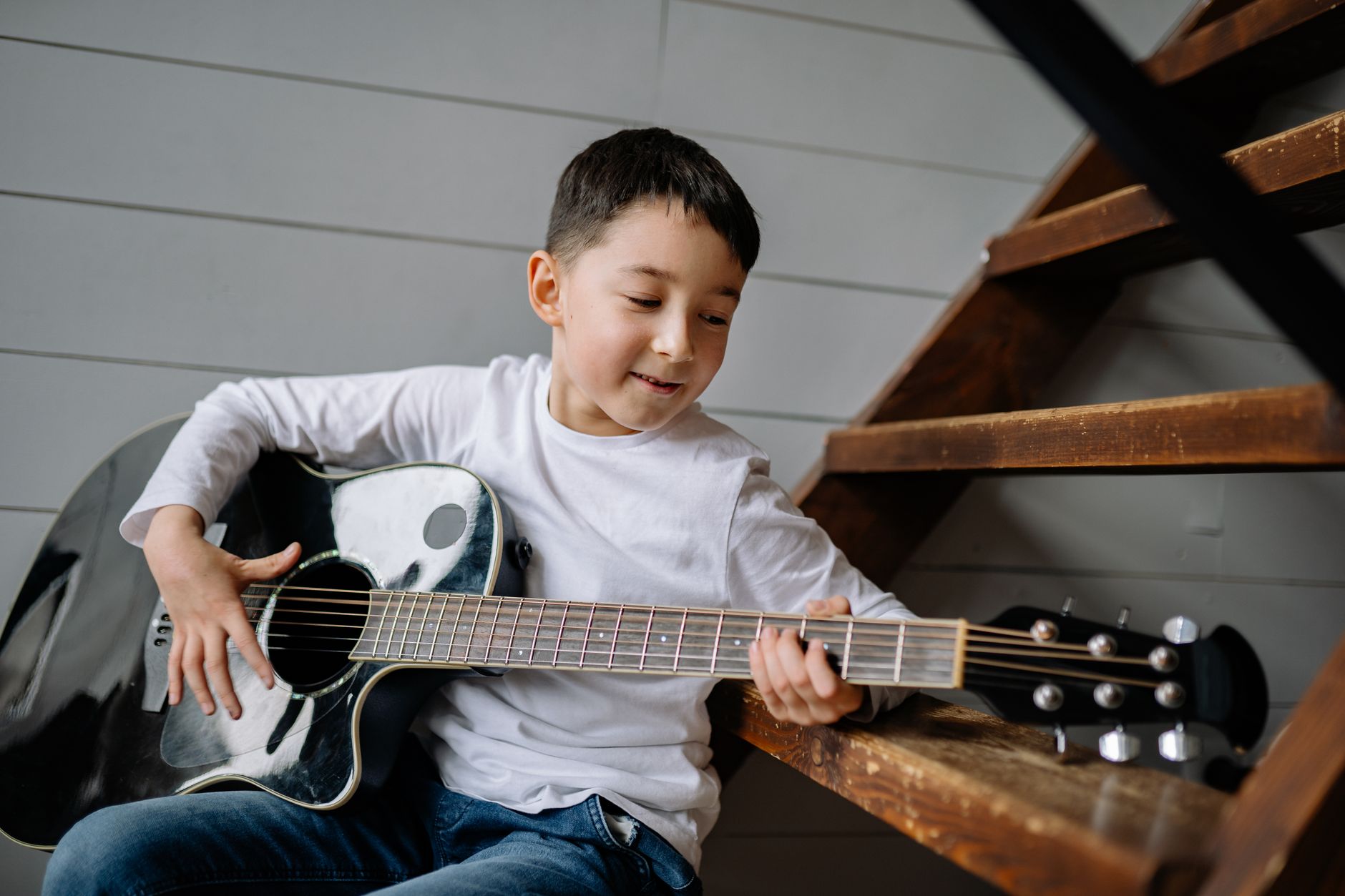 Photo by Yan Krukau / Pexels
Most guitar purchases for kids fail for the same reason: the guitar is unplayable. Budget instruments often ship with high action (string height off the fretboard), requiring so much finger pressure to fret notes that a child's hand fatigues in minutes. A good setup — or a quality factory setup — makes the difference between a child who quits and a child who practices.
Acoustic vs. Electric for Kids
Acoustic guitars require no amplifier, no cables, and no extra cost — plug in and play. They build finger strength faster because of the heavier string tension. Electric guitars have thinner necks and lower action, which is physically easier for small hands, but require a practice amp ($30–50 extra) and cable. For most parents, acoustic is the lower-friction first choice; for a child drawn to rock or already showing real commitment, a starter electric is worth considering.
Full-Size vs. Smaller Body
Ages 11 and up typically handle standard dreadnought or full-size guitars. Ages 7–10 do better with a 3/4-size guitar (parlor or concert body). Forcing a full-size guitar on a small child creates ergonomic problems — shoulder strain, poor technique, and discouragement. The Yamaha FG830 and Fender Dreadnought models here are full-size, appropriate for older kids and teens.
Solid Top vs. Laminate
Solid-top guitars (Yamaha FG830 uses solid Sitka spruce) produce richer tone and improve with age as the wood resonates more over time. Laminate tops are more humidity-resistant and cheaper, but the sound difference is noticeable to a motivated learner within a year. Solid tops are worth the premium if the child is serious.
What To Budget for Setup
New guitars at any price point benefit from a professional setup ($30–50 at most music stores). A setup lowers the action to a playable height, sets intonation, and checks for fret buzz. Yamaha and Fender tend to ship with better factory setups than budget brands — another reason to invest in a recognized name over an unbranded budget model.
Score Ranges (0–10)
We weight: playability and action (3 pts), tone quality (3 pts), build durability (2 pts), brand support and warranty (1 pt), and included accessories (1 pt).
Watch Before You Buy



“Yamaha's FG830: a dreadnought acoustic with a solid Sitka spruce top, nato back and sides, a rosewood fingerboard and bridge, diecast tuners and an adjustable truss rod.”
See Today’s Price →What we like
- Solid Sitka spruce top
- Nato back and sides
- Rosewood fingerboard and bridge
- Diecast tuners
- Adjustable truss rod
Watch out for
- Acoustic only, with no pickup for plugging into an amp
Read Full Analysis
The Yamaha FG830 Solid Top Acoustic Guitar is Yamaha's mid-tier entry into the steel-string acoustic market — a full-size dreadnought with a solid spruce top that represents a genuine construction step above laminate-top starter instruments. The solid spruce top resonates more richly than laminate and actually improves in tone with age and regular playing, which is the meaningful acoustic guitar distinction at this price level. Yamaha scalloped bracing enhances low-end response and projection without compromising structural integrity. Guitar teachers broadly recommend the FG830 as the instrument serious beginners graduate to after outgrowing starter packs: it plays in tune up the neck, intonates correctly across fret positions, and responds to deliberate left-hand technique in ways that cheap starter guitars do not. On a kids guitar page, this listing warrants a size note: the FG830 is a standard 41-inch full dreadnought — adult size in every dimension. It is appropriate for older children aged 10 and up with confirmed interest in continuing guitar study. Younger players or casual starters are better served by a 3/4-size instrument or a dedicated student guitar. Price not listed at time of review; the FG830 typically retails around $299-350, making it a substantial but appropriate investment for a young player committed to the instrument.

Frequently Asked Questions
What size guitar is right for a child?
Is acoustic or electric guitar better for kids?
How much should I spend on a first guitar for a child?
What accessories does a beginner guitarist need?
What size guitar should I get for a 10-year-old?
Is Yamaha a good guitar brand for kids?
How We Chose These Products
Verified buyer reviews and expert editorial sources. No fabricated test claims.
We compare each product’s Amazon listing, the manufacturer’s published specifications and Amazon customer ratings, shown with their review counts as Amazon’s data, and rank the products on how well they answer this page’s question. We do not test products in hand and we do not run our own analysis of review text. A publication or expert is named only where we cite its published findings about that product. No manufacturer paid for placement on this page.
A price appears only when Amazon’s API supplied it at a recent daily refresh, with the date and time beside it, and is withdrawn at 4 AM Central on the day after it turns 24 hours old; otherwise use “Check price on Amazon” for the live price. Read our full methodology →