Best Vocal Microphones for Beginners 2026: Start Singing Right

The Shure SM58 ($109) is the best beginner vocal mic for anyone serious about singing — industry-standard live mic used by professionals for 50+ years. For home recording on a budget, start with the Fifine K669B ($29.99).
See Today’s Price →At a Glance
| # | Product | Award | Price | Our Score | |
|---|---|---|---|---|---|
| 1 | 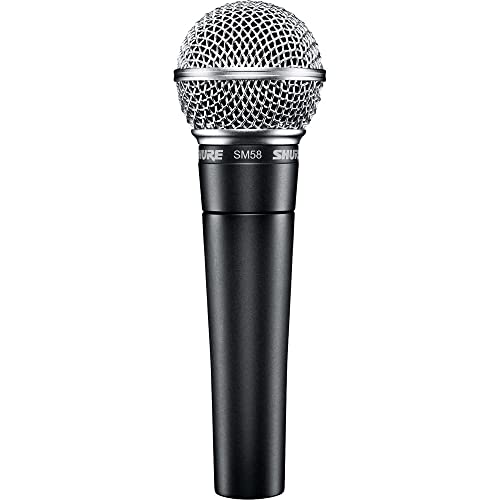 Shure SM58 Professional XLR Dynamic Voc… Shure SM58 Professional XLR Dynamic Voc… |
Best Overall | $109 | 9.2 | Buy → |
| 2 | 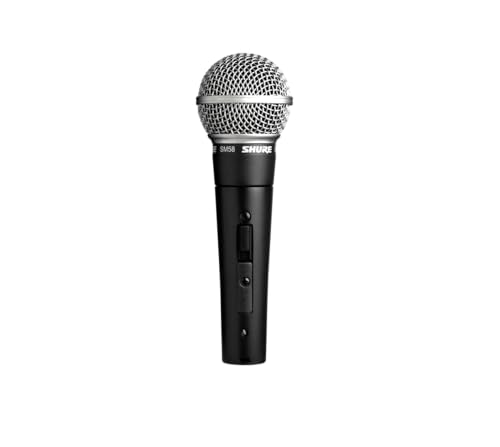 Shure SM58S Dynamic Vocal Microphone Ca… Shure SM58S Dynamic Vocal Microphone Ca… |
Best with Switch | $119 | 8.9 | Buy → |
| 3 | 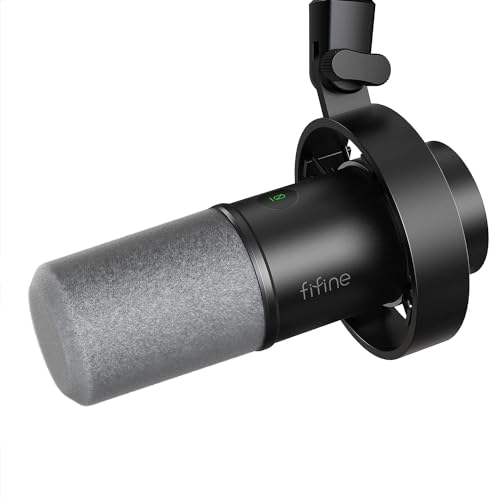 FIFINE Amplitank K688 XLR/USB Dynamic P… FIFINE Amplitank K688 XLR/USB Dynamic P… |
Best USB/XLR Hybrid | $51 | 8.5 | Buy → |
| 4 | 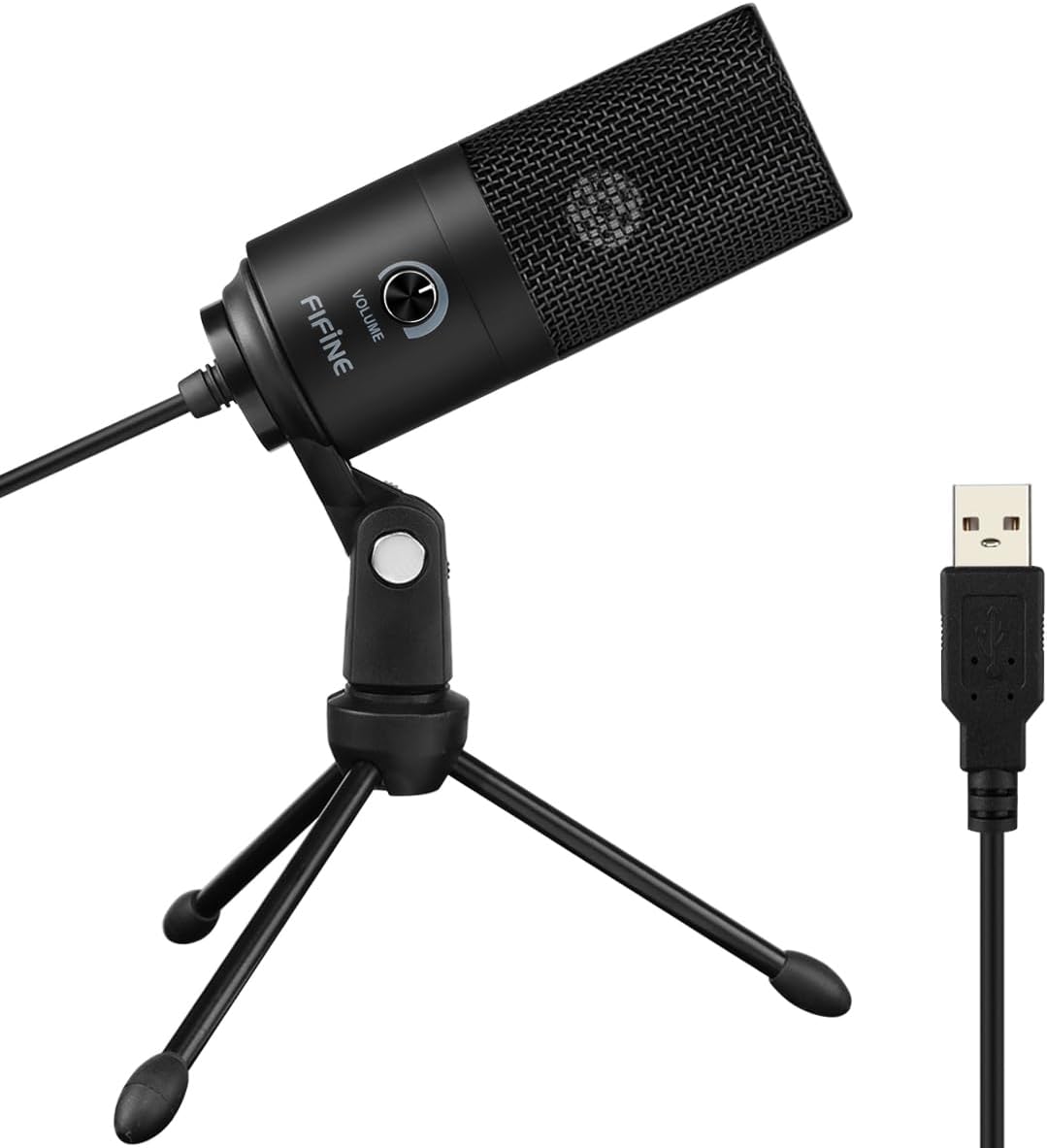 FIFINE K669B USB Condenser Microphone FIFINE K669B USB Condenser Microphone |
Best Budget | $23 | 8.2 | Buy → |
| 5 |  MAONO Wave T5 Wireless Lavalier Microphone MAONO Wave T5 Wireless Lavalier Microphone |
Best Wireless | $99 | 7.8 | Buy → |
Showing 5 of 5 products
Shure SM58 Professional XLR Dynamic Vocal Microphone Cardioid
“The industry-standard dynamic vocal microphone for live performance — used on more stages worldwide than any other mic for good reason. The steel construction survives years of touring abuse without p”
See Today’s Price →What we like
Watch out for
Read Full Analysis
The Shure SM58 at $109 is the most widely used vocal microphone in the world. Found on every major stage for 50+ years, its cardioid polar pattern and built-in pop filter deliver clean vocal capture in imperfect acoustic environments. The dynamic capsule handles loud volumes without distortion and rejects background noise naturally. For beginners who want a mic that will still be in their rig 10 years from now, the SM58 is the only answer.
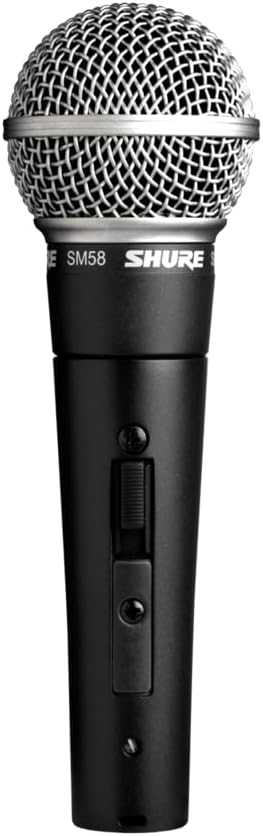
Shure SM58S Dynamic Vocal Microphone Cardioid with On/Off Switch
“The SM58 with the on/off switch that live performers prefer for MC work and between-song breaks. The switch mechanism is solid enough that accidental activation during singing is minimal.”
See Today’s Price →What we like
Watch out for
Read Full Analysis
The Shure SM58S at $119 is the SM58 with an on/off switch — $10 more for a feature that becomes invaluable on stage. The switch lets you mute between songs without feedback risk. Identical audio quality to the standard SM58. If you plan to use this mic for live performance, spend the extra $10. For home recording where you control recording via software, the switchless SM58-LC is fine.

FIFINE Amplitank K688 XLR/USB Dynamic Podcast Microphone
“A dual-input dynamic mic that bridges desktop USB convenience with professional XLR connectivity. The dynamic capsule rejects room noise naturally — ideal for home studios without acoustic treatment.”
See Today’s Price →What we like
Watch out for
Read Full Analysis
The FIFINE Amplitank K688 at $51.09 connects via both USB (direct to computer) and XLR (to an audio interface) — a rare dual-connection option that grows with your setup. The built-in mute button, headphone jack for zero-latency monitoring, and solid metal build make it feel much more expensive than $51. For home recording and streaming, it outperforms its price considerably. The dynamic capsule handles room noise better than budget condensers.
FIFINE K669B USB Condenser Microphone
“The FIFINE K669B punches well above its price — a metal-bodied cardioid condenser at $30 that is dramatically better than built-in laptop microphones and good enough for casual streaming and Zoom call”
See Today’s Price →What we like
- Under $30 with a metal body (not cheap plastic)
- Volume knob on the mic body
- Plug-and-play — no drivers needed on Windows, Mac, or Linux
- 20Hz–20kHz frequency response
- Includes tripod stand and USB cable
Watch out for
- Cardioid pattern only
- No headphone monitoring port
Read Full Analysis
The FIFINE K669B USB Condenser Microphone at $29.99 is the simplest entry point: plug into USB, open your recording software, start singing. No interface, no drivers, no complexity. The cardioid condenser picks up vocals clearly in reasonably quiet rooms. It will reveal room noise more than a dynamic mic, so a closet or treated corner helps. For bedroom recording and online content, it punches above its price point.

MAONO Wave T5 Wireless Lavalier Microphone
“The right wireless lavalier for YouTubers and content creators who need clean wireless audio for outdoor interviews and run-and-gun shooting without a mixer.”
See Today’s Price →What we like
Watch out for
Read Full Analysis
The MAONO Wave T5 at $99.98 is not a traditional vocal mic — it is a wireless lavalier clip-on for video creators, online teachers, and mobile content creators. At 48kHz/24-bit quality with 30-hour battery and USB-C/Lightning connections, it captures clear voice audio while keeping your hands free. Best for: YouTube creators, TikTok singers, or anyone recording while moving rather than standing at a mic stand.
Vocal Microphones for Beginners Buying Guide
 Photo by Tima Miroshnichenko / Pexels
Quick Verdict: Our top pick is the Shure SM58 Professional XLR Dynamic Vocal Microphone Cardioid (Best Overall) — Shure SM58 is the definitive beginner-to-pro vocal mic — sounds professional from day one.. Priced at $109.
Budget Pick: The FIFINE K669B USB Condenser Microphone at $23.99 — Fifine K669B is the best $30 mic for beginners who just want to start recording vocals today..
Great for: Podcasters, streamers, voice-over artists, and remote workers whose built-in mic gets constant complaints
Not ideal if: You use earbuds with a built-in mic for occasional calls — a dedicated mic is overkill if sound quality isn't critical
Mic type is the first decision: USB vs XLR. USB mics work directly with any computer — ideal for home recording, podcasting, and streaming. XLR mics require an audio interface ($50–$150 extra) but offer better quality and work for both live and studio use. Polar pattern matters: cardioid (picks up sound from the front, rejects background noise) is correct for almost all beginners. Dynamic mics (Shure SM58) handle loud sources and room noise better — better for live use. Condenser mics (Fifine K669B) are more sensitive — better for quiet home studios but pick up more room noise.Helpful Guides
- Home Recording Studio Guide 2026 — How to set up your first home studio: interface, mic, DAW, monitors, acoustic treatment
Who This Is For
Podcasters, streamers, home studio musicians, and remote workers on video calls. If you're currently using your laptop's built-in mic for professional calls or recording, any dedicated microphone will be a significant improvement.
Our top-ranked pick is the Shure SM58 Professional XLR Dynamic Vocal Microphone Cardioid (around $109).
The options here range from $24 to $119. Budget picks deliver solid core performance; higher-priced options typically add better build quality, longer warranties, or ecosystem integration.
What to Look For
- Polar pattern: Cardioid mics capture what's in front and reject what's behind — the right choice for solo recordings and streaming. Omnidirectional captures all directions — useful for in-person podcasts with multiple people gathered around one mic.
- Connection type: USB microphones plug directly into any computer with no extra hardware — ideal for beginners. XLR microphones require an audio interface and deliver better signal quality and flexibility for studio setups.
- Frequency response: A flat frequency response (smooth line from 20Hz to 20kHz) captures sound accurately. Presence peaks (a boost at 2–8kHz) add perceived clarity in voice — common in podcast mics.
- Self-noise: Lower self-noise (below 20dB-A) means quieter recordings. This matters when recording in a quiet room — the mic's own electrical noise becomes audible in silent passages.
Common Mistakes to Avoid
- Placing the mic at chest level and wondering why it sounds muffled — most condenser mics sound best 4–8 inches directly in front of the capsule.
- Recording in a room with hard, reflective surfaces and blaming the mic — a decent mic in a bare room sounds worse than a budget mic in a treated space.
- Buying a USB mic and an XLR interface expecting them to connect — USB and XLR are incompatible. Pick one path.
Related Guides

- Guitar Buying Guide: Acoustic vs Electric — which type to start with and what to look for at each price
- Digital Piano vs Keyboard vs Acoustic — which piano to buy at every budget and skill level
Frequently Asked Questions
USB or XLR mic for a beginner?
Is the Shure SM58 good for beginners?
Do I need a pop filter?
What audio interface do I need for XLR mics?
Can I use a vocal mic for recording instruments?
How We Analyze Products
We analyze Amazon review data — often thousands of reviews per product — to surface patterns that individual buyers miss. Our process aggregates star ratings, review counts, and buyer sentiment at scale, identifying which strengths and weaknesses appear consistently across the largest review samples available. The 34,359+ reviews analyzed on this page represent real verified-purchase feedback from Amazon buyers.
Each product earned its placement through data: total review volume, average rating, and the specific praise and complaints that repeat most often across buyers. No manufacturer paid for placement on this page. Products appear here because buyers endorsed them at scale, not because a company asked us to feature them.
We use AI to summarize review sentiment — not to fabricate opinions, but to condense what thousands of buyers actually wrote into a readable format. The pros and cons you see reflect the most common themes found in verified purchaser reviews, paraphrased for clarity. We do not claim to have accessed Reddit, YouTube, or specific publications in generating these summaries.
Prices shown reflect Amazon pricing at the time this page was last generated. Click “See Today’s Price” to get the current live price on Amazon. Read our full methodology →