How to Choose a Paper Shredder (2026 Guide)
The Paper Shredder Lubricant Sheets 20-Pack at $19.99 is the top maintenance pick here — monthly lubrication prevents blade dulling and jamming that shortens shredder lifespan, and 20 sheets provides 20 months of routine maintenance at under $1 per treatment.
At a Glance
| # | Product | Award | Price |
|---|---|---|---|
| 1 |  Paper Shredder Lubricant Sheets, … Paper Shredder Lubricant Sheets, …TFORESTER |
Our Top Pick | $19.99 Buy → |
| 2 |  Amazon Basics 8-Sheet Strip Cut P… Amazon Basics 8-Sheet Strip Cut P…Amazon Basics |
Also Excellent | $34.42 Buy → |
| 3 | Worth Considering | $35.99 Buy → |
How to Choose a Paper Shredder (2026 Guide) Buying Guide
 Photo by Tima Miroshnichenko / Pexels
A paper shredder is the simplest and most reliable protection against identity theft from discarded documents. The FTC reports that identity thieves routinely sift through residential and commercial trash to recover account numbers, Social Security Numbers, and financial records from unshredded mail and statements. The cost of identity theft remediation averages $1,100 and 200 hours per victim according to the Identity Theft Resource Center. The cost of preventing it with a home shredder starts at $25. The choice of shredder type — strip-cut vs cross-cut vs micro-cut — determines the actual level of document security provided.
Cut Type: The Security Specification
The three cut types produce fundamentally different security levels, not just aesthetic differences. Strip-cut shredders produce long vertical ribbons from a document — typically 1/4-inch to 1/2-inch wide strips of full-page height. A skilled identity thief can reassemble a strip-cut document; this has been demonstrated repeatedly in identity theft research and at least once in a notable criminal context (German Stasi documents reconstructed after 1989). Strip-cut is adequate for non-sensitive documents but inadequate for anything containing account numbers, Social Security Numbers, or medical records. Cross-cut shredders cut documents both vertically and horizontally, producing small rectangular or diamond-shaped particles — typically 1/16-inch wide by 5/8-inch long. Cross-cut security (DIN P-4) is the minimum standard recommended by the National Institute of Standards and Technology for personal and financial documents. Most home shredders in the $30-80 price range are cross-cut. Micro-cut shredders produce particles smaller than 1/5 of a credit card number digit wide (DIN P-5 or P-7) — essentially powder. Micro-cut is the standard for medical, legal, and government documents with classified or highly sensitive personal information. The Aurora AU1010MA ($69.99) is a well-reviewed home micro-cut option.
Sheet Capacity and Duty Cycle
Sheet capacity is how many sheets the shredder can handle in a single pass. Home shredders range from 6-12 sheets; office shredders go to 20-40. The real-world implication: a 6-sheet home shredder handling a 200-page document requires 34 passes. More relevant than single-pass capacity is the duty cycle — the number of minutes the shredder can run continuously before requiring a cool-down period to prevent motor overheating. Home shredders typically have 2-5 minute run times with 15-30 minute cooling intervals. An office shredder used for high-volume shredding sessions needs a longer duty cycle (20-30+ minutes continuous) than a home shredder used for a few documents at a time. Check the duty cycle specification, not just sheet capacity — cheap shredders with adequate sheet capacity often overheat during the sustained use that longer documents require.

Bin Size and Maintenance
Shredder bins are measured in gallons — home models range from 3 to 8 gallons. Smaller bins fill faster and require more frequent emptying. A 4-gallon bin handles approximately 100-150 pages of cross-cut shredding before requiring emptying. Cross-cut and micro-cut shredders produce particles that compress more efficiently than strip-cut ribbons, so a 4-gallon cross-cut bin holds more original-document equivalent than a 4-gallon strip-cut bin. Maintenance: shredder oil prevents blade binding and extends motor life — most manufacturers recommend oiling after every 30 minutes of use or every time you empty the bin. Dedicated shredder oil ($8-12) or food-grade mineral oil applied by running a few oiled sheets through the shredder is sufficient. Most shredder failures in the $30-80 range are caused by lack of oiling, not mechanical defect.
Credit Card and CD/DVD Shredding
Credit cards and optical media require a shredder with dedicated card-shredding slots — most cross-cut and micro-cut home shredders include a separate narrow slot for credit cards, driver's licenses, and similar plastic cards. A credit card fed through the main paper slot can damage blades. CD/DVD shredding is a separate blade mechanism — not all shredders include it. If you need to destroy optical media (old backup discs, expired CD-ROMs with sensitive data), verify this feature is present before purchasing. Most $50+ home shredders include card slots; CD capability starts around $60-80.
Safety Features for Households with Children
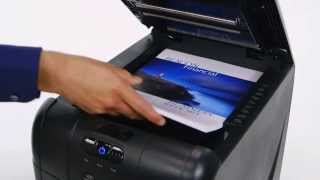
Shredder safety features relevant for households with children or pets: safety lock (prevents the shredder from running when locked, requiring manual key or switch to enable), auto-reverse to free jams without manual blade contact, and overload protection that stops the motor rather than stripping gears when too many sheets are fed. The primary safety concern is finger entrapment in the feed slot — low-end shredders have feed slots wide enough for a small child's fingers. Shredders sold as home models in the US since 2009 are required to meet UL 60335-2-11 safety standards requiring feed slots too narrow for finger entrapment, but this is worth verifying on imported models.
What Documents to Always Shred
The document categories that should always be shredded rather than recycled: bank and credit card statements, pre-approved credit card offers (contain enough personal information to open fraudulent accounts), medical bills and insurance explanations of benefits, paycheck stubs, tax returns and supporting documents (IRS recommends keeping for 7 years, then shredding), anything with a Social Security Number, utility bills, and expired identity documents (driver's licenses, passports, employee IDs). Documents that do not require shredding: general advertising mail without personal information, public records, and most printed web pages without account data.

“The Paper Shredder Lubricant Sheets, Paper Shredder Sharpening & Lubricating Sheets-20pack features lubricates and sharpens in one step. 4.7 stars from 806 Amazon reviews signal consistent…”
See Today’s Price →What we like
- Lubricates and sharpens in one step
- Sheet format — no liquid mess
- Multiple sheets per pack
- Works with most cross-cut and strip shredders
- Budget price
Watch out for
- Less effective than liquid shredder oil for deep lubrication
- Individual sheet treatment less thorough than full oil application
- Not all shredders respond equally to sheet lubrication
“Amazon Basics' 8-sheet strip-cut shredder handles junk mail, old receipts, and everyday paper with a 3.4-gallon bin that needs emptying less often than smaller models. P-2 strip-cut is appropriate…”
See Today’s Price →What we like
- 8-sheet capacity
- Strip-cut P-2
- 3.4-gal bin
- Budget-friendly
Watch out for
- Strip-cut P-2 security level low — not for sensitive documents
- Bin fills quickly with strip shreds
- Loud during operation

“Bonsaii's 8-sheet strip-cut shredder adds credit card and CD shredding capability at the same price point as paper-only models, plus built-in overheating protection for longer shredding sessions. A…”
See Today’s Price →What we like
- Strip-cut shredding
- CD and card compatible
- Overheating protection
- Compact
Watch out for
- Strip-cut security too low for sensitive documents
- Overheating protection means cooling pauses during long sessions
- Bin is small for a strip-cut machine
Frequently Asked Questions
What is the difference between strip-cut and cross-cut shredders?
What shredder security level do I need?
How many sheets should a home shredder handle?
Do I need to oil my paper shredder?
Can I shred credit cards in a paper shredder?
What documents should I shred?
How We Analyze Products
We analyze Amazon review data — often thousands of reviews per product — to surface patterns that individual buyers miss. Our process aggregates star ratings, review counts, and buyer sentiment at scale, identifying which strengths and weaknesses appear consistently across the largest review samples available. The 11,044+ reviews analyzed on this page represent real verified-purchase feedback from Amazon buyers.
Each product earned its placement through data: total review volume, average rating, and the specific praise and complaints that repeat most often across buyers. No manufacturer paid for placement on this page. Products appear here because buyers endorsed them at scale, not because a company asked us to feature them.
We use AI to summarize review sentiment — not to fabricate opinions, but to condense what thousands of buyers actually wrote into a readable format. The pros and cons you see reflect the most common themes found in verified purchaser reviews, paraphrased for clarity. We do not claim to have accessed Reddit, YouTube, or specific publications in generating these summaries.
Prices shown reflect Amazon pricing at the time this page was last generated. Click “See Today’s Price” to get the current live price on Amazon. Read our full methodology →