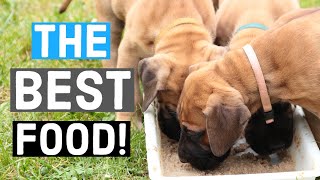
Best Dog Food for Great Danes in 2026
Royal Canin Giant Breed is the best dog food for Great Danes — controlled calcium ratios prevent skeletal deformities during rapid growth (puppy formula), while the adult formula adds joint support and taurine for cardiac health. Runners-up: Hill’s Science Diet, Purina Pro Plan Large Breed.
At a Glance
| # | Product | Award | Price |
|---|---|---|---|
| 1 |  Royal Canin Size Health Nutrition… Royal Canin Size Health Nutrition…ROYAL CANIN |
Best Overall | $109.99 Buy → |
| 2 |  Royal Canin Giant Breed Adult Dry… Royal Canin Giant Breed Adult Dry…ROYAL CANIN |
Best Overall (Adult) | Check current price on Amazon Buy → |
| 3 |  Hill's Science Diet Dry Dog Food,… Hill's Science Diet Dry Dog Food,…Hill's Science Diet |
Best Alternative Puppy Food | $74.98 Buy → |
| 4 | Best Value Puppy Formula | Check current price on Amazon Buy → |

Dog Food for Great Danes Buying Guide
 Photo by Paparazzi Ratzfatzzi / Pexels
Quick Verdict: Our top pick is the Purina Pro Plan Large Breed Puppy Chicken & Rice Formula, 47 lb (Best Value Puppy Formula) — Best value large-breed puppy formula with controlled minerals and glucosamine -- Purina's research-backed alternative. Priced at $95.48.
Who This Guide Is For
This guide is for you if:
- Your dog has specific dietary needs — allergies, joint issues, kidney disease, or age-related changes
- You want to understand ingredient quality and label claims before switching to a premium diet
- Your vet recommended a dietary change and you want to understand your options
Skip this guide if:
- You just want a quick pick — see our top dog food picks
- Your dog has a serious diagnosed condition — those require direct vet guidance
Quick verdict: Royal Canin Giant Breed formulas are the best dog food for Great Danes -- the puppy formula controls mineral ratios specifically to prevent the skeletal deformities that excess calcium causes in rapidly-growing giant breeds, while the adult formula provides joint support, taurine for cardiac health, and the caloric density needed by a 100-180 lb dog. For owners seeking alternative brands, Hill's Science Diet Large Breed Puppy and Purina Pro Plan Large Breed Puppy are the most researched alternatives for the critical growth phase.
Great Danes are the world's largest dog breed -- adult males can reach 175+ lbs and stand 32+ inches at the shoulder. This size makes them magnificent to own and uniquely vulnerable to nutrition-related health problems that other breeds don't face. The nutritional decisions you make for a Great Dane, particularly during puppyhood, have lifelong consequences that cannot be corrected later.The Growth Window: The Most Critical Nutritional Period for Any Breed
Between birth and 18-24 months, a Great Dane grows from a few pounds to potentially 150+ lbs. This is the most rapid growth rate of any dog breed. During this window, getting nutrition wrong doesn't just make a Dane uncomfortable -- it causes permanent skeletal deformities including: Osteochondrosis dissecans (OCD): Joint cartilage grows abnormally, causing bone chips that result in pain, lameness, and early arthritis. Often caused by excess protein and calories accelerating growth faster than skeletal development can accommodate. Hypertrophic osteodystrophy (HOD): Bone pain during growth caused by metabolic issues linked to over-nutrition, excessive calcium, and rapid growth rate. Panosteitis: Painful bone inflammation ("growing pains") that's more severe and prolonged in over-nourished puppies. Wobbler syndrome: Cervical vertebral instability that causes neurological symptoms -- neck pain, incoordination, paralysis. Has nutritional contributors including excess calcium during growth.The Calcium Paradox: More Is Not Better
Puppies need calcium for bone development, and Great Dane puppies need a lot of bone development. The instinct to supplement calcium is understandable -- and catastrophic in practice. Great Dane puppies cannot regulate calcium absorption efficiently. While small breeds excrete excess calcium, Great Dane puppies absorb excessive calcium indiscriminately, depositing it in bones faster than the bone matrix can properly accommodate it. This causes the skeletal deformities listed above. The correct approach: feed a giant-breed puppy food with controlled, precisely calibrated calcium content (typically 0.8-1.2% calcium, calcium:phosphorus ratio of 1.2:1 to 1.4:1). Do NOT add any calcium or phosphorus supplements. Do NOT feed adult food, which has higher mineral concentrations. Do NOT feed generic puppy food, which is formulated for smaller breeds with different calcium absorption mechanisms. Royal Canin Giant Breed Puppy and Hill's Science Diet Large Breed Puppy are among the only formulas with the mineral calibration appropriate for giant breed puppies. The label should specify they are formulated for large or giant breed dogs expected to exceed 70+ lbs adult weight.Bloat (GDV): The Great Dane's Life-Threatening Risk
Gastric dilatation-volvulus (GDV or bloat) is the number one acute killer of Great Danes. The stomach fills with gas, then rotates (volvulus), cutting off blood supply to the stomach and spleen. Without emergency surgery within hours, it is fatal. Great Danes have the highest bloat incidence of any breed -- approximately 24% of Great Danes will experience bloat in their lifetime. Nutritional risk reduction strategies:- Feed 2-3 small meals per day rather than one large meal
- Avoid exercise 1 hour before and 2 hours after eating
- Do NOT use elevated food bowls (a long-debated intervention, but current evidence slightly favors floor-level feeding)
- Avoid foods with fat or oils listed in the first four ingredients (high fat may increase risk)
- Avoid rapid eating -- use slow-feeder bowls
- Avoid highly fermentable ingredients (soy, dry beet pulp, citric acid-preserved foods) which increase gas production
Joint Health: Supporting 150+ Lbs for a Lifetime
Great Danes are predisposed to hip dysplasia, elbow dysplasia, and osteosarcoma. Their sheer size means joint deterioration happens faster and more severely than in smaller breeds. Glucosamine (2000mg/day for a 130+ lb Dane) and chondroitin sulfate (1600mg/day) from puppyhood provide ongoing cartilage support. Many premium giant-breed foods include these; for those that don't or at insufficient levels, supplementation is essential. Omega-3 fatty acids (EPA/DHA) provide anti-inflammatory joint support -- look for fish oil as an ingredient or supplement separately at 3-4g/day for an adult Dane.Cardiac Health: Great Dane DCM Risk
Great Danes are genetically predisposed to dilated cardiomyopathy (DCM) and are one of the highest-risk breeds. DCM typically presents at 4-8 years old in Danes. Nutritional management: ensure taurine sufficiency (look for taurine on the label or use lamb/poultry proteins that provide taurine precursors), avoid grain-free diets (which have FDA DCM investigation flag), and schedule regular cardiac echocardiograms from age 3 onward.Adult Feeding: The Short Great Dane Lifespan
Great Danes typically live only 7-10 years -- one of the shortest lifespans of any breed. This means their nutritional needs shift relatively early: a 6-year-old Dane is already in the senior phase. Senior Danes need maintained protein (muscle mass is critical for mobility), reduced calories if less active, continued joint supplementation, and cardiac monitoring. Do not dramatically restrict protein in seniors -- this outdated practice causes more harm than it prevents in large breed — see our guide to reading large breed food labelss.Related guides: Dog food for joint health | Best food for Rottweilers | senior dog nutrition guide | Dog lifespan by breed