How to Choose an Apartment Dog: Size, Noise, and Energy Guide
The best apartment dogs share three qualities: manageable energy levels that can be satisfied with daily walks and indoor play, a temperament that does not default to barking as a hobby, and the ability to settle calmly when the excitement is over. Size helps but is not the deciding factor.
How to Choose an Apartment Dog Buying Guide
 Photo by Sami Abdullah / Pexels
Quick Verdict
The best apartment dogs share three qualities: manageable energy levels that can be satisfied with daily walk routines and indoor play, a temperament that does not default to barking as a hobby, and the abili.
| French Bulldog | |||||
| Cavalier King Charles | |||||
| Shih Tzu | |||||
| Pug | |||||
| Greyhound | |||||
| Husky (avoid) | |||||
| Best Pick |

This guide is for you if:
-
You're choosing your first dog or cat and overwhelmed by the breed options
-
You have a specific situation — small apartment, young kids, seniors, low activity — and need a match
-
You want honest pros/cons, not just enthusiast recommendations from people who love their breed
Skip this guide if:
-
You've already chosen a breed and need gear — see our pet gear guides
-
You're an experienced owner or breeder — this is written for first-time and prospective owners
Quick verdict: The best apartment dogs share three qualities: manageable energy levels that can be satisfied with daily walks and indoor play, a temperament that does not default to barking as a hobby, and the ability to settle calmly when the excitement is over. Size helps but is not the deciding factor.
## Size Doesn't Matter as Much as You Think
This is the first and most important thing to understand about apartment dogs, and it is the thing most people get wrong.
When someone asks "what dog can I have in an apartment?" the instinct is to answer with the smallest breeds. Chihuahua. Teacup Poodle. Something that fits in a tote bag. And while some small dogs are indeed excellent apartment companions, the size instinct leads people badly astray in both directions.
A Jack Russell Terrier is 12 to 17 pounds. It was bred to hunt foxes by running them out of their dens, which requires relentless energy, a loud bark, and an absolute refusal to give up. None of those traits disappear when the dog moves into a 700-square-foot apartment. A Jack Russell in a small space without an outlet is a very effective chaos engine.
A Greyhound weighs 60 to 70 pounds. It can run 45 miles per hour and was bred for sprint racing. It is also — and this surprises almost everyone — one of the best apartment dogs in existence. Why? Because Greyhounds are sprinters, not endurance athletes. They run fast for short bursts and then rest, extensively, for the remainder of the day. A typical Greyhound sleeps 16 to 18 hours a day. They are quiet, gentle, and have the calm indoor energy of a very large cat.
The real apartment dog checklist has nothing to do with pounds:
- Energy level: Can this dog's exercise needs be met with daily walks and some play, without requiring a yard or 2-hour runs?
- Noise level: Will this dog bark constantly, or is it generally quiet inside?
- Independence: Can this dog settle calmly when nothing is happening, or does it need constant stimulation?
- Neighbor tolerance: Is this a dog that other people in close proximity can coexist with comfortably?
With that framework in place, here are the 10 apartment breeds that genuinely work.
---## The Top 10 Apartment Dog Breeds
Why they work in apartments: The Bichon Frise was essentially designed for indoor life. Compact (12 to 18 pounds), cheerful, and adaptable, they thrive in smaller spaces as long as they get their daily walks and some interactive play. They do not have the manic energy of many small breeds, which makes a significant difference in a confined space. Exercise needs: Two short to medium walks a day plus indoor play sessions. About 30 to 45 minutes of intentional activity total. Noise level: 2 out of 5. Bichons are not chronic barkers. They will alert you to the doorbell, but they do not treat every sound in the hallway as a national emergency. Size: 12 to 18 pounds, 9 to 11 inches tall. Neighbor-friendliness: High. Their low-bark nature and small size make them easy to live alongside in a building. Real talk: Bichons are prone to separation anxiety. If you are gone for long stretches regularly, a Bichon left alone may become vocal and anxious. A dog walker or a second companion pet can solve this. ---

Watch Before You Buy

At a Glance


Showing 3 of 3 products

Hertzko Self-Cleaning Slicker Brush for Dogs and Cats
“The Hertzko Self-Cleaning Slicker Brush is the most practical everyday brush for the majority of dog owners — the self-cleaning mechanism is genuinely useful, the bent pins are comfortable for dogs, a”
See Today’s Price →What we like
- One-button self-cleaning mechanism dramatically reduces post-grooming cleanup time
- Bent wire pins are gentler on skin than straight pins at equivalent contact
- Works effectively on both dogs and cats of all coat lengths
- Ergonomic non-slip handle is comfortable for extended grooming sessions
- Most reviewed brush in this category — extremely broad real-world validation
Watch out for
- Not ideal for the very dense, long coats of show breeds (Chris Christensen excels there)
- Self-cleaning button mechanism occasionally releases hair prematurely if bumped

Milk-Bone Original Dog Biscuits for Large Dogs
“The timeless everyday biscuit — Milk-Bone's vitamin-fortified formula and teeth-cleaning crunch make it the most practical daily treat at a price that never stings.”
See Today’s Price →What we like
- 12 essential vitamins and minerals
- Crunchy texture helps clean teeth
- Affordable per-treat cost
- Trusted brand since 1908
Watch out for
- Contains wheat and corn
- Not grain-free
- Basic ingredient list

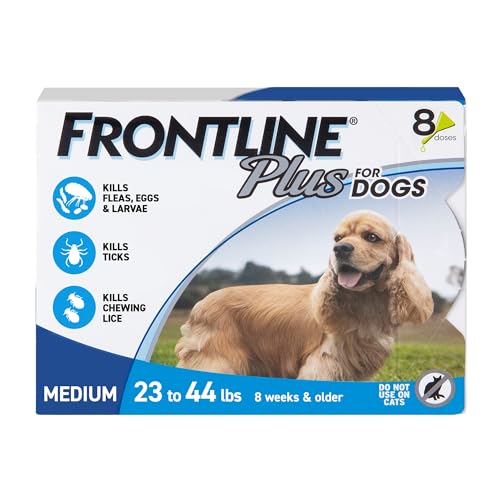
Frontline Plus Flea & Tick Treatment for Medium Dogs
“Frontline Plus is the most widely trusted flea and tick treatment for dogs with good reason: dual active ingredients, waterproof efficacy, and 25+ years of clinical backing. At $78.99 for an 8-pack ($”
See Today’s Price →What we like
- Kills adult fleas within 12 hours and prevents reinfestation by breaking flea lifecycle
- Dual active ingredients kill adults (fipronil) and prevent eggs/larvae from maturing
- Proven 25+ year clinical track record with consistent vet recommendation
- Waterproof after 24 hours — safe for dogs that swim or are bathed regularly
- Covers 4 tick species including deer ticks that carry Lyme disease
Watch out for
- Monthly application required — protection gaps occur if dose is missed
- Some flea populations have developed resistance to fipronil in certain geographic regions
- 8-pack is a 8-month supply — costlier upfront than smaller pack sizes
Frequently Asked Questions
Do I need a yard to have a dog?
What's the quietest dog breed for apartments?
My building has a 25lb weight limit. What are my options?
Can a large dog be happy in a small apartment?
Are French Bulldogs really as chill as everyone says?
How do I apartment train a new puppy?
What do I do if my dog barks while I'm at work?
Is a greyhound really a good apartment dog? That seems wrong.
Should I avoid breeds that were bred to hunt or herd?
How We Analyze Products
We analyze Amazon review data — often thousands of reviews per product — to surface patterns that individual buyers miss. Our process aggregates star ratings, review counts, and buyer sentiment at scale, identifying which strengths and weaknesses appear consistently across the largest review samples available. The 217,333+ reviews analyzed on this page represent real verified-purchase feedback from Amazon buyers.
Each product earned its placement through data: total review volume, average rating, and the specific praise and complaints that repeat most often across buyers. No manufacturer paid for placement on this page. Products appear here because buyers endorsed them at scale, not because a company asked us to feature them.
We use AI to summarize review sentiment — not to fabricate opinions, but to condense what thousands of buyers actually wrote into a readable format. The pros and cons you see reflect the most common themes found in verified purchaser reviews, paraphrased for clarity. We do not claim to have accessed Reddit, YouTube, or specific publications in generating these summaries.
Prices shown reflect Amazon pricing at the time this page was last generated. Click “See Today’s Price” to get the current live price on Amazon. Read our full methodology →