How to Choose Your First Dog: Breeds That Forgive Rookie Mistakes
The best dogs for first-time owners are trainable, forgiving of inconsistency, and do not come with the kind of stubbornness or high-maintenance health issues that punish rookie mistakes. Labrador Retrievers and Golden Retrievers are the classic starter dogs for good reason — they want to please you, learn quickly, and do not hold grudges. The Cavalier King Charles Spaniel is excellent for lower-energy households. The Standard or Miniature Poodle is arguably the most trainable dog alive. The Greyhound (particularly a rescue) is a wildly underrated choice — calm, low-grooming, and perfectly happy to be a couch companion. Avoid Huskies, Jack Russell Terriers, Chow Chows, and Afghan Hounds until you have a few years of ownership under your belt.
How to Choose Your First Dog Buying Guide
 Photo by Jolenne 87 / Pexels
Quick Verdict: Our top pick is the Joansan Interactive Dog Puzzle Toys Mentally Stimulating Treat Dispenser Training (Mental Health Must-Have) — A new dog with nothing to do is a new dog that finds its own entertainment — usually in the form of your furniture, y.... Priced at $8.09.
This guide is for you if:
-
You're choosing your first dog or cat and overwhelmed by the breed options
-
You have a specific situation — small apartment, young kids, seniors, low activity — and need a match
-
You want honest pros/cons, not just enthusiast recommendations from people who love their breed
Skip this guide if:
-
You've already chosen a breed and need gear — see our pet gear guides
-
You're an experienced owner or breeder — this is written for first-time and prospective owners
Quick verdict: The best dogs for first-time owners are trainable, forgiving of inconsistency, and do not come with the kind of stubbornness or high-maintenance health issues that punish rookie mistakes. Labrador Retrievers and Golden Retrievers are the classic starter dogs for good reason — they want to please you, learn quickly, and do not hold grudges.

| Golden Retriever | |||||
| Labrador Retriever | |||||
| Cavalier King Charles | |||||
| Poodle (Standard) | |||||
| Bichon Frise | |||||
| Chow Chow (avoid) | |||||
| Best Choice |
## You Will Make Mistakes. A LOT of Mistakes. That Is Fine.
Let's start with an honest reassurance: there is no such thing as a perfect first-time dog owner. The learning curve is real, it is steep, and it involves at least a few genuinely embarrassing moments that you will later tell at dinner parties with great comedic timing.
You will call your dog by the wrong command when you are flustered. You will give the treat too late and accidentally reward sitting while looking to the left instead of just sitting. You will make the crate too big and then wonder why crate training is not working. You will give in to the begging at dinner exactly once and spend the next six months paying for it. You will leave something within reach that should not have been within reach, and you will be philosophical about what remains of it.
All of this is normal. All of it is survivable. And with the right breed, all of it is forgivable.
The wrong breed — one that is stubborn, independent, high-energy beyond what you can manage, or prone to anxiety in the situations you will inevitably create — does not forgive easily. The wrong breed turns those normal rookie mistakes into behavioral problems that compound, making training harder and ownership more stressful for both of you.
This guide is about picking the right breed for who you are right now, not who you plan to be. You may intend to run five miles every morning. Base your dog choice on your current schedule, not your aspirational one.
---## What Makes a Breed Good for First-Timers
This is more nuanced than "trainable" and "good with people," which are the two attributes that every first-timer breed list leads with. Here is the full picture.
Trainability: Wants to Please vs. Independent
The single biggest variable in how easy a dog is to train is not intelligence — it is the desire to please. Some dogs are deeply motivated by human approval. They want to know what you want and they want to give it to you, because making you happy makes them happy. These dogs are the ones that respond to basic positive reinforcement training remarkably quickly.
Other dogs are independently minded. They are not stupid — often quite the opposite — but they have their own opinions about whether your request is reasonable, and they reserve the right to consult those opinions before complying. These dogs can be trained by experienced handlers who understand how to motivate them. They are frustrating for first-timers who do not yet have the timing, consistency, or patience that independent breeds require.
For first-timers, a dog that wants to please you is dramatically more forgiving of the inevitable training inconsistencies that come with learning as you go.
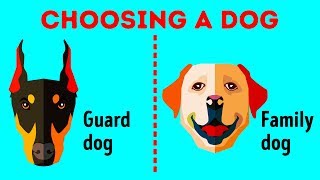
Related to but distinct from trainability, stubbornness is about persistence. A stubborn dog does not forget what it wants. It will ask again, and again, and again, in slightly different ways, with unwavering confidence that eventually you will give in. A patient, consistent owner can manage a stubborn dog successfully. A first-timer who does not yet have that consistency will find stubbornness exhausting and the behavioral patterns it produces durable.
Some breeds are genetic time bombs — beautiful, wonderful dogs that come with predictable expensive health issues. For a first-time owner who is still calibrating how much dog ownership costs, starting with a breed that has significant chronic health needs adds financial and emotional stress on top of an already steep learning curve.
This does not mean avoiding all breeds with health issues — that would eliminate half the breeds worth owning. It means being realistic about what you are ready to manage and choosing accordingly. A healthy breed with minor issues is a better starting point than a breed you love aesthetically but that will require expensive interventions before the dog is five.
The amount of exercise a dog needs is something most first-timers dramatically underestimate. A dog that needs ninety minutes of vigorous activity per day sounds totally manageable in October when you are planning your hypothetical dog-owning life. In February, in the rain, before work, with fifteen minutes before you have to leave, it is a different calculation.
Choose a breed whose energy requirements match your current life, not your optimistic vision of it. Underestimating this is the most common mistake first-time dog owners make, and it produces anxious, destructive, unhappy dogs.
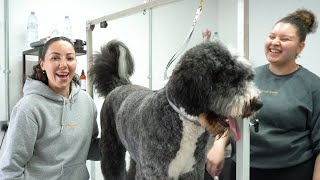
Grooming is not just about aesthetics. A dog that goes ungroomed is an uncomfortable dog — matted fur pulls at the skin, overgrown nails affect gait and joint health, and dirty ears lead to infections. Calculate honest grooming time before you choose. Some breeds need professional grooming every six to eight weeks, which is both a time commitment and a real ongoing cost.
---## Top 10 First-Timer Friendly Breeds
At a Glance

Showing 3 of 3 products
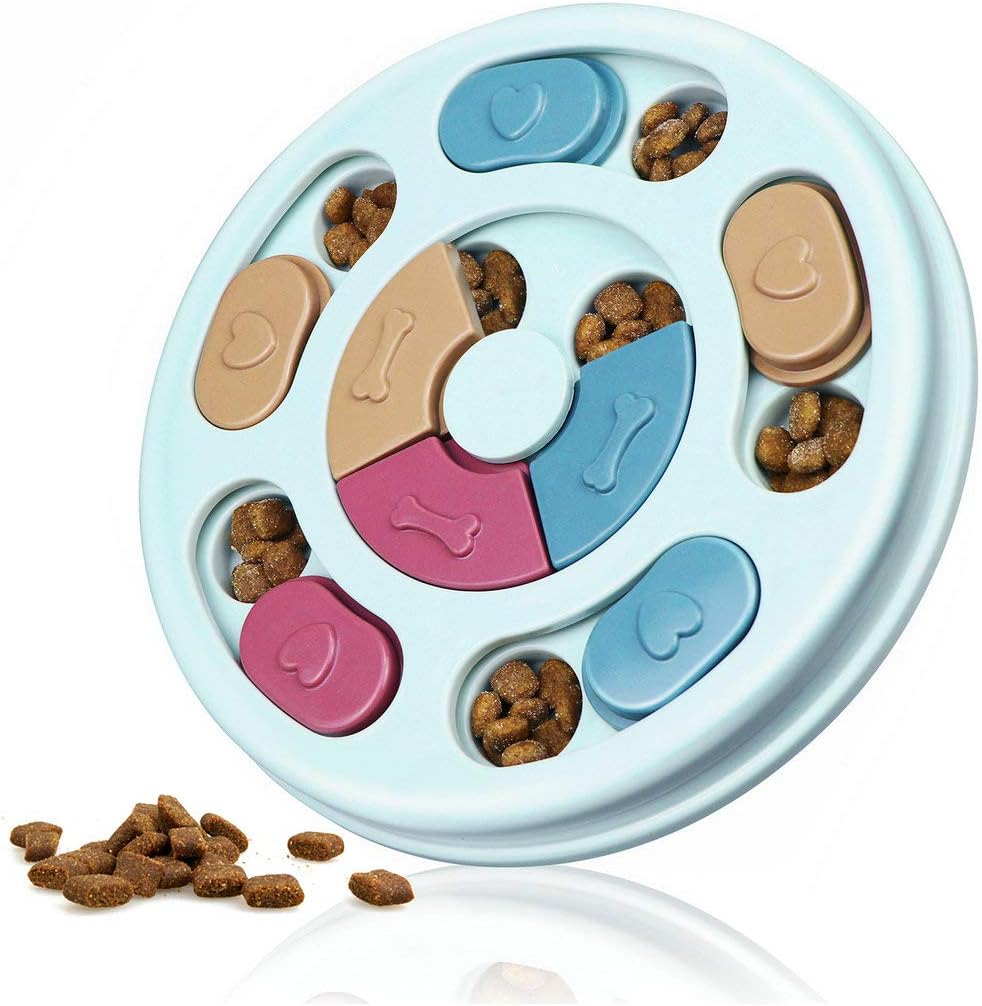
Joansan Interactive Dog Puzzle Toys Mentally Stimulating Treat Dispenser Training
“A solid training-friendly puzzle toy. Joansan's treat dispenser works well as part of positive reinforcement training - the mental challenge and treat reward maintain engagement during training sessio”
See Today’s Price →What we like
- Treat dispensing reward system reinforces positive training behaviors
- Mental stimulation reduces anxiety and boredom-related behaviors
- Multiple compartment design provides varied challenges
- Digestion aid function - slows eating pace
- Good for training focus and problem-solving
Watch out for
- Less variety than the HOUNDGAMES 6-piece set
- Can be too simple for very smart dogs

PetSafe 6-Foot Nylon Dog Leash
“The PetSafe nylon leash is the reliable, affordable everyday option for pet owners who need a functional leash without premium features. It's the sensible choice for puppies learning to walk on leash,”
See Today’s Price →What we like
- Affordable price makes it easy to keep multiples around for different situations
- PetSafe brand reliability with consistent quality control
- Standard 6-foot length appropriate for most everyday use
- Easy to find in pet stores and online for replacement
- Good option for puppies who may chew through their first leash
Watch out for
- Flat nylon is rougher on bare hands than braided nylon over extended walks
- Nickel-plated zinc hardware is less durable than brass or stainless steel
- Will not last as long as premium braided options
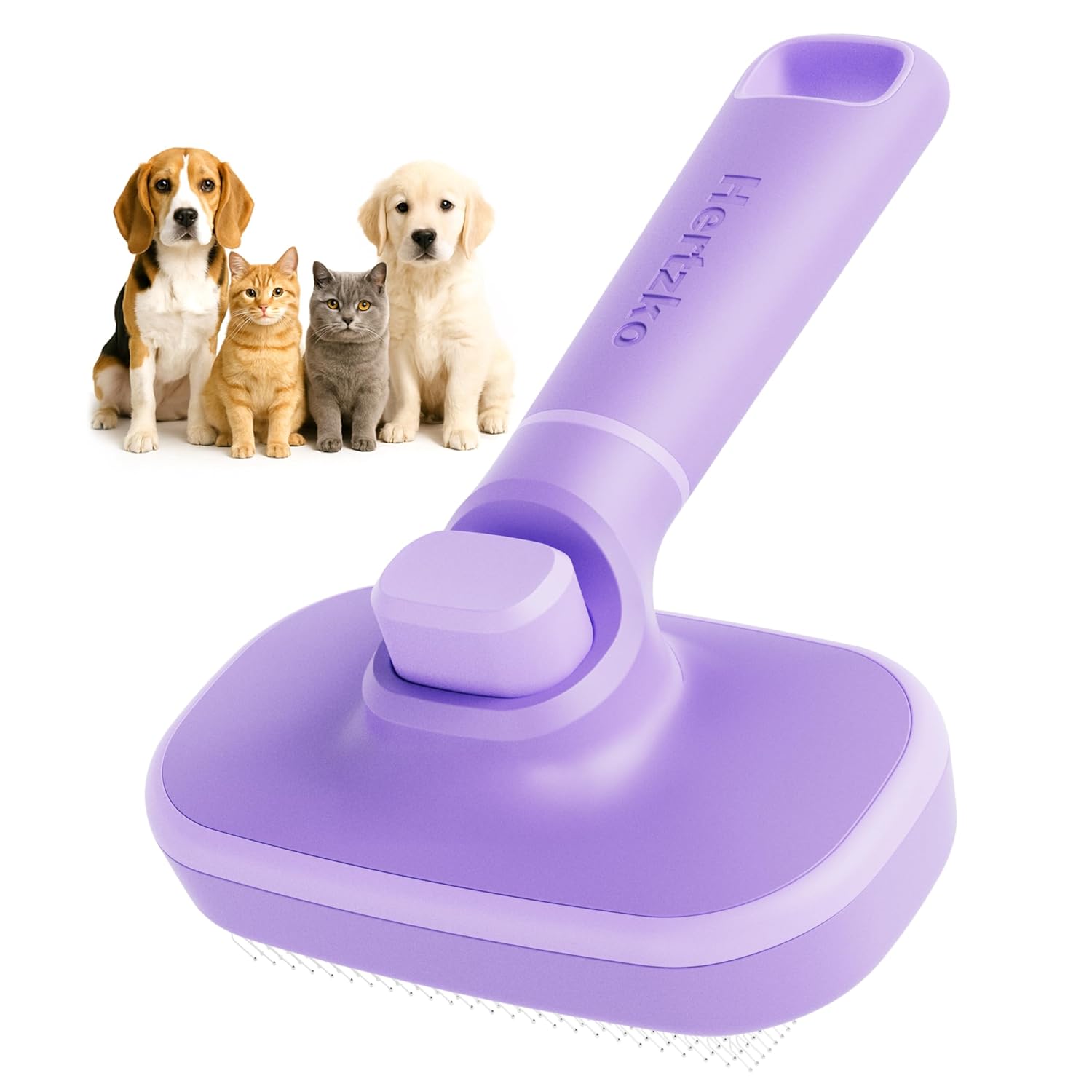
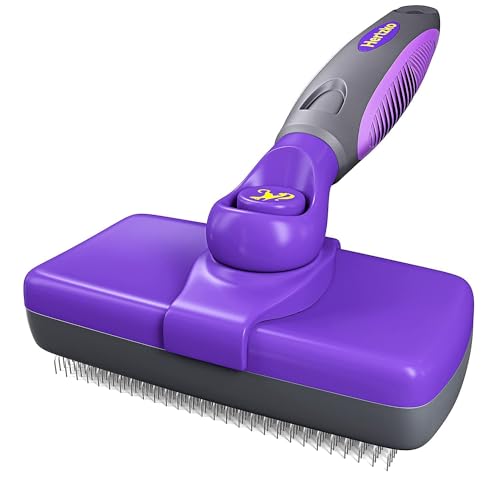
Hertzko Self-Cleaning Slicker Brush for Dogs and Cats
“The Hertzko Self-Cleaning Slicker Brush is the most practical everyday brush for the majority of dog owners — the self-cleaning mechanism is genuinely useful, the bent pins are comfortable for dogs, a”
See Today’s Price →What we like
- One-button self-cleaning mechanism dramatically reduces post-grooming cleanup time
- Bent wire pins are gentler on skin than straight pins at equivalent contact
- Works effectively on both dogs and cats of all coat lengths
- Ergonomic non-slip handle is comfortable for extended grooming sessions
- Most reviewed brush in this category — extremely broad real-world validation
Watch out for
- Not ideal for the very dense, long coats of show breeds (Chris Christensen excels there)
- Self-cleaning button mechanism occasionally releases hair prematurely if bumped
Frequently Asked Questions
I have never owned a dog. Where do I even start?
Is it easier to start with a puppy or an adult dog?
How much does a dog actually cost per year, realistically?
I want a Husky. Talk me out of it.
How long does it take to train a dog to sit, stay, and come?
What is crate training and do I really need to do it?
My dog ignores me when I call their name. Is that normal?
I work eight hours a day. Can I have a dog?
What is the one thing every new dog owner wishes they had done differently?
When does owning a dog stop feeling overwhelming and start feeling amazing?
How We Analyze Products
We analyze Amazon review data — often thousands of reviews per product — to surface patterns that individual buyers miss. Our process aggregates star ratings, review counts, and buyer sentiment at scale, identifying which strengths and weaknesses appear consistently across the largest review samples available. The 122,257+ reviews analyzed on this page represent real verified-purchase feedback from Amazon buyers.
Each product earned its placement through data: total review volume, average rating, and the specific praise and complaints that repeat most often across buyers. No manufacturer paid for placement on this page. Products appear here because buyers endorsed them at scale, not because a company asked us to feature them.
We use AI to summarize review sentiment — not to fabricate opinions, but to condense what thousands of buyers actually wrote into a readable format. The pros and cons you see reflect the most common themes found in verified purchaser reviews, paraphrased for clarity. We do not claim to have accessed Reddit, YouTube, or specific publications in generating these summaries.
Prices shown reflect Amazon pricing at the time this page was last generated. Click “See Today’s Price” to get the current live price on Amazon. Read our full methodology →