| Dog Food Type | Traditional Grain-Inclusive | Grain-Free (Legume-Based) | Grain-Free (Potato-Based) | Limited Ingredient Grain-Free |
|---|
| DCM Risk (FDA) | Not associated | Under investigation (2018-2024) | Under investigation | Lower (fewer legumes) |
| Taurine Status | Adequate in most | Some deficiency cases reported | Some deficiency cases reported | Add taurine supplement to be safe |
| Glycemic Index | Moderate (rice, oats) | Moderate-High (peas, lentils) | High (potato) | Varies |
| Digestibility | High (rice, oats) | Good (peas digest well) | High | High |
| Best For | Most healthy dogs | Dogs with grain allergy (rare) | Dogs needing grain + legume-free | True food allergy dogs |
| Our Stance | Safe default | Use named protein, check taurine | Avoid as primary diet | Fine if true allergy diagnosed |
| Bottom Line | Grain allergies in dogs are rare. True grain intolerance requires vet diagnosis. Most dogs do well on grain-inclusive kibble — it carries lower DCM risk. |
<
The FDA Investigation: What Actually Happened
In 2018, the FDA began investigating a potential link between grain-free dog foods and dilated cardiomyopathy (DCM) — a life-threatening heart condition. By 2020, the FDA had received reports of DCM in over 1,100 dogs, with 90% of those cases involving dogs eating grain-free diets. The foods named most frequently contained peas, lentils, other legumes, or potatoes as primary ingredients.

▶
Video by Veterinary Secrets: Grain-Free Dog Food STILL Causing Heart Disease? New FDA Update…
Critically, the connection is not about grains. No study has shown that grains cause DCM. The concern is specifically with what is replacing grains: legumes as a primary caloric ingredient. As of 2026, the FDA investigation remains open — no definitive causal mechanism has been established, but the statistical association between high-legume grain-free diets and DCM in non-predisposed breeds remains a serious veterinary concern. If you are evaluating any dog food, learning how to read a pet food label is the first step to assessing ingredient quality and order.
What Is DCM and Why Does It Matter?
Dilated cardiomyopathy is a disease where the heart muscle weakens and the chambers enlarge, reducing the heart's ability to pump blood efficiently. In most cases, DCM is a genetic condition seen in specific breeds: Doberman Pinschers, Boxers, Irish Wolfhounds, and Great Danes are predisposed by breed genetics alone. The FDA investigation was alarming because DCM was appearing in breeds with no genetic predisposition — Golden Retrievers, French Bulldogs, Miniature Schnauzers — dogs that should not be developing this condition at elevated rates.

▶
Video by Veterinary Secrets: FDA Warns About Dog Food Linked to (DCM) Heart Disease
DCM can progress silently. A dog may show no symptoms until the heart is severely compromised. This is why the veterinary cardiology community responded urgently when the FDA data surfaced. If your dog has been on a high-legume grain-free diet and is a breed with elevated DCM risk, talk to your vet about an echocardiogram. Dogs most at risk for diet-associated DCM include Golden Retrievers, who have shown a particularly strong association in UC Davis cardiologist research.
The Taurine Hypothesis
The leading theory is a taurine deficiency pathway. Taurine is an amino acid essential for cardiac muscle function. Dogs can synthesize taurine from methionine and cysteine — amino acids found in animal protein. The hypothesis: when legumes make up a large portion of the diet, their high fiber and phytate content may reduce the bioavailability of these precursor amino acids, reducing taurine synthesis. Some exotic protein sources (lamb, bison, venison) also have lower taurine precursor content than chicken, beef, or fish.
The mechanism is not fully proven, but the intervention response is telling: cardiologists at UC Davis and Tufts reported that DCM-affected dogs placed on conventional grain-inclusive diets (or given taurine supplementation) showed measurable cardiac recovery in the majority of cases. This reversibility is unusual for genetic DCM, which further supports a nutritional rather than structural cause.
Red flags — higher DCM risk:
- Peas, lentils, chickpeas, or potatoes in the first 3–4 ingredients
- More than 3 legume ingredients total in the formula
- Exotic protein only with no chicken, beef, or fish — taurine precursor content is lower in exotic meats
- No taurine listed anywhere in the guaranteed analysis or ingredient list
- Small boutique brand with no AAFCO feeding trial validation (formulation method only)
Green flags — lower risk:
- Named animal protein (chicken, beef, salmon) as the primary ingredient
- Animal protein makes up 75% or more of the ingredient list
- Taurine explicitly added to the formula
- AAFCO feeding trial validation rather than formulation only
Understanding whether your food is AAFCO feeding-trial validated or formulation-only is one of the most underrated aspects of food safety — covered in detail in our complete pet food label guide.
The Legume Issue Specifically
The concern is not legumes in small amounts — it is legumes as a primary caloric base replacing grain. When peas appear 2nd and 3rd in the ingredient list, their fiber and phytate content at that concentration may interfere with taurine absorption. A food with chicken as the first ingredient and peas appearing 6th or later is in a very different risk category than a food with "peas, lentils, chickpeas" as ingredients 2, 3, and 4.

▶
Video by Rachel Fusaro: GRAIN FREE Dog Food?! Watch This FDA UPDATE!
The grain-free trend was largely driven by the belief that grains are "fillers" and that dogs do better without them. This belief is not supported by veterinary nutrition research. Dogs are not obligate carnivores — they have adapted over thousands of years of human co-evolution to digest starch efficiently. Grains like brown rice, oatmeal, and barley provide complex carbohydrates and B-vitamins. Many dogs do equally well or better on grain-inclusive foods. If you are considering grain-free specifically for an allergy concern, see our guide on dog food for skin allergies — true grain allergies are far less common than allergies to specific proteins (chicken, beef, dairy), and grain-free foods do not automatically address those.
Frequently Asked Questions
Does grain-free dog food cause heart disease?
Possibly, in some dogs, under certain conditions -- but causation has not been definitively established. The FDA investigated 1,382 DCM reports from 2018-2022 and concluded the data was not sufficient to establish a causal relationship. The association between legume-heavy grain-free diets and DCM is real in the data, but the mechanism remains unclear as of 2026.
My dog has been eating grain-free for years and is fine. Should I switch?
If your dog has no symptoms and no breed predisposition to DCM, and you are feeding grain-free for a medically valid reason such as a confirmed grain allergy, there is no emergency. At the next bag change, consider transitioning to a grain-inclusive food. If your dog is a Doberman, Boxer, or other DCM-predisposed breed, discuss a switch and cardiac workup with your vet.
Are all grain-free foods equally risky?
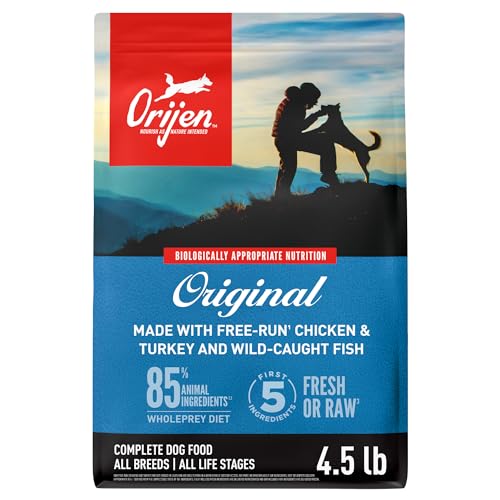
No. The risk factor appears to be legume-heavy formulations where peas and lentils are primary ingredients, not grain-free alone. Orijen Original uses 85%+ animal ingredients -- a very different profile from a food where peas and lentils appear 2nd and 3rd on the ingredient list.
My dog was diagnosed with DCM. Should I change the food?
Yes -- a 2023 UC Davis study found that 10 of 14 DCM-diagnosed dogs showed improved cardiac function after switching from grain-free to grain-inclusive food over 6 months. Switch immediately, consider taurine supplementation (500-1000mg per day in split doses), and schedule a follow-up echocardiogram in 3-6 months.
Do dogs actually need grains in their diet?
No. Dogs can thrive without grains. The concern is not the absence of grains but what replaces them. If the replacement is primarily legumes at high concentrations, that is the ingredient pattern under FDA scrutiny.
What breeds are at highest risk from grain-free diets?
Golden retrievers have shown the most consistent grain-free/taurine/DCM correlation in published studies. Doberman Pinschers, Great Danes, Irish Wolfhounds, Newfoundlands, Boxers, and Portuguese Water Dogs all have elevated baseline DCM risk and should avoid grain-free diets without a specific medical reason.
How We Chose These Products
We compare each product’s Amazon listing, the manufacturer’s published specifications and Amazon customer ratings, shown with their review counts as Amazon’s data, and rank the products on how well they answer this page’s question. We do not test products in hand and we do not run our own analysis of review text. A publication or expert is named only where we cite its published findings about that product. No manufacturer paid for placement on this page.
A price appears only when Amazon’s API supplied it at a recent daily refresh, with the date and time beside it, and is withdrawn at 4 AM Central on the day after it turns 24 hours old; otherwise use “Check price on Amazon” for the live price.
Read our full methodology →
Product prices and availability are accurate as of the date/time indicated and are subject to change. Any price and availability information displayed on Amazon at the time of purchase will apply to the purchase of this product. Prices appear on this site only when Amazon’s API supplied them at a recent daily refresh, with the date and time beside them; each is withdrawn at 4 AM Central on the day after it turns 24 hours old. Certain content that appears on this site comes from Amazon. This content is provided “as is” and is subject to change or removal at any time.
 Photo by Rafael Rodrigues / Pexels