How to Choose a Cat Tree in 2026: Buyer's Guide
For most cats under 12 pounds, any stable 4 to 5 foot cat tree with sisal-wrapped posts and a large top perch works well. For cats over 15 pounds or multi-cat households, base width, platform size, and post thickness become critical. A wobbly cat tree will be abandoned immediately regardless of how nice it looks.
How to Choose a Cat Tree Buying Guide
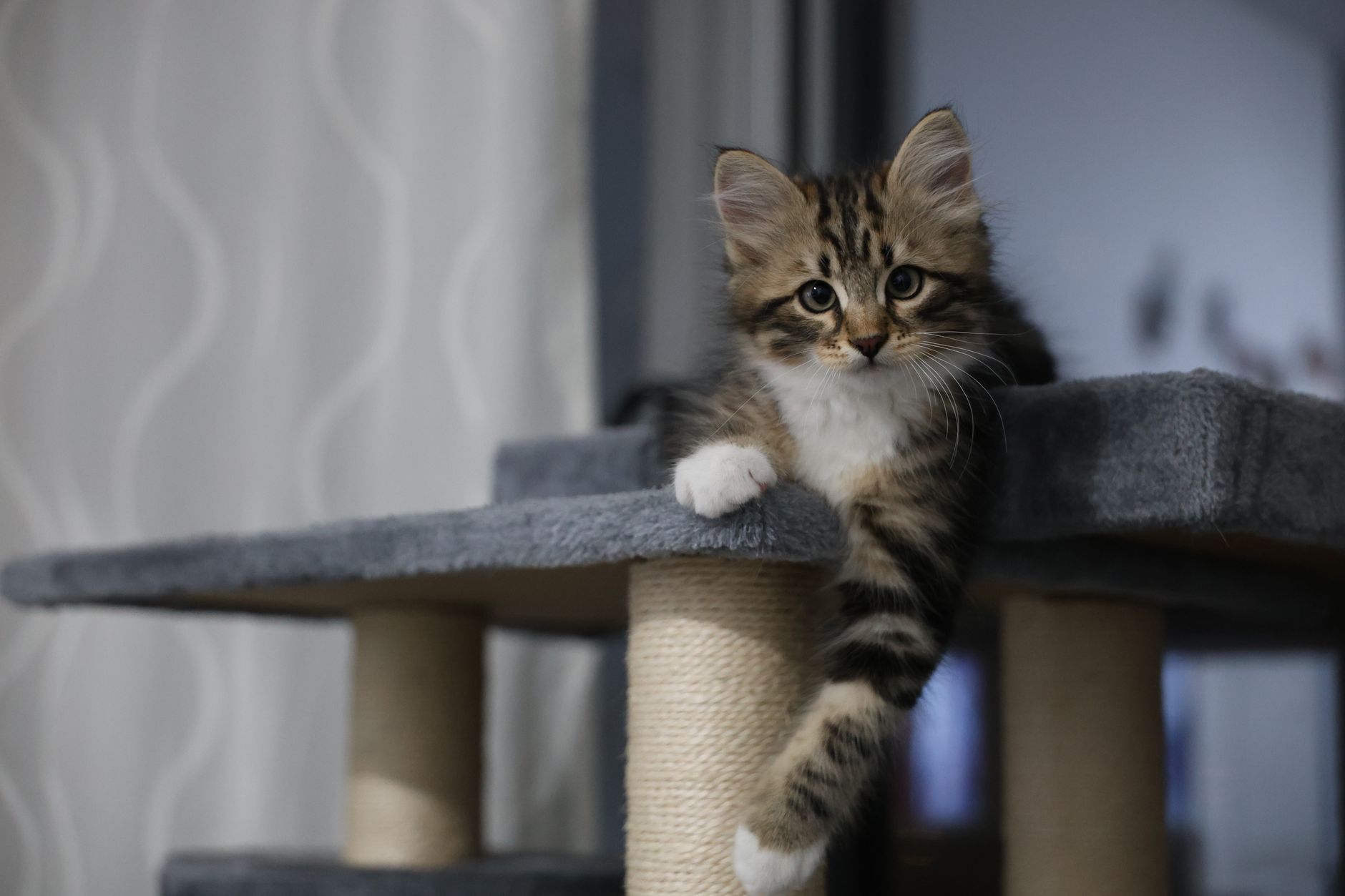 Photo by Yz ZZZ / Pexels
The most common reason cats ignore expensive cat trees is instability. A cat tree that sways when jumped onto or tilted when a cat shifts weight on the top perch triggers the cat instinct to avoid unstable surfaces. Cats test furniture before committing weight to it — if the tree moves, they will not return. Stability is determined by base dimensions relative to total height, post thickness, and platform attachment method. A 5-foot cat tree needs a base of at least 16 by 16 inches to remain stable with a 12-pound cat jumping onto the top perch from a distance.
Height and Perch Configuration
Cats prefer elevated positions that give them a view of the room and a sense of security. A top perch at 4 to 6 feet suits most home environments and allows cats to observe from above human activity without being overhead on fixtures. Trees over 6 feet require ceiling clearance and are preferred in multi-cat households where vertical territory separation reduces conflict. Perch configuration matters as much as height: multiple intermediate platforms give cats routes to climb rather than requiring a single leap to the top, which is important for older cats or cats with mobility limitations. Enclosed condos (the box-shaped hideaways) on mid-level platforms give cats a concealed resting space, which many cats prefer to open platforms for sleeping. Our best cat trees rates height and perch configuration by household type. For large breeds, see best cat trees for large cats.
Stability: Base, Posts, and Weight Capacity
Base dimensions are the primary stability factor. Measure the tree base and compare it to the total height. As a rule, the base should be at least one quarter of the total tree height on each side. A 5-foot tree should have a base of at least 15 inches on each side. Wider and heavier bases are better. Look for bases with anti-tip floor attachment options (bracket or furniture anchor strap), which are especially important in earthquake-prone regions or multi-cat homes where tree rocking is more likely. Post thickness affects rigidity: 4-inch diameter posts are meaningfully more stable than 2.5-inch posts at equivalent height. Weight capacity ratings should exceed your heaviest cat by at least 50 percent to account for landing impact force.
Scratching Material: Sisal vs. Carpet
Sisal rope is the superior scratching surface for most cats. It provides the texture and resistance cats need for nail maintenance and the visual and tactile satisfaction of destructive behavior in a sanctioned location. Carpet-covered posts are aesthetically cleaner but teach cats that carpet is an acceptable scratching material, which can transfer to carpet floors and furniture. Sisal posts also last longer under heavy scratching use before needing replacement. Corrugated cardboard scratch pads are excellent for horizontal scratching preference (some cats prefer horizontal to vertical). The best cat trees include sisal-wrapped vertical posts and optional cardboard inserts on platforms. Scratching post height matters: the post must be tall enough for the cat to stretch fully during a scratch — for most cats, at least 28 to 32 inches of vertical scratching surface. Our best cat scratchers covers standalone options as supplements to a cat tree.
Platform Size and Sleeping Comfort

Platform size must accommodate the cat fully. A 12-pound cat curled to sleep occupies roughly a 14-inch circle. Sitting upright requires more clearance. Top perches should be at least 14 by 14 inches for a single cat to sleep comfortably, and 18 by 18 or larger for bigger cats or cats that sleep stretched out. Platforms with raised lips on the edges give cats a sense of security and prevent rolling off during sleep. Fleece or faux fur surfaces are warmer and preferred by most cats over bare particleboard. Replacement perch covers sold separately extend the life of the tree when the original covering becomes matted or odorous. For multi-cat households, ensure the tree has at least as many sleeping spots as cats, since resource competition over perches causes stress and conflict.
Assembly and Materials Quality
Most cat trees assemble with bolt-on posts and platforms using Allen key hardware. Assembly quality matters for long-term stability: loose bolts cause wobble that worsens over time. Look for trees where the main posts bolt through the base platform with lock nuts rather than screwing into a thin particle board layer that strips over time. Particleboard with laminate is standard for platforms and condos — check that the laminate is thick enough to resist scratching (cats will scratch any surface). Natural wood frames command premium pricing and provide more durability. Check assembled weight as a stability indicator: trees that weigh more after assembly typically use thicker materials throughout. Our best cat trees under $50 identifies the most stable budget options.
At a Glance
| # | Product | Award | Price |
|---|
How We Analyze Products
We analyze Amazon review data — often thousands of reviews per product — to surface patterns that individual buyers miss. Our process aggregates star ratings, review counts, and buyer sentiment at scale, identifying which strengths and weaknesses appear consistently across the largest review samples available.
Each product earned its placement through data: total review volume, average rating, and the specific praise and complaints that repeat most often across buyers. No manufacturer paid for placement on this page. Products appear here because buyers endorsed them at scale, not because a company asked us to feature them.
We use AI to summarize review sentiment — not to fabricate opinions, but to condense what thousands of buyers actually wrote into a readable format. The pros and cons you see reflect the most common themes found in verified purchaser reviews, paraphrased for clarity. We do not claim to have accessed Reddit, YouTube, or specific publications in generating these summaries.
Prices shown reflect Amazon pricing at the time this page was last generated. Click “See Today’s Price” to get the current live price on Amazon. Read our full methodology →