How to Choose a Dog Harness in 2026: Buyer's Guide
For most dogs, a back-clip step-in or over-the-head harness with adjustable chest and girth straps is the best everyday walking choice. For pullers, a front-clip or dual-clip harness redirects the dog forward and reduces pulling force effectively. Escape artists need a martingale-style harness with multiple adjustable points.
How to Choose a Dog Harness Buying Guide
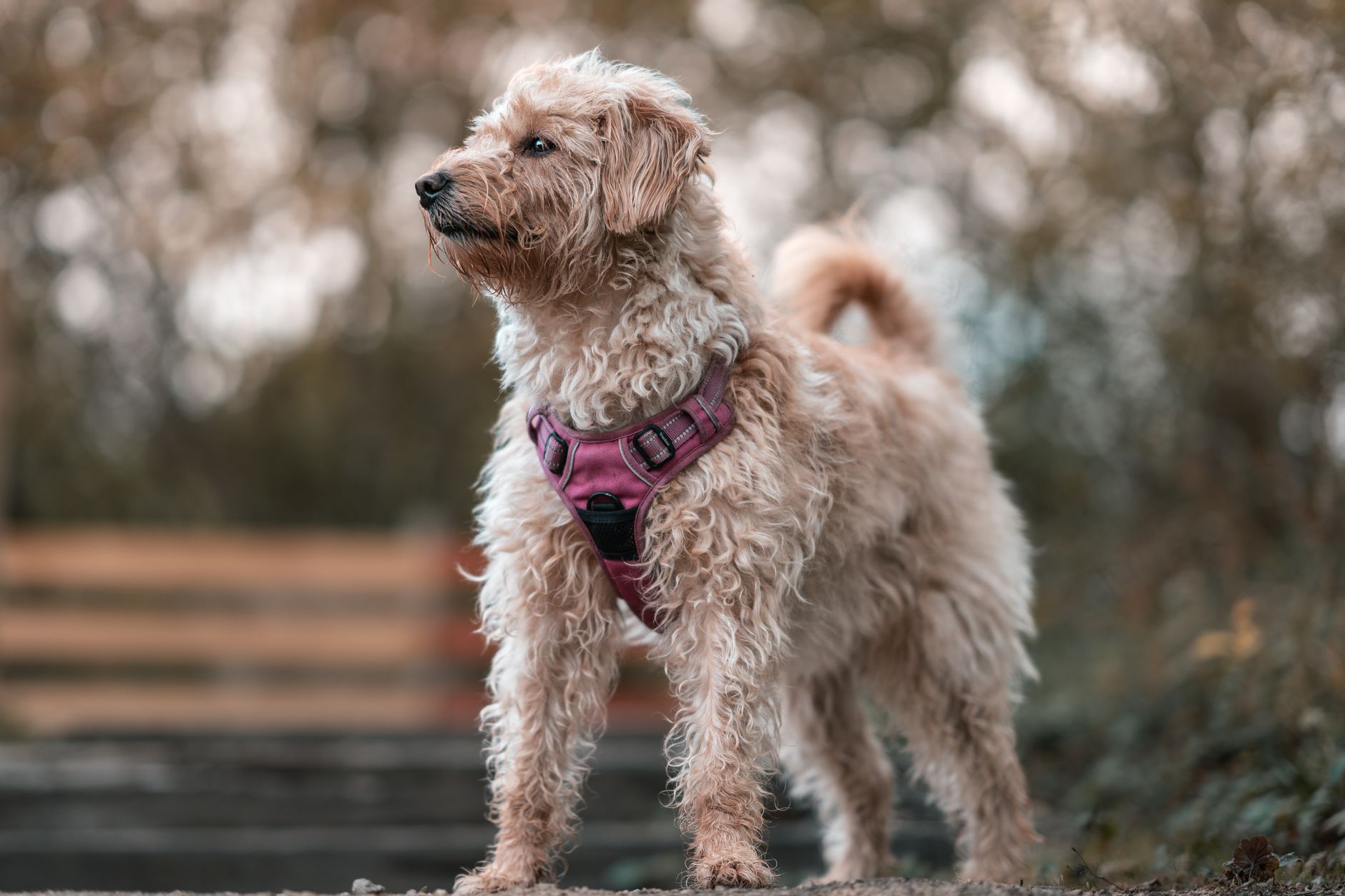 Photo by Karl Byron / Pexels
A harness works by distributing walking pressure across the chest and ribcage rather than concentrating it on the trachea and cervical spine. For dogs that pull, this is medically significant: repeated collar pressure on the trachea is linked to collapsing trachea in small breeds and eye pressure in brachycephalic (flat-faced) breeds like Pugs and French Bulldogs. Even dogs that do not pull benefit from the wider pressure distribution and the improved control a harness provides during unexpected lunges or meetings with other dogs.
Front-Clip vs. Back-Clip vs. Dual-Clip Harnesses
The attachment point determines how the harness affects walking behavior. Back-clip harnesses attach the leash to a D-ring at the middle of the back, which is comfortable and easy to use but provides no mechanical anti-pull benefit — in fact, back-clip attachment can encourage some dogs to lean into the pressure and pull harder (similar to how sled dog harnesses work). Front-clip harnesses attach the leash to a ring at the sternum, which redirects the dog toward you when they pull and naturally discourages forward lunging. Dual-clip harnesses include both rings for flexibility. For loose-leash trained dogs who walk politely, back-clip is simpler. For pullers or dogs in training, front-clip or dual-clip is the correct choice. Our best dog harnesses covers top models in each category. For strong pullers, see best harnesses for pulling dogs.
Getting the Right Fit: Measuring Your Dog

Harness fit is the most critical factor for both safety and comfort. An improperly fitted harness causes chafing, restricts shoulder movement, or allows escape. Measure your dog in three places: neck circumference (at the base of the neck where a collar sits), chest girth (the widest point behind the front legs), and the distance from the base of the neck to the base of the tail. Most harness sizing is based on girth, which is the most variable measurement. Always measure your dog and compare to the specific harness size chart rather than relying on breed or weight alone — a Labrador and a Bulldog of the same weight may need different sizes due to body proportion differences. The two-finger rule applies: you should be able to slip two fingers under any strap, but the harness should not shift significantly when the dog shakes or turns. See our best harnesses for small dogs for breeds under 20 pounds.
Step-In vs. Over-the-Head Harnesses
Step-in harnesses require the dog to step into two loops that you then clip at the back. They are quick to put on without lifting the leash over the dog head, which is useful for dogs that resist anything going over their face. However, step-in harnesses typically have fewer adjustment points and fit fewer body shapes well. Over-the-head harnesses go on like a vest — you slide the loop over the dog head, position it, and clip the chest strap. They typically offer more adjustment points and a more secure fit. Some dogs resist the over-the-head motion initially but acclimate quickly with treat reinforcement. For dogs with trauma around the head or who are difficult to handle, step-in is the more practical choice for daily use.
Padding and Material for Long Walks

For dogs walked more than 30 minutes daily, padding quality matters. Unpadded nylon straps are fine for short, casual walks but cause friction and hair loss at contact points during extended activity. Neoprene padding at the chest plate and girth strap reduces chafing significantly. Reflective stitching on straps improves visibility during dawn, dusk, and night walks — a practical safety feature for any dog walked in low-light conditions. Air mesh padding provides some cushioning while allowing heat dissipation, which matters for high-energy dogs that warm up quickly during exercise. Avoid harnesses with D-rings attached to the harness by a thin sewn loop rather than a metal anchor or reinforced webbing — these fail under pressure from strong pullers. Our dog harness comparison rates padding quality and stitching durability across tested models.
Harnesses for Specific Situations
Brachycephalic breeds (Pugs, Bulldogs, French Bulldogs, Boston Terriers) should always use a harness rather than a collar due to their compromised airway anatomy. The harness should have a wide, padded chest plate and minimal constriction around the neck. Escape-prone dogs need a harness with at least four adjustment points and consider a Martingale-style harness that tightens slightly under pressure rather than loosening. Puppies grow rapidly, so either buy a harness with wide adjustability or plan to size up every 2 to 3 months during the first year. Car harnesses are rated for crash forces and must be attached to a seatbelt loop — standard walking harnesses are not designed for crash protection and should not be used as car restraints. Our best dog leash guide pairs well with harness selection for the complete walking setup. For size-specific advice, see dog collar guide for situations where a collar is appropriate.
At a Glance
| # | Product | Award | Price |
|---|
How We Analyze Products
We analyze Amazon review data — often thousands of reviews per product — to surface patterns that individual buyers miss. Our process aggregates star ratings, review counts, and buyer sentiment at scale, identifying which strengths and weaknesses appear consistently across the largest review samples available.
Each product earned its placement through data: total review volume, average rating, and the specific praise and complaints that repeat most often across buyers. No manufacturer paid for placement on this page. Products appear here because buyers endorsed them at scale, not because a company asked us to feature them.
We use AI to summarize review sentiment — not to fabricate opinions, but to condense what thousands of buyers actually wrote into a readable format. The pros and cons you see reflect the most common themes found in verified purchaser reviews, paraphrased for clarity. We do not claim to have accessed Reddit, YouTube, or specific publications in generating these summaries.
Prices shown reflect Amazon pricing at the time this page was last generated. Click “See Today’s Price” to get the current live price on Amazon. Read our full methodology →