How to Choose Athletic Shoes by Sport 2026

The Jade Yoga Harmony Yoga Mat at $120 is the top recovery tool on this athletic training page — natural rubber provides superior grip for stretching and yoga routines that complement any sport-specific training. For sport-specific shoes: never wear running shoes for lateral sports like basketball or tennis.
See Today’s Price →At a Glance
| # | Product | Award | Price |
|---|---|---|---|
| 1 | Our Top Pick | $114.95 Buy → |
|
| 2 |  TriggerPoint Grid 1.0 Foam Roller… TriggerPoint Grid 1.0 Foam Roller…TRIGGERPOINT |
Worth Considering | $39.95 Buy → |
| 3 | Worth Considering | $99.99 Buy → |
How to Choose Athletic Shoes by Sport Buying Guide
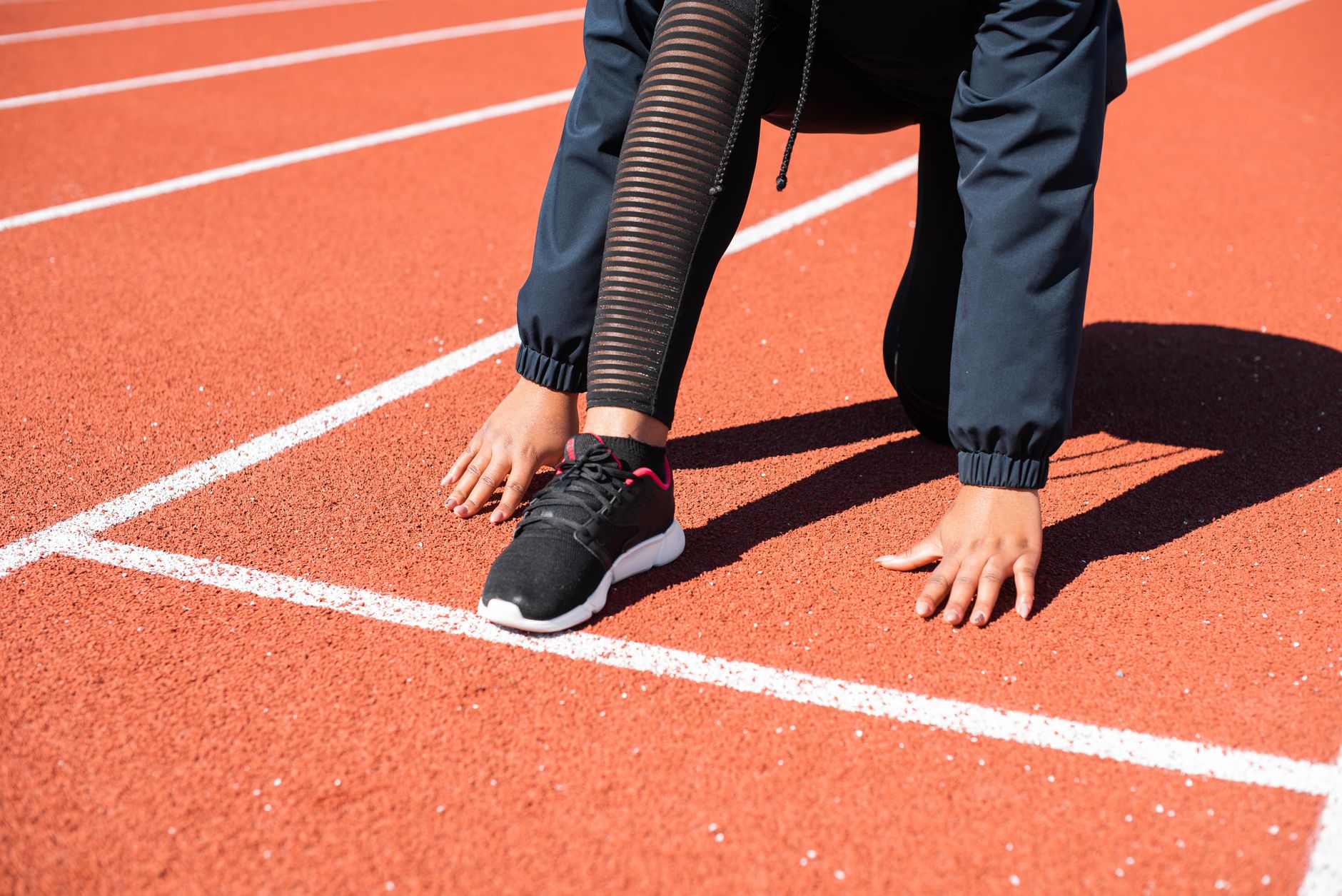 Photo by Mikhail Nilov / Pexels
Athletic shoes are engineered for specific biomechanical demands. A running shoe optimizes for forward propulsion with efficient heel-to-toe energy transfer over thousands of repetitive strides. A basketball shoe optimizes for the opposite: quick lateral cuts, hard stops, and ankle support during contact. Using one for the other's purpose doesn't just reduce performance — it increases injury risk in specific, predictable ways.
Why Sport-Specific Shoes Matter
The midsole, outsole pattern, and upper construction of an athletic shoe are engineered around the forces of a specific sport. Running creates repetitive linear loading — you need cushioning and energy return. Basketball creates lateral shear forces at the ankle — you need a wide base, reinforced lateral walls, and a sticky herringbone outsole. Weightlifting requires ground contact stability — you need a flat, incompressible sole that doesn't compress under load. A shoe compromising between these demands does none of them well, which is why "cross-trainer" describes a marketing category, not an engineering achievement.
Running Shoes
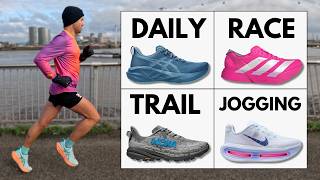
Running shoes divide by gait type: neutral (for neutral pronation), stability (for mild overpronation, with a medial post), and motion control (for severe overpronation, with rigid structure throughout). Heel drop affects Achilles loading: 8-12mm suits heel strikers; 0-4mm suits forefoot strikers. Stack height above 40mm (maximalist shoes like Hoka Bondi) measurably reduces peak impact forces per stride. Getting these dimensions wrong causes injury over hundreds of miles — gait analysis at a specialty running store takes 15 minutes and costs nothing; it should precede every running shoe purchase.
Court Shoes for Basketball, Tennis, and Pickleball
Court shoes have a wide, flat base for lateral cut stability — the opposite of a running shoe's curved last and thick heel. Reinforced lateral walls prevent ankle rolling during direction changes; the outsole uses herringbone patterns optimized for hard court grip, not forward propulsion. Wearing a running shoe on court creates instability during lateral cuts because the curved last and thick heel compress sideways, reducing control and increasing sprain risk. The fastest-growing sport using the wrong footwear: pickleball players wearing running shoes on hard courts, causing the lateral ankle sprains that specialty pickleball shoes would prevent.
Gym and Weightlifting Footwear
Flat is correct for strength training. Converse Chuck Taylor All Stars (15mm heel, essentially flat) are a legitimate powerlifting shoe because they provide stable, incompressible ground contact under heavy load. Zero-drop training shoes (Vivobarefoot, Merrell Vapor Glove) work similarly. Olympic weightlifting shoes have a 0.75-1 inch raised heel that allows greater ankle dorsiflexion in the catch position of the clean and jerk — relevant only if you're performing Olympic lifts. Never squat or deadlift in a cushioned running shoe; the compressible foam creates progressive instability as load increases and can cause knee tracking problems under heavy weight.
Yoga and Studio Training
Barefoot or minimal grip sole is best for yoga — you need toe splay, ground feel, and foot-to-mat grip that shoes eliminate. Toe socks with individual toe pockets (ToeSox, Injinji) provide hygiene benefits with barefoot-like ground feel. For studio fitness classes (aerobics, dance fitness), a low-profile cross-training shoe with a pivot point on the ball of the foot allows turning without catching the outsole. A Jade or Ewedoos yoga mat with a textured surface provides the grip that makes barefoot yoga functional — pair the right mat with the right footwear for each activity.
Cleats and Outdoor Sports
Cleats divide by ground condition: firm ground (FG) cleats have longer, fewer studs for natural grass; soft ground (SG) cleats have replaceable metal studs for wet, soft grass; artificial turf (AG/TF) cleats have many shorter rubber nubs for synthetic surfaces. Wearing FG cleats on turf is the most common cleat error — longer studs catch in turf fibers, creating rotational torque that strains the knee and ankle. Soccer position affects cleat preference: speed positions favor a low-cut for ankle mobility; defensive positions and goalkeepers often prefer mid-cut for additional ankle support during contact.
“The Jade Yoga Harmony Mat ($120) uses natural rubber tapped from rubber trees for superior grip over PVC — it holds even when sweaty — and is made in the USA with a tree planted for every mat sold.…”
See Today’s Price →Read Full Analysis
Jade Yoga's Harmony Mat at $120 uses natural rubber tapped from rubber trees — the material choice that separates it from PVC and TPE alternatives in grip performance when hands and feet become sweaty mid-practice. Natural rubber provides tactile friction that synthetic materials can't match in wet conditions, the critical failure point in flow yoga where downward dog becomes a slide without it. Wirecutter and Yoga Journal's top overall mat pick; Jade also plants a tree for every mat sold. The 3/16-inch thickness (approximately 4.75mm) is a deliberate performance trade-off: thinner than cushioned mats to create a stable platform during balancing poses where a soft surface introduces instability. At 5 lbs, the Harmony is heavier than most foam or PVC mats — a real consideration for practitioners who carry their mat to a studio. The strong rubber smell fades over weeks of outdoor airing but is noticeable out of the box. This is the right yoga mat for serious practitioners who prioritize grip in dynamic or moderately heated classes and can handle the weight. Skip it if you practice hot yoga above 100°F — natural rubber degrades at those temperatures — or if a lightweight travel mat is the priority; the Harmony's 5-lb construction is built for studio permanence, not portability.
“The TriggerPoint GRID Foam Roller ($27.69) uses a patent-pending GRID surface to mimic massage therapist finger, palm, and thumb pressure for targeted deep tissue release. Its hollow EVA core is…”
See Today’s Price →What we like
- Patent-pending GRID mimics massage therapist pressure
- Hollow EVA core maintains shape for years
- Firm density penetrates deep tissue
- 13-inch optimal length
- Tested to 500 lbs
Watch out for
- Firm density intense for beginners
- Does not cover full back
- Premium price vs basic smooth rollers
Read Full Analysis
TriggerPoint's GRID Foam Roller at $39.95 uses a patent-pending three-dimensional surface — varying widths and densities across the grid pattern — to simulate the varied pressure of a massage therapist's finger, palm, and thumb against muscle tissue. Unlike smooth-surface rollers that apply uniform pressure, the GRID creates targeted contact points that penetrate the IT band, quads, and calves more specifically. The hollow EVA core is tested to 500 lbs and maintains its cylindrical shape through years of bodyweight rolling that collapses cheaper closed-cell foam rollers over time. At $38.36, the GRID is priced above basic smooth rollers in the $10–20 range. The 13-inch length covers key lower-body muscle groups without the bulk of longer rollers, and the firm density is both the primary performance feature and the most common complaint from new users — beginners transitioning from softer rollers frequently find the pressure intensity uncomfortable until their tissue adapts over several weeks. This is the right foam roller for athletes with established self-myofascial release habits who want targeted deep-tissue release rather than general surface massage. Skip it if you're new to foam rolling — start with a softer surface roller and progress to the TriggerPoint GRID once your body acclimates; the firm density is a performance feature that reads as excessive pain to untrained tissue.
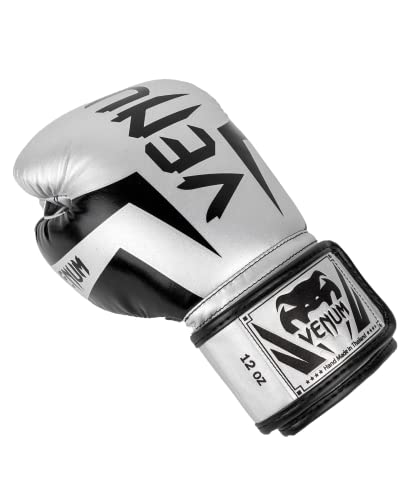
“The Venum Elite Boxing Gloves ($99.99) use Skintex leather that resists cracking far longer than PU alternatives, backed by best-in-class multi-layer foam padding and triple-stitched seams built for…”
See Today’s Price →What we like
- Skintex leather resists cracking far longer than PU
- Best-in-class multi-layer foam padding
- Triple-stitched seams hold under heavy use
Watch out for
- $100 price point hard to justify for casual use
Read Full Analysis
Venum's Elite Boxing Gloves at $99.99 are built around Skintex leather — a synthetic that resists cracking and surface degradation significantly longer than the PU leather used in most mid-range boxing gloves. The multi-layer foam padding distributes impact across the hand and wrist during heavy bag work and sparring, maintaining its protective shape over extended training volume rather than compressing flat after months of use. Triple-stitched seams at stress points are the construction detail most lower-cost gloves omit and feel first when they begin to fail. At $99.99, the Venum Elite sits above recreational gloves in the $30–60 range and below competition-level gloves above $150. The Skintex leather and construction quality make the price rational for athletes who train three or more sessions per week and need a glove that holds up for a year or more without seam failure or padding breakdown across that volume. This is the right boxing glove for serious trainees who bag-work and spar regularly and need durable construction that survives high-frequency weekly use. Skip it if you train casually a few times a month — at that volume, a $40–60 PU glove will outlast your training hours without the $99.99 investment; the Venum Elite's premium construction justifies itself under sustained heavy use, not casual sessions.
Frequently Asked Questions
Should I rotate athletic shoes?
When should I replace athletic shoes?
Do I need orthotics or insoles?
What about wide feet?
Budget vs premium athletic shoes — is the price worth it?
How long should I break in new athletic shoes?
How We Analyze Products
We analyze Amazon review data — often thousands of reviews per product — to surface patterns that individual buyers miss. Our process aggregates star ratings, review counts, and buyer sentiment at scale, identifying which strengths and weaknesses appear consistently across the largest review samples available. The 37,982+ reviews analyzed on this page represent real verified-purchase feedback from Amazon buyers.
Each product earned its placement through data: total review volume, average rating, and the specific praise and complaints that repeat most often across buyers. No manufacturer paid for placement on this page. Products appear here because buyers endorsed them at scale, not because a company asked us to feature them.
We use AI to summarize review sentiment — not to fabricate opinions, but to condense what thousands of buyers actually wrote into a readable format. The pros and cons you see reflect the most common themes found in verified purchaser reviews, paraphrased for clarity. We do not claim to have accessed Reddit, YouTube, or specific publications in generating these summaries.
Prices shown reflect Amazon pricing at the time this page was last generated. Click “See Today’s Price” to get the current live price on Amazon. Read our full methodology →