Best Badminton Shuttlecocks 2026: Feather & Nylon
Nylon shuttlecocks (EAGLES, kunli Nylon) are the right choice for most recreational and backyard players — they last 3-5x longer than feather shuttles and perform consistently in outdoor conditions. Duck feather shuttlecocks (kunli Duck Feather) are the choice for club players and competitive matches who want authentic flight feel and are playing indoors where feathers aren't destroyed by wind. For night play, the HIRALIY LED shuttlecocks are a fun alternative to standard nylon.
Badminton Shuttlecocks Buying Guide
 Photo by Lisa A / Pexels
## How to Choose Badminton Shuttlecocks
Shuttlecocks (or "birdies") come in two fundamentally different types — feather and nylon — with completely different flight characteristics, durability, and appropriate use cases. Choosing the wrong type for your playing situation leads to either frustrating durability issues (feather outdoors) or incorrect flight feel (nylon for competitive play).
This is the most important choice you'll make when buying shuttlecocks:

Feather shuttlecocks use 16 real goose or duck feathers attached to a cork base. They produce the authentic spinning deceleration flight pattern that competitive badminton is designed around — the initial speed off the racket is high, then the shuttle decelerates rapidly near the opponent. This characteristic makes advanced shots (smashes, drops, clears) perform the way badminton technique is designed to exploit. Feather shuttles are fragile — expect 1-3 games per shuttle in competitive play, and they deteriorate rapidly if exposed to wind or humidity.
Nylon shuttlecocks use a synthetic skirt (either nylon or plastic) attached to a cork or foam base. They're far more durable (10-20 games per shuttle is common) and perform consistently in wind and outdoor conditions. The flight trajectory is slightly different from feather — slightly flatter and faster at the same swing speed — but for recreational play, this difference is unimportant. Most players learning badminton should use nylon exclusively until they're playing at a club level.
EAGLES Nylon Shuttlecocks: Best Budget Option

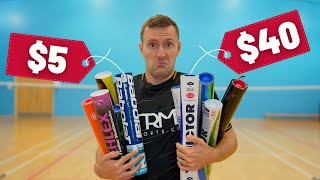
The EAGLES 24-pack at $6.85 is the best value for casual and recreational players. The nylon skirt construction provides consistent flight and excellent durability for backyard and gym play. The 24-pack quantity means you have plenty on hand for extended sessions, and the per-shuttle cost is low enough that damaged ones aren't a source of frustration. These are appropriate for anyone playing recreationally, in physical education settings, or introducing children to the sport.
kunli Nylon Shuttlecocks: Best Recreational Nylon
The kunli nylon 12-pack provides a step up in consistency and flight feel versus generic nylon shuttlecocks. The aerodynamic profile more closely mimics feather shuttle flight, which makes it useful for players who occasionally play with feather shuttles at clubs and want to practice at home with something closer to the real thing. The 16-piece nylon skirt design produces a rounder, more consistent flight path than simpler nylon designs.

kunli Duck Feather Shuttlecocks: Best for Club Play

Duck feather shuttlecocks provide flight characteristics between goose feather (tournament standard) and nylon — making them the right choice for serious recreational players and club players who want authentic badminton feel without the cost of goose feather shuttles. The cork base transmits realistic impact feel, and the duck feather flight pattern gives you proper deceleration for practicing drops and net shots. Store these in a humidor or humidity box to prevent the feathers from drying out and splitting — feather shuttles degrade faster in dry environments.
HIRALIY LED Shuttlecocks: Best for Night Play
The HIRALIY LED shuttlecocks have a light-up design that makes them highly visible in low-light conditions — backyard play at dusk, indoor gyms with poor lighting, or evening recreational games. They use a nylon skirt with an LED base that activates on impact. The flight characteristics are similar to standard nylon shuttles. These aren't designed for competitive play but are a genuinely fun option for extending your playing season into evening hours.
Badminton shuttlecocks come in different speed ratings (typically 76-79 for feather, equivalent designations for nylon). Speed is determined by air density — thinner air at altitude requires a faster shuttle, denser air at sea level requires a slower shuttle:
- Speed 76 (slow): Best for hot, humid, or high-altitude locations
- Speed 77 (medium-slow): For warm weather and moderate altitude
- Speed 78 (medium): Standard for sea-level, room temperature conditions
- Speed 79 (fast): For cold weather or high-altitude play
Most recreational players in standard indoor or temperate outdoor conditions should use Speed 77 or 78.
What to Look For When Buying Shuttlecocks
Playing surface: Outdoor play → nylon only. Indoor gymnasium → either, though nylon is standard for recreational play. Indoor competitive → feather required for official tournament standards. Skill level: Beginners and recreational players → nylon. Club and competitive players → feather. Budget: Nylon is 3-5x cheaper per session than feather. For casual players, there's no reason to use feather. Pack size: For recreational play, buy in bulk (12-24 packs). Individual feather shuttles are consumed quickly in competitive play, so larger packs are more economical.The EAGLES 24-pack at $6.85 ($0.29 per shuttle) is the best cost-per-use for recreational players — these will last many sessions. The kunli duck feather at $30.99/12 ($2.58 per shuttle) is consumed much faster but delivers authentic feel for serious players. For most readers of this guide, nylon shuttlecocks are the correct choice — feather shuttles are a meaningful investment only when your technique has advanced to the point where the flight difference is perceptible and strategically useful.
At a Glance
| # | Product | Award | Price | Our Score | |
|---|---|---|---|---|---|
| 1 |  EAGLES Nylon Badminton Shuttlecocks Sta… EAGLES Nylon Badminton Shuttlecocks Sta… |
Best Overall | $9 | 9.2 | Buy → |
| 2 |  kunli Nylon Badminton Shuttlecocks 12-Pack kunli Nylon Badminton Shuttlecocks 12-Pack |
Best Nylon Quality | $23 | 8.9 | Buy → |
| 3 |  kunli Duck Feather Badminton Shuttlecoc… kunli Duck Feather Badminton Shuttlecoc… |
Best Feather Feel | $30 | 8.5 | Buy → |
| 4 |  HIRALIY LED Glow-in-the-Dark Badminton … HIRALIY LED Glow-in-the-Dark Badminton … |
Best for Night Play | $9 | 8.2 | Buy → |
Showing 4 of 4 products
EAGLES Nylon Badminton Shuttlecocks Stable and Durable 24-Pack
“EAGLES 24-pack nylon shuttlecocks are the bulk buy for schools, recreation centers, and families who go through shuttles quickly — the per-shuttle cost is the key advantage over smaller packs.”
See Today’s Price →
kunli Nylon Badminton Shuttlecocks 12-Pack
“Kunli nylon shuttlecocks are the practical buy for backyard and gym badminton — nylon construction lasts significantly longer than feather shuttles in recreational play conditions.”
See Today’s Price →
kunli Duck Feather Badminton Shuttlecocks 12-Pack
“Kunli duck feather shuttlecocks provide the authentic badminton flight path that nylon alternatives approximate but can't replicate — useful for players training for competitive play who need accurate”
See Today’s Price →
HIRALIY LED Glow-in-the-Dark Badminton Shuttlecocks
“LED badminton shuttlecocks solve the visibility problem for evening outdoor play — the glow effect makes tracking easy in low light and the novelty factor makes them ideal for casual fun rather than s”
See Today’s Price →Frequently Asked Questions
What's the difference between feather and nylon shuttlecocks?
How many shuttlecocks do I need for a game?
Can I use badminton shuttlecocks outdoors?
What speed shuttlecock should I use?
How do I store feather shuttlecocks?
How We Analyze Products
We analyze Amazon review data — often thousands of reviews per product — to surface patterns that individual buyers miss. Our process aggregates star ratings, review counts, and buyer sentiment at scale, identifying which strengths and weaknesses appear consistently across the largest review samples available. The 2,246+ reviews analyzed on this page represent real verified-purchase feedback from Amazon buyers.
Each product earned its placement through data: total review volume, average rating, and the specific praise and complaints that repeat most often across buyers. No manufacturer paid for placement on this page. Products appear here because buyers endorsed them at scale, not because a company asked us to feature them.
We use AI to summarize review sentiment — not to fabricate opinions, but to condense what thousands of buyers actually wrote into a readable format. The pros and cons you see reflect the most common themes found in verified purchaser reviews, paraphrased for clarity. We do not claim to have accessed Reddit, YouTube, or specific publications in generating these summaries.
Prices shown reflect Amazon pricing at the time this page was last generated. Click “See Today’s Price” to get the current live price on Amazon. Read our full methodology →