Best Foam Rollers Under $30 (2026)

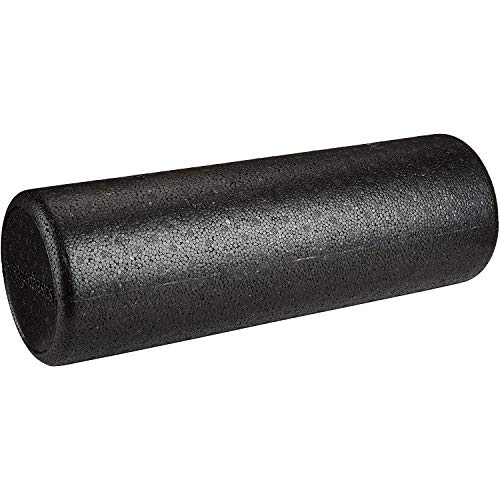
The Amazon Basics High-Density Foam Roller ($15) is firm enough for effective myofascial release and holds its shape over years of use — the best no-frills recovery tool under $20.
See Today’s Price →At a Glance

Showing 3 of 3 products
Amazon Basics High-Density Round Foam Roller 18-Inch
“Best value foam roller — high-density solid foam at a price where you can get a second one for work and home.”
See Today’s Price →What we like
- High-density foam holds its shape significantly better than soft foam
- Standard 18" length covers all major muscle groups
- Multiple color/size options available
- Under $22 — low commitment for first-time foam rollers
Watch out for
- Will eventually compress over 12-18 months of daily use
- No texture — uniform pressure less targeted than GRID
- Basic aesthetics
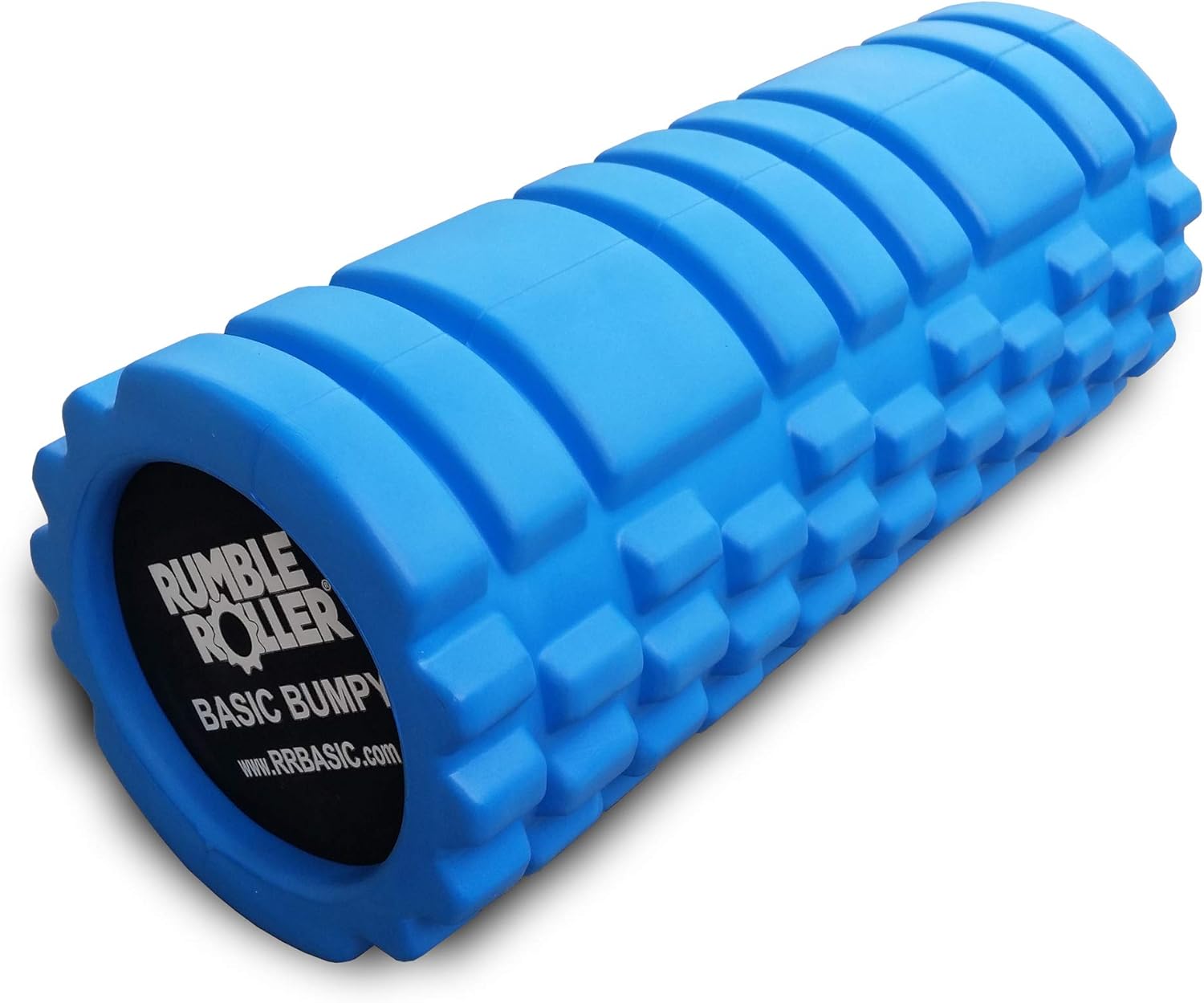
RumbleRoller Basic Bumpy Foam Roller Deep Tissue
“The intermediate option — softer bumps than the full RumbleRoller, more targeted than flat foam, good for transitioning to textured rolling.”
See Today’s Price →What we like
- Softer bump profile than full-size RumbleRoller — less intense
- More targeted than smooth rollers
- Available in multiple lengths
- Good durability
Watch out for
- Less intense than the full RumbleRoller — won't satisfy advanced users
- More expensive than flat foam alternatives
- Bumps may be too soft for users seeking deep trigger point release
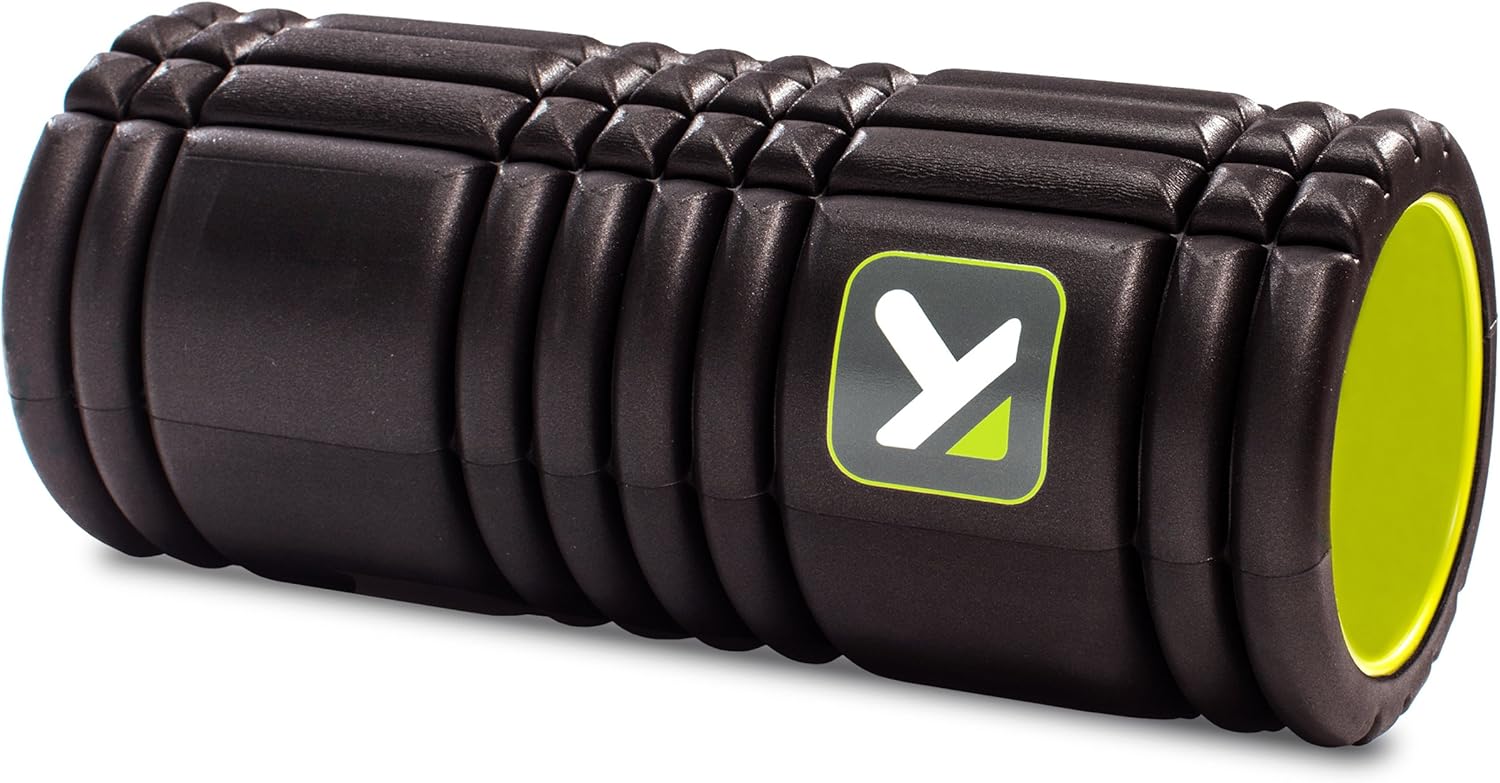
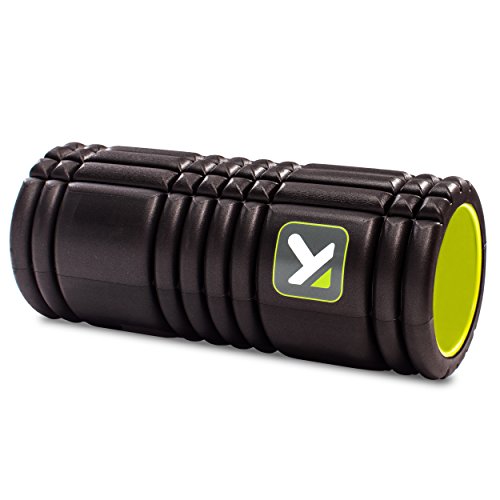
TriggerPoint GRID Foam Roller Original 13-inch
“The gold standard for deep tissue foam rolling. The multi-density grid surface — firm ridges, medium ridges, and flat zones — genuinely outperforms flat rollers for targeting specific muscles and ”
See Today’s Price →What we like
- Multi-density GRID surface mimics massage therapist technique
- 52,000+ reviews — most trusted roller
- Hollow core for extra firmness
- Includes exercise guide
- Used by professional sports teams
Watch out for
- More expensive than basic flat rollers
- GRID surface less comfortable for beginners
Foam Rollers Under $30 (2026) Buying Guide
 Photo by www.kaboompics.com / Pexels
Foam rolling is the most accessible self-myofascial release technique available — and it works. Research supports regular foam rolling for reduced muscle soreness after exercise, improved range of motion, and decreased perceived tightness in muscle groups prone to injury. At $15–$28, a foam roller is one of the most cost-effective recovery investments in fitness.
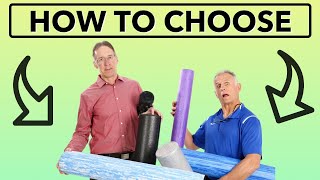
- Density: Low-density (white) foam is too soft to provide effective pressure on most adults — it compresses fully under body weight. High-density (black) foam maintains pressure contact with the target tissue. All three picks on this list use high-density construction.
- Texture: Smooth rollers provide even, broad pressure across muscle groups. Textured or bumpy rollers (like the RumbleRoller) simulate thumbs and fingertips pressing into specific trigger points. Textured rollers are more intense and better for experienced users with tight specific muscle groups. Smooth rollers are the right starting point.
- Length: 18-inch rollers are the most versatile — long enough for back rolling and IT band work, short enough for portability. 12-inch rollers are more portable but require more positioning adjustments for full back coverage. 36-inch rollers are ideal for thoracic spine work but not portable.
- Shape: Round cylinders are standard. Half-round rollers provide a gentler pressure point and can be used flat-side down as balance tools. For foam rolling recovery purposes, round cylinders are the correct form.
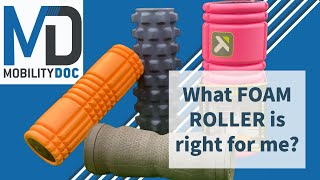
Premium foam rollers ($40–$120) add vibration motors (electric vibration accelerates recovery by stimulating blood flow), specialized EVA foam patterns, and hollow cores for reduced weight. Research on vibration rollers shows modest additional benefit over standard rolling — enough to justify the cost for serious athletes, not for recreational use. For most users, a $15 high-density roller delivers equivalent outcomes to a $120 vibrating alternative.
Watch Before You Buy
Frequently Asked Questions
Does foam rolling actually work?
How firm should a foam roller be?
How long should I foam roll?
What is the difference between smooth and textured foam rollers?
Can I foam roll every day?
How We Analyze Products
We analyze Amazon review data — often thousands of reviews per product — to surface patterns that individual buyers miss. Our process aggregates star ratings, review counts, and buyer sentiment at scale, identifying which strengths and weaknesses appear consistently across the largest review samples available. The 166,058+ reviews analyzed on this page represent real verified-purchase feedback from Amazon buyers.
Each product earned its placement through data: total review volume, average rating, and the specific praise and complaints that repeat most often across buyers. No manufacturer paid for placement on this page. Products appear here because buyers endorsed them at scale, not because a company asked us to feature them.
We use AI to summarize review sentiment — not to fabricate opinions, but to condense what thousands of buyers actually wrote into a readable format. The pros and cons you see reflect the most common themes found in verified purchaser reviews, paraphrased for clarity. We do not claim to have accessed Reddit, YouTube, or specific publications in generating these summaries.
Prices shown reflect Amazon pricing at the time this page was last generated. Click “See Today’s Price” to get the current live price on Amazon. Read our full methodology →