Best Foam Rollers for Back (2026)
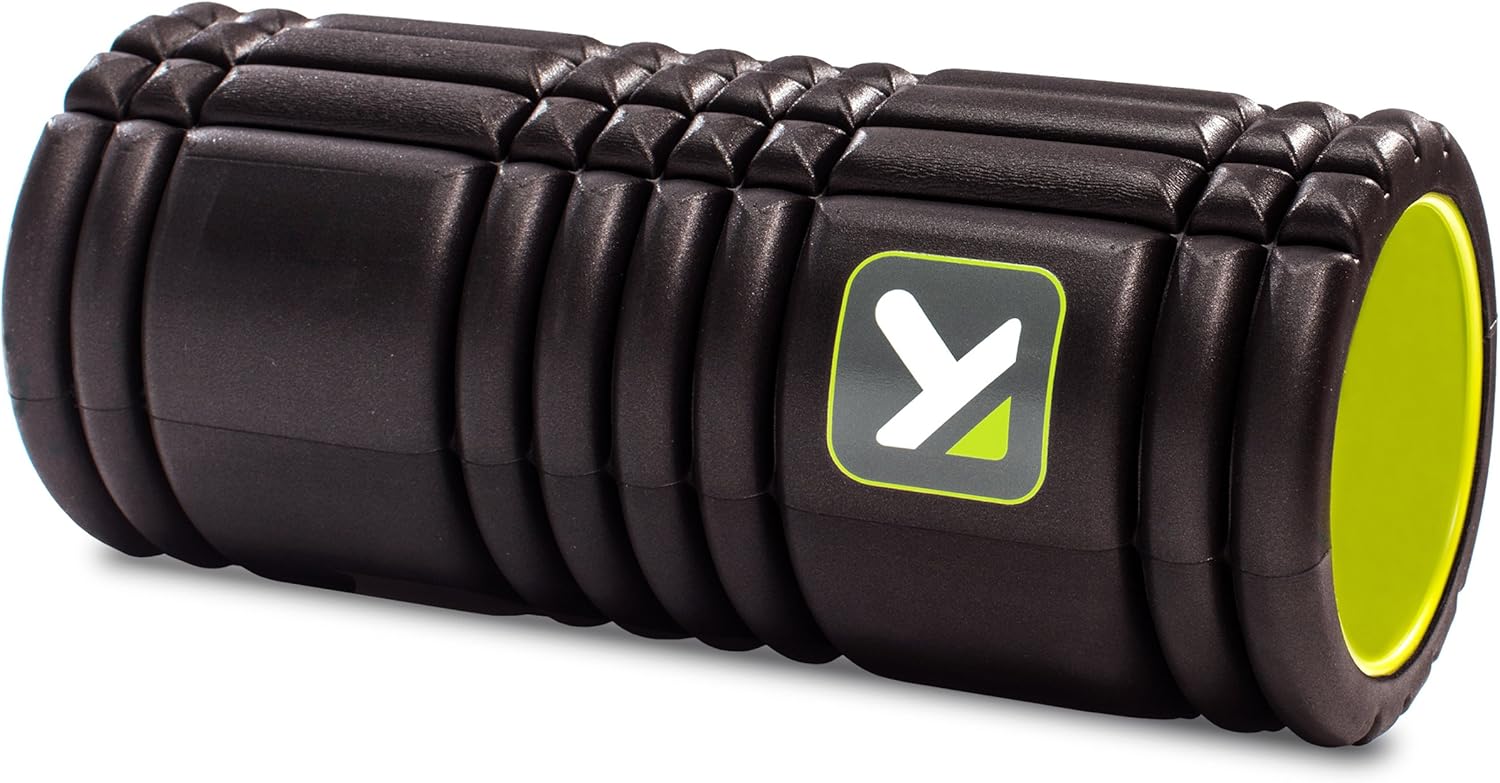
The TriggerPoint GRID Foam Roller is our top pick for its multi-density surface pattern that targets knots. For a vibrating foam roller that provides deeper muscle release, the Hyperice Vyper 2.0 is the best premium option.
See Today’s Price →At a Glance

Showing 3 of 3 products
TriggerPoint GRID Foam Roller Original 13-inch
“The gold standard for deep tissue foam rolling. The multi-density grid surface — firm ridges, medium ridges, and flat zones — genuinely outperforms flat rollers for targeting specific muscles and ”
See Today’s Price →What we like
- Multi-density GRID surface mimics massage therapist technique
- 52,000+ reviews — most trusted roller
- Hollow core for extra firmness
- Includes exercise guide
- Used by professional sports teams
Watch out for
- More expensive than basic flat rollers
- GRID surface less comfortable for beginners
Read Full Analysis
For back rolling specifically, the TriggerPoint GRID's 13-inch length requires some discussion. The thoracic spine — upper and mid-back — benefits from a roller long enough that you can rest both shoulder blades on it simultaneously and extend over it to mobilize each vertebral segment. At 13 inches, the GRID accommodates most shoulder widths for thoracic work, but users with broader builds may find the Amazon Basics 18-inch more comfortable for that technique. Where the GRID excels for back use is targeting the erector spinae and paraspinal muscles: the multi-density surface creates varied pressure that helps locate and release localized knots that a smooth roller passes over without much effect. At $29.99, the TriggerPoint GRID is the right tool if thoracic stiffness and localized back tension are your primary concerns and you already understand foam rolling technique. The GRID surface does not provide the aggressive tissue disruption of the RumbleRoller, making it a better back option for most users — back muscles are close to the spine and aggressive pressure there warrants more control. For general back decompression and mobility work, it delivers a more targeted experience than any smooth roller on this page.

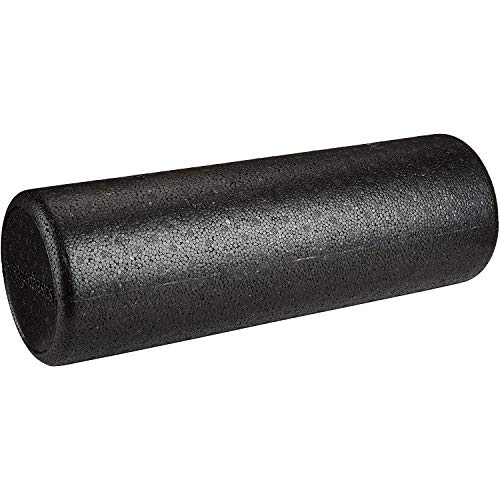
Amazon Basics High-Density Round Foam Roller 18-Inch
“Best value foam roller — high-density solid foam at a price where you can get a second one for work and home.”
See Today’s Price →What we like
- High-density foam holds its shape significantly better than soft foam
- Standard 18" length covers all major muscle groups
- Multiple color/size options available
- Under $22 — low commitment for first-time foam rollers
Watch out for
- Will eventually compress over 12-18 months of daily use
- No texture — uniform pressure less targeted than GRID
- Basic aesthetics
Read Full Analysis
For back rolling, the Amazon Basics 18-inch size is a genuine advantage over shorter rollers. The 18 x 6 x 6 inch dimensions allow both shoulder blades to rest on the roller simultaneously when you lie back across it for thoracic extension, which is the core technique for mobilizing mid-back stiffness. The firm polypropylene foam holds shape under full body weight without compressing — a hollow-core or lower-density roller that flattens defeats the purpose of thoracic extension. With 112,928 reviews at 4.6 stars, the Amazon Basics is the most validated foam roller in the world by review volume. The smooth surface is appropriate for most back rolling purposes. The lumbar spine and thoracic spine are areas where aggressive textured rollers like the RumbleRoller need careful use — the bumps can create uncomfortable pressure near vertebrae if positioning is even slightly off. The smooth surface gives you consistent, controllable compression for spinal decompression and paraspinal muscle work without the intensity management that textured rollers require. At $12.54, it is the most cost-effective way to establish a daily back mobility practice, and the 18-inch length makes it the most practical format on this page for that specific purpose.
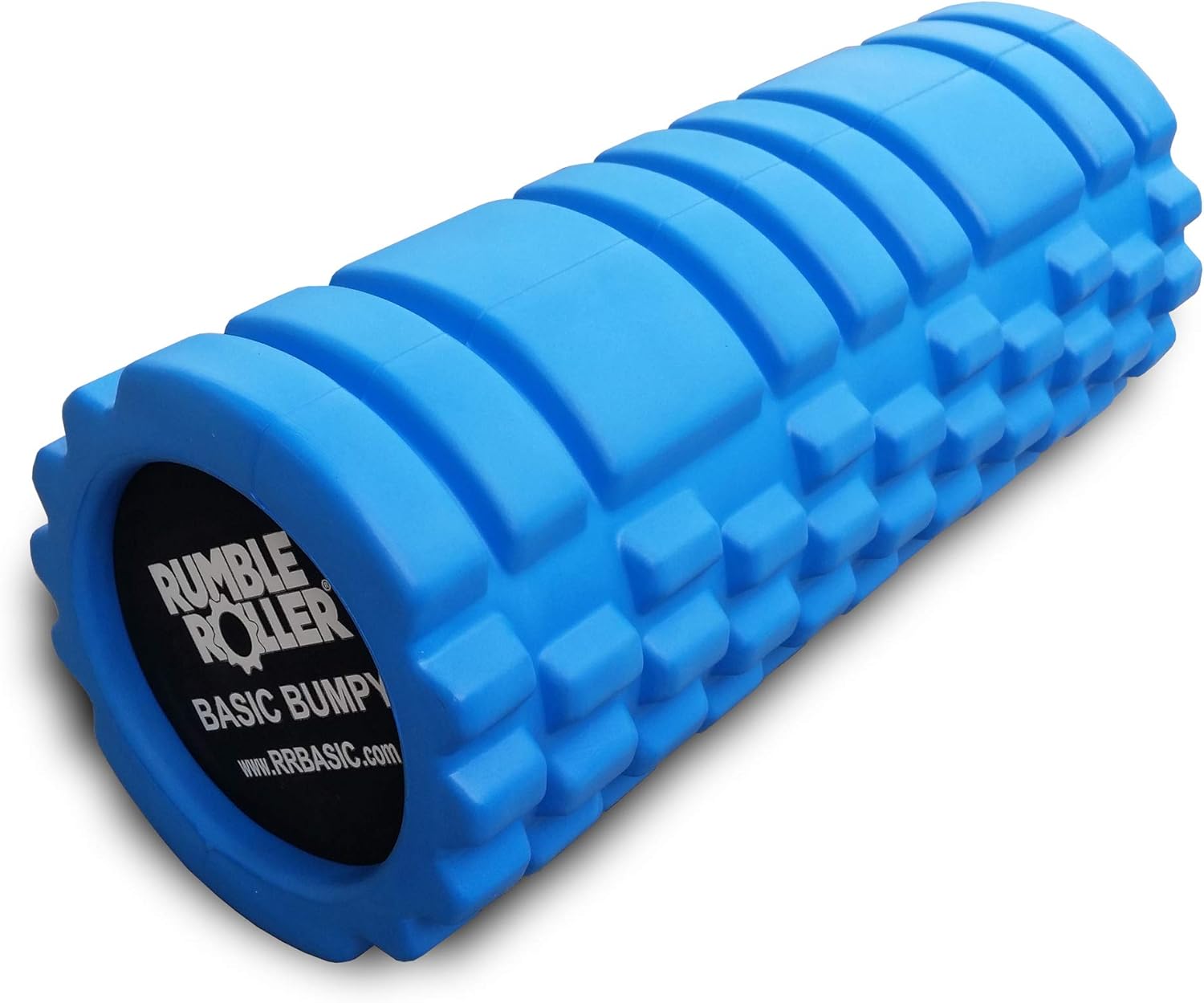
RumbleRoller Basic Bumpy Foam Roller Deep Tissue
“The intermediate option — softer bumps than the full RumbleRoller, more targeted than flat foam, good for transitioning to textured rolling.”
See Today’s Price →What we like
- Softer bump profile than full-size RumbleRoller — less intense
- More targeted than smooth rollers
- Available in multiple lengths
- Good durability
Watch out for
- Less intense than the full RumbleRoller — won't satisfy advanced users
- More expensive than flat foam alternatives
- Bumps may be too soft for users seeking deep trigger point release
Read Full Analysis
The RumbleRoller's EVA bump texture is highly effective for the erector spinae, lats, and mid-back musculature — areas where knots and adhesions from prolonged sitting or heavy lifting accumulate and resist smooth compression. The solid 3-piece core handles 300 lbs without deformation, so body weight rolling on the back produces consistent contact rather than a flattening roller that loses pressure mid-session. At 5.5 inches diameter and 13 inches long, it is compact enough to target specific spinal segments rather than the broad coverage of the 18-inch Amazon Basics. A specific caution for back use: the aggressive bump texture requires careful positioning away from the spine itself. The RumbleRoller is designed for muscle tissue, and rolling directly over vertebrae with this surface is uncomfortable and unnecessary — stay on the paraspinal muscles flanking the spine. The 13-inch length also means thoracic extension (lying back across the roller) covers less width than the Amazon Basics 18-inch, which may feel narrower for users with wider shoulders. For experienced rollers with specific upper- or mid-back muscle tension that smooth rollers have stopped addressing, the RumbleRoller at $24.00 provides the next level of tissue stimulus.
Foam Rollers for Back (2026) Buying Guide
 Photo by Ketut Subiyanto / Pexels
Great for: Athletes and gym-goers who want faster recovery, anyone with chronic muscle tightness, and desk workers with tight hips
Not ideal if: You're not exercising regularly — foam rolling addresses exercise-induced soreness and muscle tension, not general stiffness
rolling directly over the spine's vertebrae (foam rolling is for muscle tissue, not bone — always roll to the side of the spine, never directly on it), using maximum pressure as a starting point (start with bodyweight — elevate the opposite foot to reduce load, progressing to full weight only when tolerable), and rolling too fast (slow 1-inch-per-second movements are far more effective than rapid rolling — spend 60 seconds per tight area). TriggerPoint GRID 13-inch ($29.99) is the textured benchmark; Amazon Basics 18-inch ($12.54) is the smooth value option.
Budget ($10–$18): Amazon Basics High-Density 18-inch ($12.54) and LuxFit 36-inch ($17.09) — solid foam rollers adequate for regular mobility work and IT band release. Lower density than professional options but still effective for daily stretching. Mid-range ($20–$40): TriggerPoint GRID Original 13-inch ($29.99) and RumbleRoller Basic Bumpy ($24) — the textured surface provides trigger point pressure that smooth rollers can't replicate. The TriggerPoint is the most recommended by physical therapists. Premium ($40–$100): Hyperice Vyper vibrating foam rollers — motor-driven vibration enhances tissue penetration, reducing rolling time by 50% for equivalent myofascial release.
Recovery tools work best as part of a structured training setup — our home gym buying guide covers the full equipment stack from cardio to strength.
Quick Decision: If budget is the priority, go with the Amazon Basics High-Density Round Foam Roller 18-Inch; if you want the best overall, choose the TriggerPoint GRID Foam Roller Original 13-inch; if you need best value, the RumbleRoller Basic Bumpy Foam Roller Deep Tissue is your pick.
Watch Before You Buy
Frequently Asked Questions
Can foam rolling help back pain?
How long should you foam roll your back?
How firm should a foam roller be for back use?
Is a smooth or textured foam roller better for back muscles?
Can foam rolling replace stretching for back health?
How We Analyze Products
We analyze Amazon review data — often thousands of reviews per product — to surface patterns that individual buyers miss. Our process aggregates star ratings, review counts, and buyer sentiment at scale, identifying which strengths and weaknesses appear consistently across the largest review samples available. The 166,058+ reviews analyzed on this page represent real verified-purchase feedback from Amazon buyers.
Each product earned its placement through data: total review volume, average rating, and the specific praise and complaints that repeat most often across buyers. No manufacturer paid for placement on this page. Products appear here because buyers endorsed them at scale, not because a company asked us to feature them.
We use AI to summarize review sentiment — not to fabricate opinions, but to condense what thousands of buyers actually wrote into a readable format. The pros and cons you see reflect the most common themes found in verified purchaser reviews, paraphrased for clarity. We do not claim to have accessed Reddit, YouTube, or specific publications in generating these summaries.
Prices shown reflect Amazon pricing at the time this page was last generated. Click “See Today’s Price” to get the current live price on Amazon. Read our full methodology →