Best Home Treadmill (2026)
The NordicTrack Commercial 1750 is the best home treadmill — a 3.75 CHP motor that handles running, an iFit-connected 14-inch touchscreen, and a 10-year frame warranty that backs up its build quality.
See Today’s Price →At a Glance
Showing 4 of 4 products

NordicTrack Commercial 1750 Treadmill
“The best connected treadmill for daily runners who want guided training.”
See Today’s Price →What we like
Watch out for
Read Full Analysis
The NordicTrack Commercial 1750 is the benchmark connected treadmill for daily runners. The 3.75 CHP motor handles sustained running at high speeds without the motor strain that affects lower-powered machines during 45-60 minute sessions. The 14-inch touchscreen runs iFit, which delivers instructor-led outdoor route workouts that automatically adjust incline and speed to match the terrain — the AutoAdjust feature is the differentiator that makes guided training genuinely hands-free. Decline capability down to -3% is the spec missing from most competitors including the Sole F80, enabling downhill running simulation that loads different muscle groups. The 10-year frame warranty matches the Sole F80. The cost structure to understand: the $1,699 machine price is the entry cost; full iFit access adds $39/month or $396/year. Buyers who will not use iFit regularly should factor this into the total cost comparison — the Sole F80 at $1,499 with no subscription delivers better value for runners who prefer self-directed training. The NordicTrack is the right choice for buyers who want guided training programs and will actively use the iFit content.
Sole F80 Folding Treadmill
“The best treadmill for buyers who refuse recurring subscription fees.”
See Today’s Price →What we like
Watch out for
Read Full Analysis
The Sole F80 is the strongest no-subscription treadmill in the consumer category. The 22x60-inch belt is the widest deck available at this price — 2 inches wider than the NordicTrack 1750 and meaningfully more comfortable for runners with a natural wide stride or anyone over 6 feet. The Cushion Flex deck absorbs impact across the full belt length rather than just the center zone, which reduces knee and hip stress during long runs. The 3.5 CHP motor is rated to sustain speed for extended sessions without thermal shutdown, which budget treadmills fail at above 6.5 mph. No decline capability is the functional gap versus the NordicTrack 1750. The display is smaller and the onboard programming less sophisticated than connected competitors. At $1,499 with no recurring subscription, the Sole F80 is $200 less than the NordicTrack 1750 plus avoids $396/year in iFit fees — a meaningful financial advantage over a 5-year ownership period for buyers who prefer self-directed training. The 10-year frame warranty and Sole's US-based customer service are the reliability factors that separate it from lesser-known budget brands at lower price points.
Bowflex BXT216 Treadmill
“The best value treadmill for walkers and joggers who want variety without a subscription.”
See Today’s Price →What we like
Watch out for
Read Full Analysis
The Bowflex BXT216 at $1,199 is the value option for walkers and joggers who want a no-subscription treadmill with built-in programming variety. The 3.0 CHP motor is adequate for sustained jogging up to 8 mph but undersized for regular running at 9+ mph over 30-minute sessions — the motor runs warm and the belt speed becomes slightly inconsistent at high sustained loads. The BurnRate display shows real-time calorie burn in a format borrowed from fitness class environments, which some users find motivating. The 44 preset workouts cover interval, hill, and endurance programs without requiring any connectivity. Compared to the Sole F80 at $1,499: the F80 has a wider belt, stronger motor, and longer frame warranty — the $300 price gap is justified for regular runners. The BXT216 is the correct choice for households where the primary users are walkers and occasional joggers who want workout variety without a subscription and are not pushing the machine at high speeds.
LifeFitness T3 Treadmill
“Built to last 20+ years — the right investment for serious lifetime runners.”
See Today’s Price →What we like
Watch out for
Read Full Analysis
The Life Fitness T3 at $2,399 is commercial gym hardware in a home format — the same drive system and belt mechanics found in health club installations, rated for 20+ years of continuous heavy use. The whisper-quiet motor and belt operation are noticeably better than any consumer treadmill: at full speed the T3 produces less vibration and noise than the NordicTrack 1750 at moderate speed. The 15-year frame warranty is the strongest in the category and reflects genuine commercial build standards rather than a marketing claim. The trade-off is connectivity: the T3 lacks the touchscreen, integrated programming, and subscription fitness content that NordicTrack and Peloton provide. The console is straightforward — speed, incline, time, distance, heart rate — with no guided workouts or external app integration beyond basic Bluetooth heart rate. At $2,399 versus the NordicTrack 1750 at $1,699: you pay $700 more for build longevity and lose connected training features entirely. The Life Fitness T3 is the right investment for serious daily runners who prioritize mechanical reliability over 15+ years over the feature set of connected alternatives, and who do not want or need subscription fitness content.
Home Treadmill (2026) Buying Guide
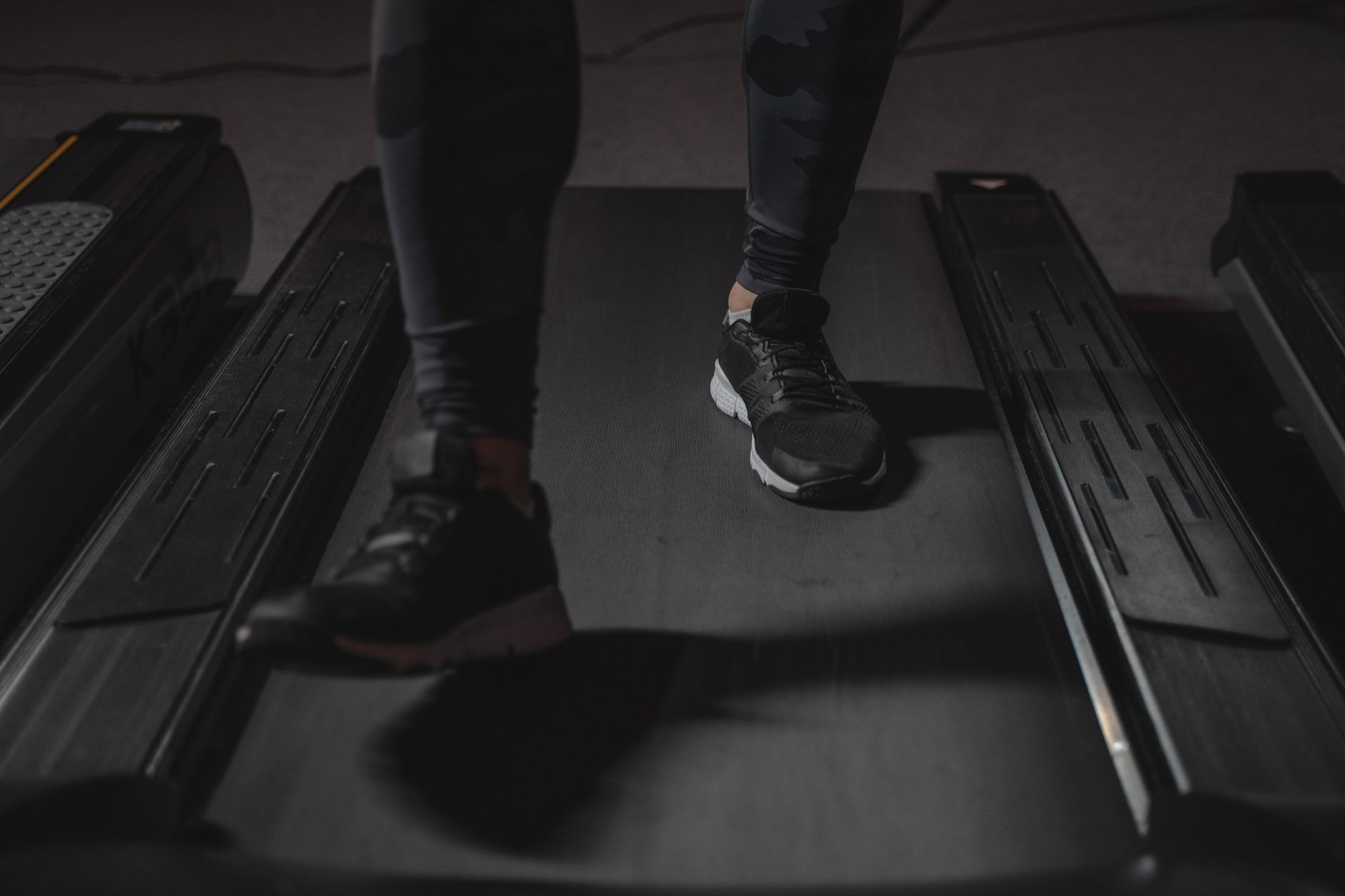 Photo by Tima Miroshnichenko / Pexels
Home treadmill motor size is the primary durability indicator — continuous horsepower (CHP) determines how the motor handles sustained load. A 2.0 CHP motor running at maximum speed generates heat that, over months, degrades the motor and belt. The correct motor sizing: 2.5 CHP minimum for walking, 3.0 CHP for jogging, 3.5+ CHP for running. Manufacturers inflate specs by listing "peak HP" rather than CHP — always look for the CHP rating, not peak.
Best Overall: NordicTrack Commercial 1750
The NordicTrack Commercial 1750 at $1,500-1,800 provides 3.75 CHP that handles running at sustained speeds without thermal stress, a -3% to 15% incline range (the decline capability is rare at this price and significantly increases the calorie burn of walking workouts), a 14-inch iFit touchscreen with live and on-demand trainer workouts, and a 10-year frame warranty indicating genuine structural confidence. iFit's AutoAdjust technology during trainer-led workouts automatically changes speed and incline to match the instructor's commands — removing the manual adjustment interruption that breaks workout flow. The 1750 stores in a standing position with the SpaceSaver folding frame. The correct choice for runners and serious walkers who use a treadmill daily.
Best Mid-Range: Sole F80
The Sole F80 at $1,300-1,600 is the most recommended non-subscription treadmill — 3.5 CHP motor, 22×60-inch belt (the widest deck in its price range, important for taller runners with longer stride), 15% incline, Cushion Flex Whisper Deck that reduces impact by 40% compared to outdoor running, and a 10.1-inch display that streams apps (Netflix, Hulu, Spotify) via Bluetooth without a subscription. The Sole F80's no-monthly-fee design is its defining advantage: the NordicTrack 1750 requires iFit ($39/month or $396/year) to access most features. For users who don't want ongoing subscription costs: the Sole F80's features are accessible without a credit card on file.
Best Budget: Bowflex BXT216
The Bowflex BXT216 at $1,100-1,300 uses a 3.0 CHP motor adequate for jogging and moderate running, a 4-inch to 15% incline range, and Bowflex's BurnRate technology that continuously adjusts speed and incline to maintain a target calorie-burn rate — a more accessible coaching model than iFit's subscription-based trainer workouts. The BXT216 includes 44 preset workouts without a subscription. For budget-conscious buyers who jog rather than run and want structured workout variety without recurring costs: the BXT216 covers the fundamentals without the premium price or subscription overhead.
The Bottom Line
NordicTrack Commercial 1750 for the best feature-complete home treadmill at $1,699. Sole F80 for the best no-subscription mid-range treadmill at $1,499. Bowflex BXT216 for the best budget option for joggers at $1,199. LifeFitness T3 for commercial-grade durability in a home setting at $2,400. Place a treadmill mat under the machine regardless of flooring type — the mat absorbs vibration that transmits to lower floors, protects flooring from belt debris, and extends belt and motor life by preventing grit infiltration.
Related Guides
Frequently Asked Questions
What speed and incline settings do I actually need on a treadmill?
How much space does a treadmill need?
What treadmill motor rating should I look for?
Is the NordicTrack Commercial 1750 worth the price?
Should I buy a treadmill or a gym membership?
How We Analyze Products
We analyze Amazon review data — often thousands of reviews per product — to surface patterns that individual buyers miss. Our process aggregates star ratings, review counts, and buyer sentiment at scale, identifying which strengths and weaknesses appear consistently across the largest review samples available.
Each product earned its placement through data: total review volume, average rating, and the specific praise and complaints that repeat most often across buyers. No manufacturer paid for placement on this page. Products appear here because buyers endorsed them at scale, not because a company asked us to feature them.
We use AI to summarize review sentiment — not to fabricate opinions, but to condense what thousands of buyers actually wrote into a readable format. The pros and cons you see reflect the most common themes found in verified purchaser reviews, paraphrased for clarity. We do not claim to have accessed Reddit, YouTube, or specific publications in generating these summaries.
Prices shown reflect Amazon pricing at the time this page was last generated. Click “See Today’s Price” to get the current live price on Amazon. Read our full methodology →