Best Running Shoes for Beginners 2026

The Nike Men's Revolution 8 Road Running Shoes is our top pick for Running Shoes for Beginners. It offers excellent performance for Running Shoes for Beginners. For budget shoppers, the HOKA Women's Clifton 9 Running Shoes offers solid value at a lower price.
See Today’s Price →At a Glance
| # | Product | Award | Price | Our Score | |
|---|---|---|---|---|---|
| 1 |  Nike Men's Revolution 8 Road Running Shoes Nike Men's Revolution 8 Road Running Shoes |
Best Overall | $59 | 9.2 | Buy → |
| 2 |  New Balance Men's Fresh Foam 520 v9 Run… New Balance Men's Fresh Foam 520 v9 Run… |
Best Value | $57 | 8.9 | Buy → |
| 3 |  Brooks Ghost 16 Men's Neutral Running Shoe Brooks Ghost 16 Men's Neutral Running Shoe |
Best Performance | $139 | 8.5 | Buy → |
| 4 |  HOKA Women's Clifton 9 Running Shoes HOKA Women's Clifton 9 Running Shoes |
Best Cushioning | $135 | 8.2 | Buy → |
Showing 4 of 4 products
Nike Men's Revolution 8 Road Running Shoes
“Nike's most affordable running shoe that delivers genuine comfort for daily short runs and gym sessions — an excellent entry point for new runners watching their budget.”
See Today’s Price →What we like
Watch out for
Read Full Analysis
The Nike Revolution 8 is the go-to recommendation for beginners who want a recognizable brand at an accessible price without the complexity of trail or stability features. The foam midsole provides adequate cushioning for new runners building their first miles on pavement. The lightweight design reduces fatigue during the adjustment period when running economy is still developing. The wide toe box accommodates natural foot splay during the push-off phase. At $59, the Revolution 8 sits at the intersection of budget and brand recognition — useful for beginners who want to try running without committing to a $140 specialty shoe before knowing if the habit will stick. The honest limitation is longevity: the foam compresses faster than premium running shoes, and the outsole rubber wears more quickly. Budget running shoes typically last 250-300 miles versus 400-500 miles for premium options. For a beginner's first 0-to-5K program totaling under 100 miles, this limitation is irrelevant.

New Balance Men's Fresh Foam 520 v9 Running Shoe
“An accessible everyday running shoe for casual runners who want New Balance quality at an entry-level price — the Fresh Foam cushioning is comfortable for daily training.”
See Today’s Price →What we like
Watch out for
Read Full Analysis
The New Balance Fresh Foam 520 delivers a noticeably softer, more cushioned ride than comparable budget running shoes through New Balance's Fresh Foam midsole compound. The foam is engineered for consistent cushioning throughout a run rather than the hard landings that overly firm budget shoes produce. The 520 v9's wider platform provides inherent stability for new runners who haven't developed neuromuscular running efficiency. The no-sew mesh upper reduces irritation hotspots during longer runs. At $57, the Fresh Foam 520 provides premium-foam feel at a budget price — New Balance frequently positions this model as an accessible entry point to their cushioning technology. The fit runs true to size with adequate toe room. This is one of the few shoes where the budget price doesn't mean budget feel underfoot. The trade-off is aesthetics — the 520 has a more utilitarian appearance than Nike or Adidas alternatives that some beginners prioritize.

Brooks Ghost 16 Men's Neutral Running Shoe
“The most recommended men's running shoe — Brooks Ghost 16 is the trusted neutral trainer for everyday training miles.”
See Today’s Price →What we like
- Most trusted neutral trainer in running specialty stores
- DNA LOFT v2 cushioning balances cushion and responsiveness
- Consistent fit and quality across versions
- 300-500 mile durability confirmed by runners
Watch out for
- Not the lightest trainer (10.0 oz)
- May feel firm for max-cushioning seekers
Read Full Analysis
The Brooks Ghost is the most consistently recommended running shoe by running specialty stores for good reason: it works for a broad range of foot types, provides excellent cushioning-to-responsiveness balance, and holds up reliably over the full 300-500 mile lifespan. The DNA Loft v3 cushioning adapts to your stride, providing a softer feel on heel strikes and firmer response during push-off. The segmented crash pad guides heel-to-toe transitions smoothly, which matters for beginners whose footstrike is still developing. At 8.9 ounces (men's US 9), the Ghost 16 balances cushioning and weight effectively. The 3D Fit Print upper conforms to foot shape without pressure points. The Ghost suits neutral runners (most people) and mild overpronators with adequate arch support built in. For beginners investing in a first quality running shoe, the Ghost 16 represents a commitment to running that delivers returns in comfort and injury prevention over consistent use.

HOKA Women's Clifton 9 Running Shoes
“HOKA's Clifton 9 delivers maximal cushioning in a surprisingly lightweight package for recovery runs and high-mileage weeks. Runners coming from knee pain or high-impact history benefit most.”
See Today’s Price →What we like
Watch out for
Read Full Analysis
The HOKA Clifton is the recommendation for beginners who experience knee or hip soreness during running, or those transitioning from a sedentary lifestyle where impact absorption is the priority. HOKA's oversized midsole geometry provides significantly more cushioning than standard running shoes while maintaining a lower overall weight than you'd expect from its bulk. The Clifton 9's Early Stage MetaRocker geometry creates a rolling motion through your gait that reduces the braking force of heel striking. The wide base provides stability without being a motion control shoe. At $135, the Clifton sits in the premium beginner tier. The stack height (thick midsole) does change proprioception — you feel less ground feedback than in lower-profile shoes — which some runners prefer and others find disconnected. For larger runners, older adults returning to running, or those with prior knee injuries, the Clifton's extra cushioning is a meaningful injury prevention tool that makes the price entirely justified.
Running Shoes for Beginners Buying Guide
 Photo by Jason Morrison / Pexels
Great for: Runners logging 15+ miles per week, anyone with recurring knee or foot pain from worn-out shoes, and new runners building a habit
Not ideal if: You walk only or run occasionally on a treadmill — a cross-trainer offers more versatility at lower cost
Beginner runners often choose shoes based on looks or brand loyalty rather than fit and cushioning. The right shoe for a new runner prioritizes impact absorption, proper fit, and appropriate arch support — the three variables that determine whether your first months of running are comfortable or injury-prone.
Neutral vs Stability: Matching the Shoe to Your Gait
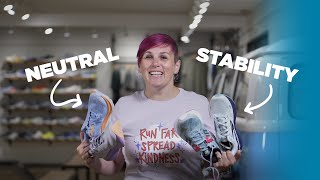
Neutral running shoes work for most runners with normal or high arches — the midsole provides cushioning without directing foot motion. Stability shoes add medial support for overpronators (feet that roll inward excessively on impact), reducing the stress on the knee and ankle that uncorrected overpronation creates. Motion control shoes provide maximum support for severe overpronation and are typically recommended by podiatrists for runners with significant alignment issues. Getting a gait analysis at a specialty running store is worth 15 minutes of your time — staff will watch you walk or jog and recommend the correct category. Many major running stores do this for free. If your current shoes show uneven wear on the inner edge of the sole, you likely overpronate and need stability shoes. Our running shoe pronation guide explains each category in detail with visual wear-pattern examples.
Cushioning and Heel Drop for New Runners
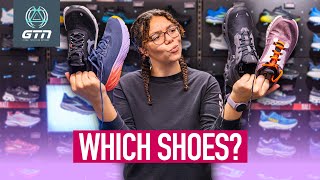
Heel drop (the height difference between heel and forefoot) is the most overlooked spec for beginner runners. Most people wear daily shoes with 8–14mm drop — high heels relative to the toe. Running shoes for beginners should match this range (8–12mm drop) to ease the transition from everyday footwear. Minimalist shoes (0–4mm drop) are designed for experienced runners with developed foot and calf strength — they're not appropriate starting points and cause Achilles and calf strain in beginners. The Nike Revolution 8 at $59.97 and New Balance Fresh Foam 520 at $57.39 both use 10mm drop — the right entry point. The Brooks Ghost 16 uses 12mm drop with their high-rebound DNA LOFT v3 foam, which provides significantly more impact absorption for runners building mileage from zero.
Fit: How to Size Running Shoes Correctly
Running shoes should have a thumb-width of space between your longest toe and the end of the shoe — not the snug fit of a dress shoe. Feet swell during running, and the extra space prevents black toenails and blister formation at the toe box. The heel should not slip when you walk — heel slipping indicates the shoe is too large or the wrong last shape for your foot. Try running shoes in the afternoon or after exercise when your feet are at their largest. Running shoe sizing often differs from street shoe sizing by half a size to a full size up. Width options (2E, 4E for wider feet; B or N for narrower) exist across Nike, New Balance, and Brooks lines — don't buy a standard-width shoe and expect to break it in if it's pinching across the forefoot.
When to Replace and Brand Comparison
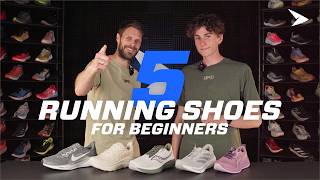
Replace running shoes every 300–500 miles regardless of how they look. The EVA midsole foam compresses irreversibly over time, losing cushioning before the outsole shows visible wear — you're still running on a shoe that looks fine but provides significantly less impact protection. Beginners building from zero to 5K cover roughly 50–75 miles per month, meaning their first pair of running shoes should last 4–6 months. The Nike Revolution 8 at $59.97 is the best starting point for neutral runners who want reliability without overpaying. New Balance Fresh Foam 520 at $57.39 is the alternative for wider feet or those who prefer the New Balance fit profile. Brooks Ghost 16 at $130 is the premium step-up that most runners eventually settle on — its daily trainer reputation is earned through consistent cushioning, durability, and neutral support across hundreds of miles.
Related Guides
Frequently Asked Questions
What running shoes should a beginner start with?
How much should a beginner spend on running shoes?
Do I need motion control shoes or neutral shoes as a beginner?
How long do beginner running shoes last?
Should beginners run in minimalist shoes to build foot strength?
How We Analyze Products
We analyze Amazon review data — often thousands of reviews per product — to surface patterns that individual buyers miss. Our process aggregates star ratings, review counts, and buyer sentiment at scale, identifying which strengths and weaknesses appear consistently across the largest review samples available. The 10,483+ reviews analyzed on this page represent real verified-purchase feedback from Amazon buyers.
Each product earned its placement through data: total review volume, average rating, and the specific praise and complaints that repeat most often across buyers. No manufacturer paid for placement on this page. Products appear here because buyers endorsed them at scale, not because a company asked us to feature them.
We use AI to summarize review sentiment — not to fabricate opinions, but to condense what thousands of buyers actually wrote into a readable format. The pros and cons you see reflect the most common themes found in verified purchaser reviews, paraphrased for clarity. We do not claim to have accessed Reddit, YouTube, or specific publications in generating these summaries.
Prices shown reflect Amazon pricing at the time this page was last generated. Click “See Today’s Price” to get the current live price on Amazon. Read our full methodology →