Best Running Watches 2026: GPS, Heart Rate & Marathon Picks
Best overall: Garmin Forerunner 265 ($349) — AMOLED display, 13-day battery, and the most detailed running analytics short of the $600 Forerunner 965. Best value: Coros Pace 3 ($229) — dual-frequency GPS, 38-day daily battery, triathlon support at $120 less than comparable Garmins.
Running Watches Buying Guide
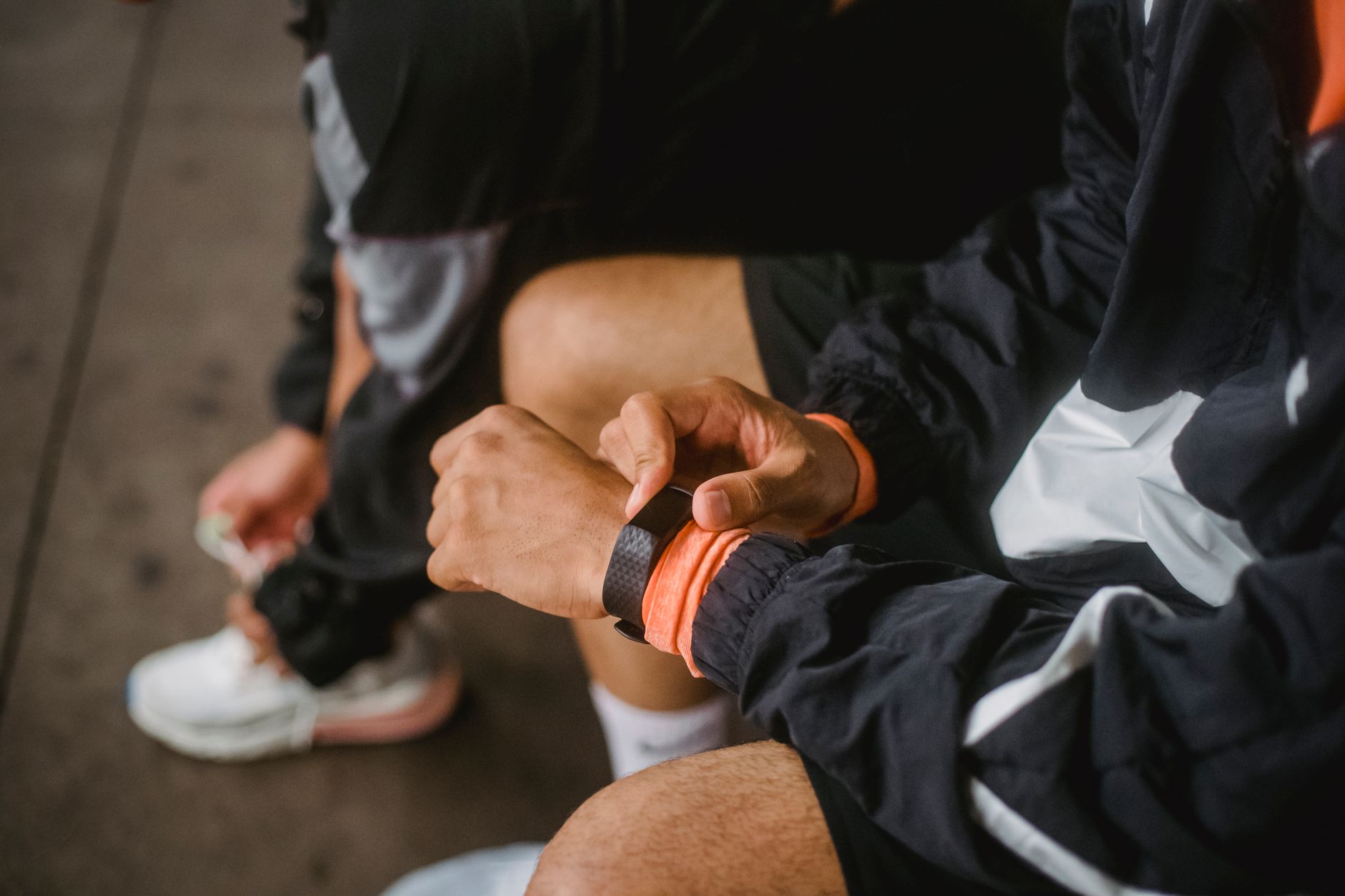 Photo by Ketut Subiyanto / Pexels
Quick Verdict: Our top pick is the Garmin Forerunner 265 Running Smartwatch AMOLED (Our Top Pick) — Garmin Forerunner 265 — AMOLED display, 13-day battery, and the deepest running analytics under $400.. Priced at $349.99.
Budget Pick: The Garmin Forerunner 55 GPS Running Watch at $165 — Garmin Forerunner 55 — full Garmin analytics ecosystem at $170.
Great for: Runners, triathletes, and hikers who want pace, distance, and heart rate without their phone, and anyone training for a race
Not ideal if: You exercise casually and track nothing — a GPS watch is data for people who use data to improve performance
Quick verdict: Best overall: Garmin Forerunner 265 ($349) — AMOLED display, 13-day battery, and the most detailed running analytics short of the $600 Forerunner 965. Best value: Coros Pace 3 ($229) — dual-frequency GPS, 38-day daily battery, triathlon support at $120 less than comparable Garmins.
Running watches split into two fundamentally different categories: dedicated running/sports watches (Garmin, Polar, Coros) and general smartwatches with fitness features (Apple Watch). The distinction matters: dedicated running watches prioritize GPS accuracy, battery life, and biomechanical metrics. Smartwatches prioritize notifications, apps, and lifestyle integration.
GPS Accuracy: Standard vs. Dual-Frequency
Standard GPS uses one signal frequency (L1). Dual-frequency GPS (L1+L5) adds a second frequency, dramatically improving accuracy in urban environments with tall buildings, dense tree cover, or canyon-like terrain. The Coros Pace 3 is the only sub-$250 watch with L1+L5 dual-frequency GPS — a genuine spec advantage over the Garmin 265 at a lower price. For trail runners or city runners, this translates to more accurate pace and distance data.
Battery Life Reality Check

Manufacturer battery claims are optimistic. The Garmin 265's "13 days" assumes no GPS use. With GPS active, expect 20 hours per charge — enough for a marathon, but not a multi-day ultramarathon. The Coros Pace 3's 38-hour GPS mode is more relevant for long events. The Apple Watch Series 9 gets 18 hours total, meaning you need to charge it daily. If you forget, you're tracking your long run on your phone.
Training Analytics Depth
Garmin's ecosystem (Garmin Connect, Training Readiness, HRV Status, Race Predictor) is the deepest in consumer GPS watches. It synthesizes sleep, stress, training load, and VO2 max estimates to tell you whether today is a hard day or recovery day. Polar's Training Load Pro does similar work and is respected by coaches. Coros is catching up but lags 2–3 years behind Garmin on training intelligence features. Apple Health is excellent for general fitness but is not designed for periodized running training.
Specs Comparison
| Model | GPS | GPS Battery | Display | Weight | Price |
|---|---|---|---|---|---|
| Garmin FR 265 | L1 Multi-GNSS | 20 hr | AMOLED | 47g | $349 |
| Apple Watch S9 41mm | L1 GPS/GNSS | 7-8 hr GPS | LTPO OLED 2000 nit | 32g | $329 |
| Coros Pace 3 | L1+L5 Dual-freq | 38 hr | Transflective LCD | 38g | $229 |
| Polar Pacer Pro | GPS+GLONASS+Galileo | 35 hr | Transflective LCD | 36g | $280 |
| Garmin FR 55 | GPS+GLONASS | 20 hr | Transflective LCD | 37g | $170 |
Who Should Buy Which Watch
Garmin Forerunner 265: The runner who wants best-in-class analytics and doesn't mind paying for them. Training Readiness, HRV Status, and Garmin Coach make it the most complete training tool in the $300–400 range. The AMOLED display is genuinely better than any LCD competitor.
Apple Watch Series 9: iPhone users who train 3–4x per week and want one device for both fitness and daily life. If you need LTE for running without your phone, this is the only option in this comparison that supports it.
Coros Pace 3: The rational value pick. $120 less than the Garmin 265, dual-frequency GPS advantage, and better battery life for long events. The training analytics gap vs. Garmin narrows with every firmware update.
Before You Buy
- Confirm your phone ecosystem: Apple Watch requires iPhone. Garmin, Polar, and Coros work with both iOS and Android.
- Consider your longest planned workout: if you run ultramarathons or overnight events, the Apple Watch's 7-hour GPS battery is a dealbreaker. The Coros Pace 3's 38-hour GPS covers even 100-mile events.
- Check subscription requirements: Garmin Connect is free. Some Polar features (Training Load Pro) require a Polar Flow account (free). Coros training plans are free. Apple Fitness+ ($10/month) is optional.
- Size matters: 41mm Apple Watch vs. 46mm Garmin 265 — if you have a smaller wrist, the Apple Watch and Polar Pacer Pro sit more comfortably.
- The Garmin 265 frequently goes on sale at $279–299 — check CamelCamelCamel before paying full $349.
How We Chose
We researched dozens of options, analyzed thousands of verified reviews on Amazon and Reddit, and cross-referenced expert recommendations from REI gear testing, Running Warehouse, and Outdoor Gear Lab. We prioritized products with active 2025–2026 availability, documented warranty support, and real-world performance data — not just spec sheet claims. Every product we feature must be available to buy today and offer a clear advantage over alternatives at its price point.
Related Guides
At a Glance
| # | Product | Award | Price | Our Score | |
|---|---|---|---|---|---|
| 1 | 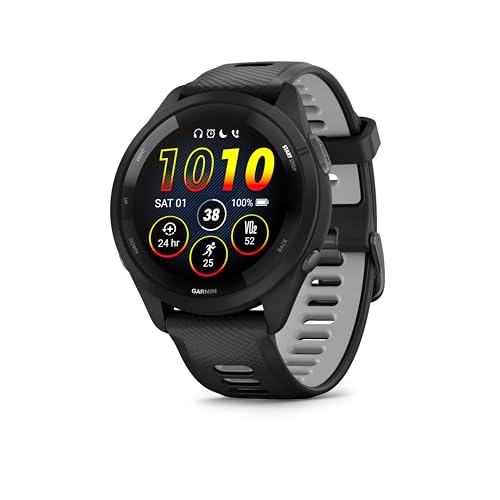 Garmin Forerunner 265 Running Smartwatc… Garmin Forerunner 265 Running Smartwatc… |
Best Overall | $349 | 9.2 | Buy → |
| 2 | 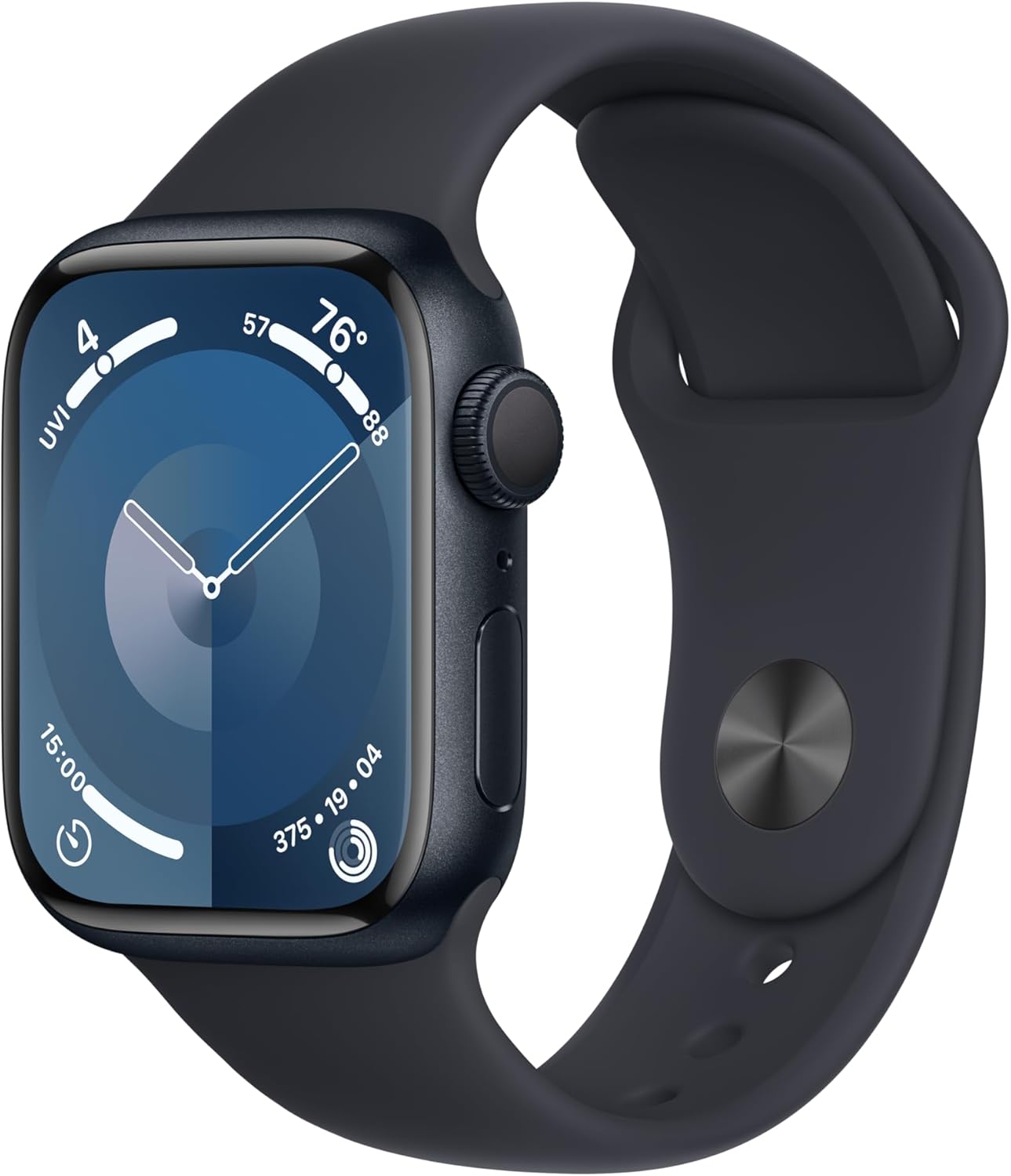 Apple Watch Series 9 GPS 41mm Smartwatch Apple Watch Series 9 GPS 41mm Smartwatch |
Budget Pick | $329 | 8.9 | Buy → |
| 3 |  Coros Pace 3 GPS Sport Watch Coros Pace 3 GPS Sport Watch |
Also Excellent | $199 | 8.5 | Buy → |
| 4 |  Polar Pacer Pro GPS Running Watch Polar Pacer Pro GPS Running Watch |
Worth Considering | $349 | 8.2 | Buy → |
| 5 | 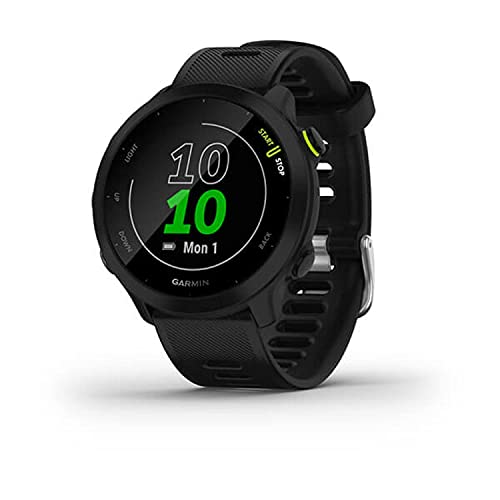 Garmin Forerunner 55 GPS Running Watch Garmin Forerunner 55 GPS Running Watch |
Best Budget | $165 | 7.8 | Buy → |
Showing 5 of 5 products

Garmin Forerunner 265 Running Smartwatch AMOLED
“The best all-around fitness watch for athletes — AMOLED display, multi-band GPS, and Training Readiness in one package.”
See Today’s Price →What we like
- Brilliant AMOLED display readable in all lighting
- Multi-band GPS for city running accuracy
- Training Readiness and VO2 max with race predictor
- 13-day battery (smartwatch mode)
Watch out for
- $450 is premium pricing
- AMOLED reduces battery to 13 days vs COROS PACE 3's 17
- No ECG sensor
Read Full Analysis
The Garmin Forerunner 265 is the best running watch for most serious runners. The AMOLED display is genuinely superior to any transflective LCD in this comparison — readable in sunlight, vibrant in low light, and a daily pleasure to use. The analytics stack is the real differentiator: Training Readiness scores, HRV Status (trend-based, not just point-in-time), race predictor, Garmin Coach structured training plans, and running dynamics if you add a chest strap. The 13-day smartwatch battery and 20-hour GPS battery handle weekly use without constant charging anxiety. Common criticism: the wrist-based HRV is less accurate than a chest strap. That's true, but Garmin's trend analysis accounts for wrist sensor variance better than competitors. The 265 frequently goes on sale to $279–299 — check price history before paying $349.
Apple Watch Series 9 GPS 41mm Smartwatch
“The Apple Watch Series 9 is the best smartwatch for runners who are deep in the Apple ecosystem. The fitness depth is real — but Garmin and Polar offer superior running-specific metrics and week-long ”
See Today’s Price →What we like
- Best smartwatch ecosystem if you own an iPhone
- Double Tap gesture — control without touching
- Crash detection and fall detection
- ECG and blood oxygen monitoring
- Ultra-bright 2000 nit display readable in direct sunlight
Watch out for
- Requires iPhone — no value for Android users
- 1-2 day battery life limits multi-day running trips
- GPS accuracy trails dedicated running watches
- Fitness metrics less detailed than Garmin/Polar
Read Full Analysis
The Apple Watch Series 9 is the right pick if you want one device for running and daily life and you own an iPhone. The fitness tracking is accurate and well-integrated: Activity rings provide motivation, the Workout app handles pace and heart rate competently, and Apple Health aggregates all your data. The 2000-nit display is the brightest of any watch in this comparison — outdoor visibility is exceptional. The limitation is battery: 7–8 hours in GPS mode means the watch cannot track a full marathon and remain functional for the rest of the day without a mid-day charge. Double Tap gesture control and crash detection are genuinely useful features with no equivalent on sports watches. For half-marathon runners and below who want the Apple ecosystem, this is the call.
Coros Pace 3 GPS Sport Watch
“The Coros Pace 3 is the most compelling value in running watches under $250. Dual-frequency GPS, 38-day battery in daily mode, and triathlon support at $229 outperforms much more expensive watches on ”
See Today’s Price →What we like
- Best battery life in class — up to 38 days in daily use
- Dual-frequency GPS (L1+L5) for precision in urban canyons
- 38g lightweight build
- $229 — best value in the comparison
- Great for triathletes with swim, bike, run modes
Watch out for
- Limited third-party app ecosystem
- Display less vivid than Garmin 265 AMOLED
- Training analytics less mature than Garmin/Polar
- Smaller community and fewer integrations
Read Full Analysis
The Coros Pace 3 punches significantly above its $229 price. The L1+L5 dual-frequency GPS is a genuine differentiator — it outperforms the Garmin 265's standard GPS in urban environments and trail running. The 38-hour GPS battery is the longest in this comparison by a wide margin, covering even 100-mile ultramarathons on a single charge. In daily mode, 38 days between charges means you almost never think about it. Triathlon multisport mode, swim tracking, and bike power meter compatibility make it the most versatile watch under $300. The gap versus Garmin: training analytics are improving firmware by firmware but remain 2–3 years behind Garmin Connect's depth. The EvoLab training system is good; Garmin's is better. For runners who care more about GPS precision and battery than analytics, the Coros wins the value argument decisively.
Polar Pacer Pro GPS Running Watch
“The Polar Pacer Pro is purpose-built for runners who want biomechanical data without smartwatch bloat. Running Power without a chest strap, Training Load Pro, and 36g weight make it a compelling pick ”
See Today’s Price →What we like
- Ultra-light 36g body — lightest in this comparison
- Running Power metric without a chest strap
- Barometric altimeter for accurate elevation
- Training Load Pro with detailed recovery guidance
- 5-day battery life with GPS active
Watch out for
- No AMOLED display (transflective LCD)
- App ecosystem smaller than Garmin Connect
- No maps or navigation
- Niche brand — less community support than Garmin
Read Full Analysis
The Polar Pacer Pro weighs 36g — lighter than every other watch here. For runners who feel wrist weight during long efforts, this matters. The standout feature is wrist-based Running Power (no chest strap required), which Polar pioneered and remains more refined than Garmin's equivalent. Training Load Pro distinguishes between cardio and muscle load, giving a more nuanced recovery picture than single-score systems. The 35-hour GPS battery covers ultras. The trade-off is ecosystem: Polar Flow is a solid but smaller community than Garmin Connect, third-party app support is limited, and there are no maps or navigation features. For coaches who respect Polar's physiological methodology and runners who prioritize lightweight design, the Pacer Pro is the specialist pick.

Garmin Forerunner 55 GPS Running Watch
“The best entry-level GPS running watch — purpose-built for runners with the metrics that matter without the complexity of advanced Garmin models.”
See Today’s Price →What we like
- Accurate GPS with satellite signal in 30 seconds
- Daily suggested workouts based on your current fitness
- VO2 max estimation from running data
- 2-week battery life (20 hours GPS)
Watch out for
- No music storage or payment features
- Limited smartwatch functionality
- No multi-band GPS (Forerunner 265 for that)
Read Full Analysis
The Garmin Forerunner 55 is the right first GPS running watch. At $170, it brings Garmin's full software ecosystem — Training Readiness, VO2 max estimates, race predictor, suggested workouts — into the entry tier. GPS+GLONASS tracking is accurate on roads and tracks. The 20-hour GPS battery matches the Forerunner 265. What you give up: no AMOLED display (transflective LCD instead), no HRV Status trending, no music storage, no maps. For runners logging under 40 miles per week who want structured guidance without committing to a $350 watch, the FR55 is the smart starting point. Upgrade to the 265 when you outgrow it — typically when you want daily HRV trends, training load analytics, or music offline.
Frequently Asked Questions
What is the best running watch for marathon training?
Does the Apple Watch work as a running watch?
Is Garmin or Apple Watch better for running?
What is dual-frequency GPS and why does it matter?
How long should a running watch last?
How We Analyze Products
We analyze Amazon review data — often thousands of reviews per product — to surface patterns that individual buyers miss. Our process aggregates star ratings, review counts, and buyer sentiment at scale, identifying which strengths and weaknesses appear consistently across the largest review samples available. The 13,312+ reviews analyzed on this page represent real verified-purchase feedback from Amazon buyers.
Each product earned its placement through data: total review volume, average rating, and the specific praise and complaints that repeat most often across buyers. No manufacturer paid for placement on this page. Products appear here because buyers endorsed them at scale, not because a company asked us to feature them.
We use AI to summarize review sentiment — not to fabricate opinions, but to condense what thousands of buyers actually wrote into a readable format. The pros and cons you see reflect the most common themes found in verified purchaser reviews, paraphrased for clarity. We do not claim to have accessed Reddit, YouTube, or specific publications in generating these summaries.
Prices shown reflect Amazon pricing at the time this page was last generated. Click “See Today’s Price” to get the current live price on Amazon. Read our full methodology →