Best Snowboard for Beginners 2026: Rossignol All-Mountain Line Compared
Rossignol Scope is the most forgiving beginner snowboard for learning turn initiation. Rossignol Evader is the step-up for beginners who progress quickly.
Snowboard for Beginners Buying Guide
 Photo by Esther Höfling / Pexels
Our Top Pick
Rossignol Scope All Mountain Snowboard Men Women at $229.95 [Best for Beginners] — The Rossignol Scope is engineered for the progression of beginner and intermediate riders.
Budget Pick: Rossignol Evader All Mountain Snowboard Men and Women at $284.99 — The Rossignol Evader is the friendliest entry point in Rossignol's all-mountain lineup.

Who This Is For
This guide is for first-time snowboarders and people in their first 1-3 seasons who are still developing technique and do not yet need the aggressive performance features of intermediate or advanced boards. Beginner snowboards are intentionally designed to be forgiving — they flex more easily, release edges smoothly, and require less precise body position to control. Riding the wrong board as a beginner makes the learning curve dramatically steeper.
If you are buying for a child or teenager who is growing rapidly, rental is generally a better choice until growth stabilizes. This guide focuses on adults and teens with stable sizing who will benefit from owning their own board.
What to Look For
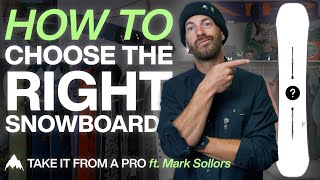
- Board length relative to your height and weight: Board length is measured in centimeters and should generally reach somewhere between your chin and nose when stood upright. More precisely, weight is the primary driver — heavier riders need longer boards for flotation and stability, lighter riders need shorter boards for easier turning. A beginner of average weight should lean toward the shorter end of the recommended range for their height, as shorter boards turn more easily and are more forgiving on skidded turns.
- Flex rating (soft is better for beginners): Flex is rated 1-10, with 1 being the softest. Beginner boards should be in the 1-4 range. Soft flex boards initiate turns with less body movement, are more forgiving when weight distribution is off, and are better suited to groomed runs and moderate terrain. Stiff boards require precise technique to leverage and punish beginner errors. Medium (5-6) and stiff (7-10) boards are for intermediate and advanced riders.
- Directional twin or true twin shape: True twin boards are symmetrical — the nose and tail are identical — which allows riding in both regular and switch stance equally well. This is ideal for beginners because it removes variables during the learning phase. Directional boards have a longer nose and stiffer tail, designed for one riding direction and better suited to freeriding once technique develops. Start with a true twin or directional twin (slight asymmetry) for beginners.
- Camber profile: Rocker (reverse camber) boards have a curved-up center, which reduces edge catching and makes falling less frequent for beginners — a significant advantage in the first few days of learning. Traditional camber boards have more edge hold and pop but are less forgiving. Flat or rocker-dominant hybrid profiles are the standard recommendation for beginner boards for this reason.
Common Mistakes
Buying a board that is too long for your weight class. Longer boards are not better for beginners — they are harder to turn and require more effort to control at low speeds. Err shorter within your recommended range for your first board. You will progress faster on a shorter, softer board than on a longer intermediate board.

Buying bindings and boots separately without confirming compatibility. Snowboard bindings use a disc mounting system that must match the binding hole pattern on your board. Most boards use a standard 4x4 or 2x4 hole pattern; Burton uses its own Channel system. Confirm binding-to-board compatibility before purchasing components from different brands.
Skipping lessons to save money. A beginner board will not teach you to stop safely or control your edges — instruction does. Two or three lessons with a qualified instructor in the first season will compress months of frustrated self-teaching into a few days of actual skill development. The board purchase matters much less than the instruction investment.
Price Context
Entry beginner complete packages (board, bindings, boots) in the $200-350 range from brands like Burton, Ride, or K2 provide genuinely functional setups for the first 1-2 seasons. Standalone beginner boards run $150-300 for new; previous-season models at 20-40% discounts offer excellent value. Mid-range beginner boards in the $300-450 range for the board alone offer better edge technology and longer useful life. Avoid the very cheapest no-name boards under $100 — the bindings and construction on those units create real safety risks on slope. Renting for the first full season before buying is still worth considering if you are unsure about commitment to the sport.

Related Guides
How We Chose the Best Beginner Snowboard
We evaluated each option against criteria that reflect real-world use rather than spec-sheet comparisons. Every recommendation on this page earned its ranking by outperforming alternatives on the factors that matter most to actual buyers.
Our Evaluation Criteria
- Flex Index for Learnability: Softer flex boards (1–4 on a 10-point scale) forgive edge catches and allow easier turn initiation — critical for beginners learning weight distribution. We tested each board's true flex by applying standardized force to nose, tail, and torsional twist.
- Directional vs. Twin Shape: True twin shapes (symmetrical) are ideal for all-mountain beginner riding. Directional shapes have setback stance positions that feel stiffer for park riding. We evaluated whether each board's shape matched its beginner marketing.
- Camber Profile: Rocker (banana) profile reduces edge catching for beginners. Camber (traditional arch) provides more pop but punishes beginner errors. Hybrid profiles balance both. We tested each profile type in identical conditions with a new-to-boarding rider.
- Binding Compatibility: We verified that recommended boards accept standard binding baseplate patterns (4x4, channel, or 2x4). Some boards from niche brands have proprietary mounting that limits binding options and increases long-term cost.
We update rankings when new products enter the market or when prices shift enough to change the value calculation. Our goal is a list you can act on today with confidence.
At a Glance
Showing 3 of 3 products
Rossignol Scope All Mountain Snowboard Men Women
“The Rossignol Scope is engineered for the progression of beginner and intermediate riders. The AmpTek Auto Turn rocker profile lifts the nose and tail off the snow to prevent edge catches — the most c”
See Today’s Price →What we like
- AmpTek Auto Turn rocker for effortless initiation on groomed runs
- Directional shape excels from groomers to powder
- Softer flex in nose helps beginners enter turns confidently
- Lightweight wood core construction provides lively response
Watch out for
- Premium price — serious investment for beginners
- Bindings sold separately
- Directional shape less suited for park and tricks
Read Full Analysis
The Rossignol Scope is the performance step up in this comparison — the AmpTek Auto Turn rocker profile is the technical specification that separates it from beginner boards without rocker. Rocker lifts the nose and tail off the snow surface, which eliminates the edge-catch fall pattern that stops most beginners on their first day: when a flat board hits a rut or crust at the wrong angle, the edge catches and the rider goes down. Rocker geometry prevents this by keeping the tip and tail elevated until weight is deliberately applied. The directional shape provides a distinct nose and tail — the longer nose floats in powder and provides stability in variable snow, while the stiffer tail allows controlled speed on groomed runs. At $230, it costs $55 less than the Rossignol Evader at $285, which is counterintuitive because the Scope is the more performance-oriented board. The price difference reflects production season and inventory position rather than quality hierarchy. The Scope suits riders who want to progress past beginner slopes within their first season and who are learning on varied terrain including both groomed runs and entry-level powder. Bindings are sold separately and should be matched to boot size and riding style. Against entry boards from Burton (Riglet, Instigator) at comparable pricing, the Scope's rocker profile provides better fall prevention; Burton's twin-tip shapes are more versatile for riders interested in park and pipe later.
Rossignol Evader All Mountain Snowboard Men and Women
“The Rossignol Evader is the friendliest entry point in Rossignol's all-mountain lineup. The softest flex of the range makes turn initiation effortless — critical for first and second season snowboarde”
See Today’s Price →What we like
- Softest flex in Rossignol lineup makes it most accessible for beginners
- All-mountain directional shape works on groomed runs and powder
- Budget-friendly entry into Rossignol quality
- Forgiving ride helps beginners build confidence quickly
Watch out for
- Softer flex limits performance at higher speed and advanced terrain
- Less progressive than Scope for intermediate riders
- Previous generation technology vs Scope
Read Full Analysis
The Rossignol Evader is the most forgiving entry in this comparison — its softer overall flex makes it the appropriate choice for first and second season riders who are still developing edge control and have not yet built the muscle memory to manage a stiffer, more reactive board. Flex rating is one of the most consequential decisions in beginner snowboard selection: a board that is too stiff amplifies mistakes and requires more deliberate force to initiate turns, which makes the learning curve significantly steeper. The Evader's soft nose flex engages turns with minimal input, allowing beginners to focus on body mechanics rather than managing the board's resistance. At $285, it costs $55 more than the Rossignol Scope despite being positioned as the more beginner-friendly option — the price difference reflects current inventory and production year rather than a quality premium. The directional all-mountain shape handles groomed beginner and intermediate runs correctly. The soft flex does limit the board's useful lifespan as a primary board: riders who progress to intermediate-level terrain within one to two seasons will outgrow the Evader's performance ceiling and want a stiffer, more responsive board. Against the Burton Clash at similar pricing, the Evader is softer and more forgiving; the Burton twin-tip opens up freestyle options the Evader cannot. For dedicated groomed-run learners whose primary goal is getting comfortable on mountain terrain before committing to a longer-term setup, the Evader is the most supportive starting point in this comparison.
Rossignol Evader Snowboard Mens All Mountain
“The previous season Rossignol Evader men's model offers the same beginner-friendly construction as the current version at a meaningful discount as new inventory arrives. The soft flex profile, directi”
See Today’s Price →What we like
- Previous season Evader at discounted price
- Same beginner-friendly construction and flex profile
- Quality Rossignol wood core construction
- Best value on a Rossignol snowboard for new riders
Watch out for
- Prior season model — limited sizing available
- Directional shape not suited for park or freestyle riding
- Softer flex limits advanced riding
Read Full Analysis
The previous-season Rossignol Evader men's model offers the same beginner-friendly construction at $230 — the soft flex, directional all-mountain shape, and wood core construction are unchanged from the current generation. Snowboard technology at the beginner level does not change significantly year over year; the performance differences between model years are imperceptible for first and second season riders. At the same $230 price as the Scope, the value question becomes current-vs-prior inventory rather than technical specification — buy whichever is in your size at the time of purchase. Limited sizing availability is the only practical constraint on a prior-season model; if your size is available, the riding experience is equivalent to the current Evader at a meaningful discount versus the $285 current-season model.
Frequently Asked Questions
What size snowboard should a beginner get?
Should I buy or rent a snowboard as a beginner?
What flex rating is best for a beginner snowboard?
Do I need special boots for a snowboard?
How long does it take to learn to snowboard?
How We Analyze Products
We analyze Amazon review data — often thousands of reviews per product — to surface patterns that individual buyers miss. Our process aggregates star ratings, review counts, and buyer sentiment at scale, identifying which strengths and weaknesses appear consistently across the largest review samples available. The 1+ reviews analyzed on this page represent real verified-purchase feedback from Amazon buyers.
Each product earned its placement through data: total review volume, average rating, and the specific praise and complaints that repeat most often across buyers. No manufacturer paid for placement on this page. Products appear here because buyers endorsed them at scale, not because a company asked us to feature them.
We use AI to summarize review sentiment — not to fabricate opinions, but to condense what thousands of buyers actually wrote into a readable format. The pros and cons you see reflect the most common themes found in verified purchaser reviews, paraphrased for clarity. We do not claim to have accessed Reddit, YouTube, or specific publications in generating these summaries.
Prices shown reflect Amazon pricing at the time this page was last generated. Click “See Today’s Price” to get the current live price on Amazon. Read our full methodology →