Best Weightlifting Belts (2026)

The Dark Iron Fitness Genuine Leather Weightlifting Belt is our top pick for Weightlifting Belts. Full 4-inch genuine leather — uniform thickness. For budget shoppers, the Element 26 Self-Locking Weightlifting Belt for Olympic Lifting offers solid value at a lower price.
See Today’s Price →At a Glance

Showing 3 of 3 products
Dark Iron Fitness Genuine Leather Weightlifting Belt
“The Dark Iron Fitness belt delivers genuine leather quality at a mid-range price. The uniform 4-inch width provides consistent lumbar support, and the double-prong buckle locks in place. Worth the bre”
See Today’s Price →What we like
- Full 4-inch genuine leather — uniform thickness
- Double-prong steel buckle for secure lock
- Tapers to 2 inches in front for comfort during squats
- Suede inner lining reduces slip
- Comes in multiple sizes — measure your waist, not pants size
Watch out for
- 2–3 week break-in period for stiff new leather — the belt feels uncomfortably rigid for the first 8–10 sessions before conforming to the torso
- Double prong takes 5–10 seconds longer to buckle than single-prong designs — relevant in timed competition or circuit training formats
- At $40, costs $15–20 more than nylon alternatives like the Harbinger 4-inch belt — the tradeoff is leather durability versus nylon compression loss over time

RDX Weightlifting Belt Genuine Leather 4 Inch
“The RDX belt is the entry point for genuine leather at under $35. The thinner leather limits its ceiling under maximum loads, but for anyone lifting under 85–90% of max regularly, it provides real sup”
See Today’s Price →What we like
- Under $35 — best price in the comparison
- Genuine leather construction
- Single-prong steel buckle
- 4-inch uniform width
- Good starter belt for beginners
Watch out for
- Thinner leather than Dark Iron or Inzer
- Break-in period still required
- Buckle quality inconsistent between units
- Not competition-legal

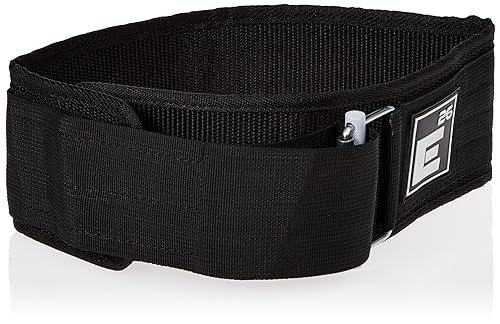
Element 26 Self-Locking Weightlifting Belt for Olympic Lifting
“The preferred belt for Olympic weightlifting and functional fitness — stays secure during overhead movements without restricting hip mobility. Top choice for CrossFit athletes and Olympic lifters.”
See Today’s Price →Weightlifting Belts (2026) Buying Guide
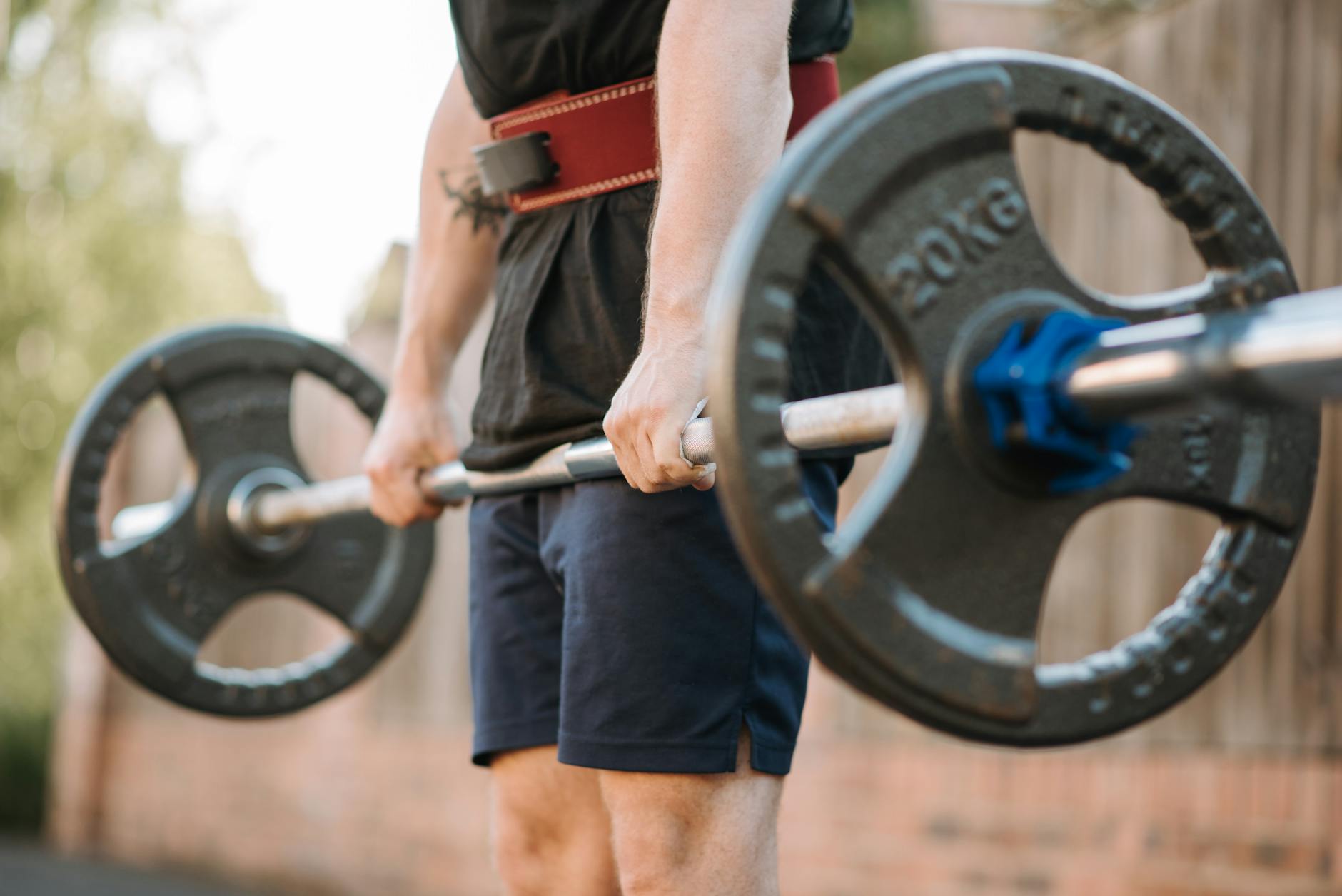 Photo by Anete Lusina / Pexels
Belt Types and When to Use Each
Powerlifting belts are uniform 4 inches wide all the way around, providing maximum lumbar support for heavy deadlifts and squats. Tapered belts narrow in the front (2-3 inches) and widen in the back (4 inches), which suits Olympic lifters and CrossFit athletes who need repeated forward bends. Lever belts use a hinged mechanism that is fast to tighten and loosen between sets, but require a screwdriver to change the fit for different users. Prong belts use a standard buckle that is slower to close but allows incremental sizing adjustments without tools.
Leather vs. Nylon: Break-In and Longevity
Genuine leather belts like the Dark Iron Fitness require a 4-6 week break-in period before they conform to your torso. The leather feels stiff early on. After break-in, a quality leather belt maintains its rigidity for years and outlasts multiple nylon alternatives. Nylon belts with Velcro closures have no break-in period and are comfortable immediately, but the hook-and-loop wears out over time and eventually fails to hold under maximum loads. For recreational lifters training 2-3 days per week, nylon is adequate. For anyone regularly training above 80% of their max, leather is the correct long-term choice at $39.99.
How to Size a Weightlifting Belt
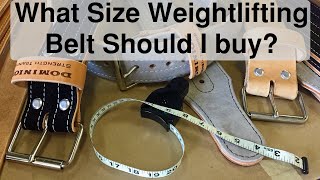
Measure your waist at the navel, not your pants waistband. A lifting belt is worn higher on the torso than pants. Most manufacturers size belts using S/M/L/XL based on this measurement. For a correct fit, slide two fingers under the belt when buckled: tight enough to brace against during a lift, not so tight that it prevents a full breath. When sizing a lever belt, be precise because there is no buckle adjustment. When sizing a prong belt, you have a few inches of flexibility across the range.
When You Need a Belt at All
Belts are not a substitute for a strong core. Most coaches recommend building a base of beltless strength before adding a belt. A belt improves intra-abdominal pressure on heavy compound lifts: squats, deadlifts, and heavy Romanian deadlifts. It adds little benefit on isolation exercises. Begin using a belt when training at 85-90% of your one-rep max on compound movements. Wearing a belt on every exercise, including light warm-up sets, reduces your core development over time. The Dark Iron Fitness leather belt is appropriate for intermediate lifters who have been training seriously for 1-2 years and are starting to push heavier loads on the big three lifts.
Watch Before You Buy
Frequently Asked Questions
When should I use a weightlifting belt?
What size weightlifting belt should I get?
What should I look for when buying weightlifting belts?
How much should I expect to spend on weightlifting belts?
How long do weightlifting belts typically last?
How We Analyze Products
We analyze Amazon review data — often thousands of reviews per product — to surface patterns that individual buyers miss. Our process aggregates star ratings, review counts, and buyer sentiment at scale, identifying which strengths and weaknesses appear consistently across the largest review samples available. The 30,300+ reviews analyzed on this page represent real verified-purchase feedback from Amazon buyers.
Each product earned its placement through data: total review volume, average rating, and the specific praise and complaints that repeat most often across buyers. No manufacturer paid for placement on this page. Products appear here because buyers endorsed them at scale, not because a company asked us to feature them.
We use AI to summarize review sentiment — not to fabricate opinions, but to condense what thousands of buyers actually wrote into a readable format. The pros and cons you see reflect the most common themes found in verified purchaser reviews, paraphrased for clarity. We do not claim to have accessed Reddit, YouTube, or specific publications in generating these summaries.
Prices shown reflect Amazon pricing at the time this page was last generated. Click “See Today’s Price” to get the current live price on Amazon. Read our full methodology →