Best Yoga Blocks Under $20 2026: Foam & Cork Picks

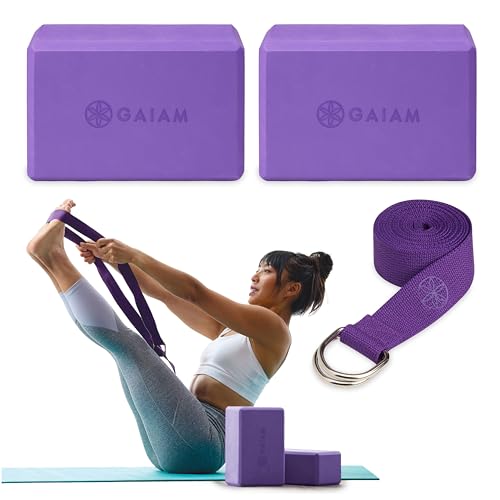
The Gaiam Yoga Block (id:13207) is the best single-block pick — supportive EVA foam with beveled edges for alignment cues, a non-slip surface, and the trusted Gaiam brand at $16.
See Today’s Price →At a Glance


Showing 3 of 3 products
Gaiam Yoga Block Latex-Free EVA Foam Non-Slip Beveled Edges
“A reliable standard yoga block from a trusted brand. Buy two for a complete set — pairs with any level of practice from beginner restorative sessions to advanced alignment work.”
See Today’s Price →What we like
Watch out for
- Single block only — restorative and yin yoga poses (supported fish, reclining bound angle, legs-up-the-wall) require two blocks; buying one requires a second purchase before completing a standard class sequence
- Firm EVA foam transmits more pressure to sensitive bony areas (sacrum, ribs) than softer-density blocks like the Manduka Foam Block at $18 — experienced practitioners generally prefer the firmer density, but beginners may find it uncomfortable
- Available in approximately 6 solid colors — no cork-finish option; cork blocks from Manduka or Hugger Mugger provide better grip on sweaty hands during heated yoga classes
Read Full Analysis
The Gaiam Yoga Block is the best single-block pick in the under-$20 category and consistently appears on recommended gear lists from yoga studios and instructors. Made from supportive latex-free EVA foam, it provides firm enough support for standing balance poses while offering enough give for comfortable restorative setups. The beveled edges along all four long sides serve dual purposes: they provide a clear visual reference for hand and foot placement alignment, and they eliminate the sharp 90-degree corners that can dig into palms during extended holds. The non-slip surface texture performs well on both yoga mats and bare floors, staying put even during vigorous flow sequences. Dimensions are 9 x 6 x 4 inches — the standard yoga block size compatible with all mainstream yoga styles. At $16, you are paying for the Gaiam name and the quality consistency that comes with it: density is uniform across the block, edges are cleanly finished, and the foam holds its shape over extended use without significant compression. The trade-off: at $16 for one block, the per-block cost is higher than the 2-pack options below. If you need two blocks, the Trideer 2-pack may be a better value depending on your practice style.
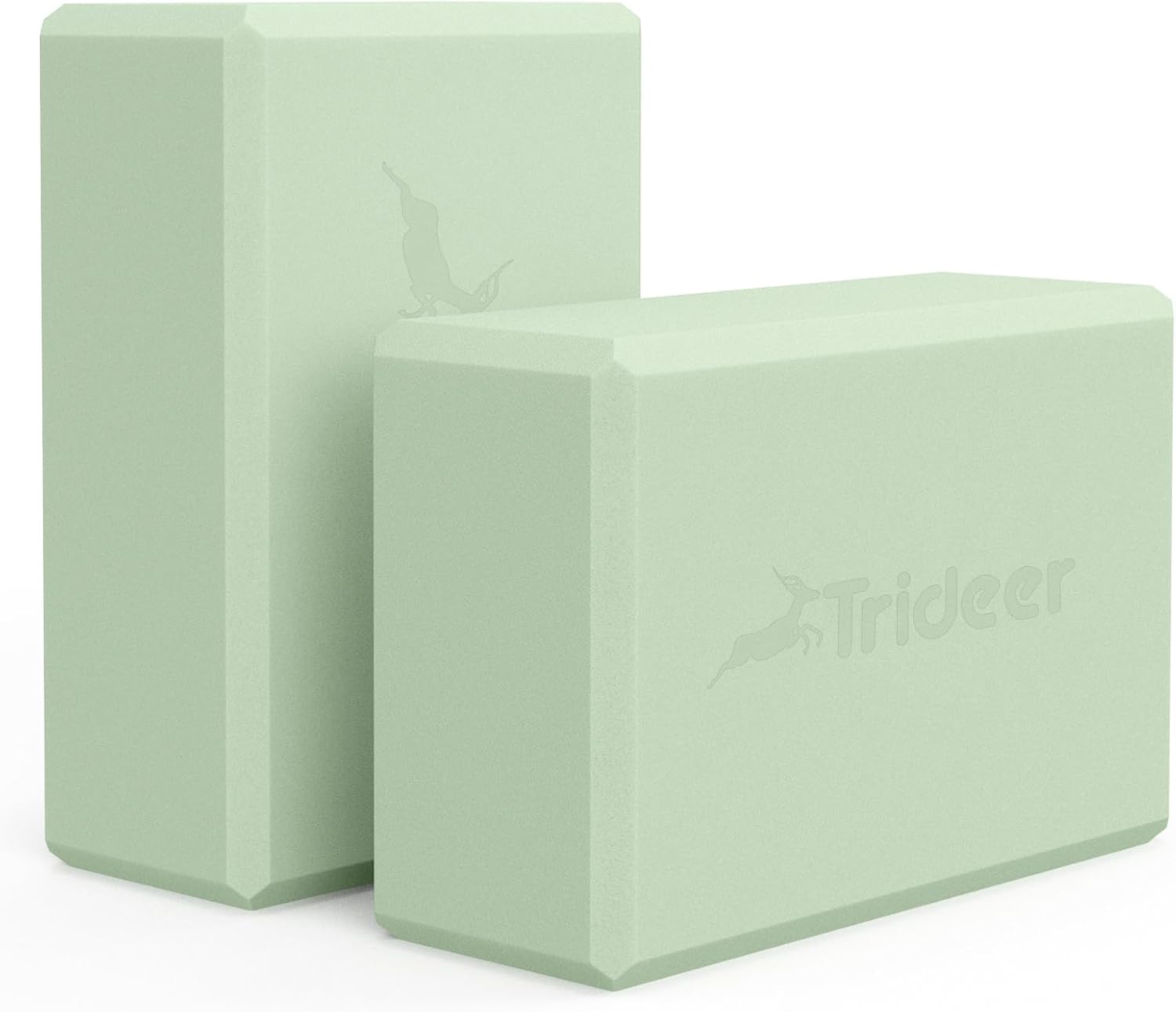
Trideer Soft Non-Slip Foam Yoga Blocks with Beveled Edges 2-Pack
“The best foam yoga blocks for beginners and restorative yoga practice. Soft, beveled edges are comfortable under palms and backs, making them ideal for gentle stretching and meditation.”
See Today’s Price →What we like
Watch out for
Read Full Analysis
The Trideer Yoga Blocks 2-Pack delivers two blocks for $12 — a per-block cost of $6, which is less than half the Gaiam single-block price. For anyone who practices symmetrical poses or wants a second block for restorative setups without buying two separate units, this is the obvious value play. The EVA foam is soft and non-slip, the beveled edges provide alignment cues on all sides, and the odor-resistant material keeps the blocks smelling clean through regular use and sweaty sessions. At 9 x 6 x 4 inches (standard size), these blocks are compatible with all yoga styles and work well on both mats and bare floors. The honest trade-off is density consistency: at this price point, the foam is slightly softer than the Gaiam single block, which means marginally more compression under full body weight during standing poses. For restorative yoga, gentle flow, and beginner practice, that difference is imperceptible. For advanced practitioners who need a firm, stable base for arm balances and deep backbends, the Gaiam or a cork block would serve better. For most practitioners starting out, these Trideer blocks represent the best value in this roundup.

Foam Yoga Blocks 9x6x3 in for Pilates Stretching Meditation 2-Pack
“Budget yoga blocks for casual home practice. Best for beginners who want to try yoga blocks before investing in premium cork or higher-density options.”
See Today’s Price →What we like
Watch out for
Read Full Analysis
The 9 x 6 x 3-inch Foam Yoga Blocks 2-Pack is the most affordable option in the lineup at $11 for two blocks. The slightly thinner profile (3 inches rather than the standard 4 inches) means less height support, which is noticeable in forward folds where you need to bring the floor up to reach your hands. The lighter foam is well-suited for restorative yoga — resting the head, back, or pelvis on the block for long holds — and for seated meditation support. For standing balance poses or weight-bearing hand placements, the thinner profile and softer foam provide less stable support than the 4-inch options. At $11, you are getting the bare minimum of functional yoga block performance: the blocks will not fall apart on first use and work adequately for basic stretching and beginner practice. The honest assessment: if you are serious about yoga practice, the $1 per-block savings over the Trideer 2-pack is not worth the trade-off in thickness and foam density. The Trideer 2-pack is the better value. The generic 2-pack is appropriate for casual stretching or as travel blocks where you want to minimize weight and cost.
Yoga Blocks Under $20 Buying Guide
 Photo by Mikhail Nilov / Pexels
Gaiam Yoga Block Latex-Free EVA Foam Non-Slip Beveled Edges At $18.99, it offers the best overall value. [See today's price](https://www.amazon.com/dp/B075W5FNJX?tag=myawesomebuy2-20).
Foam Yoga Blocks 9x6x3 in for Pilates Stretching Meditation 2-Pack ($11.99)
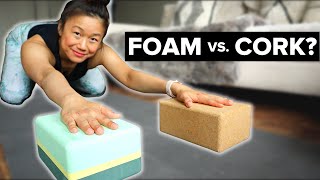
Trideer Soft Non-Slip Foam Yoga Blocks with Beveled Edges 2-Pack
When buying yoga blocks, the key factors are foam density, dimensions, and edge finish. Denser foam provides more stable support for standing balance poses and seated extensions but weighs slightly more. Softer foam is more comfortable for restorative poses where you rest body weight on the block for extended periods but compresses slightly under full body weight in weight-bearing positions. Standard yoga block dimensions are 9 x 6 x 4 inches for a single block; some brands sell 2-packs at a lower per-block price. Beveled edges serve both an aesthetic and functional purpose — they provide a clear visual and tactile cue for proper hand and foot alignment, and the angled edge prevents sharp corners from digging into your hands or feet. Non-slip surface texture is important for both sweaty-hand grip during practice and for keeping the block stable on a yoga mat or hardwo
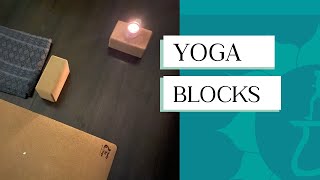
Watch Before You Buy
Frequently Asked Questions
Do I need one or two yoga blocks?
What size yoga block should I buy?
What is the difference between foam and cork yoga blocks?
Can I use yoga blocks for meditation?
Are cheap foam yoga blocks worth buying?
How We Analyze Products
We analyze Amazon review data — often thousands of reviews per product — to surface patterns that individual buyers miss. Our process aggregates star ratings, review counts, and buyer sentiment at scale, identifying which strengths and weaknesses appear consistently across the largest review samples available.
Each product earned its placement through data: total review volume, average rating, and the specific praise and complaints that repeat most often across buyers. No manufacturer paid for placement on this page. Products appear here because buyers endorsed them at scale, not because a company asked us to feature them.
We use AI to summarize review sentiment — not to fabricate opinions, but to condense what thousands of buyers actually wrote into a readable format. The pros and cons you see reflect the most common themes found in verified purchaser reviews, paraphrased for clarity. We do not claim to have accessed Reddit, YouTube, or specific publications in generating these summaries.
Prices shown reflect Amazon pricing at the time this page was last generated. Click “See Today’s Price” to get the current live price on Amazon. Read our full methodology →